Chicano tattooing isn’t a trend you scroll past on Instagram and forget. It’s a visual language born in California barrios, refined in prison yards, and polished in street shops from East LA to San Diego. When someone sits in my chair asking for a Chicano piece, I know we’re talking about fine-line black and grey, religious imagery that hits hard, and lettering that has to be perfect. No room for sloppy. This style demands respect for its roots and technical precision that separates weekend warriors from artists who’ve put in the years.
Origins & History
From Pachuco Culture to Prison Art
Chicano tattooing traces back to the 1940s and 50s, when Pachuco style emerged among Mexican-American youth in Southern California. The zoot suit era gave us the early visual markers, clean lines, religious devotion, pride in heritage. By the 60s and 70s, the style deepened in unexpected places. Prison yards became incubators. Limited to black ink and homemade machines, artists developed the grey wash techniques that define the style today. I’ve talked to old-timers who learned to stretch guitar strings for needles and burn toothpaste caps for ink cups. That resourcefulness still lives in how we approach black and grey work.
What started as survival art became a legitimate tattoo tradition. Shops in East LA, Whittier Boulevard, and later San Diego’s Chicano Park area became the style’s commercial home. I apprenticed under an artist who came up in those shops, and he drilled into me: every line matters, every drop of wash has purpose.
Crossing Into Mainstream Respect
By the 1990s, Chicano style started getting recognition beyond its community. Lowrider Arte magazine spread the imagery. Artists like Freddy Negrete, who came up in the prison system and transitioned to professional shops, became legends. What I respect about this evolution: the core never got watered down. The best artists today still honor those technical foundations.
Key Characteristics & Motifs
When I evaluate a Chicano piece, I’m looking for specific elements. Miss these and you’ve got generic black and grey, not true Chicano style.
- Religious iconography: Virgin Mary, crucifixes, praying hands, rosaries. These aren’t decorative, they carry personal weight for the wearer.
- Clown faces and masks: The happy/sad duality, the “smile now cry later” motif. Represents the mask people wear versus inner truth.
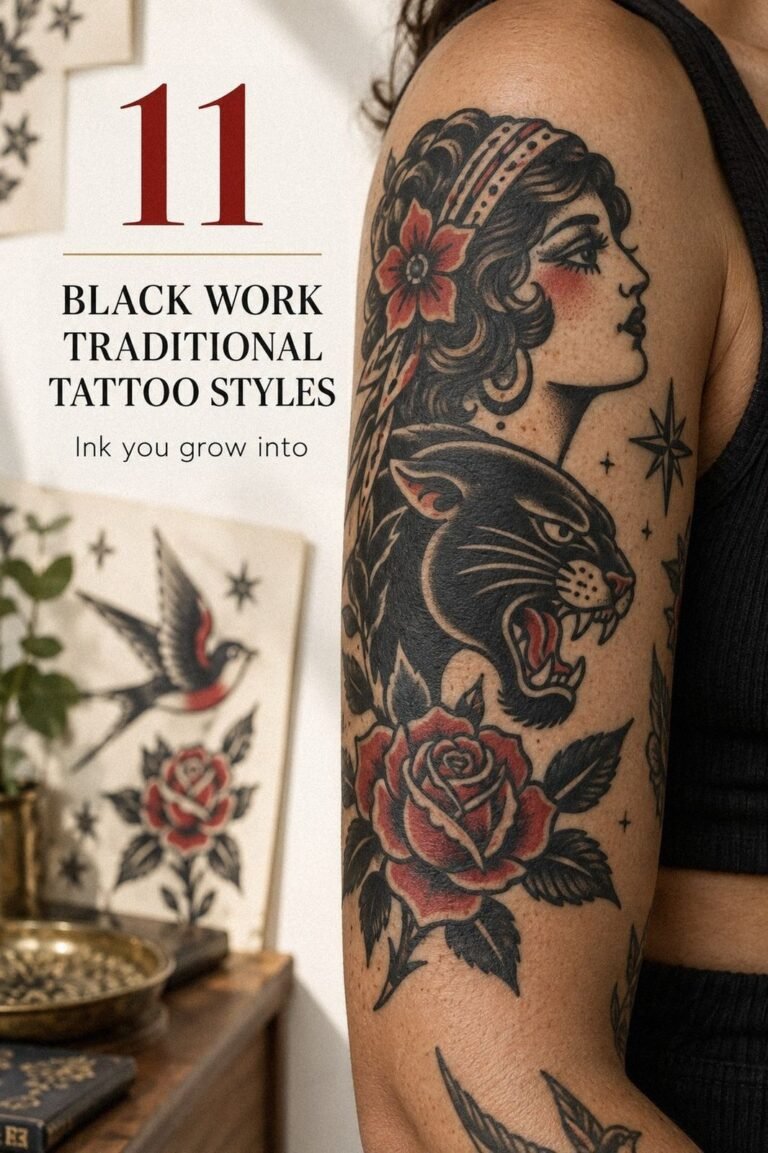
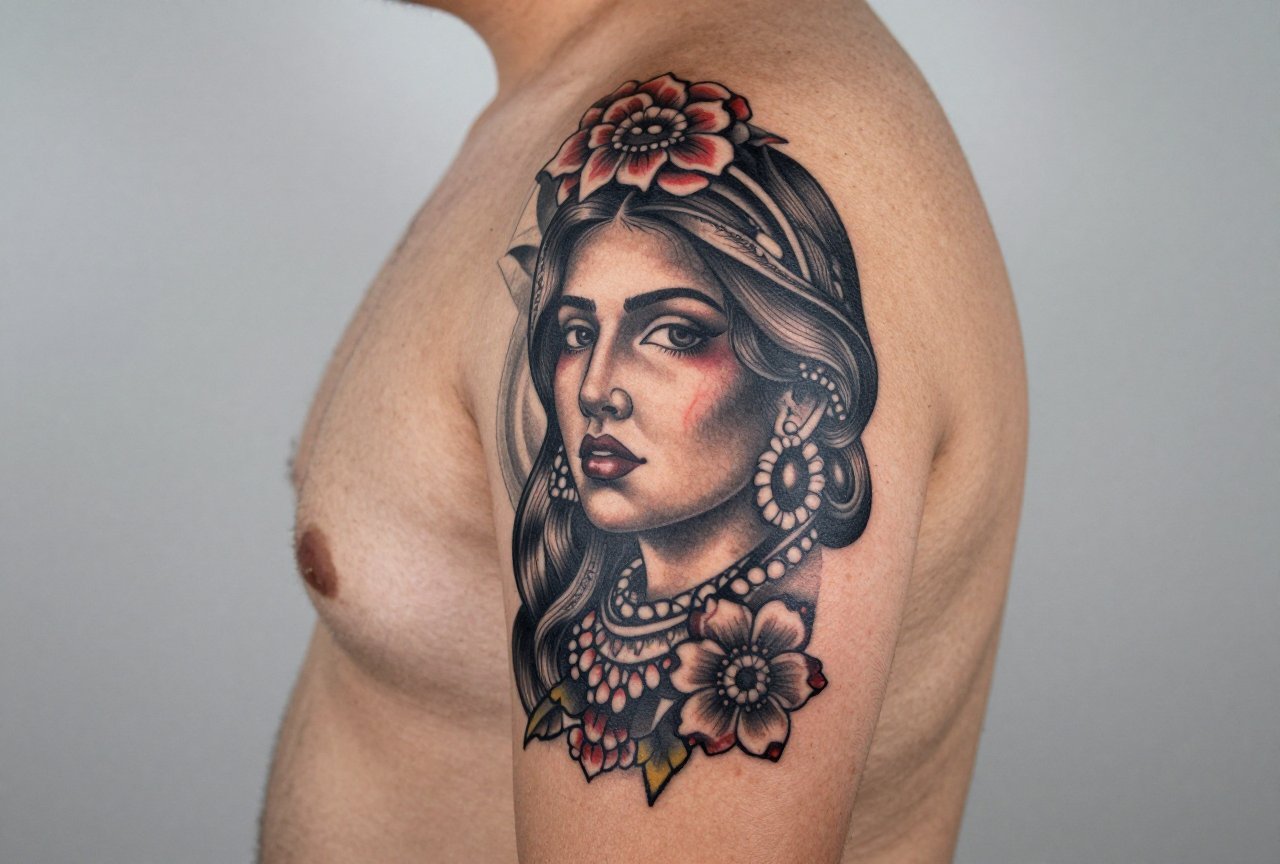
- Beautiful women: Often stylized, sometimes with bandanas or religious elements. The “Chicano girl” portrait is a whole sub-specialty.
- Lettering: Script that flows like calligraphy. Old English, cursive, or custom script. This is where I see most artists fail, bad lettering ruins the whole piece.
- Payasa imagery: The female clown face, distinctive to Chicano culture, often with tears or specific makeup styling.
- Lowrider and street elements: Cars, cityscapes, neighborhood references. Personal history rendered in ink.
The line work is everything. Single needle or tight three-liner for details. Smooth transitions in grey wash that look photographic from two feet away but hold up when the skin heals and settles. I’ve seen beautiful fresh pieces fall apart in six months because the artist didn’t understand how grey wash ages.
Color vs Black and Grey
Here’s where I get direct with clients: traditional Chicano is black and grey. Period. The prison origins demanded it, only black ink available. That limitation became the style’s strength. Artists learned to create depth, temperature, and emotion without a single drop of color.
That said, I’ve done Chicano-inspired pieces with selective color. A red rose. Brown tones in skin. A touch of blue in a bandana. The key word is selective. When color enters, it should accent the black and grey, not compete. I tell people: if you want full color, look at a different style. Chicano color work exists but it’s a departure, not the tradition.
Black and grey ages better anyway. I’ve tattooed Chicano pieces that looked sharp ten years later because the contrast holds. Color fades, shifts, blurs. Black and grey settles into something that often looks better with time, like a photograph developing in reverse.
Best Placements
Large Format: Back, Chest, and Full Sleeves
Chicano work loves space. The detail level, the grey wash transitions, the storytelling, they need real estate. I’ve done full back pieces with the Virgin Mary centered, rosaries draped, script banners flowing. Chest pieces work similarly, especially with the “praying hands” motif positioned between the collarbones. Full sleeves let you build narrative: religious imagery at the top, street elements below, script tying it together.
Smaller Work: Hands, Neck, and Face
These are culturally loaded placements. In the tradition, face and hand tattoos signified serious commitment, often prison time or gang affiliation. I don’t take these requests lightly. When someone asks for Chicano-style hand tattoos now, I ask about their connection to the culture. Appropriation is real, and this style carries weight. That said, I’ve done beautiful small script on fingers, tiny rosaries on hands, for people with genuine roots and understanding.
Neck script is common now across styles, but Chicano lettering on the neck or throat hits different. It’s bold. Permanent. I make sure clients understand they’re wearing a cultural statement.
Who It Suits
Not everyone. I say this with love. Chicano tattooing carries cultural specificity. If you’re not from the community, you need to approach with education and respect. I’ve turned down requests that felt like costume, white suburban kids wanting “prison style” because it looks tough. That’s not what this is.
For those with Chicano heritage, these tattoos are home. They’re grandmother’s altar rendered on skin. They’re neighborhood pride. They’re survival and celebration together. For allies and appreciators from other backgrounds, I ask: do you understand the history? Are you supporting artists from the culture? Are you treating this as art to respect, not consume?
Skin type matters technically too. Darker skin needs adjusted grey wash, more contrast, less subtle mid-tones. I’ve developed specific wash recipes for different melanin levels. The style works on everyone, but the approach shifts.
Modern Variations
Chicano Meets Fine Art
Some contemporary artists are pushing boundaries. I’ve seen Chicano-inspired work with surrealist elements, geometric backgrounds behind traditional portraits, mixed media approaches. Artists like Chuey Quintanar and others blend photorealism with classic motifs. The core remains, black and grey, cultural weight, technical precision, but the visual vocabulary expands.
Script Evolution
Lettering has gotten wild. Traditional script stays clean, but I’ve seen artists incorporating graffiti influences, custom typefaces that still flow. The key: readability ages better than complexity. I do custom script for clients, but I always test it at distance, check how letters interact when skin moves. Bad script is the fastest way to spot an amateur in this style.
Choosing an Artist
This is where I get passionate. Not every black and grey artist does Chicano. Not every artist who says they do Chicano actually understands it.
- Look at healed work: Fresh photos lie. Ask for one-year-healed pieces. Grey wash either holds or it doesn’t.
- Check their lettering: If the script in their portfolio looks shaky, run. Lettering is half this style.
- Ask about their training: Did they learn from someone in the tradition? Apprenticeship matters here.
- Portfolio depth: One or two Chicano pieces among fifty unrelated styles? They dabble. Find someone who lives in this work.
- Shop culture: Walk in. Feel the vibe. Real Chicano shops have a specific energy, respect, history, community. You’ll know.
I send people to specific artists when I can’t take the work. Mister Cartoon in LA, though he’s selective and expensive. Shops in San Diego’s Barrio Logan. The network is tight and reputation travels. Good artists know each other.
Final Thoughts
Chicano tattooing is living history. Every piece connects to decades of artists who worked with nothing, who developed techniques under constraints that would break most contemporary tattooers. When I lay in that grey wash, when I pull a single needle line for a tear drop on a payasa face, I’m participating in something bigger than a transaction.
Get this work because it means something to you. Because you understand where it comes from. Because you found an artist who respects the tradition enough to execute it properly. The best Chicano tattoos I’ve done weren’t the most technically complex, they were the ones where the client and I both knew the weight of what we were creating. That’s the point. The ink lasts, but the meaning is what makes it worth wearing.
Frequently Asked Questions
How long does a Chicano black and grey sleeve typically take?
A full sleeve in this style usually runs 25-40 hours depending on detail density. I break it into sessions every 2-3 weeks to let healing happen between layers. Rushing grey wash work always shows in the final result.
Why do some Chicano tattoos look blurry after healing?
Usually it’s overworked skin or grey wash packed too dense. Black and grey needs negative space to breathe. I see this when artists try to make it look like a photograph fresh, but skin isn’t paper, it heals and settles differently.
Can I get Chicano style lettering with a non-English phrase?
Absolutely. I’ve done Spanish script, even mixed languages. The lettering style matters more than the language itself. That said, get your translation triple-checked. I won’t tattoo words I can’t verify, and you shouldn’t want me to.
What’s the difference between Chicano and general black and grey realism?
Chicano has specific cultural motifs, tighter line work traditions, and a particular approach to grey wash temperature. General black and grey realism might use similar techniques but lacks the iconography and historical context. It’s like the difference between blues and rock, related, but distinct roots.
Related Style Guides
- Hawaii Traditional Tattoos: Complete Style Guide
- Ladies Japanese Tattoos: A Real Shop Guide
- Realistic Rose Tattoos: A Working Artist s Guide
- Explore more