Birth month flower tattoos can stay personal without turning into a tiny unreadable soup. I nearly made that mistake with an over-detailed floral reference years ago. Now I tell clients to simplify the bloom, give the stem breathing room, and pick placement before chasing a Pinterest-exact drawing.
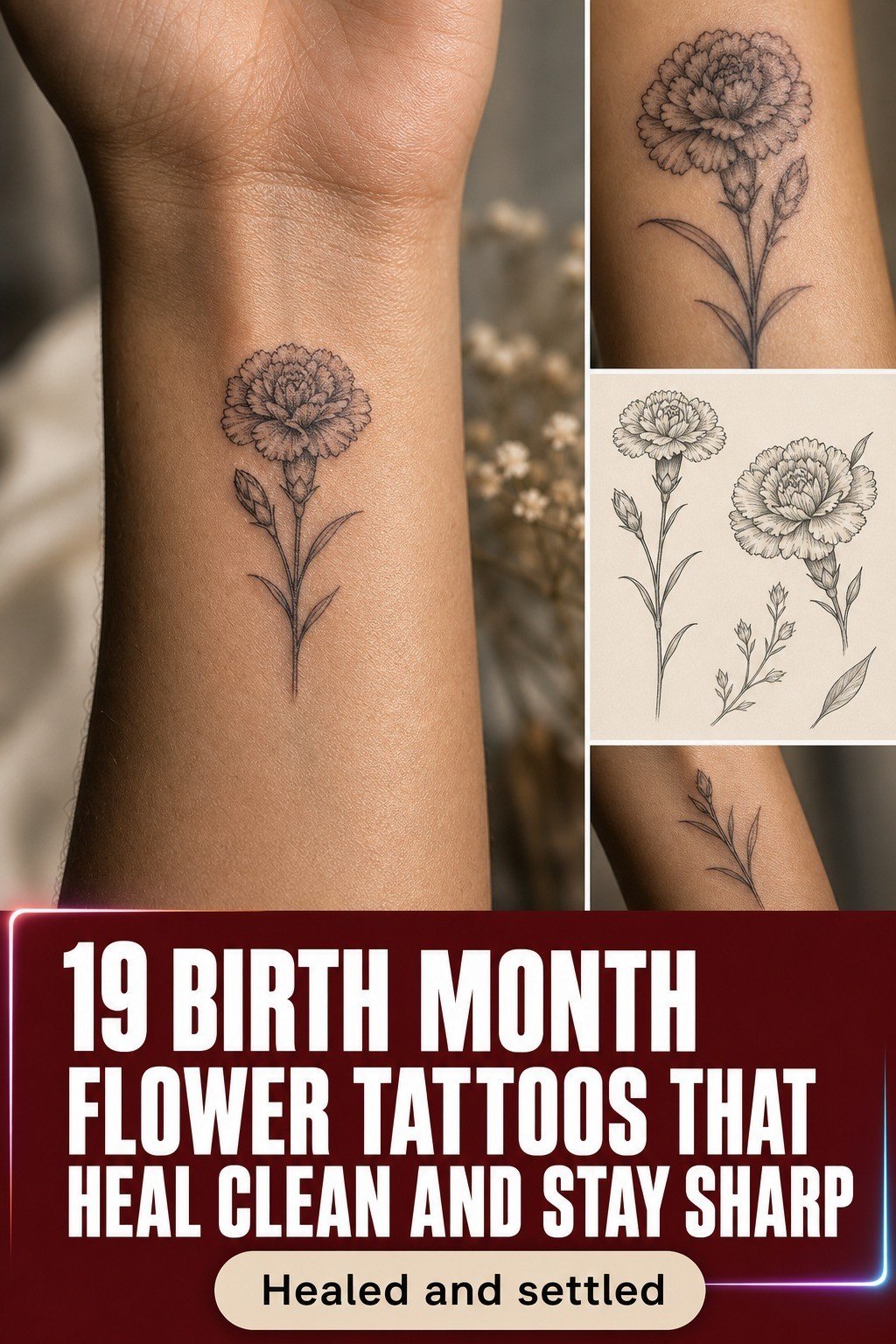
- January Carnation Fine-Line Wrist Tattoo
- February Violet Minimalist Ankle Tattoo
- March Daffodil Black-and-Grey Collarbone Tattoo
- April Daisy Tiny Finger Tattoo
- May Lily of the Valley Rib Tattoo
- June Rose Birth Flower Shoulder Tattoo
- July Water Lily Fine Red-Ink Tattoo
- August Gladiolus Botanical Forearm Tattoo
- September Aster Birth Flower Tattoo
- October Marigold Blackwork Calf Tattoo
- November Chrysanthemum Botanical Back Tattoo
- December Narcissus Delicate Sternum Tattoo
- Wildflower Birth Month Bouquet Tattoo
- Birth Flower Tattoos Ideas For Families
- Matching Birth Month Flowers on Forearms
- Birth Month Flower and Birthdate Lettering
- Birth Flower Constellation Fine-Line Tattoo
- Birth Month Flowers in a Botanical Sleeve
- Birth Flower Tattoo with Meaningful Initials
1January Carnation Fine-Line Wrist Tattoo
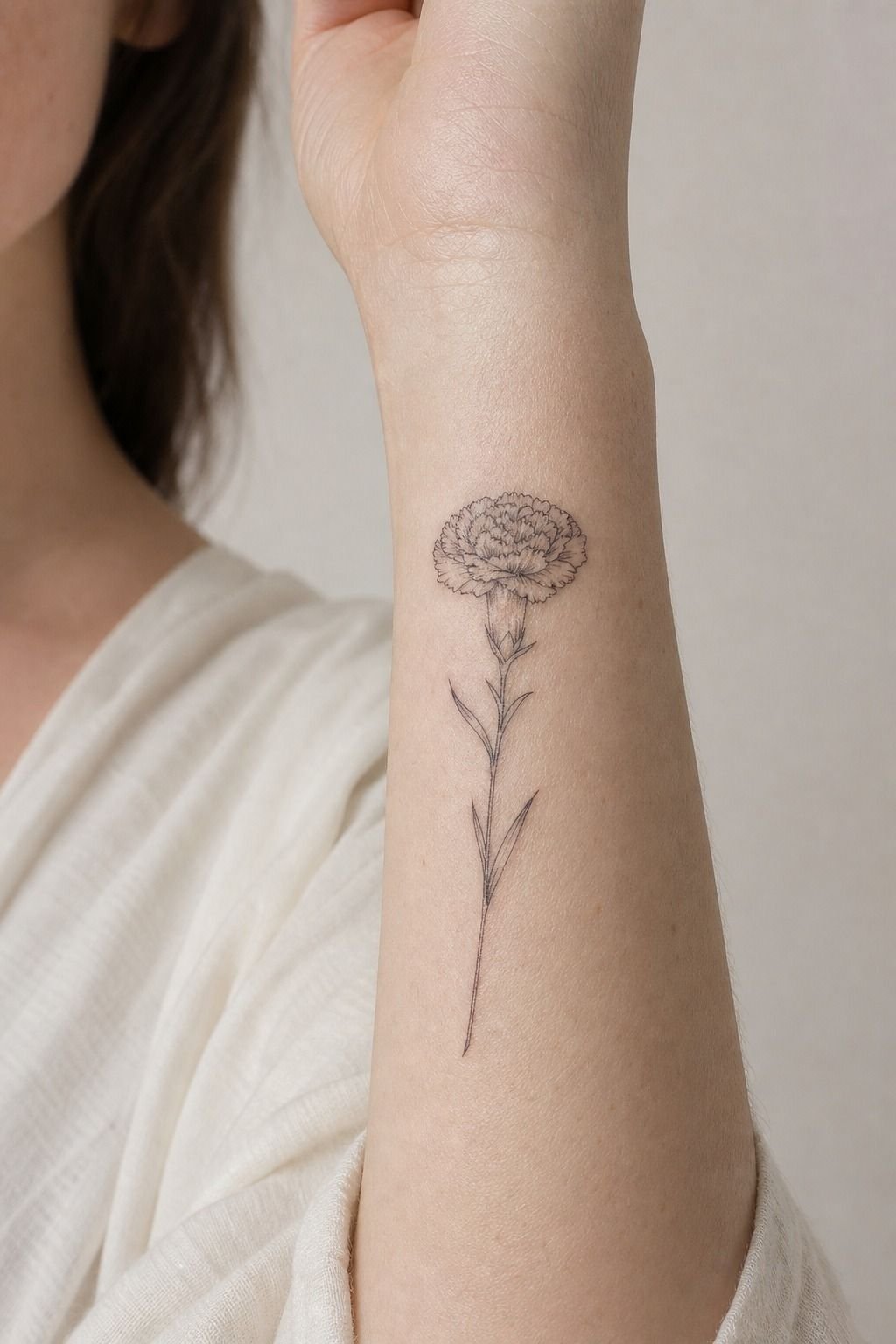
Keep a January carnation simple if you want it on your wrist. One open bloom, one bent stem, and crisp single-needle lines will read better than three stacked flowers jammed into a 2-inch spot.
On fair cool-pink skin, black tattoo ink gives the petals enough contrast to stay soft without vanishing. I’d skip pale grey wash here because wrists get sun, soap, sleeves, and constant movement. Your design needs room to breathe, especially near the wrist crease.
2February Violet Minimalist Ankle Tattoo
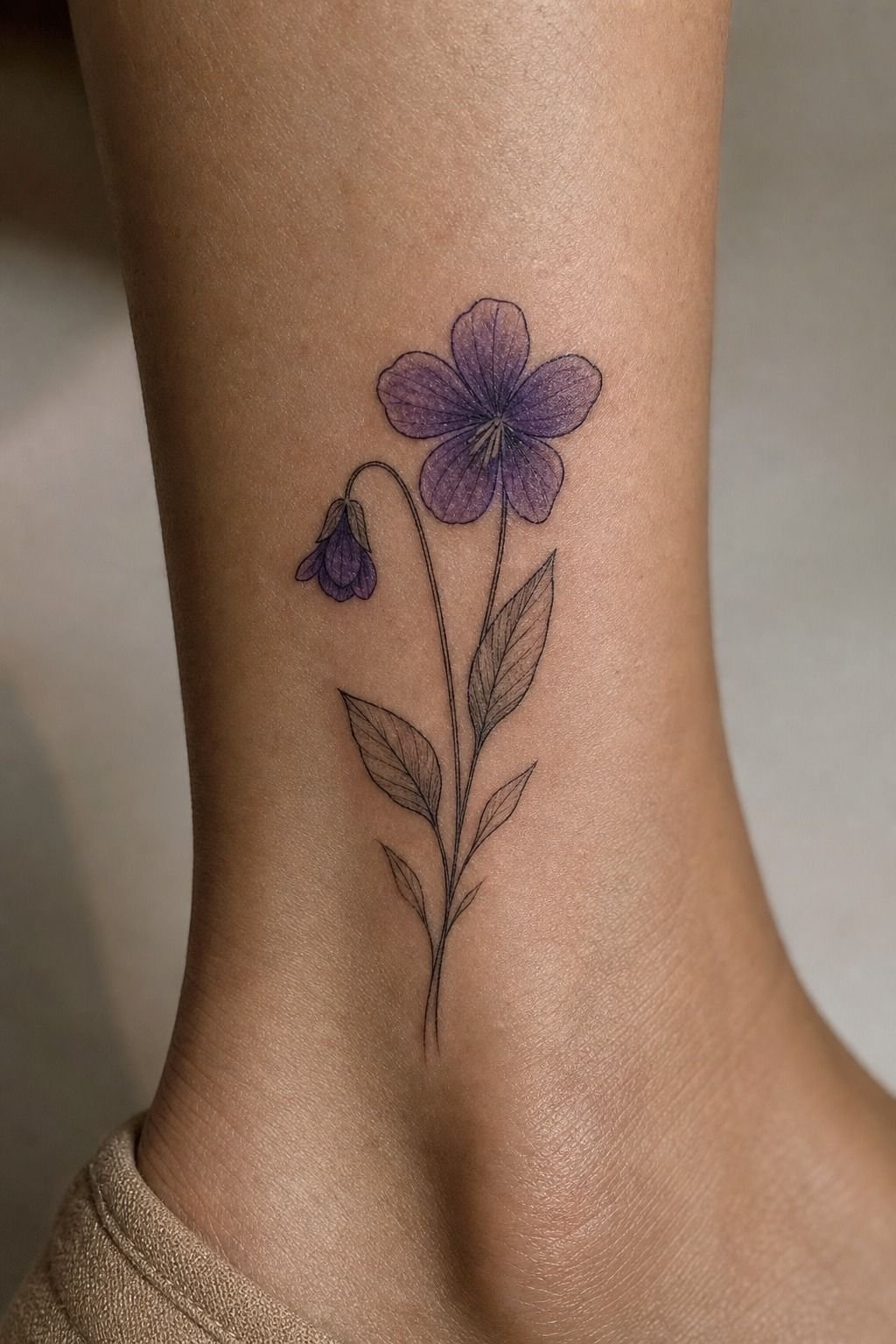
Let the February violet sit just above your ankle bone instead of directly on it. You’ll get a cleaner canvas, and your artist can use a gentle curve that follows your lower leg instead of fighting the joint.
A single-needle violet with two leaves looks intimate and refined at 2 to 3 inches. But don’t make every petal microscopic. That size on an ankle can blur if the line gaps are too tight, so I’d keep the center open and the outlines confident.
3March Daffodil Black-and-Grey Collarbone Tattoo
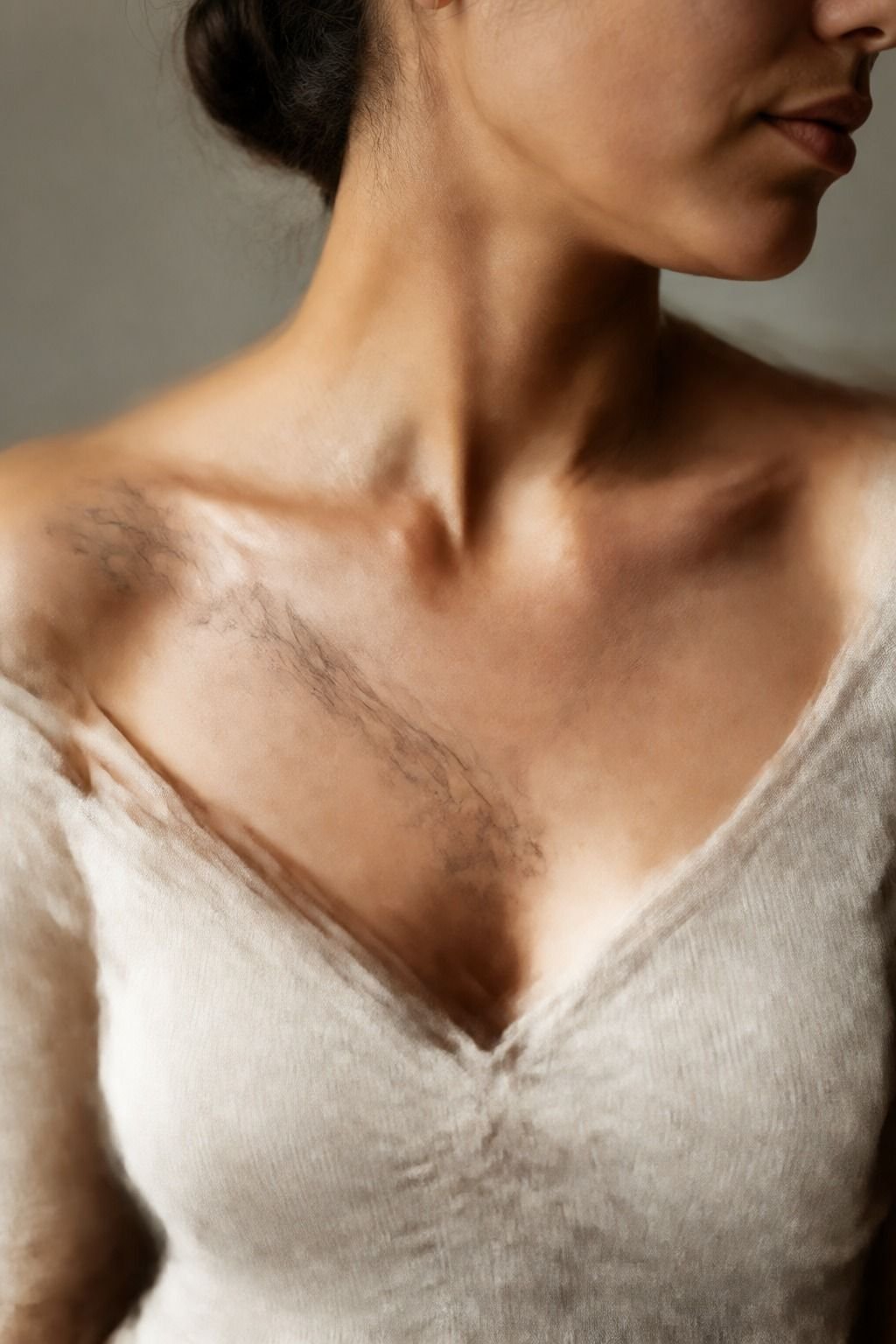
Use the collarbone’s natural sweep for a March daffodil. A bloom tilted toward the shoulder looks organic, while a straight-up flower can feel pasted on.
Ask for grey wash shading behind the trumpet, not dense black fill. You want the flower to heal soft and velvety, not patchy or flat. Collarbone tattoos are a little spicy, but the visible placement is worth it if you want your birth month tattoo to read from across the room.
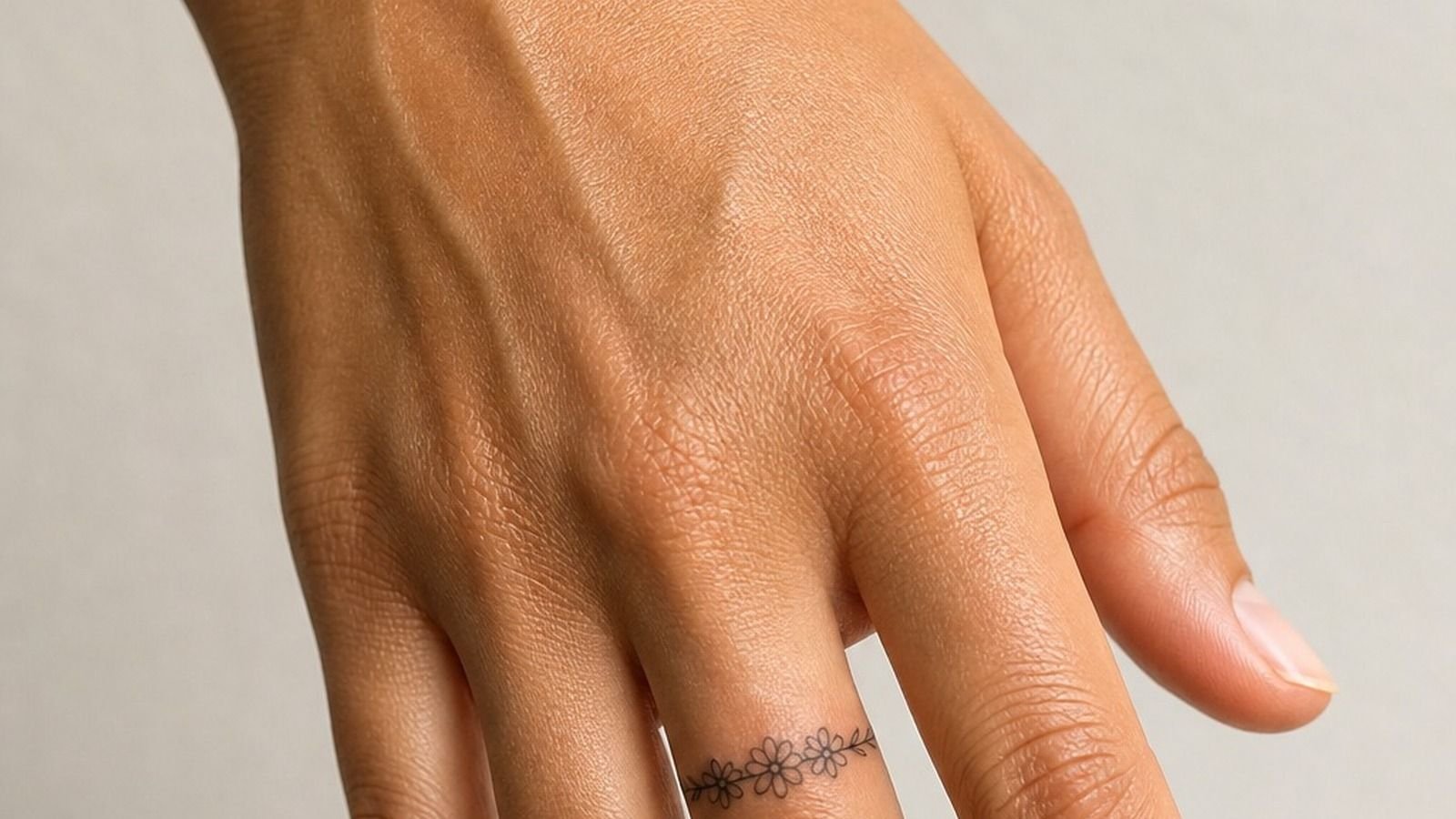
4April Daisy Tiny Finger Tattoo
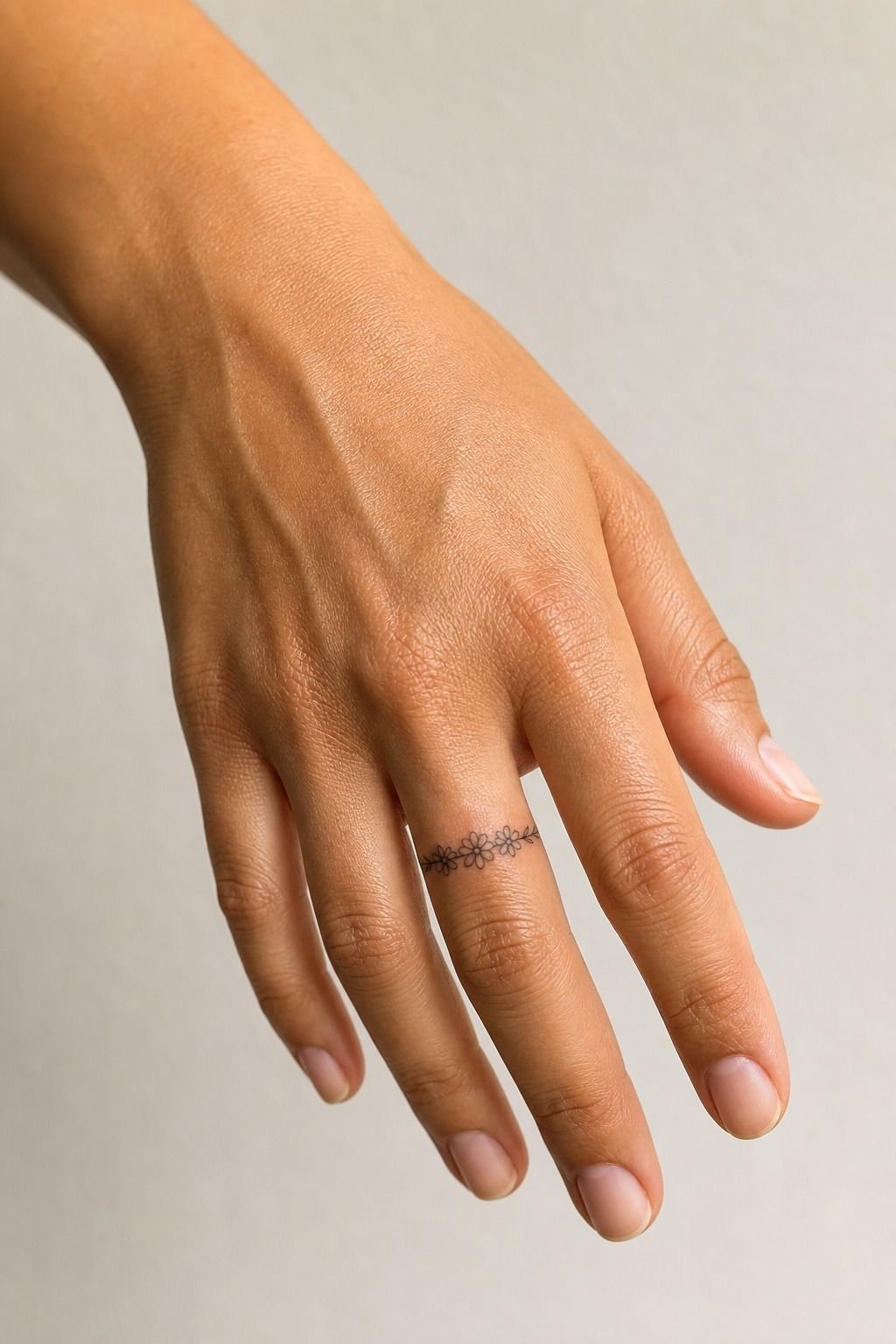
Think twice before putting a whole April daisy on a finger. The placement is charming, sure, but fingers are high-wear zones and fine details can get chewed up fast.
A fine-line daisy wrapped along the side of one finger is the smarter call. Keep it bold enough for the scale, with a simple center and five to seven petals. If you want tiny birth flower tattoos that age cute on you, move the same design to your upper hand or lower forearm instead.
5May Lily of the Valley Rib Tattoo
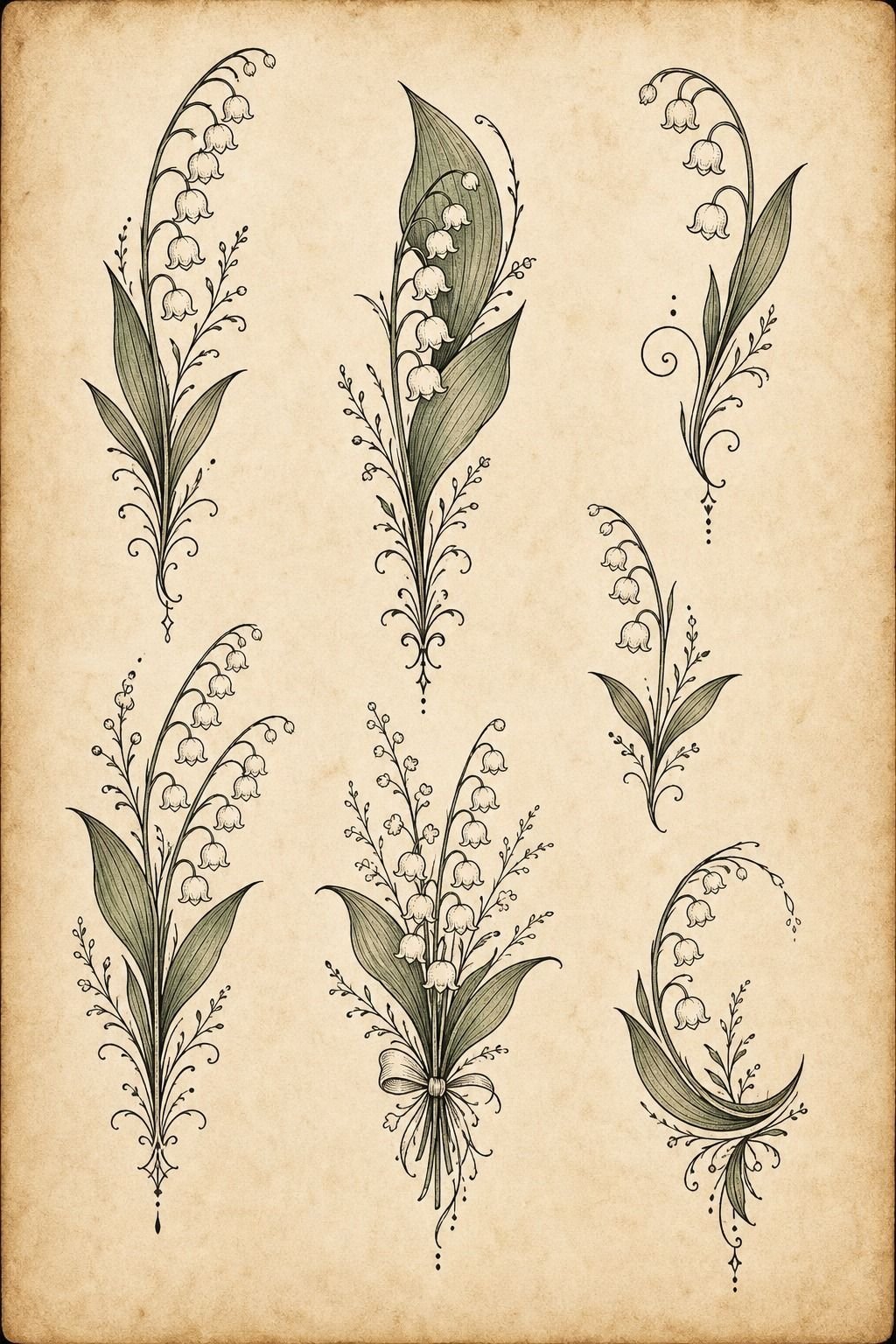
Build a May lily of the valley tattoo from hanging bells and one long stem. The rib area gives you vertical space, so your artist doesn’t have to crush all those little flowers together.
I love this one as botanical flash first, then customized with a bend that follows your ribs. Flash gives you a clean starting point, but your body flow still matters. Ribs are spicy, no point pretending otherwise, so eat first and tap out for five rather than trying to tough it out.
6June Rose Birth Flower Shoulder Tattoo
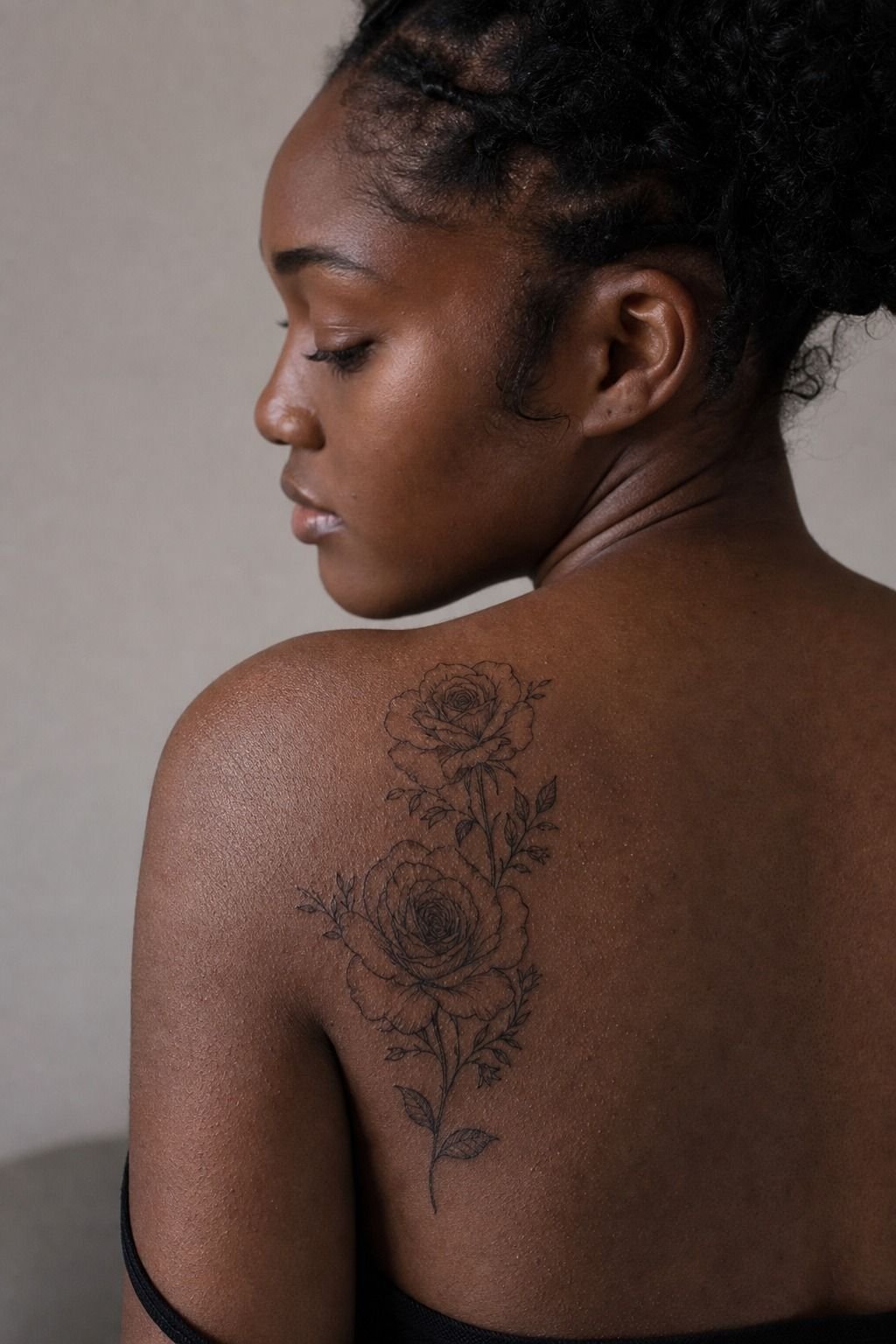
Anchor a June rose on the outer shoulder if you want a bloom that holds up. It’s a low-wear zone, it gives your artist room for saturated linework, and you can hide it or show it whenever you want.
A black-and-grey rose with a few thorny stems looks more timeless than a tiny hyper-detailed rosebud. I’d avoid micro-realism here.
You want petals with contrast, not thirty little folds that heal into visual noise. Your shoulder can handle a 3-inch design beautifully.
7July Water Lily Fine Red-Ink Tattoo
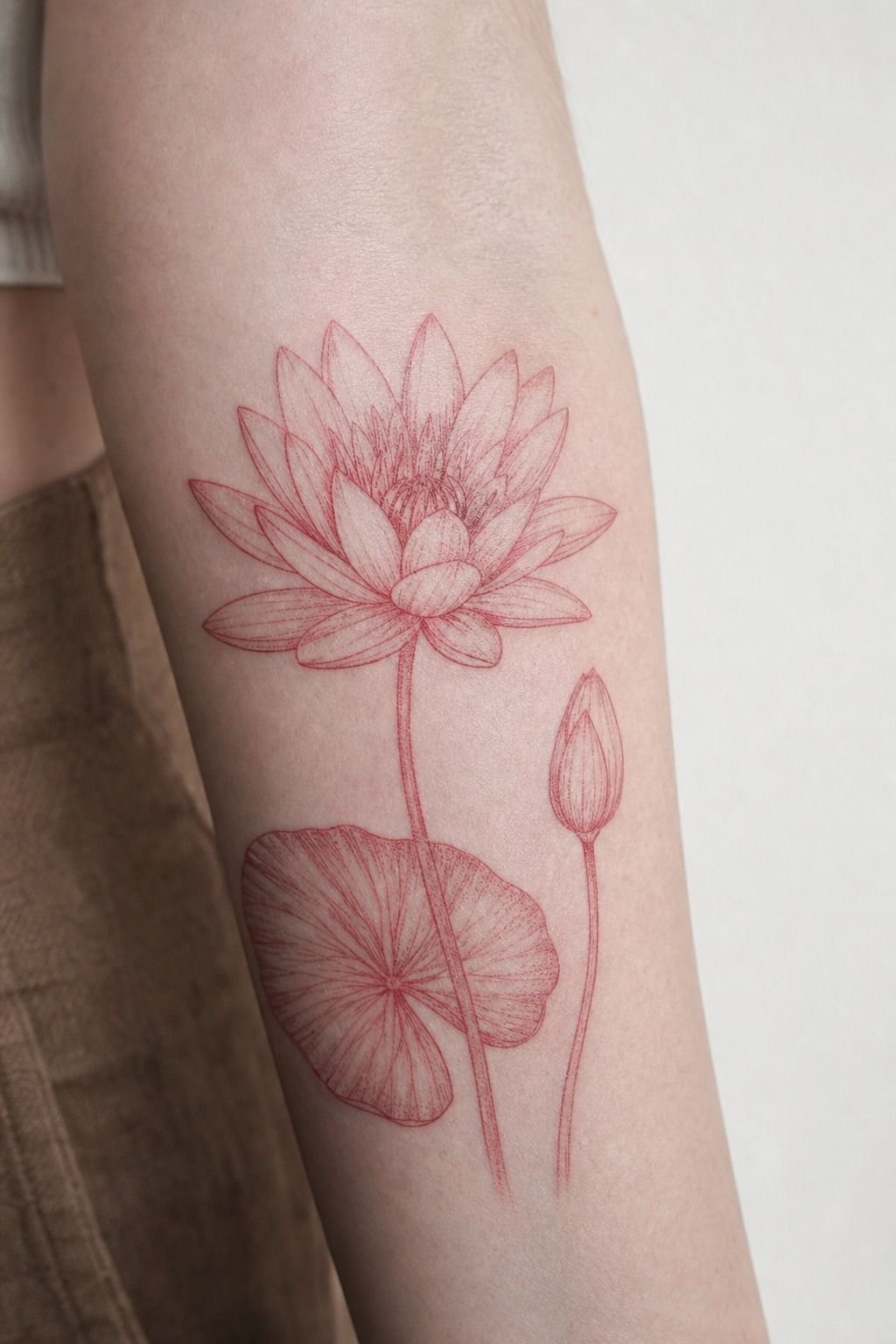
Use red ink as spice, not the whole meal.
8August Gladiolus Botanical Forearm Tattoo
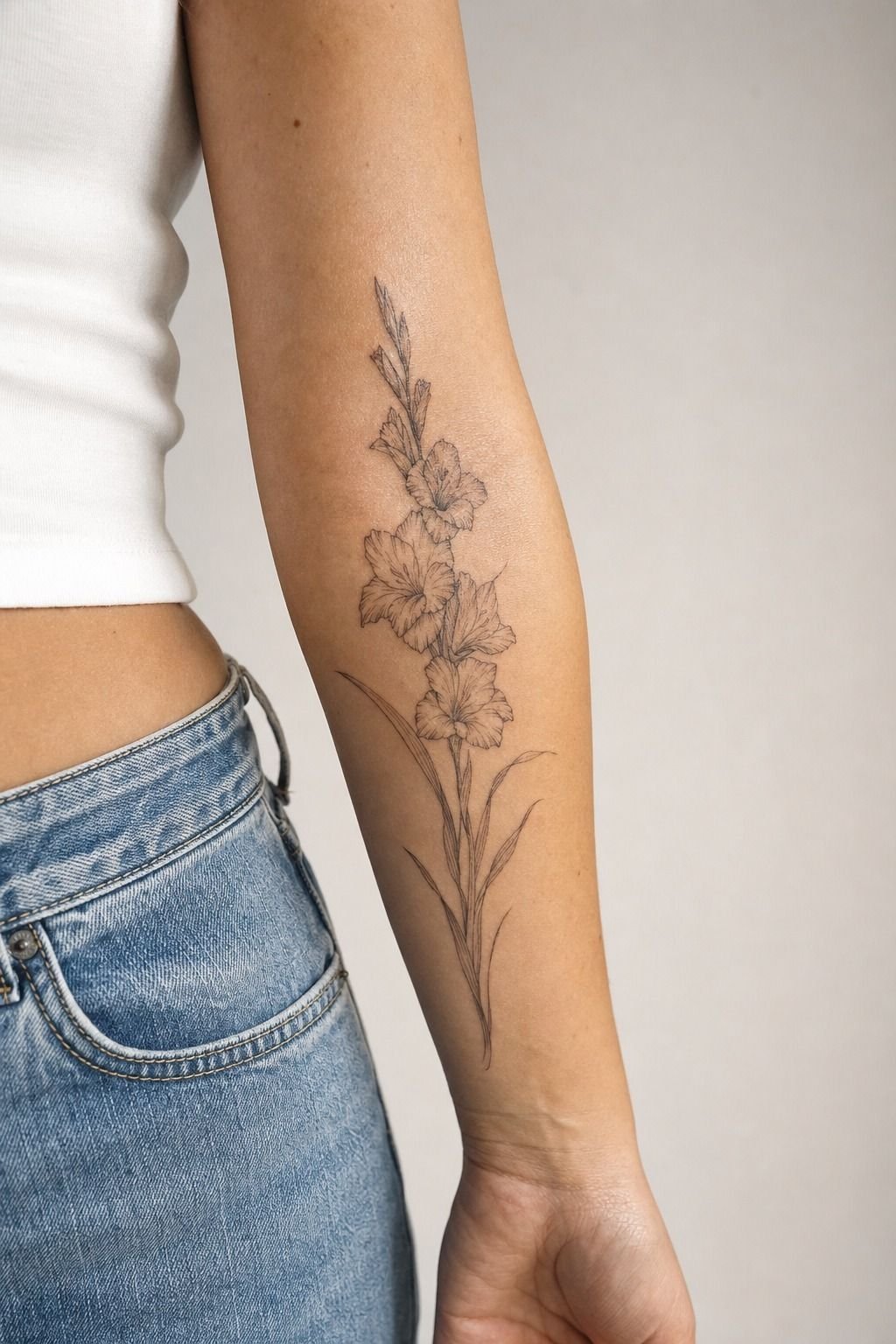
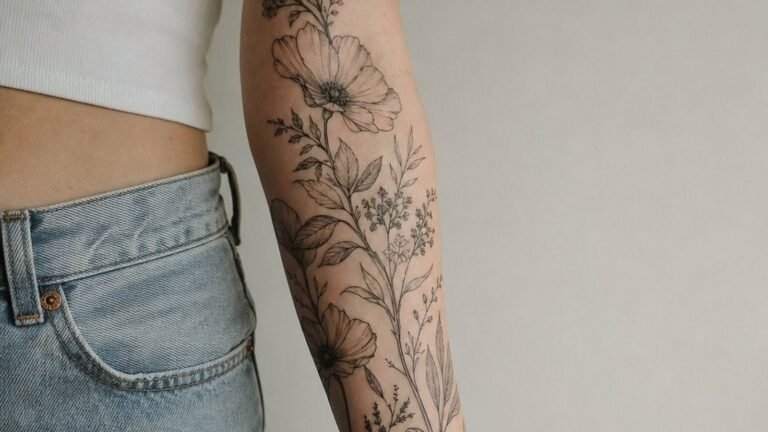
Stretch an August gladiolus up your forearm. This flower has height, and the forearm gives it a natural lane from wrist toward elbow without forcing the blooms into a tight cluster.
Your artist can use black linework with light pepper shading between the petals. I’d choose the outer forearm over the inner one if you want a calmer healing process and less daily friction. The inner arm is softer and sensitive, while the outer forearm is usually pretty chill.
9September Aster Birth Flower Tattoo
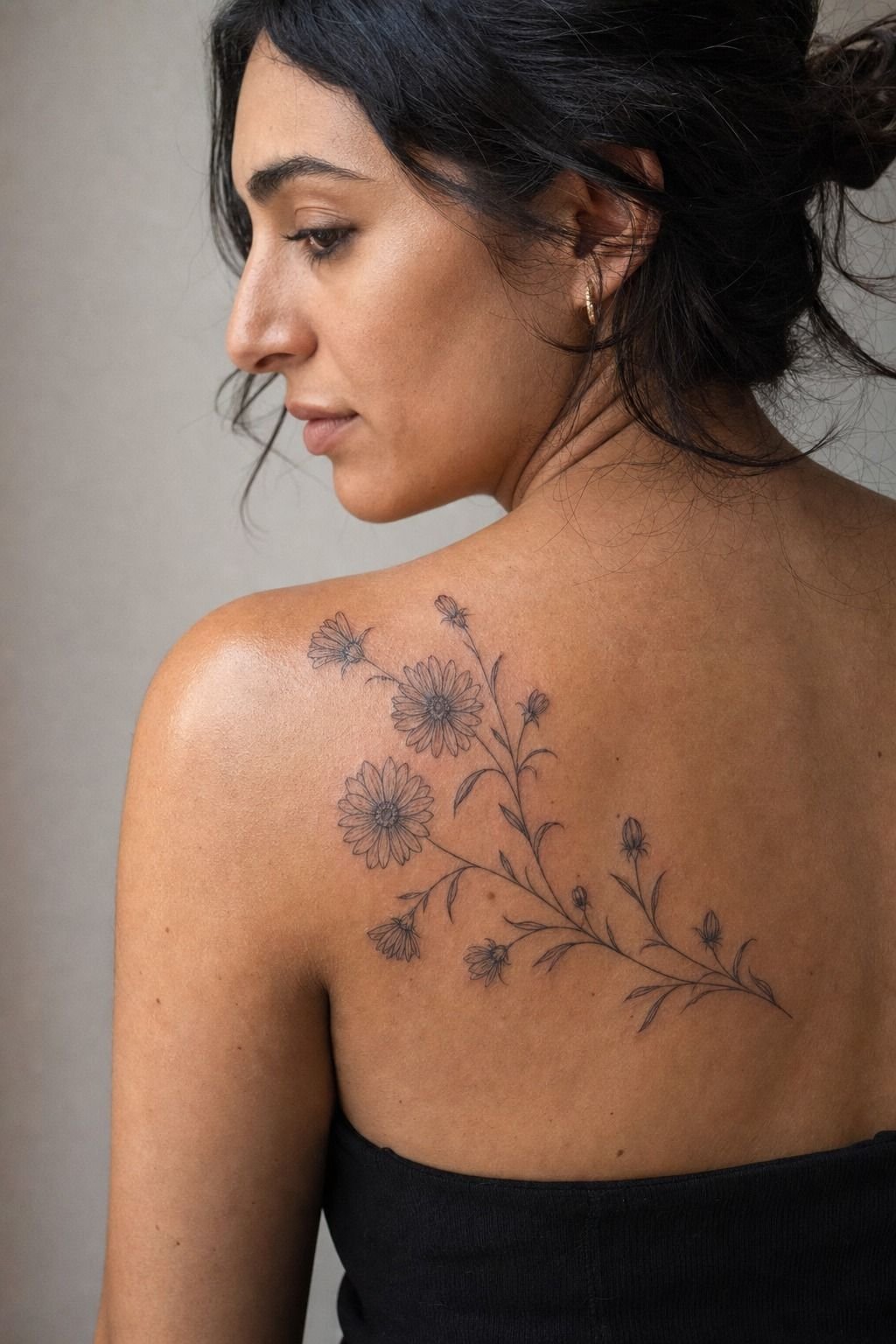
Frame a September aster around the shoulder cap rather than dropping it dead center. That wrap makes the tattoo look like it belongs to your body instead of sitting there like a sticker.
Use aster petals with varied lengths and a clean circular center. Your artist should leave a little negative space between each petal, because too many hair-thin marks turn to soup later.
Want a softer floral direction? These minimalist flower tattoos show why simple shapes often age nicer.
10October Marigold Blackwork Calf Tattoo
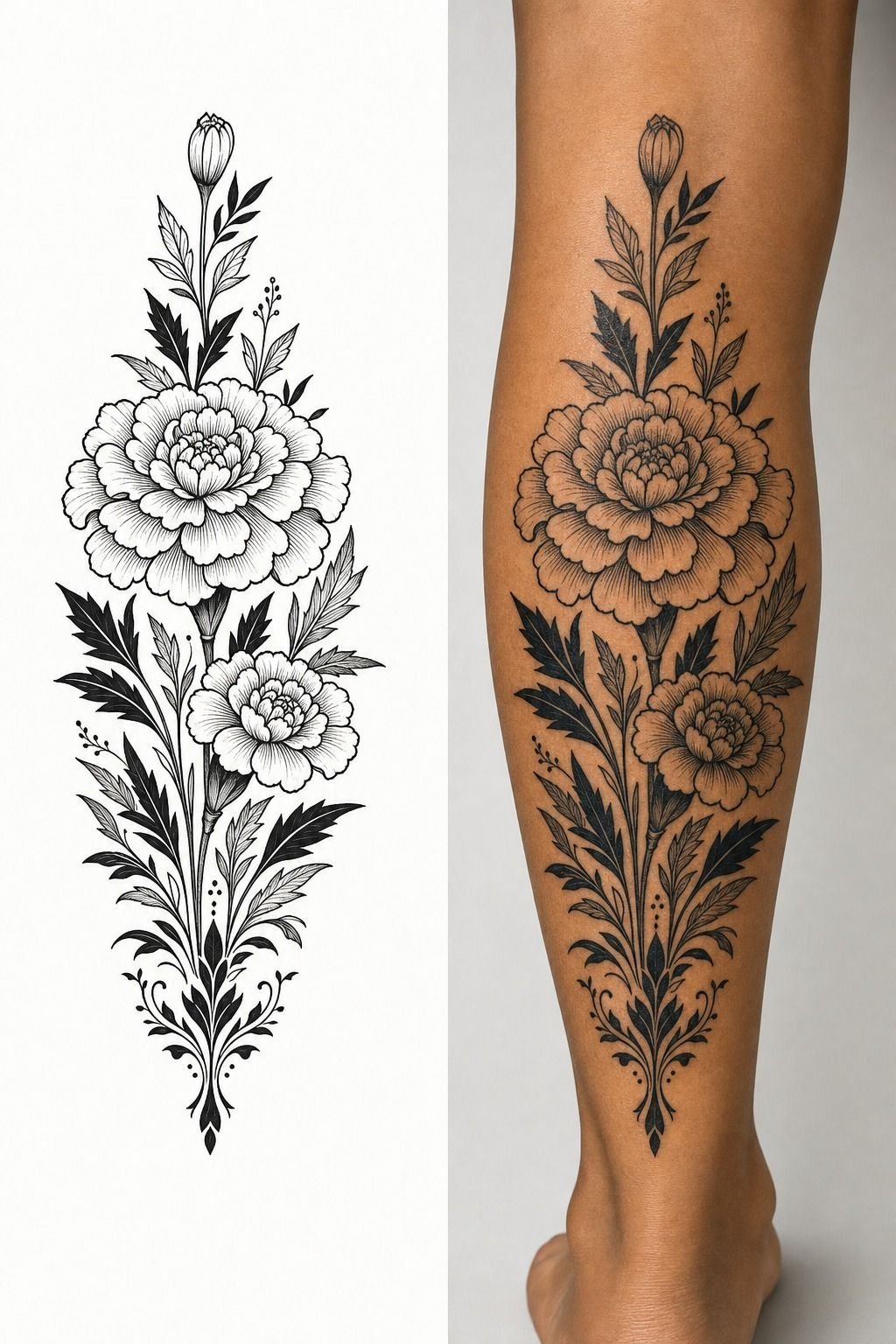
Choose blackwork for an October marigold if you want the design to hold. The calf gives you enough skin for bold petals, a dark center, and smooth grey shading without overworking the area.
A blackwork stencil is useful here because you can judge the silhouette before it hits skin. I’d pick the version with larger petal breaks over the denser one every time. Your calf is forgiving, but the tattoo still needs contrast to look solid after years of sun and movement.
11November Chrysanthemum Botanical Back Tattoo
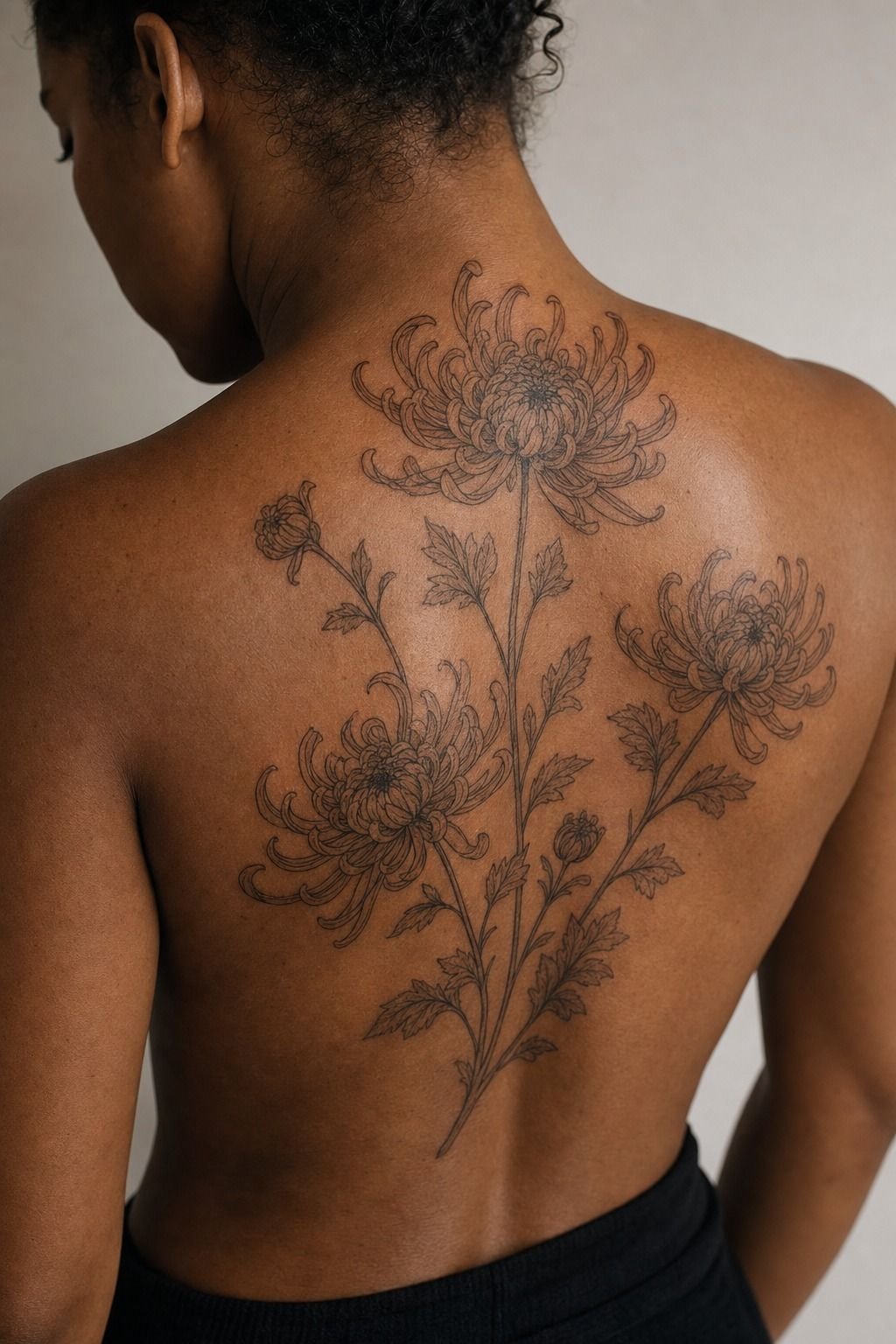
Scale a November chrysanthemum up on your upper back. This bloom has a lot going on, and your back gives it enough width to stay detailed without becoming fussy.
Use chrysanthemum linework with a few heavier outer petals, then let the inner petals stay soft. I’ve seen people shrink this flower too far because they want something delicate.
Bad call. A 4-inch bloom can still feel gentle, and it’ll give your artist room for one clean pull instead of ten fuzzy ones.
12December Narcissus Delicate Sternum Tattoo
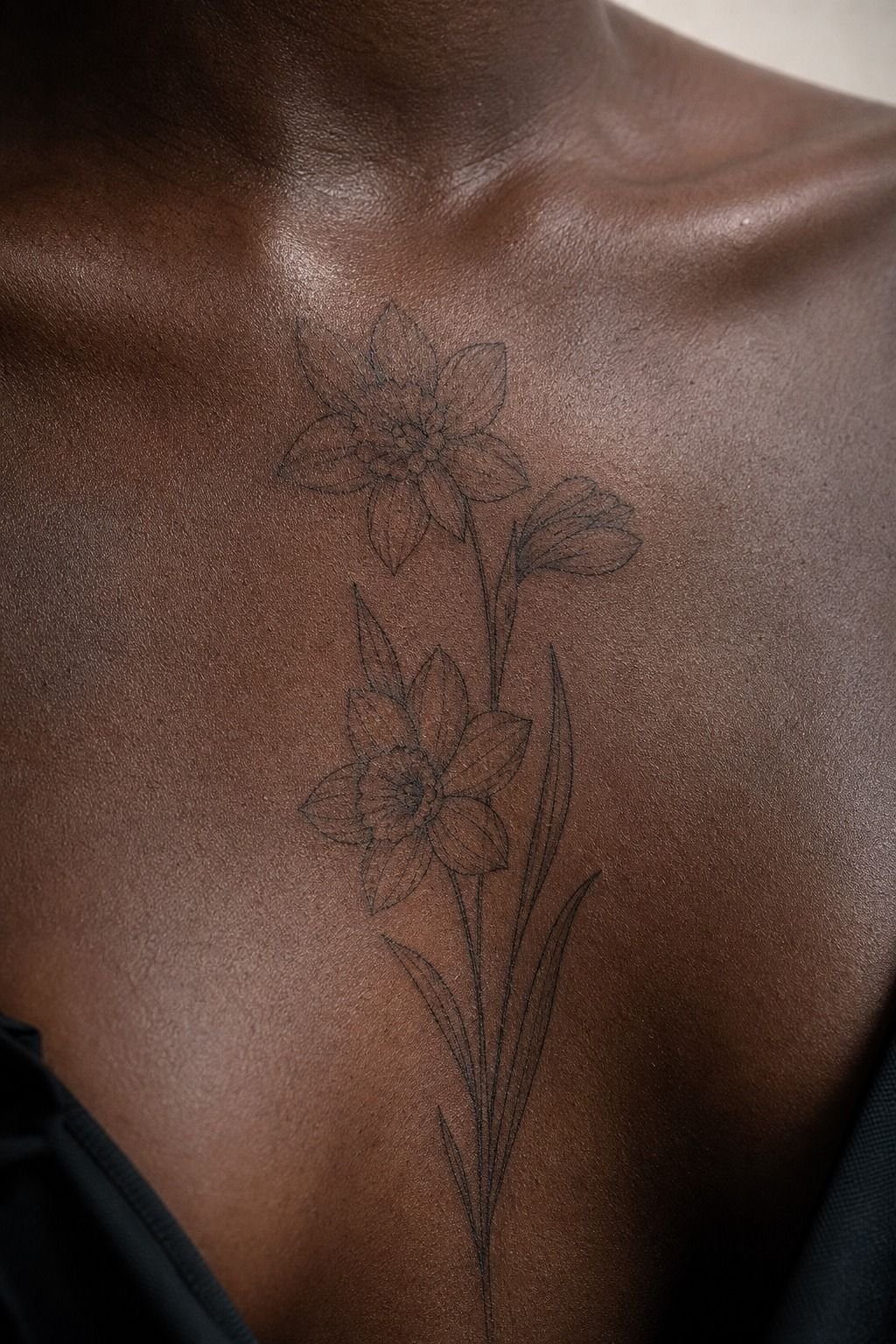
Skip the tiny sternum tattoo if you know you’ll want more later.
13Wildflower Birth Month Bouquet Tattoo
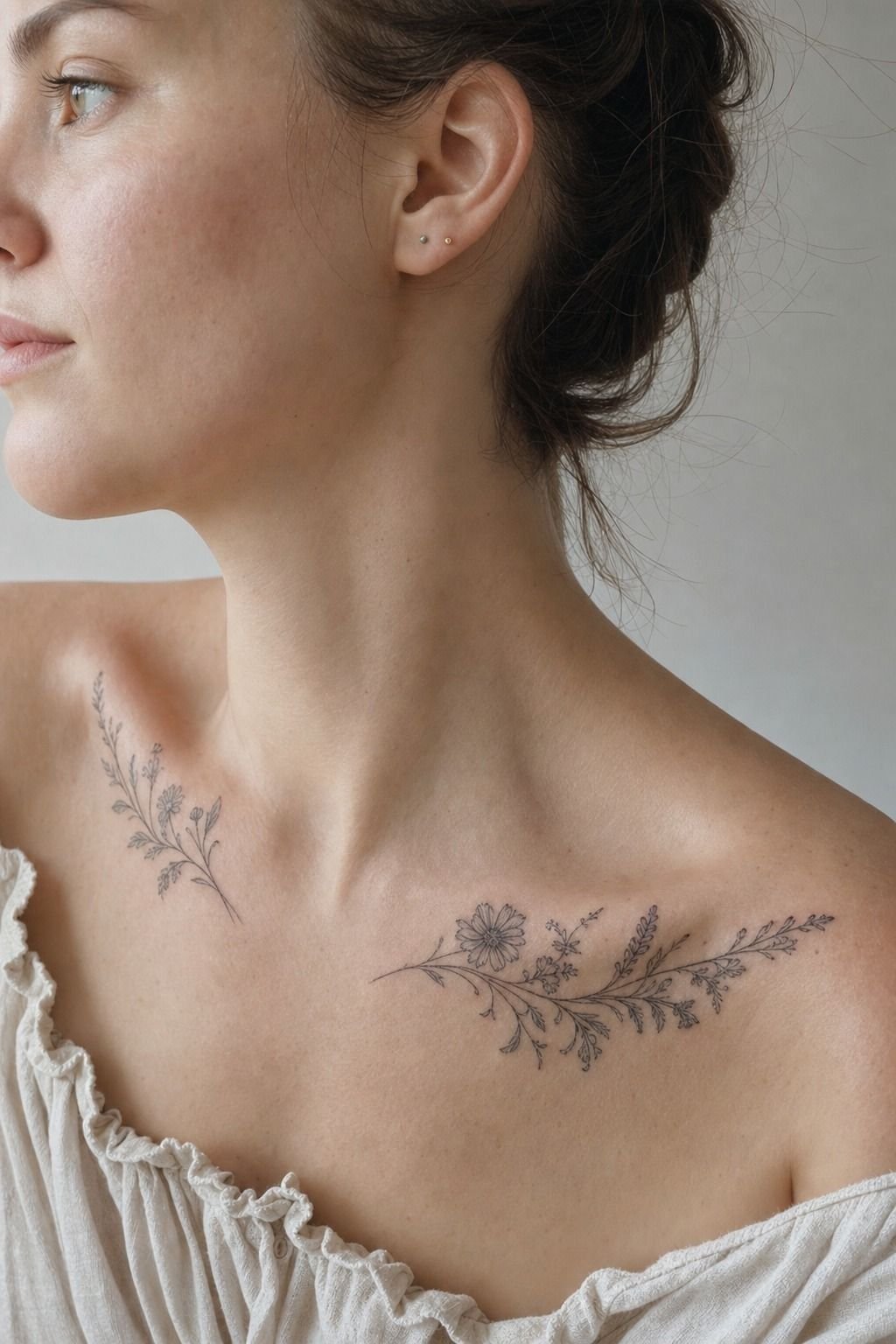
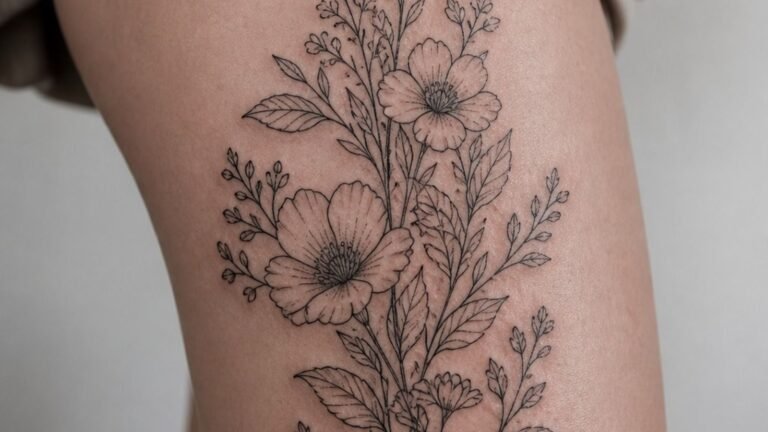
Mix several birth flowers into one wildflower bouquet when you’re honoring more than one person. A carnation, violet, daffodil, and aster can look harmonious if one flower leads and the others support it.
Make the lead bloom about 3 inches, then tuck smaller flowers around it with botanical stems connecting everything. I’d avoid equal-size flowers because they fight for attention.
Your bouquet needs a hierarchy, not a floral traffic jam. Browse more birth flower tattoo ideas before settling on a final mix.
14Birth Flower Tattoos Ideas For Families
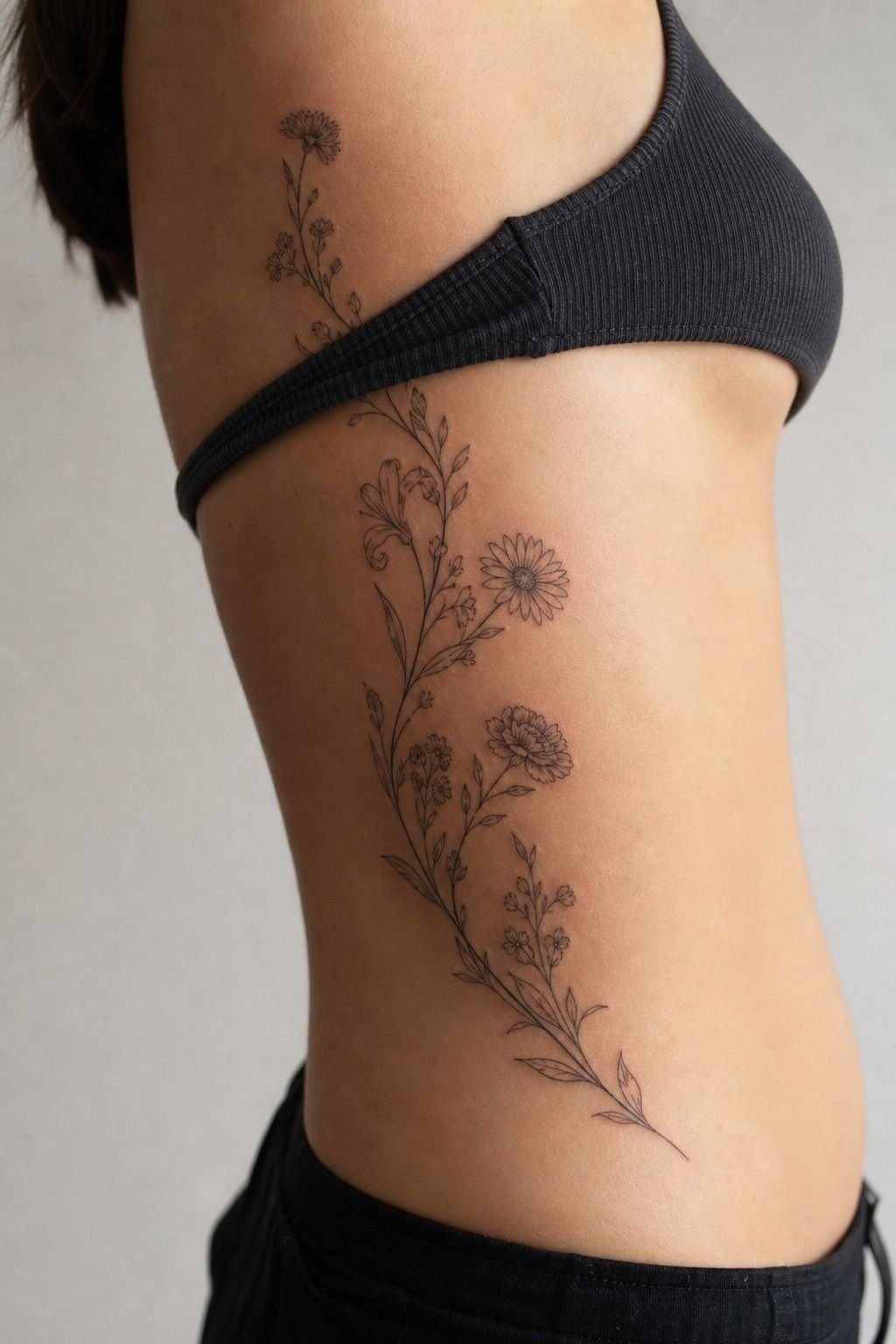
Layer family birth flowers along the ribs only if you’re willing to give them space.
15Matching Birth Month Flowers on Forearms
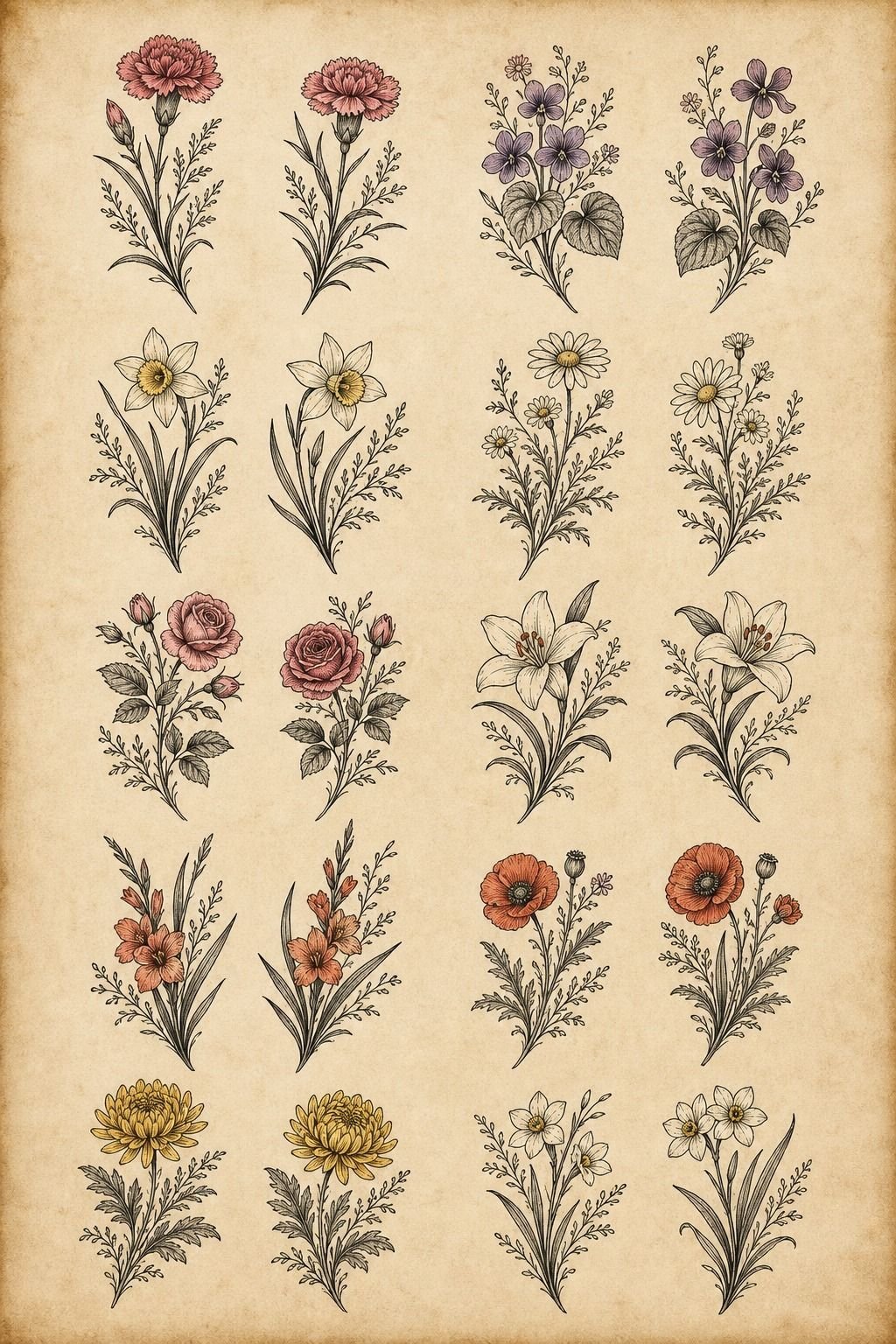
Match the concept, not every line, for forearm tattoos with a sibling or partner. Two people can share the same birth flower while choosing different sizes, stem bends, or shading levels.
A matching floral flash sheet is great for this. Pick the same core drawing, then let each tattoo follow the individual forearm. Your tattoos will feel connected without looking copied and pasted.
If you both want Pinterest-exact, I’m probably not your artist, but references for vibe are always welcome.
16Birth Month Flower and Birthdate Lettering
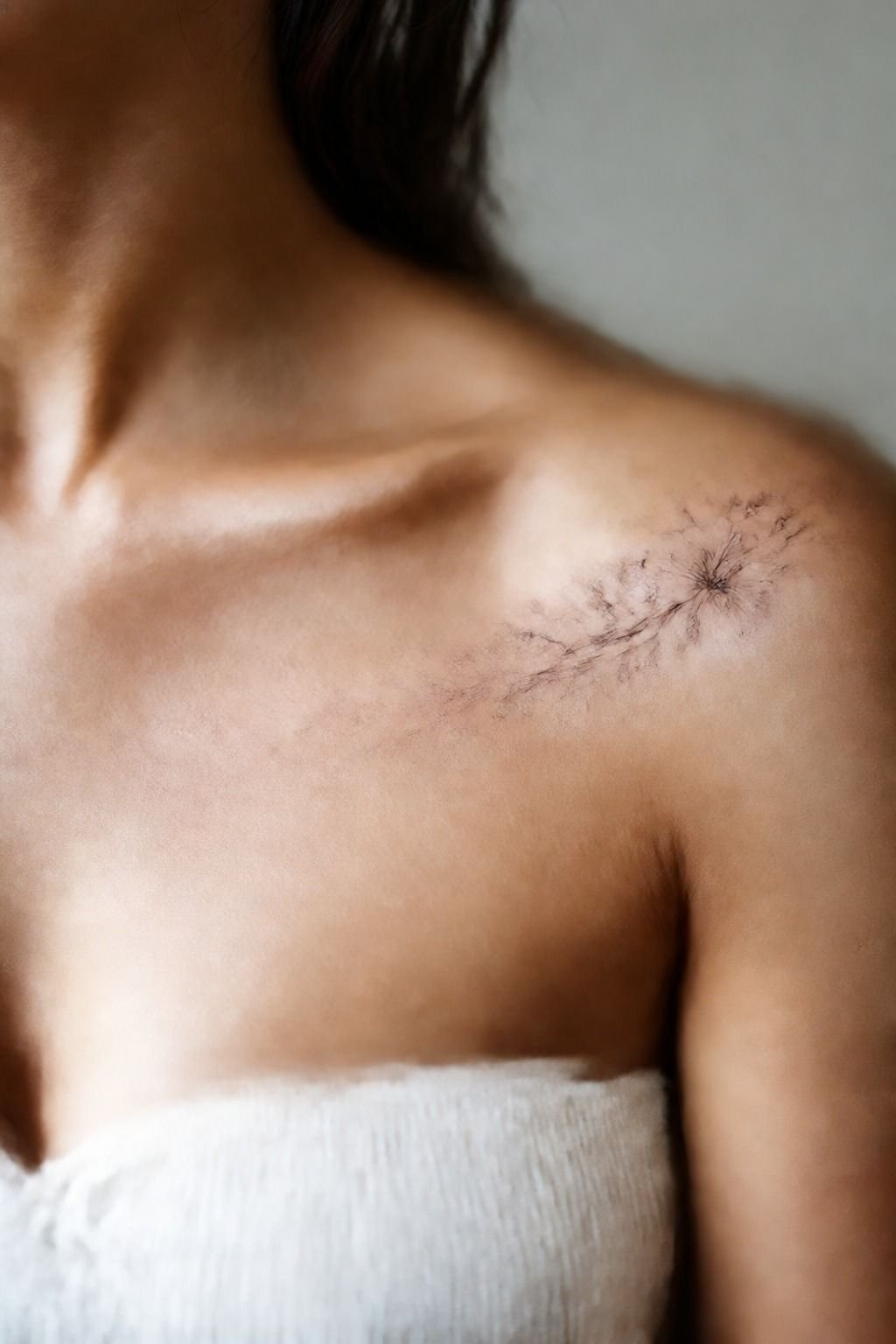
Pair a flower with a birthdate only when the lettering is large enough to heal clean. A June rose on the collarbone with a short date beneath it can look elegant, but thin script is the first thing I’d question.
Use simple serif lettering or clean handwritten print, not ornate loops that cross over stems. You’ll want at least a little separation between letters and petals.
I’ve watched delicate dates blur into each other while the flower stayed fine. Keep the text readable.
That’s the whole job.
17Birth Flower Constellation Fine-Line Tattoo
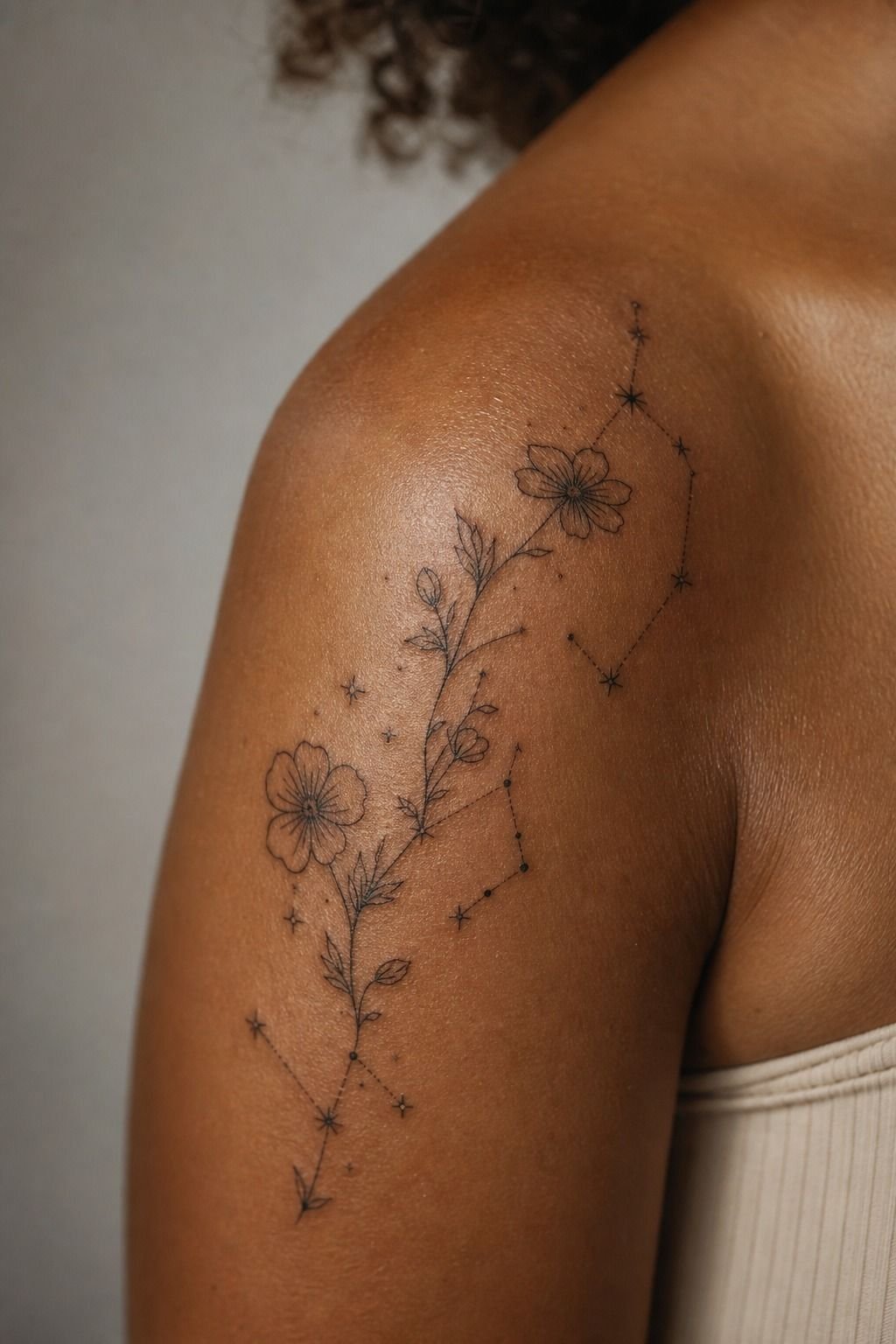
Try a constellation detail if you want symbolism without adding another full flower. A few tiny stars around a bloom can make the tattoo feel dreamy, but they should support the floral design instead of taking over.
Use fine-line stars sparingly, with dots that are slightly larger than pinpricks. Tiny dots fade faster than people expect, especially on shoulders that see sun. But a simple constellation arc behind one flower can feel peaceful and modern when it’s given enough breathing room.
18Birth Month Flowers in a Botanical Sleeve
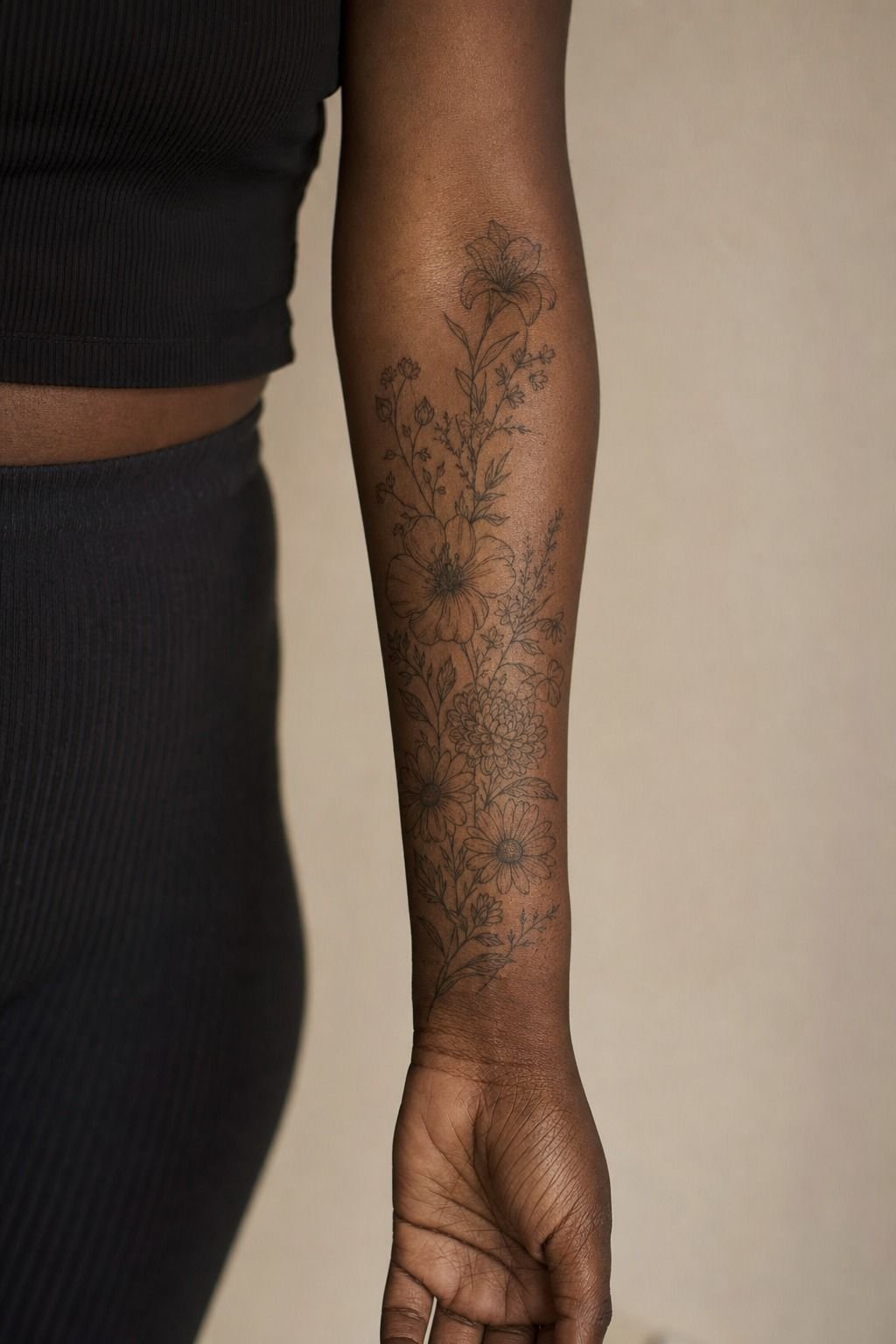
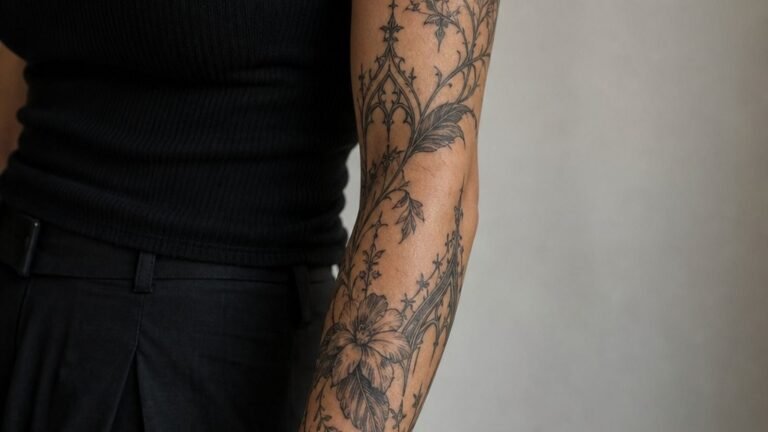
Build a botanical sleeve slowly. Start with one birth flower on the forearm, then leave intentional openings for future blooms, leaves, and small filler branches.
A botanical sleeve needs flow from every angle, so I’d ask your artist to map the arm before tattooing the first piece. Don’t fill every blank patch immediately.
Skin needs visual pauses, and a sleeve that’s too busy can heal flat. Our guide to minimalist flower tattoos can help you keep the overall look clean.
19Birth Flower Tattoo with Meaningful Initials
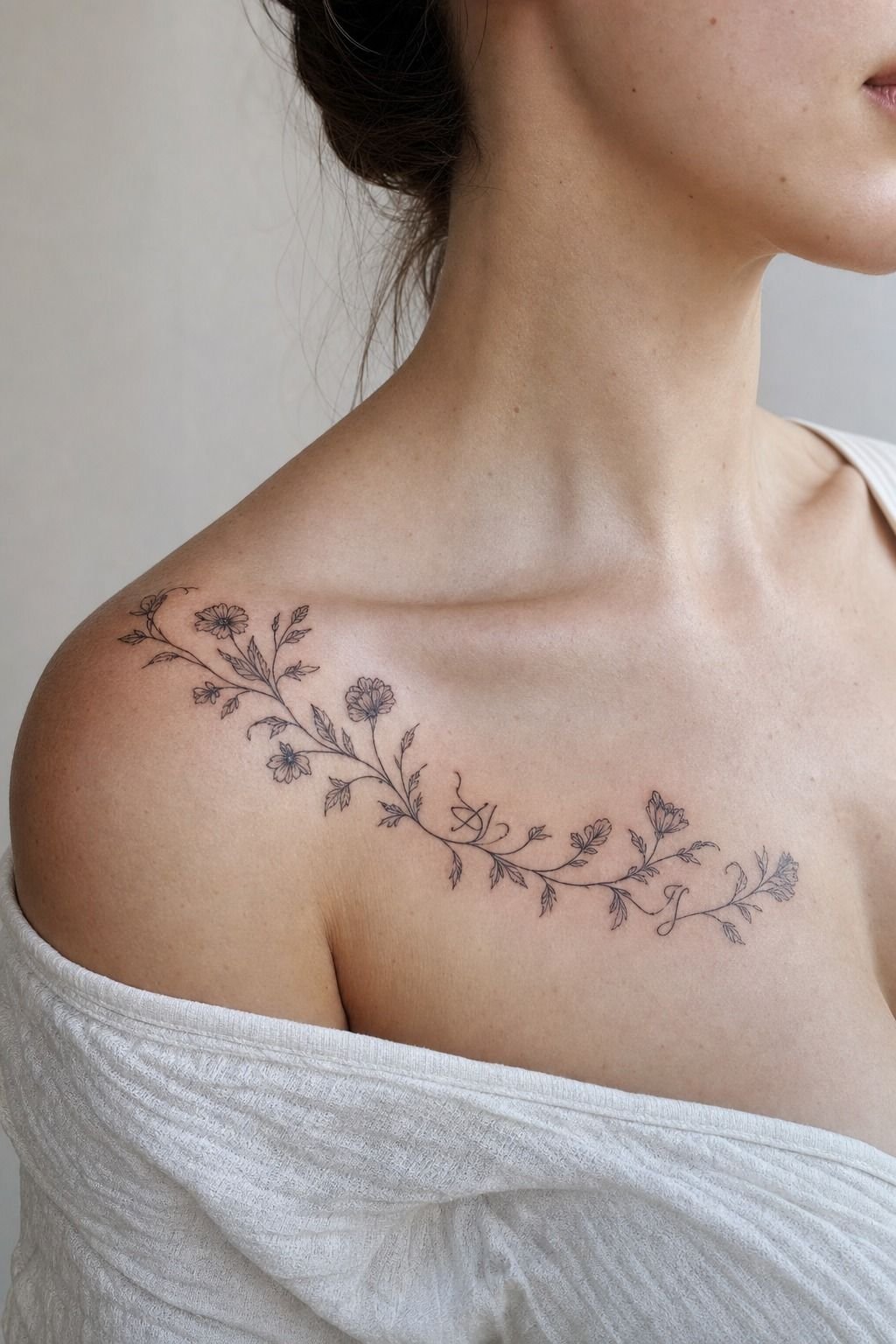
Place initials beside a birth flower, not inside every petal. A collarbone tattoo with one small initial at the stem base feels intimate and subtle, while initials scattered through the bloom usually read messy.
Use clean capital initials with a flower that has one obvious focal point, like a rose or daisy. I’d keep the lettering black even if you add a little red or muted color to the flower. Black is your best friend for longevity, and it keeps the meaning readable.
The Placement and Healing Reality Check
Here’s the no-bullshit version: the prettiest reference isn’t always the right tattoo for your body. I’ve had clients show me a delicate wrist flower with twelve tiny petals and ask for it at half the size. I won’t do it.
Not because I’m trying to be difficult, but because I know what happens when those lines settle under skin.
You need to think about wear before aesthetics. Hands, fingers, feet, elbows, knees, inner biceps, and ribs all move, rub, fade, or heal differently.
A tiny daisy on a finger might be charming for a while, then need a touch-up. A 3-inch carnation on your outer forearm has a much better chance of staying crispy.
That’s not boring advice. It’s the difference between a tattoo that still reads in ten years and one that looks like a faint scribble.
And healing matters more than your mood board. The first few days, it’s an open wound, so treat it like one.
Wash with gentle unscented soap, pat it dry, use a thin layer of ointment, and don’t suffocate it. It’ll peel like a sunburn.
Don’t pick the flakes, because you can pull color out.
But I’m not saying every tattoo has to be huge, black, and serious. Small meaningful tattoos can be gorgeous.
You just need the right amount of skin, a design with clear spacing, and an artist whose healed work proves they know how fine line behaves. That’s the standard I’d use for you every time.
The Questions Worth Answering First
How much does a Birth Month Flower Tattoos usually cost?
Most birth month flower tattoos cost about $100 to $300, depending on size, placement, and your artist’s rate. A simple 2-inch flower can fit a shop minimum, while a larger custom bouquet may take several hours at $100 to $250 per hour.
Are Birth Month Flower Tattoos a good idea for a first tattoo?
Yes, especially if you choose a simple flower and a low-wear placement. Outer forearm, shoulder, and calf tattoos tend to be easier to sit for and give fine lines a better chance to heal clean. Start with these birth flower tattoo ideas if you’re narrowing it down.
How do I choose a tattoo artist for Birth Month Flower Tattoos?
Look for healed photos, not just fresh tattoos under bright studio lights. Crispy healed linework matters more than a polished Instagram grid. Check that the artist regularly does botanicals, uses clean single-pass lines, and works in a properly licensed studio.
How much do Birth Month Flower Tattoos hurt?
Pain depends mostly on placement. Outer arm, shoulder, calf, and thigh are usually more tolerable, while ribs, feet, hands, sternum, and bony areas feel spicier. Lines feel sharp, shading is a dull burn, and color packing can be the roughest part.
How long does a Birth Month Flower Tattoos take to heal?
Surface healing usually takes 2 to 3 weeks, while full settling can take 2 to 3 months. Gentle aftercare protects the linework. Unscented soap, a thin layer of moisturizer, no pools, no direct sun, and no picking during peeling.
What’s the best placement for Birth Month Flower Tattoos?
Outer forearm and shoulder are my top picks for most people. They offer cleaner aging and decent visibility without the same wear as fingers or feet. If you want white details, read up first, because white ink tattoos need realistic expectations.
Where I’d Start First
If I had to pick one, I’d start with the August gladiolus on the outer forearm. It has vertical flow, enough skin for clean petals, and less daily wear than a finger tattoo. Pin that placement for later and compare it with these minimalist flower tattoos.