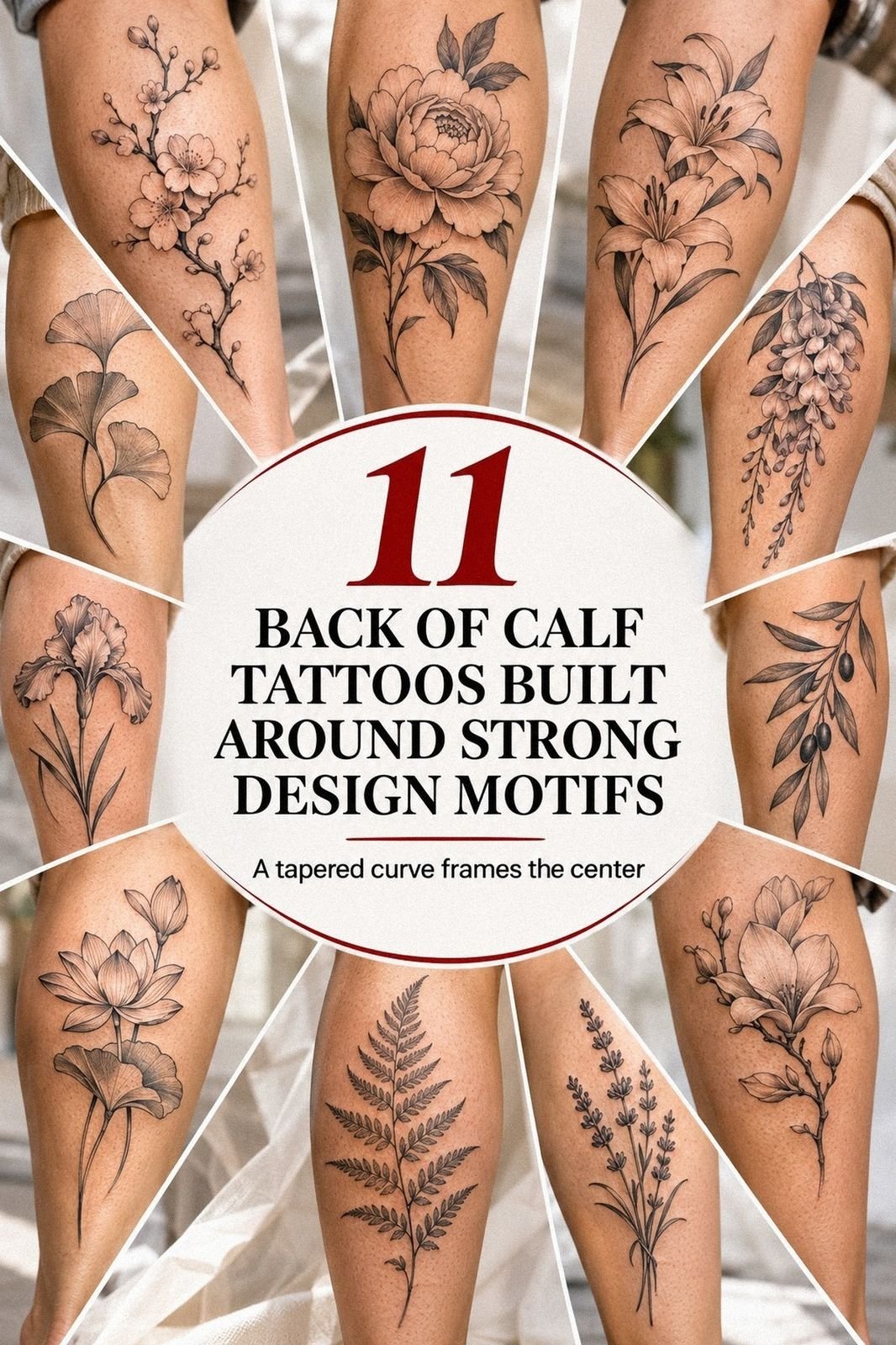
Back Of Calf tattoo designs can stay discreet under trousers while still giving you a striking piece to reveal later. You’ll want enough space for clean breathing room and a stylish silhouette. These 11 ideas keep placement practical, personal, and expressive!
- ✓ Start With a Delicate Botanical Back Of Calf Tattoo
- ✓ Why a Fierce Snake Back Of Calf Tattoo Works
- ✓ Frame Minimalist Linework for Maximum Clarity
- Start With a Delicate Botanical Back Of Calf Tattoo
- Why a Fierce Snake Back Of Calf Tattoo Works
- Frame Minimalist Linework for Maximum Clarity
- What Meaning Fits a Lower Calf Tattoo for Women?
- Mandala Geometry: Ornate, Not Overloaded
- Let a Graceful Floral Back Of Calf Tattoo Breathe
- Blackwork or Bare Skin? Choose the Contrast
- The Moon as a Symbol Behind the Calf
- Build an Intricate Fine-Line Calf Tattoo
- Choose a Playful Butterfly Behind the Calf
- Script That Says More Behind the Calf
1Start With a Delicate Botanical Back Of Calf Tattoo
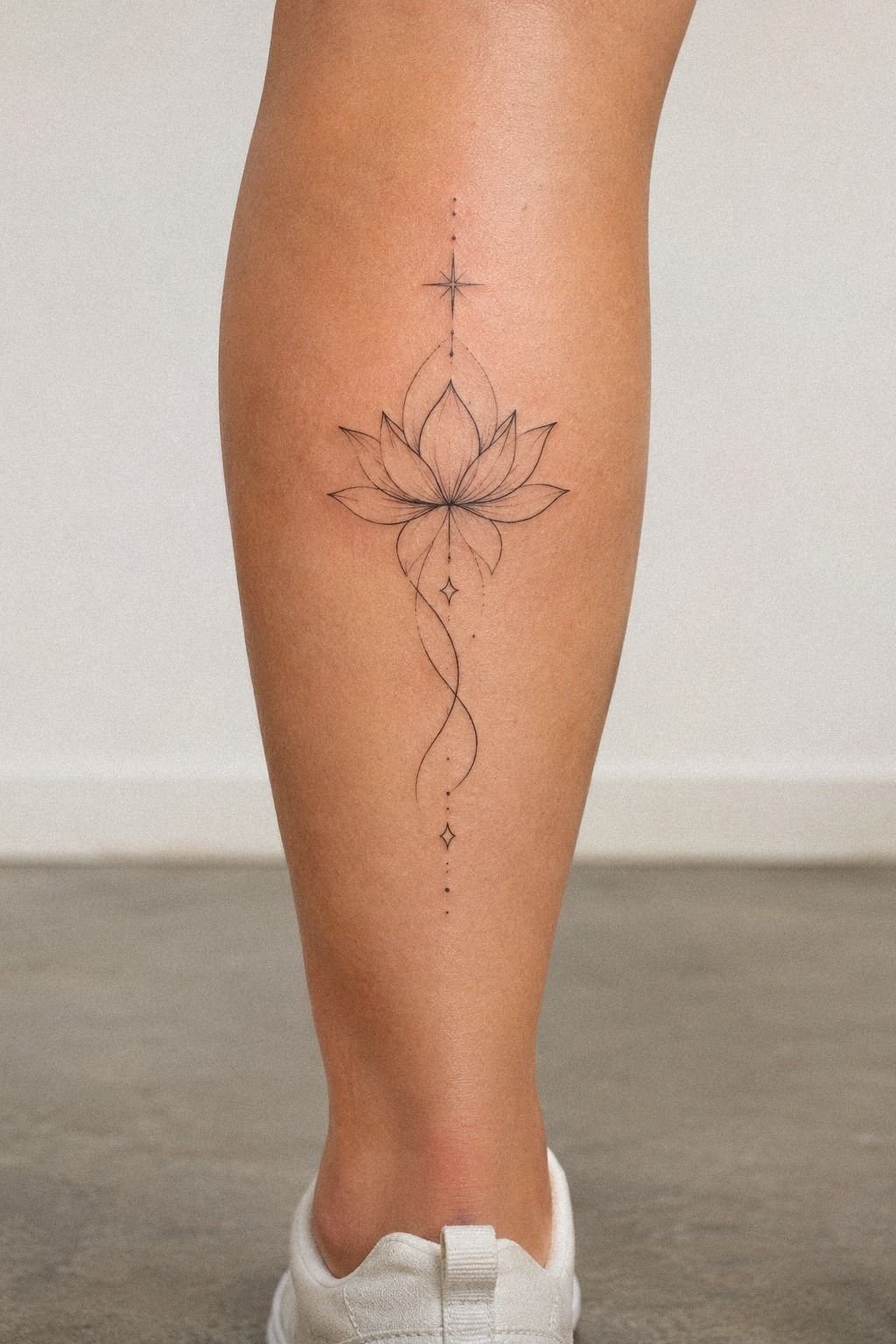
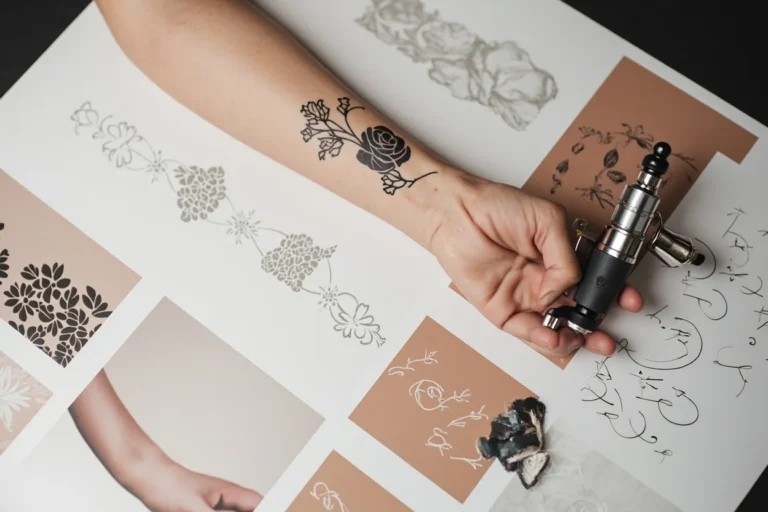
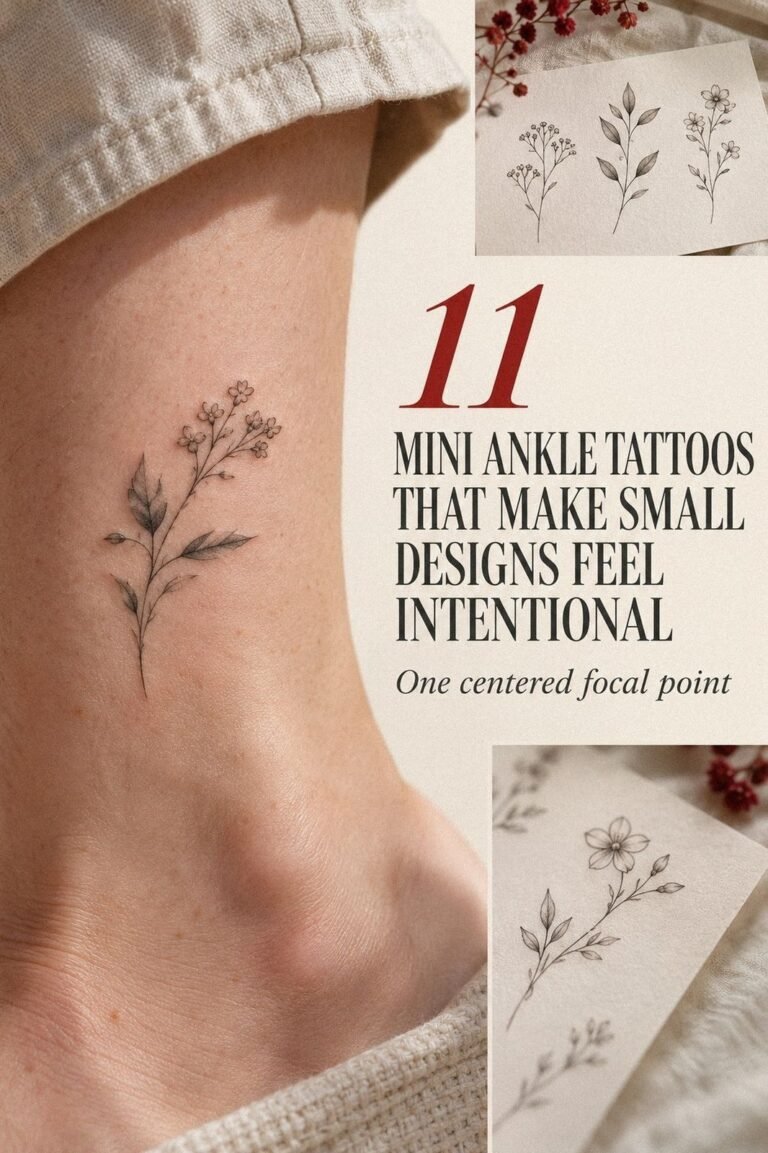
A delicate botanical sprig works beautifully on the upper back of the calf because its flowing shape follows the leg instead of fighting it. You’ll get a graceful look with hair-thin lines, two or three leaves, and a tiny stem that stays easy to cover beneath straight-leg trousers.
I’d keep the design around 3 to 4 inches tall so the details don’t crowd each other. Upper back of the calf placement also gives the stem enough vertical space.
The single-needle linework should remain crisp, not overly crowded. Ask your artist for open spacing between petals, especially if your skin is fair or cool-pink. A little negative skin will help the piece stay readable as it ages.
If you’re comparing other placements, browse these fine-line back tattoo ideas for women before your consultation. Single-needle linework needs thoughtful spacing.
My favorite version uses one small wildflower, not a full bouquet. It’s understated, feminine, and personal without looking precious.
You’ll want to avoid dense shading because the airy gaps are what make this tattoo feel elegant. Let one small wildflower carry the meaning.
Choose soft black pigment with restrained terracotta and olive accents rather than a pale grey wash. Artists often see ultra-light botanical tattoos fade into a whisper after too much sun exposure, and you won’t get those fine leaves back without a touch-up.
A clean stencil and careful aftercare matter more than adding extra petals. Soft black pigment usually gives the leaves clearer separation.
2Why a Fierce Snake Back Of Calf Tattoo Works
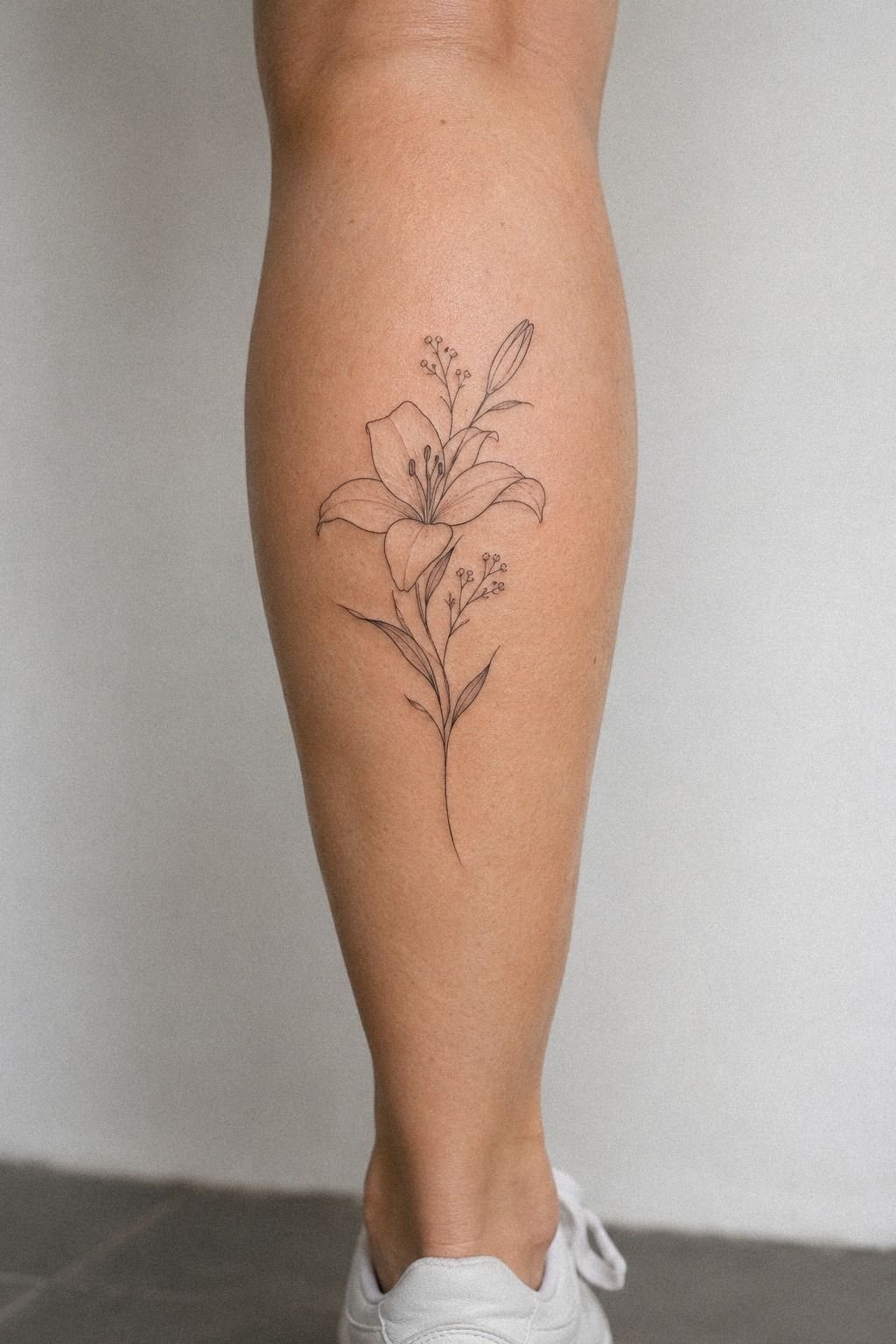
A slim serpent coiling behind the calf gives you a fierce silhouette without needing a large tattoo. The curved body can follow the natural vertical line of your leg, while a small head and tapered tail keep the design sleek under work clothes. You’ll get more movement if the snake bends slightly instead of forming a rigid spiral.
Protect the serpent silhouette first.
The fine scale linework needs restraint. Ask for scales only along the central curve, with smoother skin breaks near the tail and underside.
I’d skip heavy grey shading here because it can make a narrow serpent look muddy at a glance. If you’re worried about placement sensitivity, this back tattoo pain guide can help you compare nearby zones.
Fine scale linework should support the outline.
A muted clay accent could make the snake feel daring, while charcoal-black ink will hide more easily. Your artist should keep the head clear and the eye small.
You don’t need a dramatic face for the shape to read! Charcoal-black ink keeps the design easier to conceal.
The serpent silhouette is the part people notice first, so protect it with a simple composition. It’s edgy, symbolic, and powerful without becoming theatrical.
And if you’re choosing between a packed design and a cleaner coil, I’d choose the cleaner coil every time. A cleaner coil gives the tattoo more visual control.
3Frame Minimalist Linework for Maximum Clarity
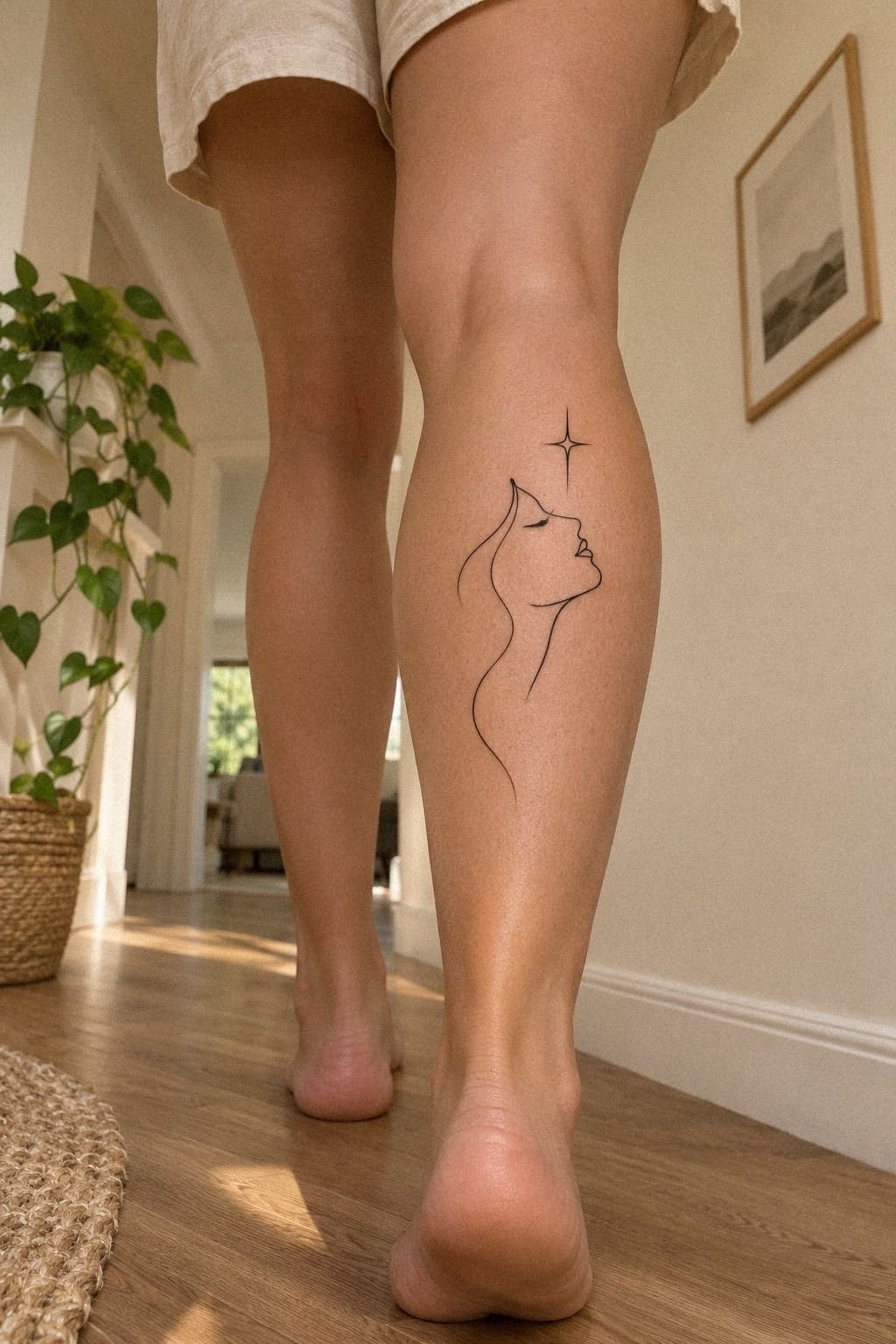
Minimal calf linework can be a few deliberate marks, a side-profile face, or an abstract figure with one continuous curve. A plum, grey, or rose-gold accent can add a stylish note, but the outline should remain the main idea.
4What Meaning Fits a Lower Calf Tattoo for Women?
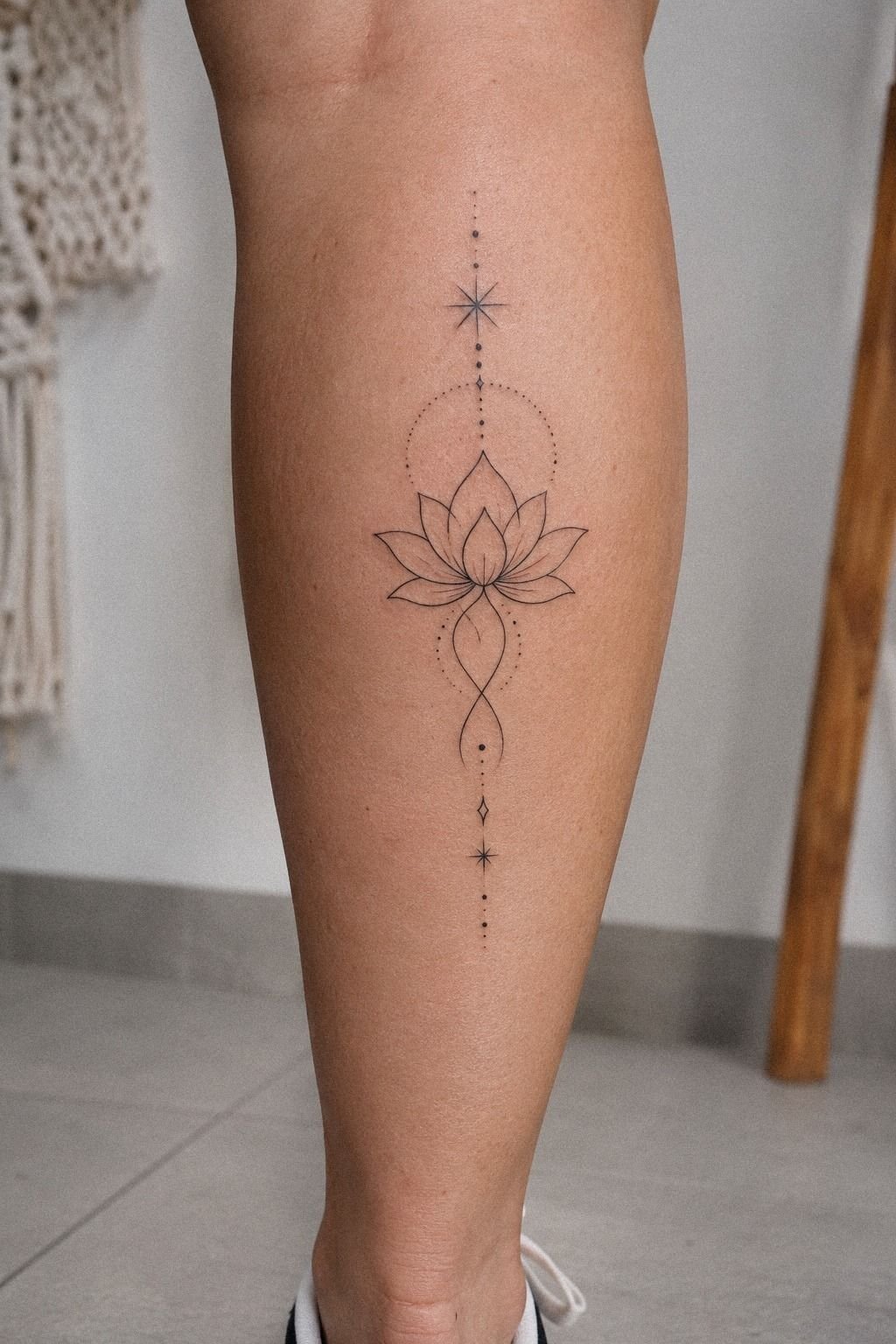
A meaningful lower-calf symbol gives you room for something that matters, such as a small star, initial, date, or botanical emblem. The best choice depends on whether you want a private reminder, a family reference, or a symbol that feels connected to your identity. A meaningful lower-calf symbol can stay small without feeling random.
A star, date, or initial can work well when the stencil has enough spacing around it. You’ll want the lettering or marks to remain readable from a short distance, especially if socks may cover the lower edge. A small star or date keeps the concept direct.
Think about the story you want the tattoo to carry five years from now. If you’re collecting references, start with this fine-line tattoo guide and mark the shapes that still interest you after the first glance. A personal reference should guide the design without dictating every detail.
5Mandala Geometry: Ornate, Not Overloaded
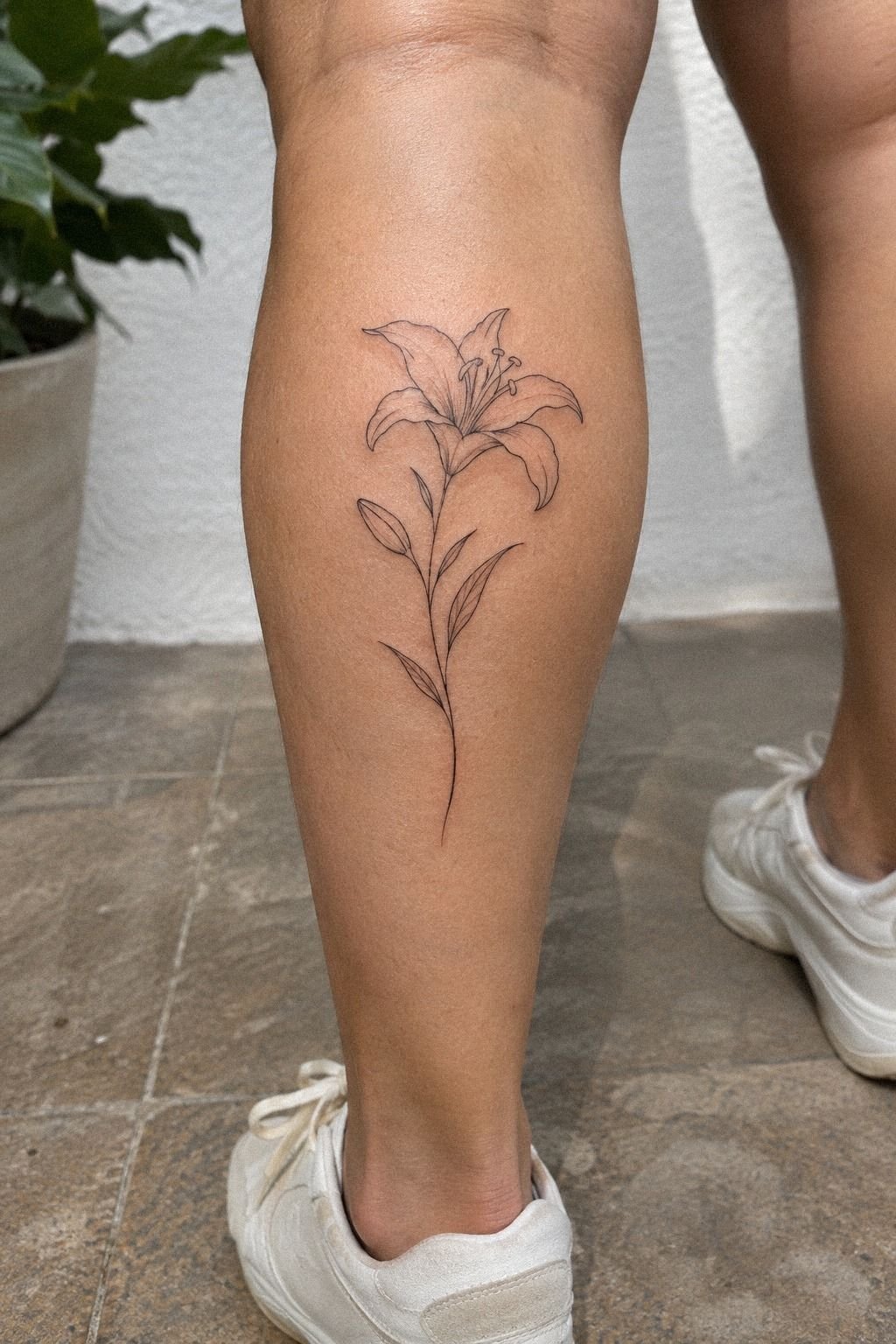
An ornate mandala can work as a compact flash-inspired piece when its geometry is sized for the calf rather than copied at full scale. Emerald, gold, and cream-toned accents can make the pattern vibrant, but the central symmetry still needs enough open skin to remain sharp.
6Let a Graceful Floral Back Of Calf Tattoo Breathe
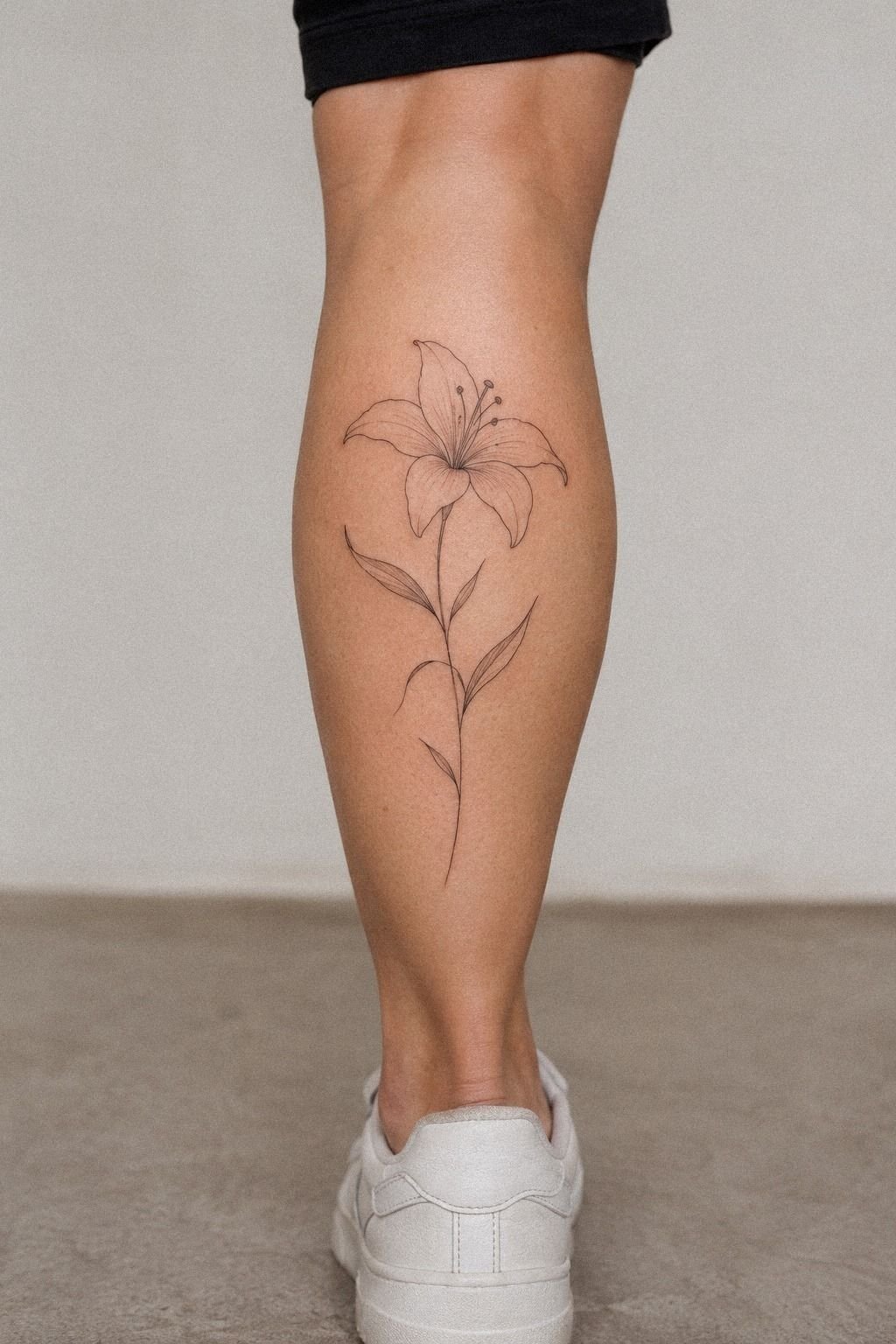
A graceful wildflower sprig with forest-green and rust accents can look wonderfully expressive when the artist respects contrast and line weight. The petals should be large enough to remain distinct, while the stem can stay light and narrow. A wildflower sprig gives you a flexible starting shape.
Ask your artist how the pigment and line weight will read against your skin tone. A design can use strong contrast without filling every petal, and open skin can help the flower remain legible. Line weight should be chosen for both your complexion and the tattoo’s final size.
Keep the reference simple enough to redraw for your leg. If you want to compare how placement changes across the back, look through these back tattoo ideas for women before your appointment. A healed reference will help you judge softness and contrast more honestly.
7Blackwork or Bare Skin? Choose the Contrast
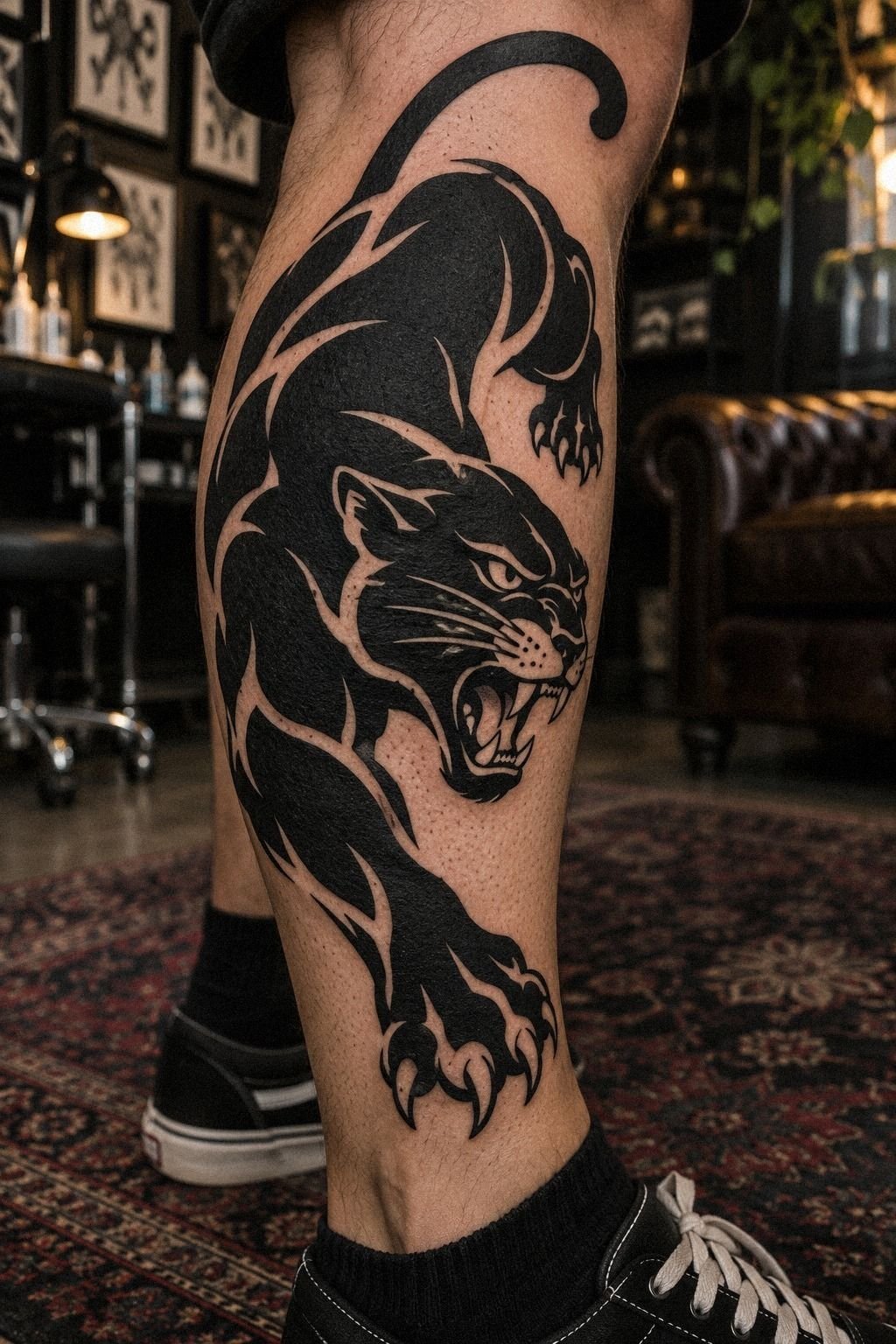
Blackwork gives you the strongest contrast of the group, especially when the design sits along the side of the calf instead of directly over the center. A narrow abstract shape, thorned branch, or solid geometric mark can look sharp without taking up much space. You’ll want the outer edge to do most of the visual work.
A blackwork silhouette should remain legible at a glance.
The solid charcoal-black fill needs clean boundaries and enough surrounding skin to stay readable. Ask your artist how the shape will sit over the calf muscle, since a heavy patch can look different when the leg flexes.
I’d avoid adding tiny grey ornaments inside a form that already has strong contrast. Solid charcoal fill leaves less room for correction.
Blackwork often offers good value when you want a decisive design without a long list of delicate details. The cost still depends on the artist and session time, but the simple silhouette can make the appointment more efficient.
That doesn’t mean it’s basic! Session time still depends on size, saturation, and the artist’s process.
My favorite version uses one crisp angular break or a pointed taper, with a restrained dusty-rose or brass-toned accent if color suits the concept. It feels raw, gritty, and iconic while remaining easy to conceal under trousers.
If you’re torn between more detail and stronger impact, I’d spend the budget on a better silhouette. A crisp angular break can become the whole design.
8The Moon as a Symbol Behind the Calf
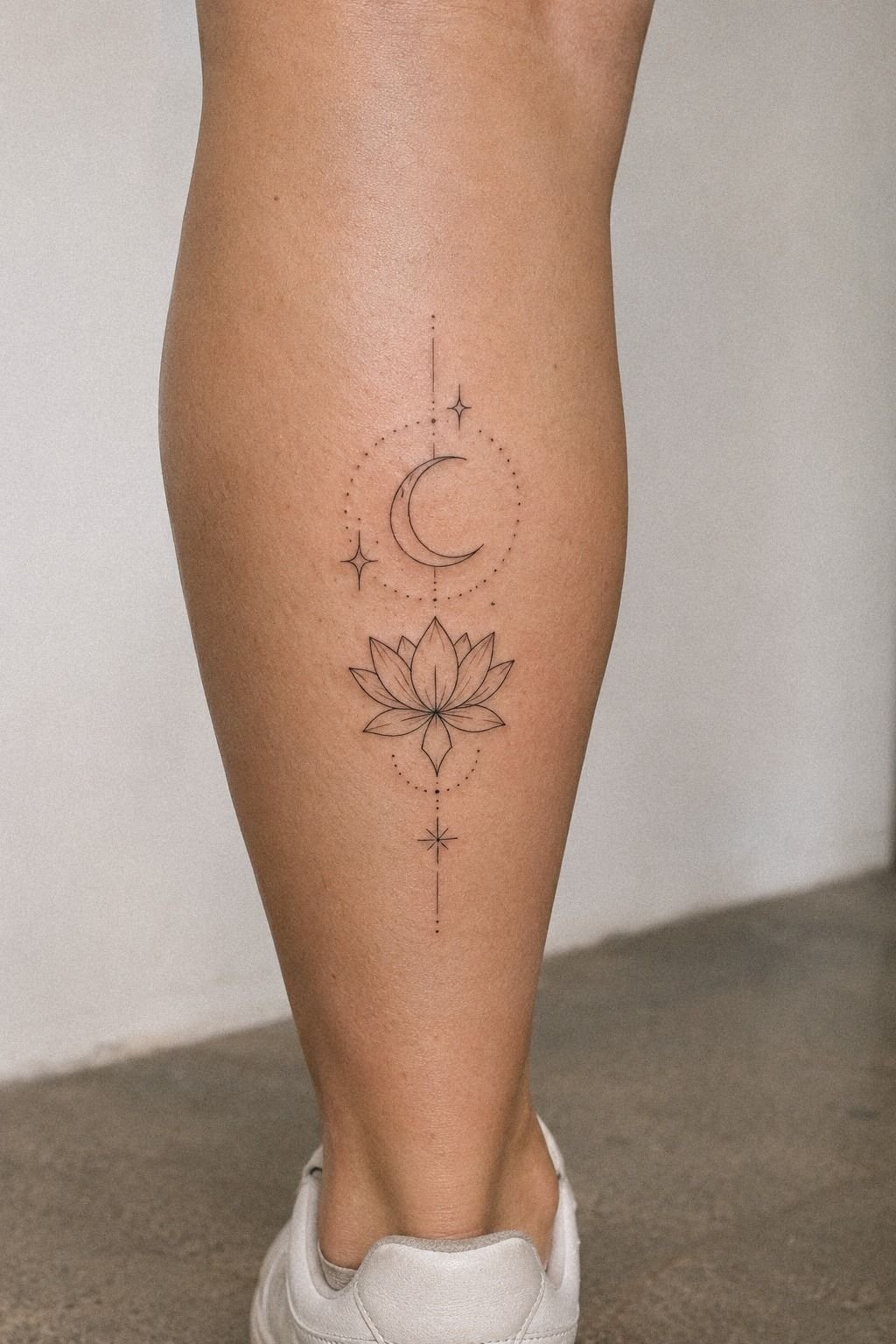
A crescent moon with a few small stars is a symbolic option that feels personal without exposing its meaning to everyone at work. Place the crescent vertically on the upper back of the calf, with the tips angled slightly toward the knee.
You’ll get an ethereal shape that follows the leg and hides neatly beneath trousers. A crescent moon works well as a narrow vertical mark.
The crescent moon outline should remain the visual anchor. I’d use three stars at most, each with different spacing, because a crowded star field can make a small tattoo look messy. The crescent moon outline should be readable before anyone studies the smaller marks.
A tiny warm-white or camel accent is optional, but black linework gives you a more discreet result. Your artist can add a few stippled shadows inside the crescent, although I’d keep the center mostly open. Stippled shadows should support the moon, not compete with it.
This design can feel haunting and timeless. You’ll find it easy to explain as a symbol of change, memory, or night without sharing the whole story.
If you want an established symbolic reference, this 444 tattoo meaning article may help you think beyond generic motifs. Personal meaning matters more than adding extra stars.
9Build an Intricate Fine-Line Calf Tattoo
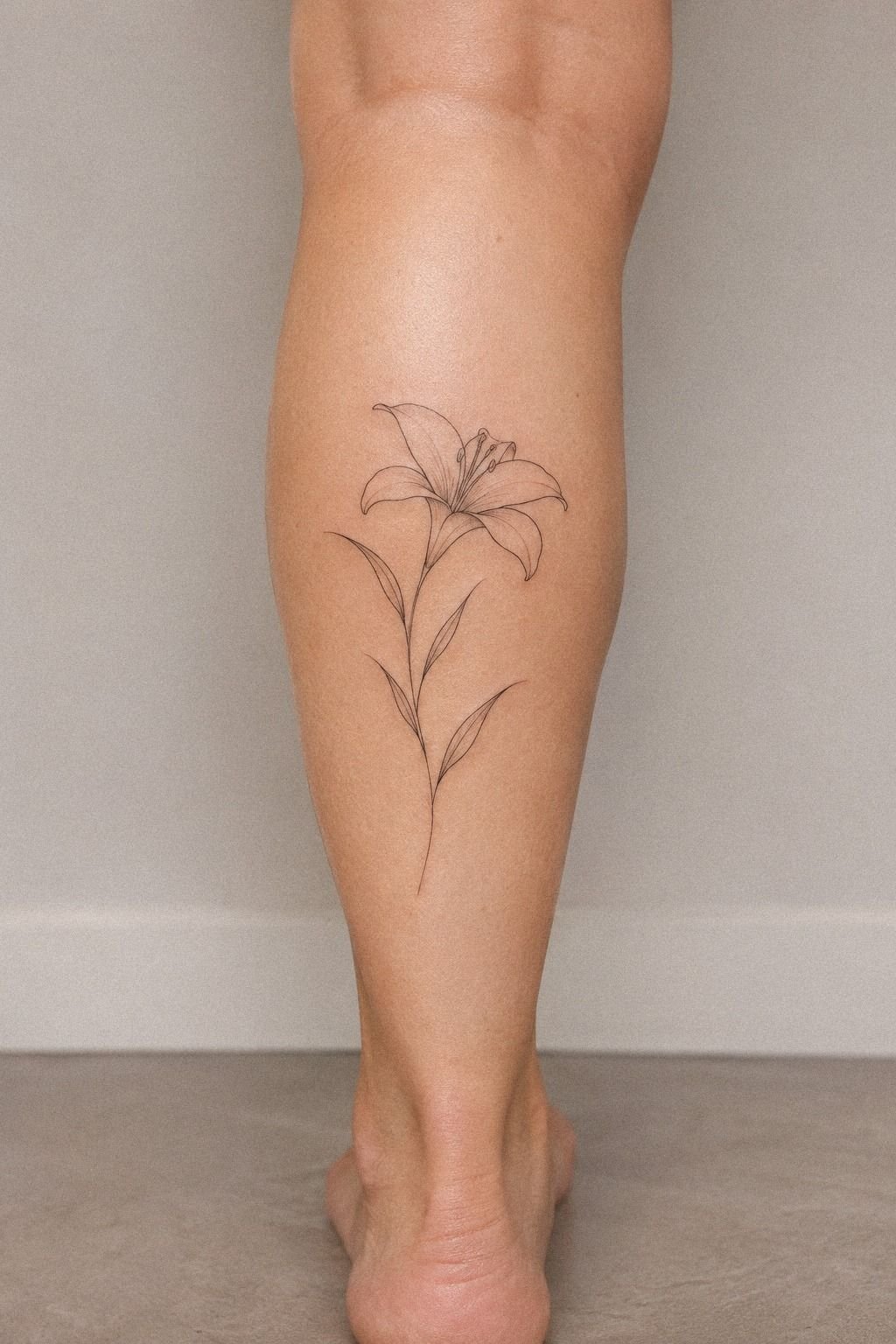
Intricate fine-line work can fit behind the calf when the design has a clear hierarchy. Consider a tiny architectural symbol, a botanical diagram, a constellation, or a meaningful object with one dominant outline.
You’ll want the concept to read before anyone studies its smallest marks. Fine-line work needs one obvious focal point.
The fine-line needle grouping should match the size and location of the tattoo. Ask your artist which details are likely to remain distinct after the skin settles. If every feature depends on an ultra-thin stroke, the design may lose its clarity faster than you expect.
Fine-line needle grouping determines how much detail is realistic.
I’d compare fresh and healed work before deciding. A beautiful new tattoo can look very different once mild softness appears around the lines.
Your artist’s healed portfolio is worth more than a polished social-media preview. Healed results show how the design actually performs.
Fine line can feel vintage and vibrant at once, depending on the subject. It’s a strong choice when you want quiet detail rather than a loud statement. Just remember that restraint is part of the style.
Quiet detail often has more staying power than crowded detail.
10Choose a Playful Butterfly Behind the Calf
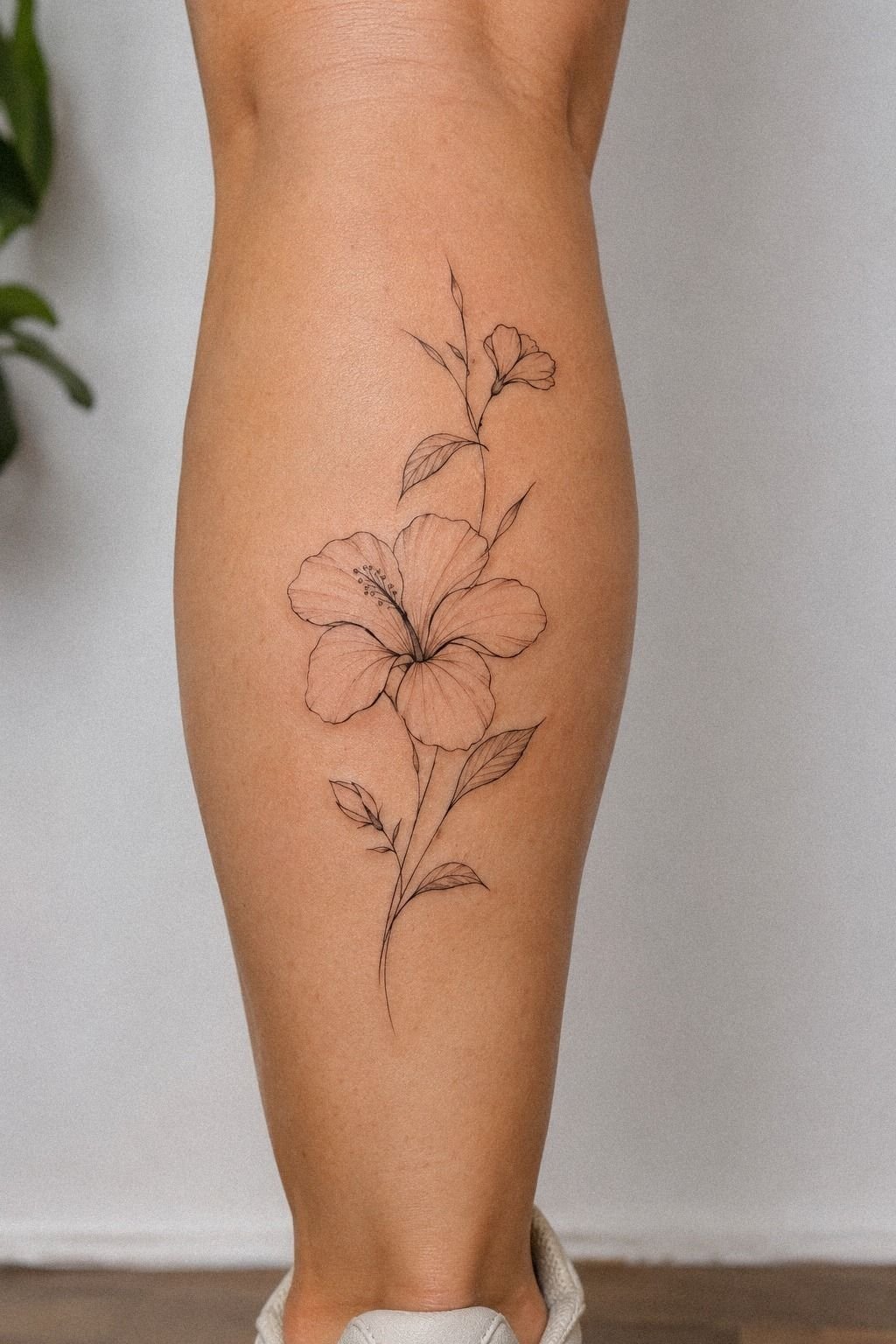
A playful butterfly can be delicate without feeling childish when the wings have an intentional shape and the body stays narrow. Sage-green and warm-cream accents can keep it whimsical, while a restrained outline preserves readability as the tattoo settles.
11Script That Says More Behind the Calf
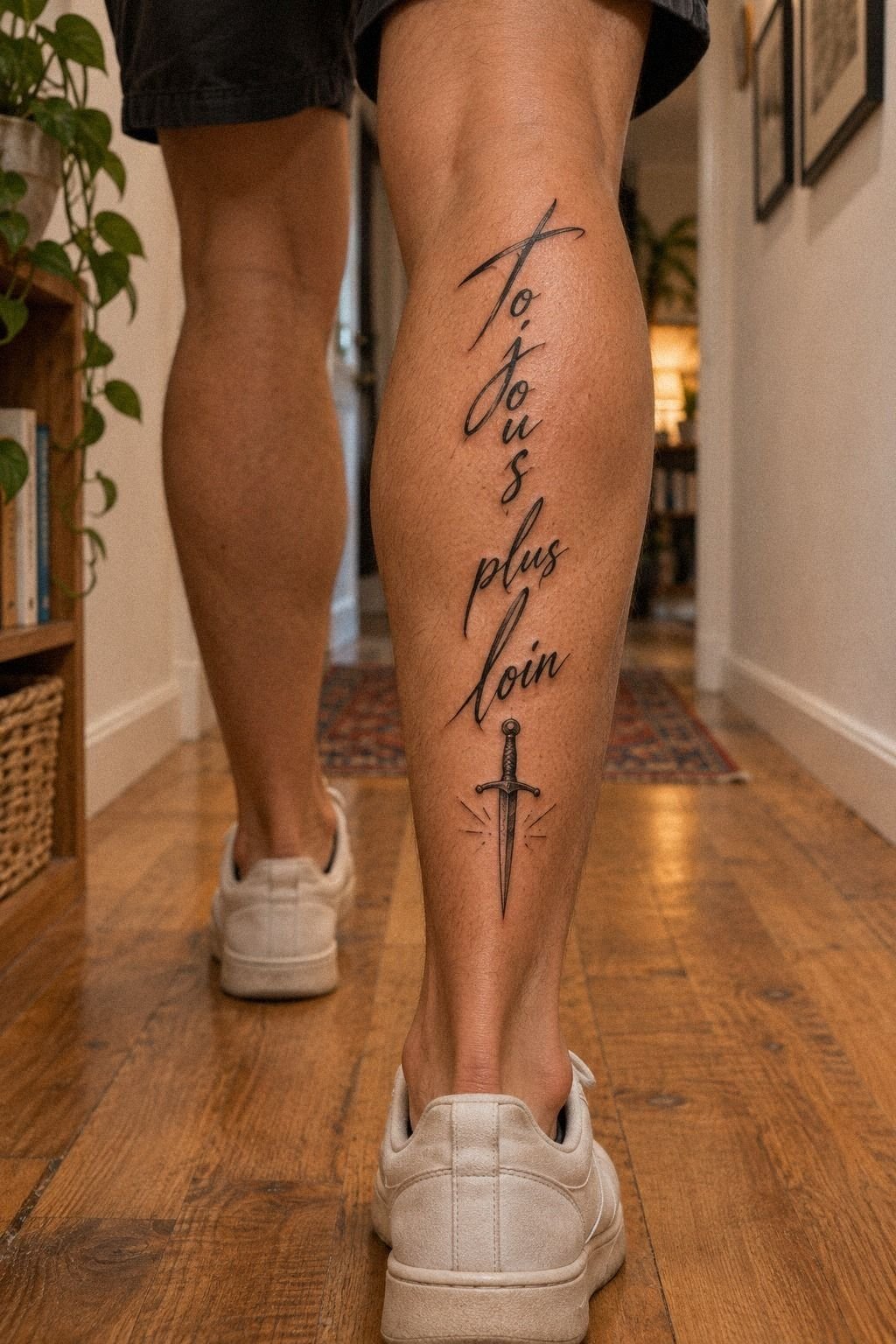
A short script word such as “soul” can sit vertically behind the calf, following the natural length of the leg. The design uses a fine-line handwritten style, so the artist should pay close attention to contrast, spacing, and the curves of each letter. Terracotta and olive accents can add personality without overwhelming the lettering.
You’ll want the word large enough to read without crowding the lower calf. Vertical script makes good use of the placement.
The handwritten script should come from a real reference, such as your own handwriting or a letter from someone important. I’d avoid copying a random internet font because personal lettering gives the tattoo more emotional weight.
If you’re considering a larger back theme, the full back tattoo cost guide can help you understand how scale affects planning, even for a smaller piece. Handwritten script should feel connected to you.
Keep the word short. A single resonant term gives your artist room to make every curve intentional, while a long phrase may become difficult to hide and harder to read.
Your tattoo doesn’t need an explanation before it becomes meaningful. A single word gives the design enough breathing room.
This style is expressive, masculine, or feminine depending on the lettering, and deeply personal. A fine black script can feel understated at work while remaining noticeable in private. You’ll want to protect it from direct sun because thin lettering can soften faster when UV exposure is constant.
Fine black script depends on consistent spacing.
What I’ve Learned About Choosing a Back Of Calf Tattoo
The useful lesson with a back-of-calf tattoo is that the smallest option isn’t always the easiest one to live with. Hiding it at work may be important, but the piece still needs enough breathing room to remain clear. Back-of-calf tattoo planning starts with visibility and long-term readability.
Your calf has movement, muscle, and a natural vertical flow. A design that looks perfect on flat paper may need a small curve once it reaches skin.
I’d rather see an artist redraw a botanical stem, serpent, or script word for your leg than force a copied stencil into the wrong proportions. That adjustment is where the tattoo starts to feel personal.
The calf’s vertical line should guide the stencil.
I also wouldn’t judge a style only by its fresh result. Fine line can be delicate and striking, but it may soften. Bold blackwork can be crisp and powerful, but it takes more commitment.
Ornate work can be elegant, but too many tiny marks may merge. You’ll want to compare healed examples, ask about line weight, and listen when an artist says a design needs more space.
A healed result tells you more than a new tattoo.
For most people, the upper back of the calf is more tolerable than bony zones such as the feet, hands, ribs, or sternum. Still, every body responds differently.
Your session might take less than an hour for a small symbol or several hours for a dense ornamental design. Plan for typical healing of about 2 to 3 weeks at the surface and 2 to 3 months for the skin to settle completely.
Surface healing is only one part of the timeline.
The practical part matters, too. Wash gently, moisturize as directed, and avoid swimming and strong sun while the skin heals.
Tight socks can create friction around the lower edge, and loose clothing is easier during the first few days. Loose clothing can make the early period much easier.
For another placement comparison, browse these side back tattoo ideas for women and note which shapes still look clear when they follow a curved body area.
Tattoo Cost and Value: What Changes the Quote?
A back-of-calf tattoo’s total cost depends on the artist’s minimum, hourly rate, size, color, detail, and consultation time. A small fine-line mark may cost less than dense blackwork, but the cheapest quote isn’t automatically the best value.
You’re paying for judgment, placement, hygiene, and a design that can hold its shape. Total cost should include the whole appointment.
Ask for a written estimate before booking. Your artist’s minimum may cover a small tattoo even if the actual work takes less than an hour.
If the design needs several revisions, extra color, or a longer session, the final price may move beyond the first range. An artist’s minimum can determine the price of a tiny piece.
The question isn’t only whether a tattoo is affordable today. It’s whether the design will still feel worth the price after years of seeing it on your leg. I’d rather simplify a concept than cut the budget by choosing someone whose healed work doesn’t inspire confidence.
Long-term value matters more than a low starting number.
Which Details Are Worth Paying For?
Spend first on anatomical placement and a strong stencil. A perfectly drawn design can still look awkward if it ignores the calf’s curve, the knee crease, or the way your leg moves while walking.
Your artist’s ability to adjust the shape is part of the tattoo’s value. Anatomical placement deserves attention before decoration.
Healed examples are also worth your attention. Ask how the artist’s fine lines, black fills, and color accents look after the initial settling period.
You’ll learn more from a quiet daylight reference than from a heavily edited social-media post. Healed examples are the best comparison point.
If you have a limited tattoo budget, remove details before reducing size beyond readability. A clean symbol with breathing room can look more considered than a crowded design full of marks that blur together.
That’s where thoughtful editing pays off! A tattoo budget should protect clarity first.
For broader planning, compare the full back tattoo cost guide and pay attention to how session length, detail, and scale affect the quote.
How to Plan a Discreet Workday Placement
Start by wearing the trousers, socks, and shoes you’re most likely to wear at work. Check where the fabric ends and where the sock rubs.
The clothing coverage test takes only a few minutes, but it can prevent an annoying placement mistake. The clothing coverage test is simple and useful.
Ask your artist to place the stencil while you’re standing and sitting. A position that looks centered on a relaxed leg may shift when the calf flexes. You’ll want the design to feel balanced from the side and from behind.
Stencil position should be checked in both postures.
Think about future clothing, too. If you might wear shorts, skirts, uniforms, or ankle socks, decide whether the tattoo should be hidden completely or revealed as a deliberate accent.
A versatile placement gives you more control over visibility. Versatile placement is helpful when your work clothes change.
Healing and Aftercare: What Actually Matters
The surface usually heals in about 2 to 3 weeks, while complete settling can take about 2 to 3 months. Follow your artist’s instructions for washing and moisturizing, and don’t pick at flakes.
Your aftercare routine has more influence than a dramatic product list. An aftercare routine should stay consistent.
Avoid swimming, strong sun, and unnecessary friction during early healing. Tight socks can rub the lower edge, while rough trousers may irritate a fresh upper-calf tattoo.
If you can, arrange a few days of easy clothing around the appointment. Early healing is when friction matters most.
Contact your artist or a medical professional if you’re unsure whether a reaction is normal. Don’t guess based on a random post.
Good aftercare protects the lines, the color, and your peace of mind. A medical professional can help when a reaction seems unusual.
The Questions Worth Answering First
How much does a Back Of Calf Tattoo usually cost?
A small Back Of Calf Tattoo often falls around $100 to $300 in the United States, depending on the artist, region, size, and detail. Some shops have a minimum of about $50 to $100, while hourly rates may run around $100 to $250. Your consultation should clarify the estimate.
For a wider budget comparison, read the full back tattoo cost guide. It’s a larger category, but it can help you understand why size and session time affect your quote.
Are Back Of Calf Tattoos a good idea for a first tattoo?
Yes, a Back Of Calf Tattoo can be a strong first choice because the area is usually more tolerable than ribs, feet, hands, or sternum. Practical placement also lets you cover the tattoo easily. You’ll still need a design that fits your skin, lifestyle, and comfort with aftercare.
How do I choose a tattoo artist for Back Of Calf Tattoo designs?
Choose an artist with healed examples of the style you want, whether that’s fine line, script, botanical work, or blackwork. A clean healed portfolio matters more than follower count. You should also check studio hygiene, consultation habits, and whether the artist adjusts the stencil to your anatomy.
If you’re comparing placement styles, look through side back tattoo ideas for women and bring two or three references to your appointment. Your artist should explain what will and won’t translate well.
How much do Back Of Calf Tattoos hurt?
Pain varies, but the back of the calf is often more tolerable than ribs, feet, hands, and sternum. The thigh, shoulder, and forearm are commonly easier for many people. Personal sensitivity matters more than a universal rating, so you’ll want to eat beforehand and tell your artist if you need a pause.
This back tattoo pain guide offers another comparison point. A short session with fine lines may feel manageable, while dense blackwork can create more prolonged irritation.
How long does a Back Of Calf Tattoo take to heal?
The surface usually heals in about 2 to 3 weeks, while complete settling can take about 2 to 3 months. Wash gently, moisturize as directed, and avoid direct sun and swimming during early healing. Consistent aftercare helps your lines stay crisp.
You’ll also want to avoid tight socks, rough fabric, and picking at flakes. If you’re unsure whether a reaction is normal, contact your artist or a medical professional rather than guessing.
What’s the best placement for Back Of Calf Tattoo designs?
The upper back of the calf is a practical choice for visibility control, while the lower calf can hide beneath socks and trousers. A position away from constant friction usually gives your design a better chance to settle cleanly. Your artist can check how the muscle moves before applying the stencil.
For another placement comparison, see the lower back tattoo pain guide. The exact sensation won’t be identical, but it can help you prepare questions for your consultation.
Where I’d Start First
If I had to pick one, I’d start with the delicate botanical design. Its open spacing gives fine lines room to age, and the upper-calf placement stays easy to cover without hiding the piece from you. Save the fine-line tattoo guide for your consultation and bring one healed reference.
The delicate botanical design is the most adaptable starting point.
If you want more contrast, choose the snake or blackwork silhouette. If meaning matters most, the moon, script, or small personal symbol may be the better investment.
The right tattoo is the one whose shape, price, and visibility still feel right after the appointment. The snake silhouette gives you the clearest contrast.