
Mini ankle tattoos can be a striking first choice because you can keep the design personal, visible, and easy to cover. I once chose detail over readability, and the tiny lines blurred sooner than I expected. Your best bet is a crisp idea, enough breathing room, and an artist who knows how skin moves. Start small, but don’t start vague!
Editor’s note: Your budget, anatomy, and healed references matter more than a trend. I’d rather choose a meaningful, understated mark that stays readable than pay for intricate detail that fades into noise.
- A Delicate Botanical Sprig
- Why Minimal Fine Linework Wins
- Beneath the Ankle Bone: Tiny Foot Tattoos
- Build a Striking Star Cuff
- A Symbolic Crescent Moon With Meaning
- Can an Intricate Floral Wrap Stay Readable?
- Snake Movement, Kept Small
- One Tiny Heart, No Extra Noise
- Script That Still Reads Later
- Geometric Cuff or Broken Band?
- Let an Ocean Wave Move
1A Delicate Botanical Sprig

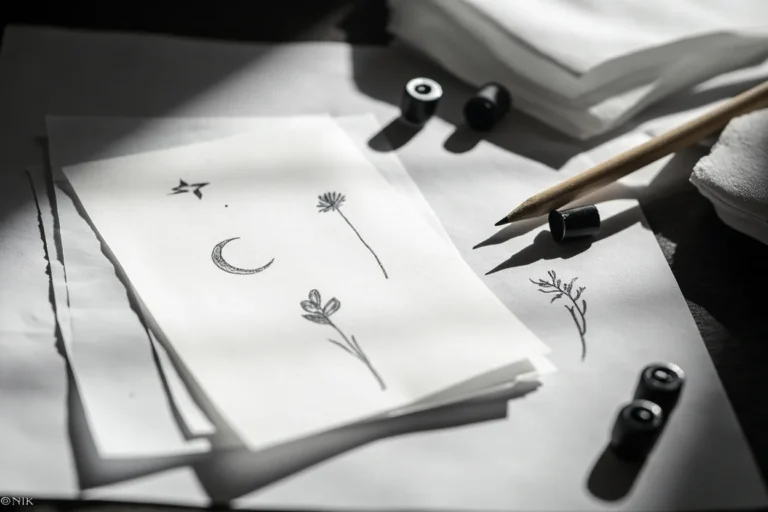
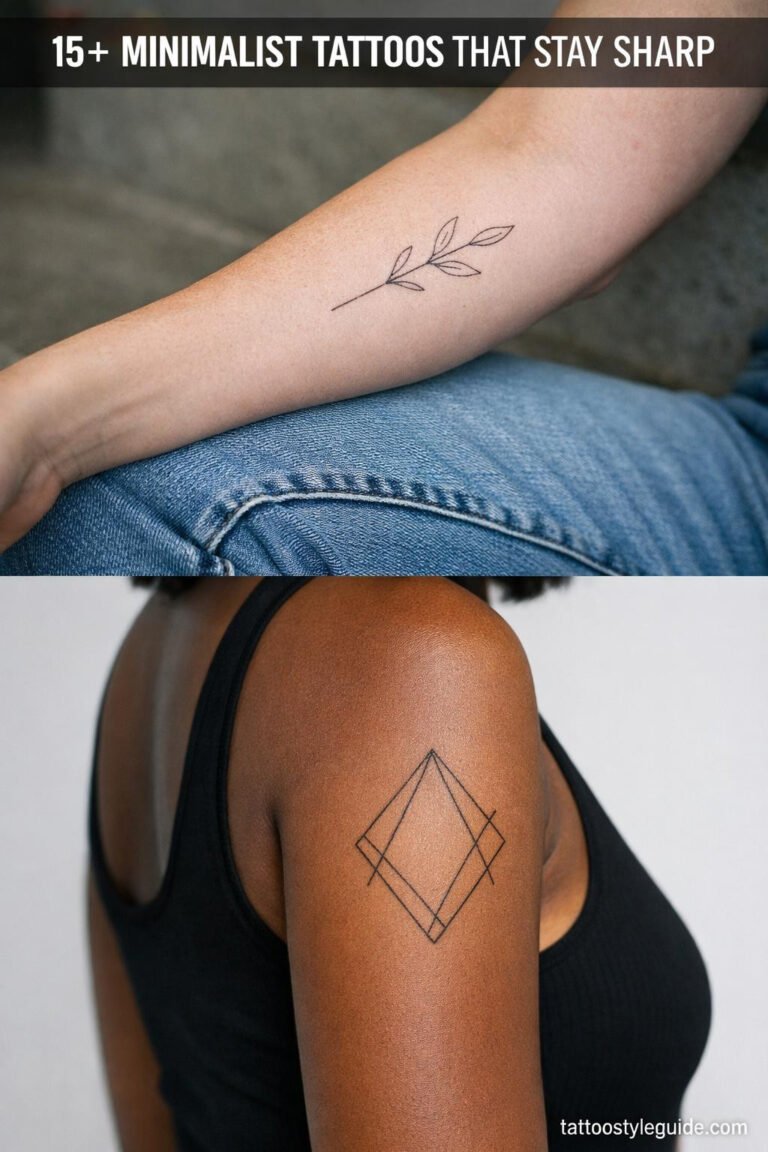
A delicate botanical sprig suits the ankle because its flowing shape can follow the natural curve without looking crowded. A personal flower will mean more than a random bloom copied from a trend board. For a first tattoo, that emotional connection adds real value.
The most successful version has one main stem, two or three leaves, and a clear stopping point. I’d skip an ornate bouquet here.
It may look intricate in a sketch, but the ankle needs open skin around every mark so the design stays readable as it settles. A single-stem botanical design is often worth it.
Your artist can use a crisp, restrained ink tone with a soft hand, leaving the smallest leaf shapes unfilled. That negative space keeps the piece elegant instead of muddy. If you’re collecting small ideas, compare this with these small ankle tattoos before you book.
Think about placement before you settle on the flower. The outer ankle gives you more visual breathing room, while the front makes the design easier for you to see.
A 1-inch sprig can feel dainty; a slightly longer stem can look more graceful and age with less crowding. A healed botanical tattoo should still have a recognizable silhouette.
I made the mistake of asking for too much detail in a tiny design once. Don’t repeat it.
Choose one meaningful plant, one clean line direction, and a tattoo that still looks crisp when you glance down at it six months later. That’s the difference between a beautiful idea and a costly repair.
2Why Minimal Fine Linework Wins

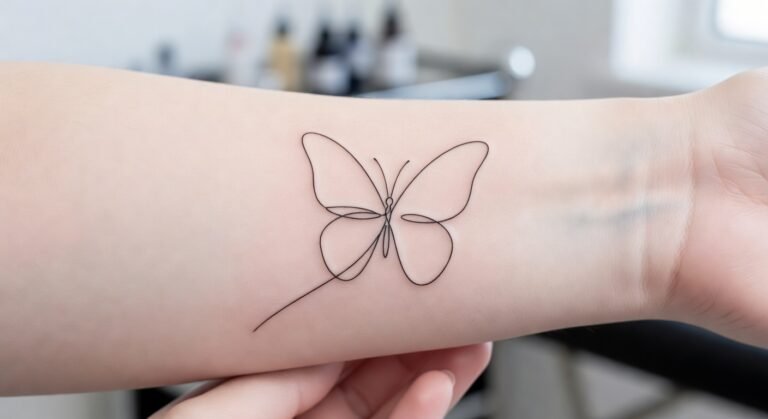
This minimalist ankle tattoo relies on restraint: a small abstract mark, a clean contour, and sleek lines that don’t compete with the ankle bone. A minimalist ankle tattoo can feel quietly expressive when every mark has a reason.
3Beneath the Ankle Bone: Tiny Foot Tattoos

Tiny foot tattoos beneath the ankle bone can look discreet and expressive, especially when the design sits just below the joint instead of directly on top of it. This placement feels personal because you can see it when you choose, while socks or shoes can cover it easily. The outer foot placement deserves a careful stencil test.
The upper foot and side edge usually give a small design more stability than the sole. Friction, movement, and frequent contact can affect how crisp a tattoo remains. If you’re comparing options, ask whether the expected longevity justifies the cost of this sensitive placement.
A tiny symbol can work beautifully here: a polished star, an understated initial, or a symbolic wave. I’d avoid packing several marks into one narrow area. A small ankle-foot tattoo needs deliberate spacing to stay readable.
Your artist should check the design while you’re standing and while your ankle is relaxed. A shape that looks graceful with your leg stretched may bend differently when you walk.
That practical check can save you from an expensive adjustment later. A standing stencil test is worth the time.
If you’re still deciding between the foot and outer ankle, save a few small ankle tattoo ideas and compare their actual placement, not just their symbolism.

4Build a Striking Star Cuff

A striking ankle cuff can feel playful when it uses a few stars rather than a continuous heavy band. One larger star gives your eye an anchor, while smaller marks create rhythm around the ankle.
The result can be bold without becoming overwhelming. That’s a strong first-tattoo choice!
The varied scale matters. I’d skip evenly spaced stars that look stamped on.
A slightly irregular arrangement feels more personal and less mechanical, especially when your ankle changes shape as you move. A constellation-style cuff can offer better value than a dense wrap.
Ask for solid star points if you want the design to remain legible over time. Fine outlines can look elegant, but a tiny open star may soften into an indistinct dot. Your artist can balance a bold central star with smaller outline stars so the cuff still feels dainty.
Balanced star shapes keep the design expressive.
You don’t need a full circle to create an anklet effect. A partial arc can be easier to place and may feel less restrictive visually. If you like the wraparound idea, compare it with these ankle tattoos that wrap the bone just right before deciding.
A partial arc can feel more graceful than a forced loop.
This is one of the more expressive first-tattoo choices because it reads from several angles. But don’t crowd the back of the ankle just to finish the loop.
Leave a small break where your skin naturally folds, and the whole design will look sharper when you walk. A partial star cuff may be worth it if you want movement without a full band.
5A Symbolic Crescent Moon With Meaning

Symbolic crescent moon ankle tattoos work especially well as a first tattoo because the shape is recognizable without being predictable. A symbolic crescent moon can feel sacred, personal, and timeless without needing extra decoration.
6Can an Intricate Floral Wrap Stay Readable?

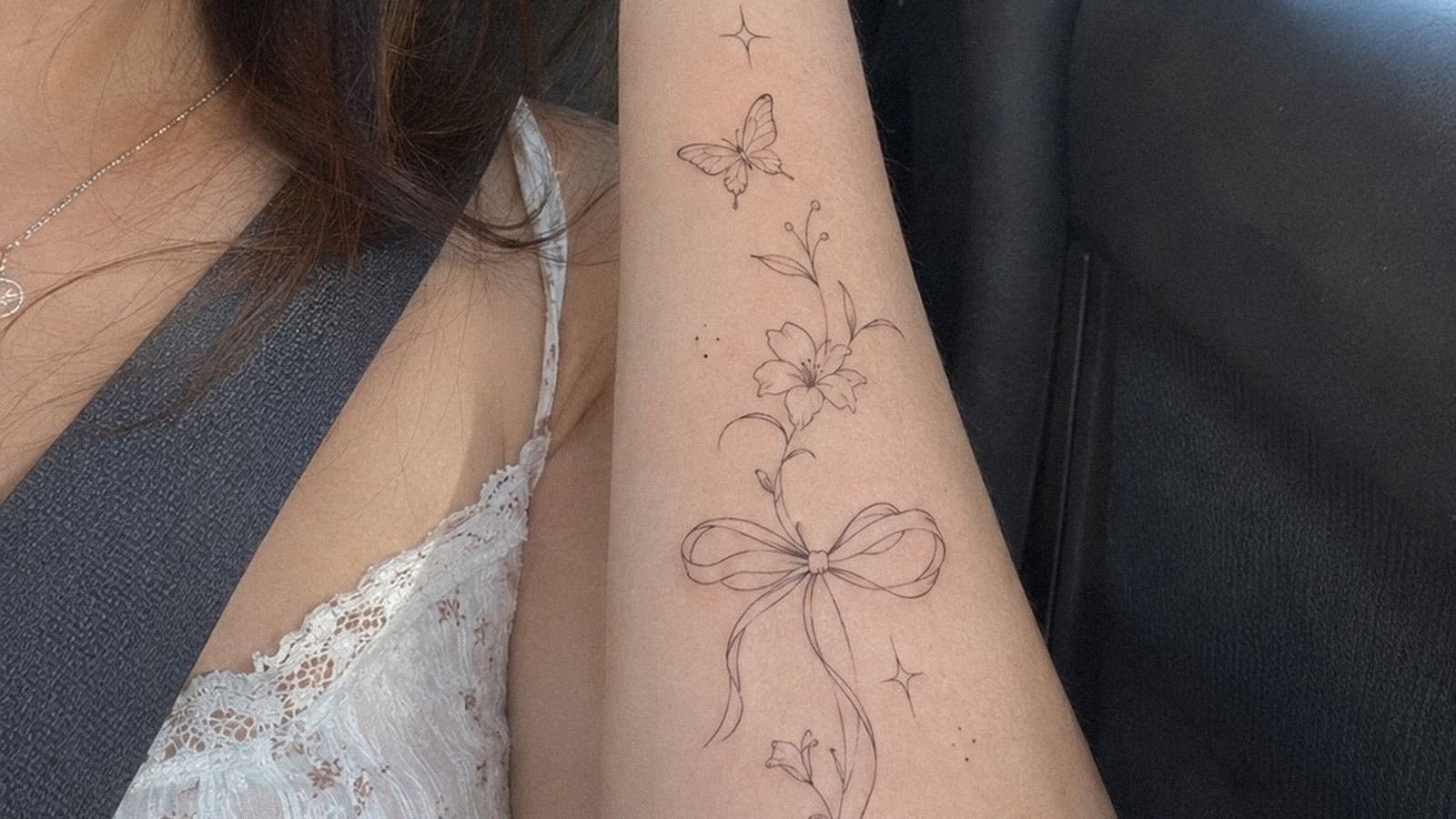
Intricate floral wrap tattoos can look graceful on deep ebony skin when the artist uses clear, confident linework. A delicate wildflower sprig winding around the ankle creates movement without demanding a complete band.
A dark outline gives the petals definition, while open interiors keep the flowers light. An open floral wrap preserves that delicate movement.
Contrast matters here. I’d skip weak grey lines if you want the design to remain expressive, because low contrast can disappear sooner than a clean structure. The strongest version feels vibrant and polished, with enough space between leaves to protect the silhouette.
Clear floral contrast helps the piece stay readable.
Your artist should study how the sprig wraps, not just how it looks from one angle. A design that seems perfect from the front may tangle behind the ankle.
Ask to see the stencil while you rotate your foot, and check that the stems don’t collide with the ankle bone. A rotating placement check is worth the extra appointment time.
The wrapping motion can be subtle. You don’t need a complete band for the idea to work.
One stem crossing slightly toward the back can create an elegant path without forcing detail into a high-friction fold. These wrap-around ankle tattoo ideas offer useful placement references.
I prefer one strong wildflower over a crowded garden here. It feels more personal, and your artist can give each leaf enough space to stay readable. If you’re choosing between more flowers and better spacing, take the spacing every time.
One graceful wildflower usually delivers better value than several cramped blooms.
7Snake Movement, Kept Small

A fierce snake mini ankle tattoo brings movement to a small placement. A slim serpent can coil around the ankle with a compact silhouette, expressive head, and sharp directional curve. A fine outline can look edgy without heavy shading.
A fine serpent outline keeps the design sleek.
Snakes need a readable gesture more than microscopic scales. Your artist should establish the head, curve, and tail first, then add only enough texture to suggest the body. I’d skip a fully detailed scale pattern in a miniature piece because it can turn into visual noise as the ink settles.
One darker section near the head gives the design an anchor, while the open body keeps it sleek. If you want a more daring result, ask whether a slightly larger silhouette would protect the expression of the snake. A readable snake silhouette is more valuable than a tiny technical showcase.
Think about direction, too. A snake curving upward can feel energetic, while one circling horizontally reads more like an anklet. You can compare that placement with these ankle cuff tattoo designs before choosing your stencil.
This is a strong option if your style leans edgy but you still want something small. Don’t choose it only because it looks clever in a sketch.
Choose it if the movement feels like you, because the best symbolic tattoos have a reason behind their shape. A fierce serpent tattoo can be daring and personal at once.
8One Tiny Heart, No Extra Noise

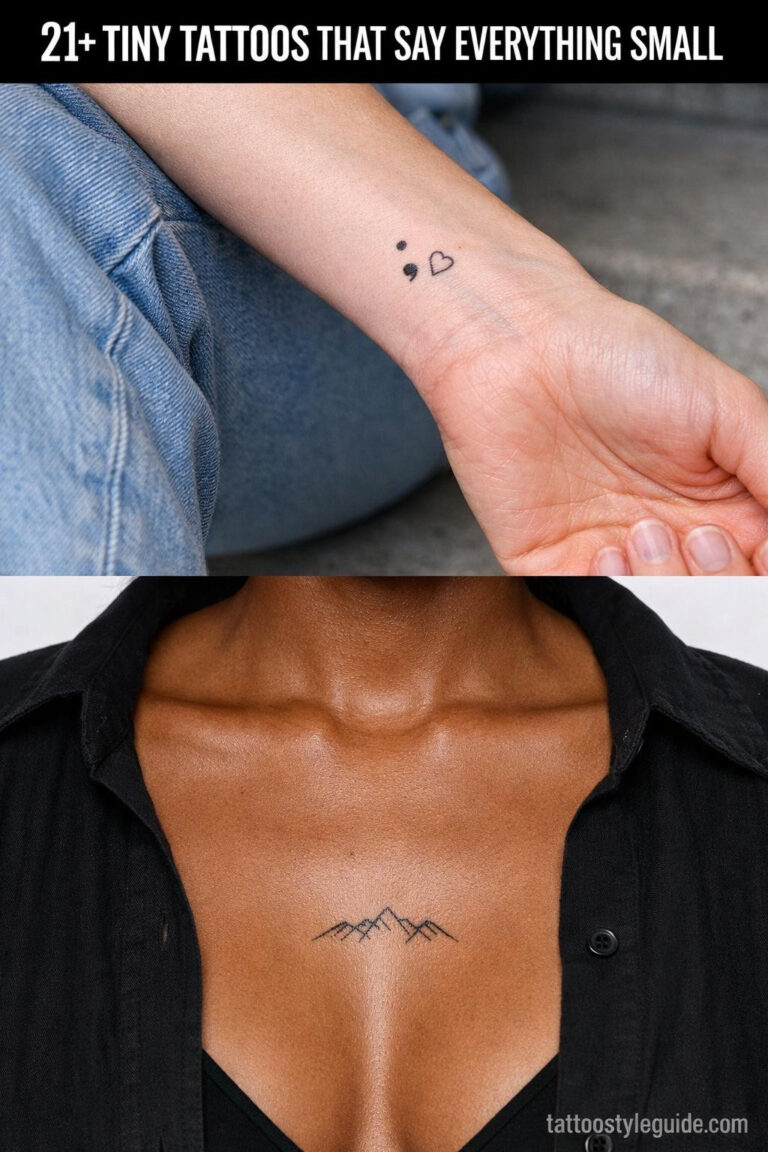
Playful tiny heart foot tattoos keep the design direct: one small heart, a clean outline, and no extra decoration. The simple shape can feel personal without becoming sugary. A clean heart outline leaves room for your meaning to stay yours.
A heart can mark a relationship, a recovery, or simply a visible reminder of tenderness. You don’t have to add initials or a date. I’d choose an understated symbol over a crowded sentimental design because simplicity tends to hold its value longer.
The upper foot or side ankle can work better than the sole, especially if you want the outline to remain crisp. Your artist can help you avoid a crease where the shape would bend constantly.
Ask how the heart will look when you stand, not only when your leg is stretched out. The final standing stencil matters.
And don’t assume a tiny heart needs almost no planning. The point, curves, and thickness must be balanced at the final size. If you’re gathering small, cheerful references, these cute ankle tattoos can help you compare symbols without copying one exactly.
This idea is charming because it doesn’t pretend to be more complicated than it is. One heart, placed thoughtfully, can feel more powerful than a page full of symbols.
Keep it crisp, give it space, and let the simplicity do its work. A symbolic heart tattoo can be an empowering bargain in both size and meaning.
9Script That Still Reads Later

Elegant script mini ankle tattoos depend on lettering that remains readable after the surface settles. Readable script lettering matters more than adding decorative flourishes.
10Geometric Cuff or Broken Band?

Geometric ankle cuff designs reward careful preparation. A clean pattern can feel bold and understated at once, especially when the artist respects the ankle’s natural curve. A geometric stencil transfer should sit evenly without forcing a straight line to follow a curved body.
The most important detail is alignment. Your artist may adjust the spacing or break the cuff into sections, and that isn’t a flaw. It is how the design respects your anatomy.
A broken geometric band can have more value than a technically perfect circle that looks warped when you walk.
I’d choose a simple repeating shape over a dense mathematical pattern. Thin triangles and small arcs can look polished, but too many intersections may blur together. Your eye needs a clear rhythm, especially if this is your first tattoo and you want to understand how the mark will age.
Ask to see both the stencil and a healed portfolio from the same artist. If you’re weighing a cuff against another wraparound placement, compare these geometric wrap tattoo references with ankle-specific examples before you commit. A healed geometric portfolio tells you more than a fresh sketch.
Keep the line thickness consistent, leave deliberate gaps, and don’t rush the transfer. A geometric tattoo has nowhere to hide a crooked section, so patience is part of the design. A careful alignment check may add time, but it can protect your budget from a correction.
11Let an Ocean Wave Move

Meaningful ocean wave ankle tattoos bring movement, memory, and a little raw energy to the ankle. A single curved wave can feel expressive without requiring a large composition. A simple ocean wave works especially well when its crest and base remain easy to recognize.
You could connect the wave to travel, family, resilience, or a season that changed you. The symbol doesn’t need extra shells, birds, and lettering to become meaningful. I’d keep one dominant curve and let the emotion come from the gesture.
Ask your artist whether the wave should face inward or outward. An inward-facing wave may feel more private, while an outward-facing curve can look more dynamic from a distance. The wave direction changes the personality of the tattoo.
Avoid forcing tiny foam lines into a miniature design. A few deliberate marks can suggest motion, but too many can soften into a dark patch. If you’re choosing between added detail and stronger readability, choose readability.
A wave can be feminine, masculine, or entirely personal depending on the line quality and placement. It can also feel iconic without looking generic. A raw wave silhouette is worth considering if you want a meaningful first tattoo with a sharp, timeless profile.
The Space Between the Marks
Negative space is not empty decoration. It gives each line a visual boundary and helps the design stay recognizable as the tattoo settles. Open skin around the design can matter more than adding another leaf, dot, or star.
Look at the piece from a few steps away. If the silhouette disappears at that distance, the design may need fewer details or a slightly larger scale. A confident artist will explain what to remove.
A recognizable silhouette should come first.
This is especially important for ankle tattoos because the skin bends and moves constantly. Deliberate spacing gives a minimal, intricate, or symbolic design a better chance of staying crisp.
Which Direction Feels Like You?
Placement changes the mood of a small tattoo. An inward-facing wave or crescent can feel private, while an outward-facing star or serpent may read as more expressive. The facing direction deserves the same attention as the symbol itself.
Ask yourself whether you want to notice the tattoo easily or reveal it only when you choose. The front ankle is more visible to you, while the outer ankle can feel slightly more discreet. That’s worth noticing!
Choose the direction that matches your reason for getting the tattoo. A personal placement decision will matter long after a trend has moved on.
Check the Placement Before You Pay
Before you book, stand naturally and look at the proposed design from the front, side, and back. Your ankle changes shape when your foot flexes, so a stencil that looks polished in one position may look awkward in another. A standing stencil test is one of the smartest uses of your appointment time.
Think about friction from socks, shoes, and everyday movement. The outer ankle, side ankle, and area beneath the bone often give a small tattoo more stability than a high-friction fold. The exact placement affects both comfort and longevity.
If you’re unsure, ask for two stencil sizes. The slightly larger option may preserve a delicate or intricate design better, while the smaller option may fit your budget. A size comparison can prevent an expensive cover-up.
Save a few small ankle tattoos before your consultation, then use them to discuss proportions rather than copying a design exactly.
What Is the Tattoo Budget Really Buying?
A mini tattoo isn’t automatically cheap. Many studios have a minimum charge, and an experienced artist may cost more because they understand anatomy, healed linework, and placement. The shop minimum should be part of your first budget conversation.
Typical US shop minimums often sit around $50 to $100, while hourly rates commonly fall around $100 to $250. The final cost varies by artist, region, placement, and complexity. The extra cost can be worth it when the portfolio shows clean healed work.
Worth remembering!
A lower budget shouldn’t mean skipping healed examples or hygiene questions. You can ask what the estimate includes, whether a deposit is refundable, and whether the artist charges for a consultation. A written price estimate protects both your expectations and your wallet.
If you want to compare more design complexity before discussing price, browse these tattoo design references and note which ideas still look readable at a small scale.
What I Would Skip for a First Ankle Tattoo
I’d skip designs that depend on microscopic texture, crowded lettering, or several unrelated symbols. They may look bold in a sketch but lose their identity when reduced to ankle size. A crowded miniature scene often offers less value than one confident mark.
I’d also skip copying a design exactly from someone else’s body. Your ankle has its own curve, movement, and skin behavior.
An artist can keep the idea while making the proportions more personal. A custom adaptation is usually worth the modest extra thought.
Finally, don’t book solely because a design is trending. Choose something that still feels meaningful when the trend disappears. A personal symbol has stronger staying power than a fashionable flash choice.
If you need a lighter reference set, these cute ankle tattoo ideas can help you compare simple symbols without turning the design into a crowded collection.
The Negative-Space Rule: What Makes a Mini Ankle Tattoo Stay Readable?
I’ve learned that the strongest mini ankle tattoos aren’t the ones with the most detail. They’re the ones with a clear silhouette, deliberate gaps, and enough contrast to survive real movement.
My first small tattoo taught me that lesson the annoying way. I wanted every leaf, dot, and tiny texture included, and the result looked more polished on paper than it did on skin.
Your ankle bends, rubs against footwear, and catches sunlight. Those facts matter more than a trend reference.
A solid anchor mark can preserve the identity of a design, while open skin keeps the smaller elements from merging. I now ask an artist to show me the design at the proposed size, then I look at it from several steps away.
A readable anchor mark gives the rest of the tattoo room to breathe.
The cost also deserves an honest conversation. Typical US shop minimums often sit around $50 to $100, while hourly rates commonly fall around $100 to $250.
The final number varies by artist, region, placement, and complexity. You shouldn’t choose the cheapest appointment if the portfolio doesn’t show clean healed work.
A healed portfolio can prevent an expensive cover-up.
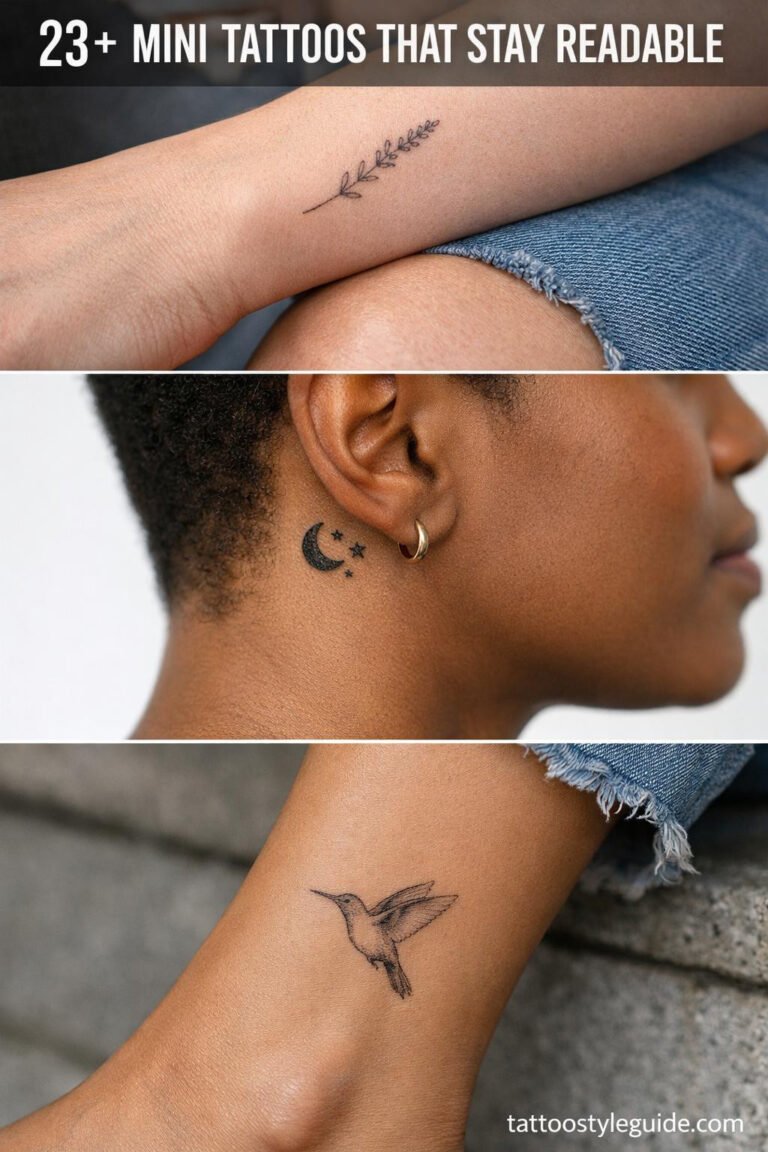
Fine lines can spread as they age, especially when they are packed too tightly or exposed to repeated UV. You can’t stop time, but you can choose clear spacing, sensible placement, and an artist who understands healed skin. And if you’re still comparing styles, these mini tattoos that stay readable on real skin are worth saving.
What People Always Want to Know
How much does a mini ankle tattoo usually cost?
A mini ankle tattoo typically starts around a shop minimum of $50 to $100, while hourly rates often sit around $100 to $250 in the US. Your final price depends on the artist, region, size, and detail.
Ask about the deposit and minimum before booking. A clear estimate prevents surprises.
Are mini ankle tattoos a good idea for a first tattoo?
Yes, mini ankle tattoos can be a meaningful first choice because the placement is visible but easy to cover. The ankle can be more sensitive than the forearm, though.
Choose a crisp design with realistic spacing, and look for healed examples in your artist’s portfolio. Good planning matters more than tiny size.
How do I choose a tattoo artist for mini ankle tattoos?
Review healed linework, not only fresh work, and check whether the artist regularly tattoos ankles or feet. Look for clean studio hygiene, consistent stencils, and lettering or botanical work if that’s your style.
You can also compare artists through these wrist tattoos for guys portfolios for line quality. Healed work tells you more.
How much do mini ankle tattoos hurt?
The ankle and foot can feel sharper because they sit close to bone, while the forearm, thigh, and shoulder are often more tolerable. Your experience will vary with placement and sensitivity.
Tell your artist if you need a pause. Comfort planning is part of the appointment.
How long do mini ankle tattoos take to heal?
The surface usually heals in about 2 to 3 weeks, while complete healing can take about 2 to 3 months. Wash gently, moisturize as directed, and avoid swimming and strong sun during early healing.
Save these aftercare placement notes before your session. Patience protects crisp lines.
What’s the best placement for mini ankle tattoos?
The outer ankle and the area just beneath the ankle bone are practical starting points because they give small designs room to read. The foot can be more sensitive and exposed to friction.
Ask your artist to test the stencil while you stand. Placement changes both comfort and longevity.
Where I’d Start First
If I had to pick one, I’d start with the delicate botanical sprig. Its open spacing gives fine lines room to breathe, and one meaningful flower won’t look dated when a trend moves on.
Pin the botanical ankle tattoo ideas for later and bring your favorite stem to a careful artist. A personal botanical tattoo offers the right balance of value, meaning, and readability.