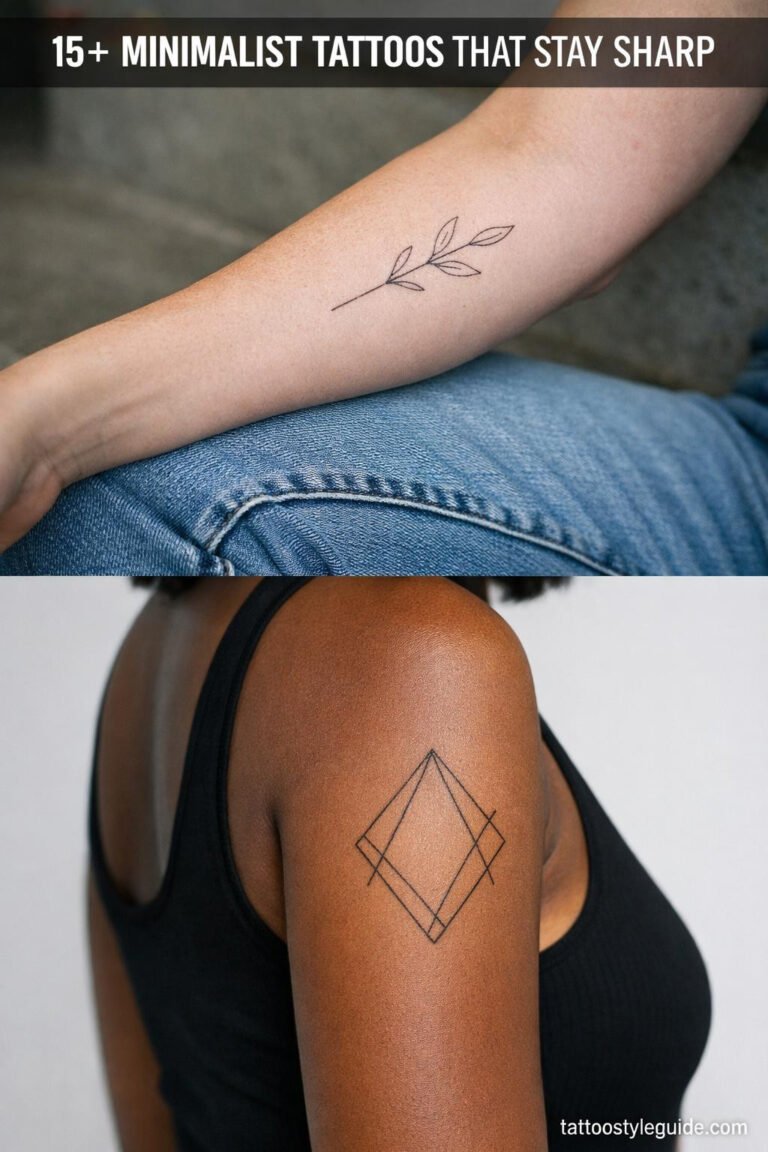
Small ankle tattoos can be elegant because the placement is visible only when you want it to be. The tradeoff is friction from shoes, socks, shaving, sun, and swelling during healing.
Quick answer: Good small ankle tattoos include stars, flowers, tiny animals, moons, initials, ornamental marks, simple bands, and small butterflies placed where shoes will not constantly rub the fresh tattoo.
Small ankle tattoo ideas
The best ankle tattoos are simple enough to read from standing distance.
| Idea | Best use | Watch-out |
|---|---|---|
| Tiny flower | Soft side ankle piece | Shoe straps can rub |
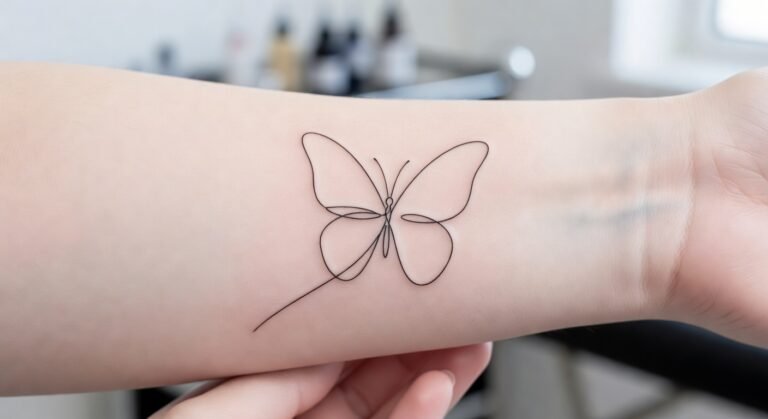
| Small butterfly | Change or memorial meaning | Wing detail needs size |
| Ankle band | Decorative wrap | Lines must be even |
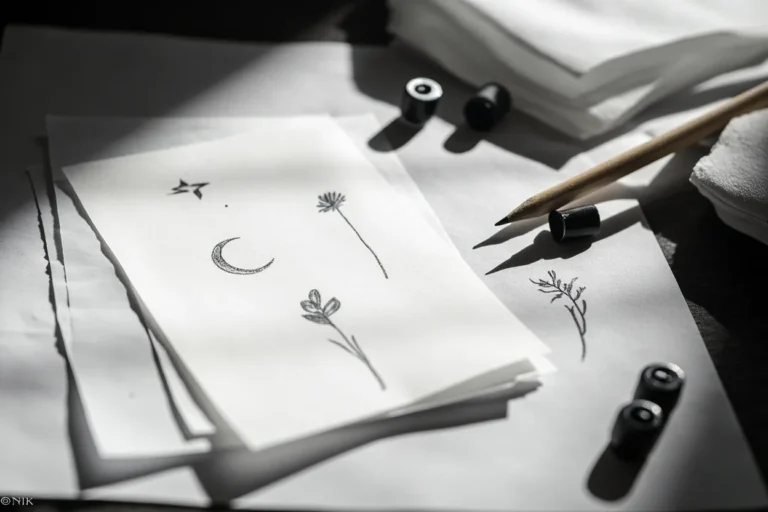
| Moon or star | Simple symbol | Avoid too tiny placement |
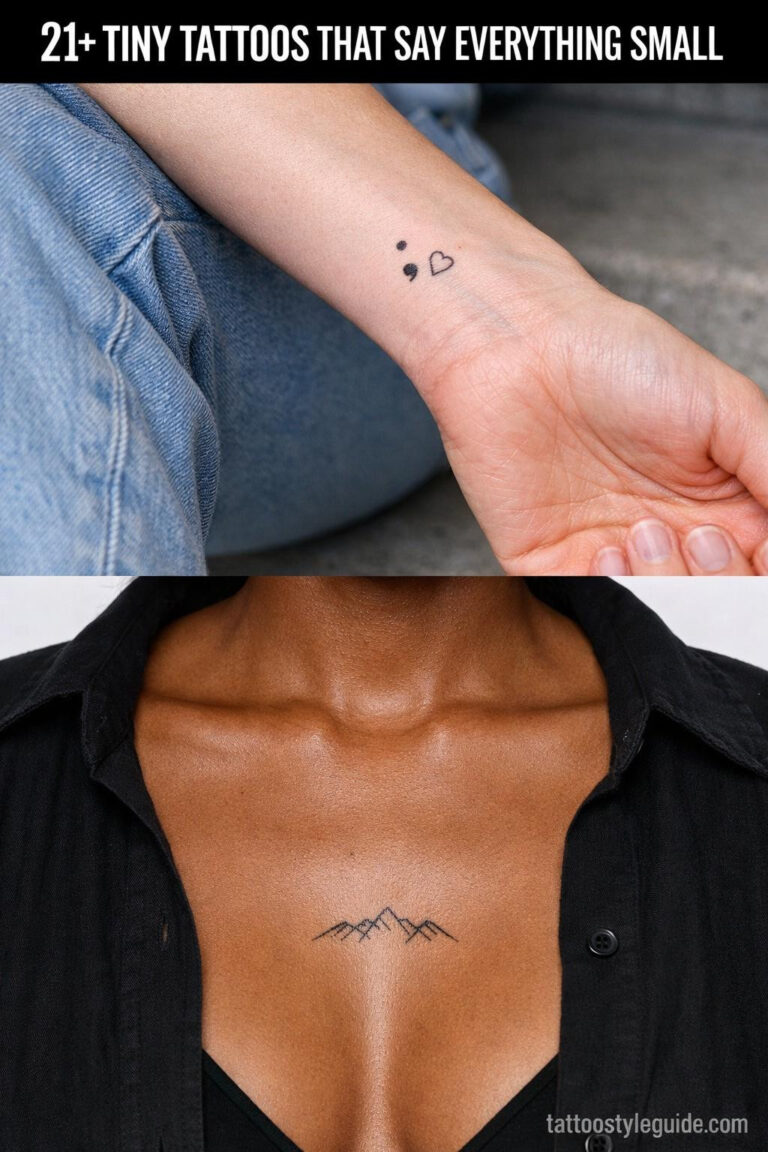
| Initial or date | Personal mark | Keep numerals readable |
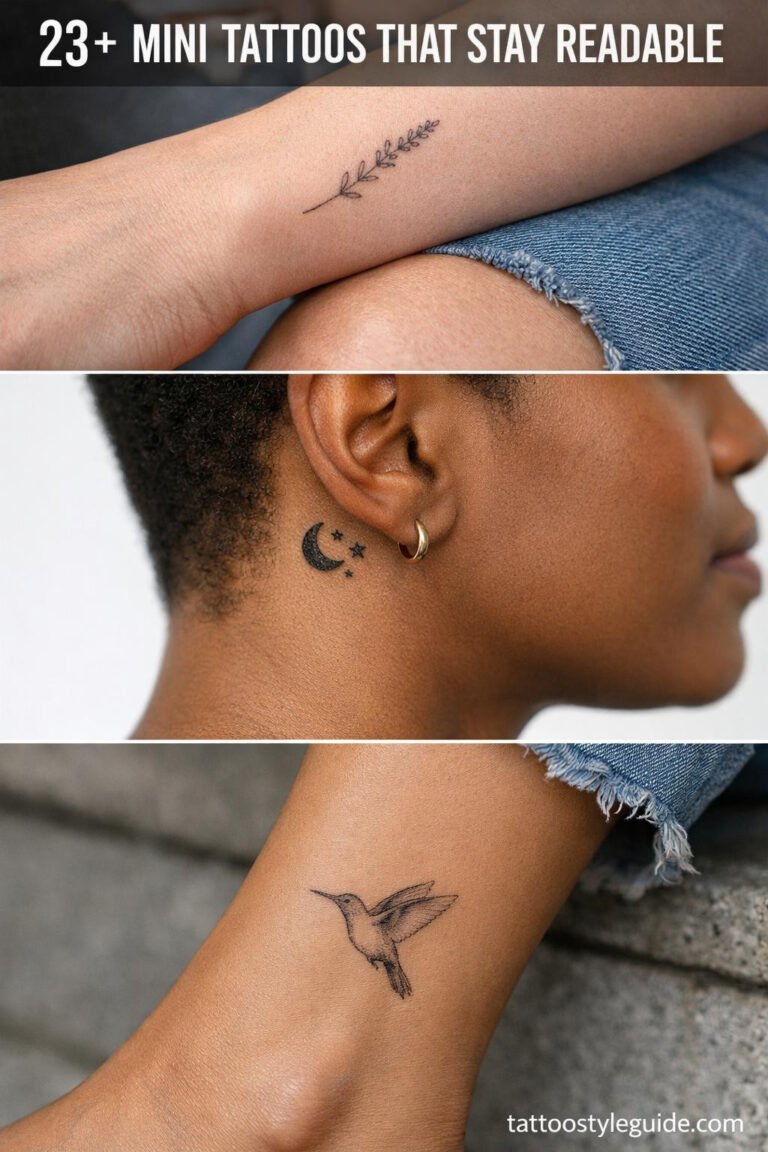
The outer ankle bone is your best friend for small designs. The flat shelf of skin right above that bony bump gives you a stable canvas for a simple botanical sprig, a single word, a small geometric shape, or a minimalist animal silhouette. Designs in the 1.5- to 2.5-inch range hit the sweet spot here. They’re big enough to read clearly from a normal standing distance but small enough to stay delicate.
The inner ankle works great for softer, vertical designs like a thin snake, a dragonfly, or a stack of small symbols. Fine line black and grey holds well in that spot if you keep the linework at least 1mm thick. Go thinner than that and you’re gambling on blowout as the skin stretches. For color, a small saturated piece, red poppies, a bluebird, a simple koi, stays vivid longer than a pastel wash on ankle skin.
Plan around shoes
A small ankle tattoo either reads clean at ten feet or it doesn't read at all.
Bring or think through the shoes you wear most. A tattoo placed exactly under a strap can be miserable during healing and may fade faster from repeated rubbing.
Ankle tattoos can swell during the first days. If you have a job that keeps you standing, plan the appointment around a period when you can keep pressure and friction low.
Sock and shoe lines are real enemies of fresh ink. Tell your artist exactly what footwear you wear daily, sneakers, boots, heels, whatever. A design sitting right at the sock line of a sneaker will get rubbed during healing and can lose crispness fast. The smarter placement is just above or just below where your sock rides, not directly on it. Your artist can mark the spot with a skin pen while you’re wearing your actual shoes.
Boot wearers need to think about the shaft line specifically. Cowboy boots and tall fashion boots sit at mid-ankle, right across a common tattoo sweet spot. If you’re a daily boot person, shift the placement up toward the lower calf or down toward the heel side where contact is lighter. Fresh tattoos need two full weeks without tight fabric rubbing the area. Sandal weather helps a lot. Timing your appointment for summer makes the healing process significantly easier.
Stencil checks
The ankle is curved, so flat designs need adjustment.
- Check the stencil standing and sitting.
- Ask whether the design wraps cleanly around the ankle bone.
- Ask about shoe friction during healing.
- Ask if the design should move higher.
A stencil check is non-negotiable on ankles. Before any needle touches skin, stand up, let the artist place the stencil, then look at it from across the room in a mirror. Ankle tattoos curve around a three-dimensional surface, and what looks balanced flat on paper can look tilted or pinched once it wraps the bone. Walk a few steps and check again. The skin shifts slightly when you flex your foot, and that movement can drag a poorly positioned design.
Check size at this stage too, not after you’re already lying down. A lot of people second-guess themselves and ask to go smaller in the chair. Going smaller than your approved stencil is fine, but don’t go so small that fine detail disappears. If your design has a face, lettering, or negative space shapes under half an inch, those elements will merge as the tattoo ages. Bold will hold. What reads cleanly at day one needs to still read cleanly at year five.
Ankle tattoo mistakes
The biggest mistake is choosing a design that only works in a close-up photo. The ankle is viewed from farther away than the wrist.
Another mistake is booking right before travel, beach days, or a period when shoes will rub the tattoo daily.
The biggest mistake people make is going too fine on ankle skin. Hairline script, micro-realism portraits, and single-needle geometric work look incredible fresh out of the studio. Six months later, on a high-wear zone that sees sun, socks, and constant flexion, those ultra-thin lines spread. The ink isn’t going anywhere, but the edges soften. Minimum 1mm linework is a realistic floor for anything you want to stay crispy for years.
Skipping the touch-up is the second big mistake. Ankles sit low on the body, blood pools there, and the healing is sometimes uneven. Patchy spots, light areas where ink didn’t fully saturate, small gaps in linework, all of that is normal and fixable. Most shops include one free touch-up within 60 to 90 days. Use it. Don’t wait a year when the skin has locked in and a re-work costs real money. Go back at eight weeks, let your artist assess it, and walk out with a piece that actually looks finished.