An elephant tattoo carries weight without noise. Most people choose it for strength, memory, family bonds, patience, wisdom, or protection. The meaning shifts with posture: a walking elephant reads as steady determination, a parent and calf as loyalty, a raised trunk as quiet optimism. The animal’s real behavior, long memory and herd care, gives the symbol substance that outlasts trend.
Quick answer: Elephant tattoos usually mean strength, memory, family, wisdom, patience and protection. Small designs need clean trunk and ear silhouettes to stay readable. Larger pieces allow skin texture, eye expression and ornamental detail. Expect moderate pain on ribs, manageable sessions on thigh or upper arm.
What the Symbol Actually Means
From observation, not myth
Elephants do not need symbolic invention. They live sixty to seventy years, recognize other elephants after decades of separation, and coordinate care for injured herd members. These observed behaviors give the tattoo its resonance. When someone says an elephant means memory, they are drawing on documented cognition, not folklore alone.
Strength in elephants is structural and social. They push trees, but they also stand in circles around calves. That combination of physical power and protective restraint is what makes the symbol distinct from predators like lions or wolves. You do not get menace with an elephant. You get mass used carefully.
Cultural connections to respect
In South Asian traditions, particularly Hindu practice, the elephant-headed deity Ganesha represents removal of obstacles and beginning of endeavors. This is not the same as a generic luck symbol. If you are drawing on Ganesha imagery, you should know the distinction between religious iconography and decorative elephant design. A tattoo artist can adapt the elephant form without appropriating sacred attributes if you discuss intention beforehand.
In Southeast Asian history, white elephants were associated with royalty and spiritual significance, often linked to Buddhist traditions of patience and moral discipline. African cultural contexts emphasize the elephant as ancestral and ecological keystone, a creature whose presence shapes the landscape. None of these are universal “meanings” you can paste onto any design. They are contexts you should know before choosing your specific reference.
How Design Changes the Read
Posture and grouping
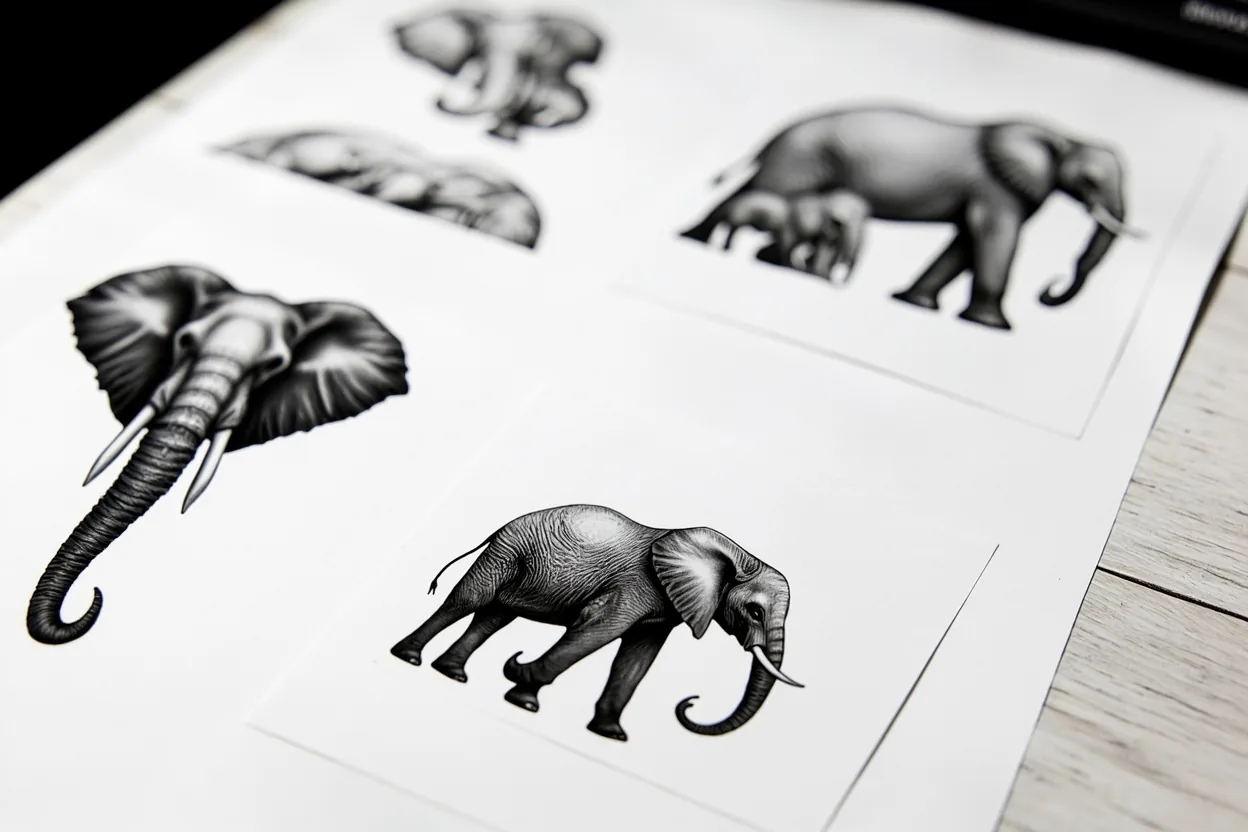
A single elephant walking forward reads as solitary determination. The angle of the head matters: lowered suggests foraging, patience, groundedness; raised with trunk extended suggests alertness, greeting, or in some interpretations optimism. A parent and calf facing each other, trunks linked, is the most direct family statement. Three or more elephants in procession reads as herd, continuity, lineage.
The mistake is cramming too many figures into too small a space. Two elephants with linked trunks need horizontal room. On a wrist or narrow forearm, the trunks compress into unreadable curves. If you want the family meaning, give the composition at least four to five inches of width.
Style and detail level
Realistic elephant tattoos succeed or fail on the eyes and skin texture. Elephants have visible emotional expression in photographs: relaxed eyelids, the slight curve of the mouth, the weight of the brow. A realistic piece needs an artist comfortable with animal portraiture. Ask to see healed elephant work, not just fresh photos. Skin texture details blur over time if they are too fine.
Blackwork and strong silhouette approaches trade expression for permanence. A bold black elephant with white highlight for the eye will read at any size and any age of tattoo. This is the safer choice if you want the symbol without the maintenance of delicate shading.
Ornamental and geometric frames around elephants are popular in Pinterest references and often disappointing on skin. Mandala patterns inside the ear, dotwork backgrounds, and floral integration work only at sufficient scale. At under three inches, the ornament competes with the silhouette and the tattoo becomes a dark blob within five years.
Symbols that pair well, and badly
Flowers soften the elephant without fighting it. A single lotus, a small spray of the subject’s native flora, or a simple geometric frame can work. The problem is accumulation: elephant plus lotus plus mandala plus moon plus script plus birth flowers plus coordinates. Each addition dilutes the others. Choose one secondary element maximum for small to medium pieces. Reserve complex composition for back pieces or thighs where the eye has room to travel.
Size and Placement
Small tattoos: the silhouette test
At small sizes, three lines carry the design: the trunk curve, the ear shape, and the back line from head to tail. If those read, the tattoo works. If the trunk is too thin or the ear too detailed, the design loses coherence as it heals and spreads slightly.
Fingers are poor placement for elephant tattoos. The trunk needs length to curve recognizably. The ear needs width to distinguish from generic animal blob. Side of the hand, wrist inner surface, and ankle bone are similarly constrained. Better small placements: outer upper arm, calf side, collarbone with two to three inches of horizontal space, behind the ear only if extremely simplified to head profile.
Medium and large placements
Thigh, outer upper arm, calf, and shoulder blade give the elephant room to breathe. A forearm wrap can work if the trunk extends toward the wrist and the body occupies the inner forearm, using the natural cylinder of the arm rather than fighting it.
Ribcage and sternum are emotionally significant placements for memorial or family pieces, but the pain is substantial and the canvas moves with breathing. Elephants have long horizontal bodies; the rib curve can distort this. A front-facing head or a vertical composition of stacked figures works better on ribs than a walking profile.
Back pieces allow full herd compositions or landscape integration. If you are building around existing tattoos, place the elephant as an anchor image with clear silhouette before adding surrounding elements. Do not bury it under competing filler.
Working With Your Artist
Reference material that helps
Bring photographs of real elephants, not tattoo recreations of other tattoos. Look for images that show the specific posture you want: a mother turning toward her calf, a bull elephant with ears spread in display, an old female with worn tusks and relaxed posture. The more specific your reference, the more personal the result.
Discuss eye expression explicitly. Elephant eyes are small relative to the head but emotionally communicative. A blank eye ruins realism. A stylized eye with highlight placement changes the mood from calm to alert to mournful.
Technical decisions to make together
Trunk direction matters for composition and for cultural sensitivity. A trunk raised in some South Asian traditions is auspicious. A trunk lowered is more common in nature photography and reads as grounded. Neither is wrong, but you should choose intentionally rather than defaulting to the first stock image.
Tusks present a choice. Present tusks read as mature, potentially aggressive, protective. Absent or small tusks (as in many Asian elephants and females) read differently. Ivory poaching history makes tusks a loaded visual for some viewers. This is worth considering if your tattoo will be visible in professional or international contexts.
What to Remember
An elephant tattoo succeeds when it carries the animal’s actual presence rather than a generic idea of strength. Start with real reference, choose posture for meaning, limit secondary symbols, and give the design enough scale for the ears and trunk to read clearly. The best elephant tattoos feel observed, not invented: a specific animal in a specific moment of attention or care. That specificity is what keeps the symbol from becoming another empty icon.
Healing follows standard tattoo protocol with one note: elephants often involve solid black areas that can scab heavily. Do not pick scabs in trunk or ear details where fine lines matter. Expect two to four weeks for surface healing and three to four months before the skin fully settles and you can judge the final clarity of texture work.
Cost varies by region and artist specialty, but animal realism generally commands higher rates than ornamental work. Budget for an artist who shows healed animal portfolio pieces, not just fresh work. The difference between a good elephant tattoo and a failed one is often the eye detail and the trunk curve, both of which require confident technical execution.
Frequently Asked Questions
What does an elephant tattoo symbolize?
Most commonly strength, memory, family loyalty, patience, wisdom, protection, and gentle power. The specific meaning depends on posture: a parent and calf for family, a walking elephant for determination, a raised trunk for optimism or greeting.
Is an elephant tattoo good for a family piece?
Yes, if you give it enough space. Parent-and-calf designs with linked trunks need horizontal room to read clearly. Too small, and the trunks blur into unrecognizable curves. Forearm, upper arm, or thigh work better than wrist for this composition.
Where should I place an elephant tattoo?
Medium to large designs suit thigh, outer upper arm, calf, shoulder blade, and forearm. Small simplified silhouettes can work on collarbone or behind the ear. Avoid fingers and narrow wrist spaces where the trunk cannot curve recognizably.
Do elephant tattoos need to be large?
Not necessarily, but detail must match scale. A clean outline reads small. Realistic texture, eye expression, and ornamental additions need larger canvas to survive healing and aging. Match your ambition to your available skin space.
What style works best for elephant tattoos?
Bold blackwork and strong silhouettes age most reliably. Realism succeeds with an experienced animal portrait artist. Ornamental and geometric frames need sufficient scale and should not compete with the elephant’s silhouette at small sizes.