
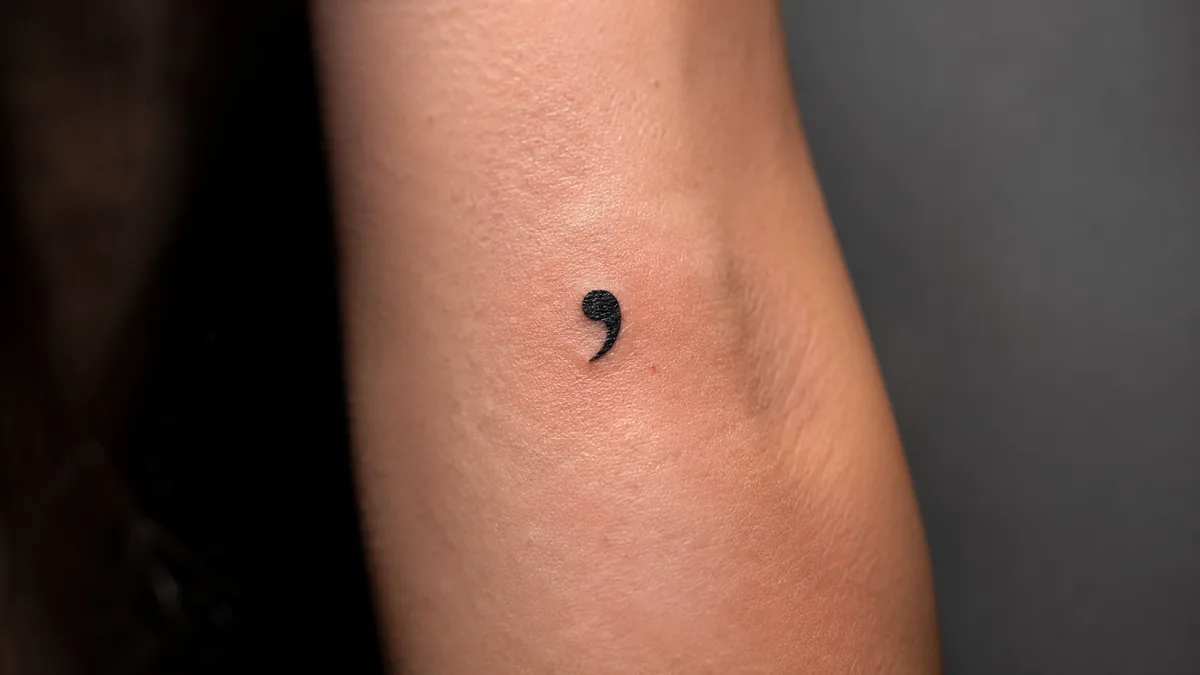
A comma tattoo is exactly what it sounds like: a single punctuation mark on skin. But the reason people sit for it runs deeper than aesthetics. The comma means pause, not stop. It says your sentence keeps going. That’s the whole idea, and for a lot of people, that’s enough.
It’s one of the most minimal tattoos you can get, which is part of the appeal. No elaborate imagery, no long quote. Just a small curve and a dot that carries a personal weight. Here’s everything you need to know before you commit to one.
The Core Meaning: A Pause, Not an Ending
In grammar, a comma tells the reader to pause before the sentence continues. As a tattoo, that same logic applies to life. People who get a comma are usually marking a moment where things could have stopped but didn’t. A hard season, a tough chapter, a point where they caught their breath and kept moving. It reads as quiet resilience without broadcasting anything specific.
Unlike a period, which closes everything out, the comma holds space for what comes next. That open-endedness is the draw. It doesn’t tell the whole story, and it’s not supposed to. The wearer knows what it means to them, and that’s the point.
How It Differs from the Semicolon Tattoo
A comma means the sentence isn't over, and neither are you.
The semicolon tattoo is tied directly to Project Semicolon, a mental health movement founded in 2013 by Amy Bleuel after losing her father to suicide. The symbolism is specific: the author is you, the sentence is your life, and you chose to continue rather than end it. It became a globally recognized symbol for surviving depression, suicidal ideation, addiction, and self-harm. There is an organized movement behind it with a clear message.
The comma carries no such formal movement. It’s personal, open, and loosely defined. Some people choose it precisely because they want something softer, a nod to resilience without the weight of crisis. Others choose it because they connect to the pause concept without having faced a mental health emergency. Both symbols are valid. They just carry different levels of specificity.
Who Gets This Tattoo and Why
The comma tends to land on people who’ve been through a transition: a divorce, a burnout, a move abroad, losing someone, or finishing treatment. It marks a before and after without spelling it out. Creatives and writers sometimes gravitate toward it because punctuation carries literal meaning in their work. Mindfulness folks like it as a reminder to slow down and breathe before reacting.
It’s also popular among people who wanted a semicolon but felt it didn’t quite fit their story. If you didn’t reach a breaking point but you did go through something real, the comma is a softer fit. It says you paused, recalibrated, and continued. No drama required. Just a mark that means something to the person wearing it.
Design Styles That Work Best
Fine line is the dominant style for comma tattoos, and for good reason. A single-needle comma done by a solid artist comes out clean, crisp, and reads perfectly at scale. Calligraphic and handwritten versions add a little personality, with tapered strokes that look like a fountain pen put it there. Both hold well in lower-wear zones when the line weight isn’t pushed too thin.
Some people integrate the comma into a minimal composition: a comma at the end of a one-word script piece, a comma inside a heartbeat line, or paired with a tiny heart above it. Keep the design tight. The simpler it is, the better it heals and the longer it stays legible. Bold holds over time. Ultra-micro detail is the first thing to soften.
Color vs. Black and Grey
Most comma tattoos go black and grey, or straight solid black. The symbol is so minimal that color can easily overpower it or make the edges bleed together as the piece ages. A clean black comma in fine line reads sharp at fresh and holds its shape better long term than an ink-packed color version at that scale.
That said, a light single-color watercolor wash behind the comma can look solid if the artist knows what they’re doing. Soft blues, muted reds, or a simple warm tone work without fighting the mark. Just know that any color will fade faster than black in sun-exposed placements. If you want the piece to age well for years with zero maintenance, go black.
Best Placements and How They Age
Inner wrist and inner forearm are the most common spots. You can see it daily, it’s easy to conceal, and the skin is stable enough that fine line holds for years without major blowout risk. Behind the ear is a popular discreet choice, though skin there is thin and can be spicy to sit through. Collarbone and ribcage work nicely for a slightly larger version or for a comma integrated into a short quote along the line of the body.
High-wear zones are where things get tricky. Finger tattoos and hand placements look great fresh but need touch-ups every few years because the skin moves constantly and the ink breaks down faster. If you put a fine-line comma on a finger, expect it to soften within two to three years. Blowout is also more likely when the artist works on thin, mobile skin, so go to someone with a portfolio of healed fine-line work, not just fresh shots.
Making It Personal
The comma is a blank slate, and that’s the strength of it. Before you book your appointment, get clear on what yours means. Is it a marker for a specific year? A reminder to pause before you react? A nod to keeping your story going after something hard? The cleaner your intention, the more the tattoo will mean five years from now when someone asks.
Placement can reinforce the meaning. An inner wrist comma is a daily personal reminder. A ribcage piece is private, just for you. A collarbone comma reads to others. Think about visibility versus intimacy and pick accordingly. You can also add a single word in small script, something like breathe or still, with the comma sitting right after it. Keep it tight. Minimal reads strongest with this symbol.









