Flying birds tattoos are one of the most requested designs in any shop, and for good reason. They carry real weight. Birds in flight have stood for freedom, transcendence, and forward motion across almost every culture on earth. That’s not a coincidence.
The meaning hits differently depending on the design, the species, the number of birds, and where it sits on your body. A flock of tiny silhouettes scattering off a wrist reads completely different from a single raven mid-dive on a forearm. Let’s break it all down so you know exactly what you’re putting on your skin.
Core Symbolism: What Flying Birds Actually Mean
At the most fundamental level, flying birds represent freedom. The ability to leave the ground, to go anywhere, to escape what’s holding you down. That’s why this tattoo resonates with people coming out of hard chapters. Divorce, addiction, loss, a job that was killing them. It marks a turning point. The bird is leaving. So are you.
Beyond freedom, birds in flight commonly symbolize hope, aspiration, and the soul. Many people get them to honor someone who passed, believing the birds carry that person’s spirit. Transition and transformation are huge themes here too. You’re not the same person you were. The birds say it without saying it.
Cultural and Historical Background
Birds don't just mean freedom — they mean you chose it.
Birds have carried spiritual meaning for thousands of years across wildly different cultures. In ancient Egypt, the soul, called the ba, was depicted as a human-headed bird that could fly between the living world and the afterlife. In Norse tradition, Odin’s ravens Huginn and Muninn flew across the world gathering knowledge. Celtic cultures saw birds as messengers between worlds.
In Japanese tattooing, cranes in flight represent longevity, good fortune, and fidelity. Swallows were a classic sailor tattoo, earned after logging 5,000 nautical miles, meaning the sailor had enough experience to find his way home like a swallow finds its nest. That nautical tradition is why swallows still carry themes of safe return and loyalty to this day.
Popular Design Variations
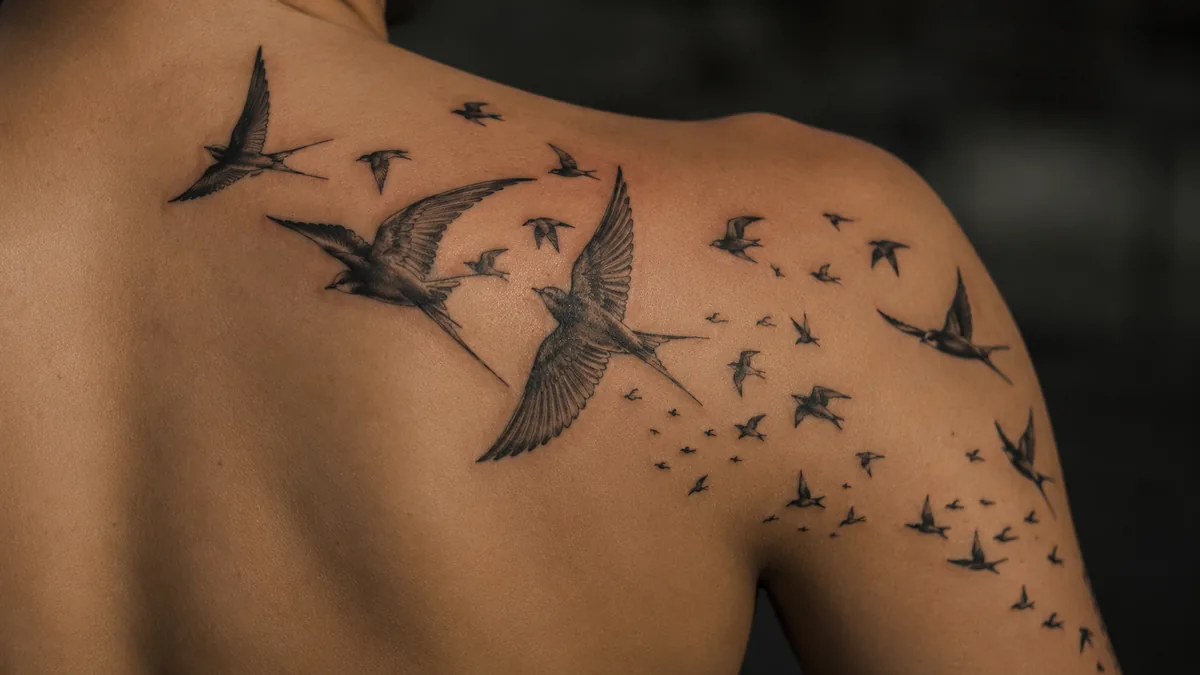
The most common version is a scattered flock of small bird silhouettes, usually in simple V-shapes, that look like they’re flying off the skin. These are almost always done in black and grey or solid black. They work beautifully as a flowing composition that wraps around a shoulder, trails down a forearm, or scatters across ribs. Simple, clean, reads strong from across the room.
Single bird designs are a different conversation. A crane in traditional Japanese style, a raven in illustrative black and grey, a swallow in classic American traditional with bold outlines and saturated color. Fine line single birds have blown up in popularity too, especially on wrists, collarbones, and behind the ear. The level of detail you can pull off depends heavily on placement and how much space you’re working with.
Color vs. Black and Grey
Black and grey is the dominant choice for flying birds, and honestly it makes sense. The silhouette reads crisp, heals predictably, and holds up over years without looking muddy. A well-executed solid black flock with clean, sharp edges will still look solid fifteen years from now if you keep it moisturized and out of the sun. It’s a forgiving style in terms of long-term wear.
Color opens different doors. A swallow in American traditional style with bold red, yellow, and blue, outlined thick, will last and stay bold if the saturation is pushed properly during the session. Fine line color birds are trickier. Pale watercolor-style birds look beautiful fresh but can fade and blur faster, especially in high-wear zones like hands and wrists. Your artist should be straight with you about what holds and what doesn’t.
Best Placements and How It Ages
Shoulder blades and upper back are top-tier spots for flying birds. You get real estate to build a composition that breathes, the skin stays relatively stable as you age, and sun exposure is manageable. Forearms and upper arms work great for single birds or a tight trailing flock. Ribs are a popular choice for the scattered silhouette style, though ribs are spicy and the skin moves a lot, so keep linework clean and not too fine.
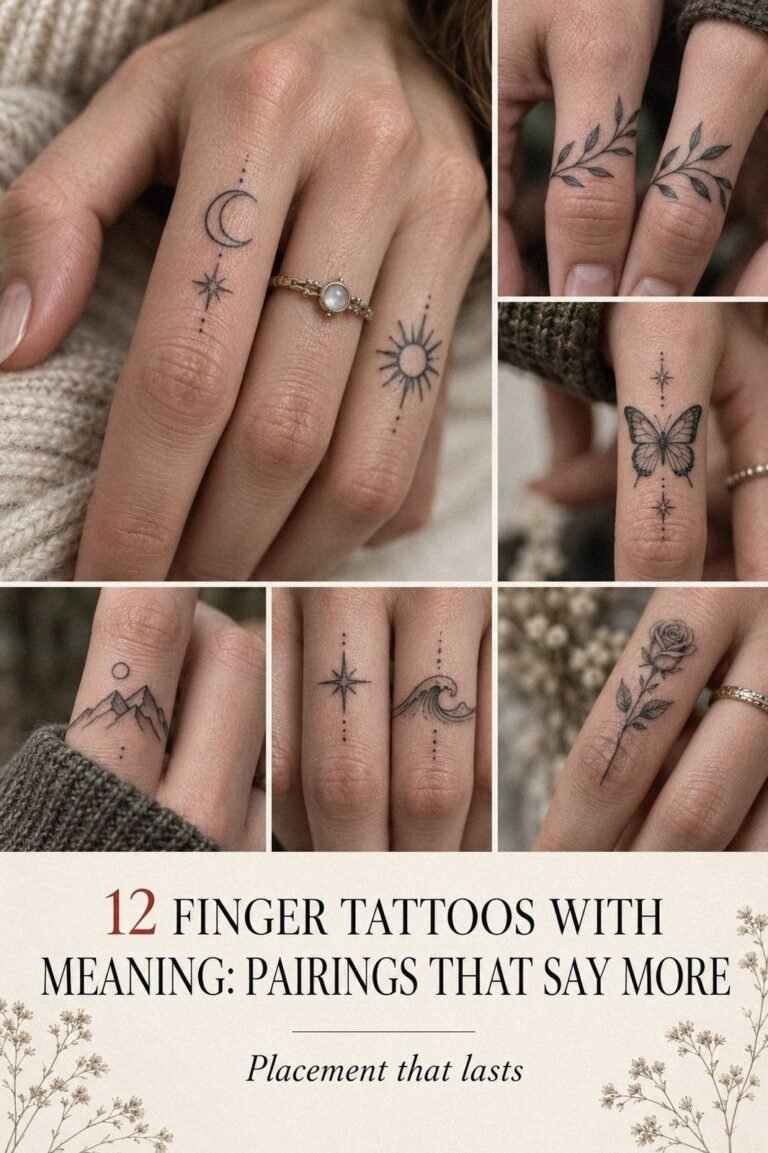
High-wear zones like fingers, hands, and feet will fade faster. Fine line birds in those spots will need touch-ups sooner than you think. Collarbone and sternum placements are beautiful but demand an artist comfortable with curved, awkward surfaces. Feet and ankles are the hardest to keep crisp long-term. For longevity, bold will hold. If you love delicate fine line birds, go slightly larger than you think you need so the lines have room to breathe as the tattoo settles.
Number of Birds and What It Changes
One bird is a statement. Three birds carry a specific association with the Bob Marley song ‘Three Little Birds,’ and people get them intentionally for that reason, tied to messages of hope and don’t-worry positivity. Five birds can reference the Three Doors Down song, though that’s less common. Some people choose a number that matches something personal, the age they lost someone, the number of kids they have, years of sobriety.
A large scattered flock usually isn’t about a specific number. It’s about movement, chaos becoming direction, a crowd of possibilities. Clients sometimes describe it as representing their thoughts finally organizing, or a hard period releasing. The symbolism is personal and loose with larger groupings. If you have a specific number in mind for a real reason, tell your artist. It can shape how the composition is built so those birds are clearly countable.
Who Gets This Tattoo and How to Make It Yours
Flying birds cross every demographic. They’re popular with people marking major life transitions, memorial pieces for loved ones, and anyone who just genuinely connects with the idea of freedom and movement. They’re not gender-coded, not age-coded. A 22-year-old college student and a 45-year-old finishing chemo can both walk in wanting the same design for completely different reasons, and both are right.
To make it personal, give your artist context. If it’s a memorial piece, incorporate something that references the person, their favorite bird species, a specific date worked into the composition. If it’s about a chapter closing, think about the direction the birds are flying and where on your body they’re launching from. A good artist will use those details to build something that isn’t just a tattoo. It’s yours.