
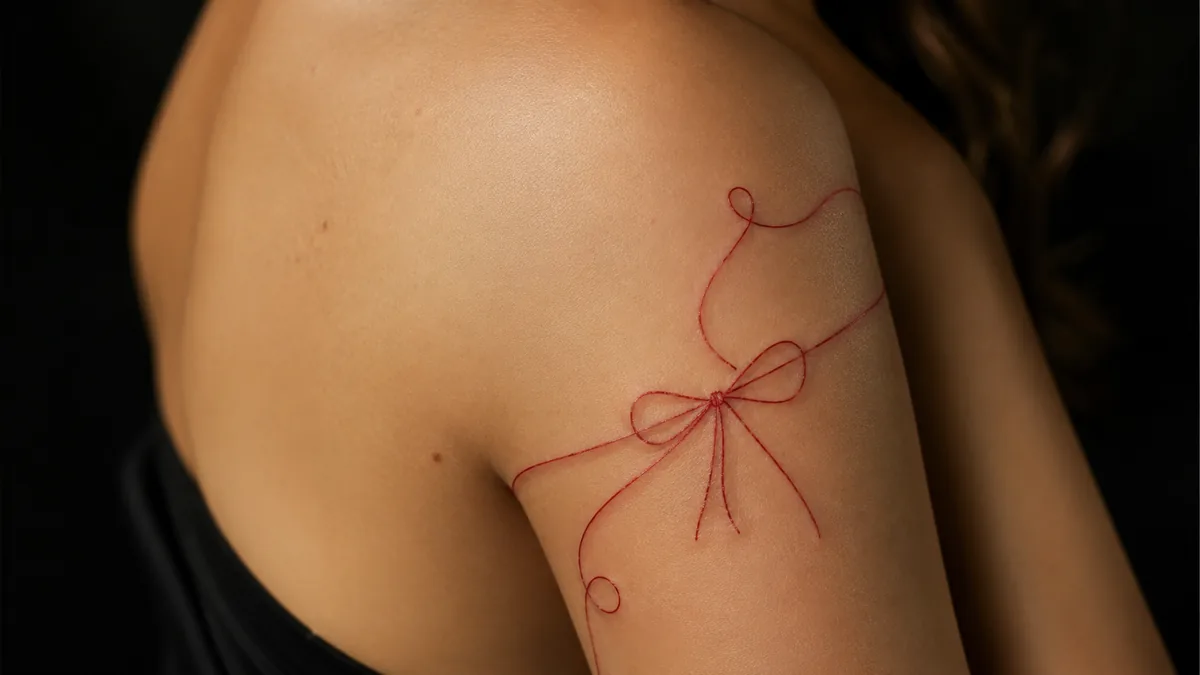
The red string tattoo is one of those simple designs that punches way above its weight. A single line, maybe a knot, maybe a loop around a finger, and suddenly you’ve got something that means fate, love, and an unbreakable connection to another person or to your own path.
People get this tattoo for all kinds of reasons. Some are marking a relationship. Some are honoring a belief in destiny. Some just feel it deep and can’t explain it more than that. Any of those is a solid reason to sit in the chair.
The Core Meaning: Fate and Connection
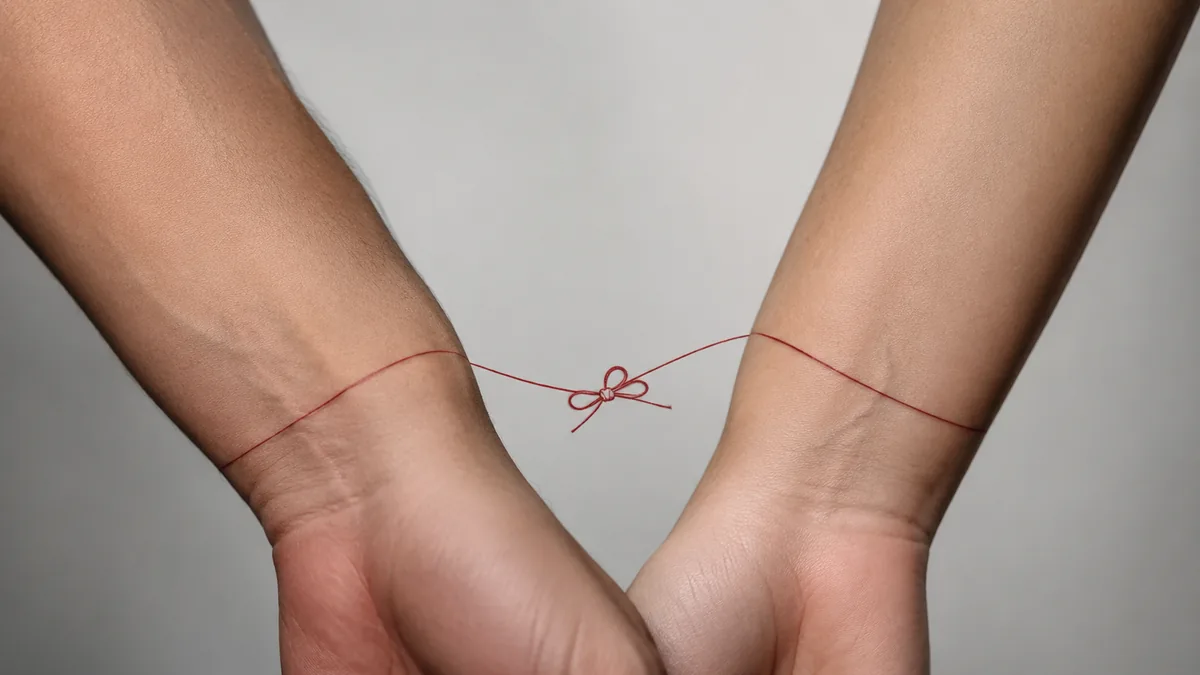
The red string tattoo is rooted in the idea of an invisible thread that ties people together. The concept goes by different names across cultures, but the core reading is consistent: two people are connected by fate, and nothing can permanently break that bond. Distance can stretch it, circumstances can tangle it, but it holds.
On skin, that idea becomes permanent. People choose this tattoo to honor a person they feel destined to know, whether that’s a partner, a best friend, a sibling, or someone they lost. It’s a quiet statement. It doesn’t need an explanation to carry weight.
Where It Comes From: East Asian Tradition
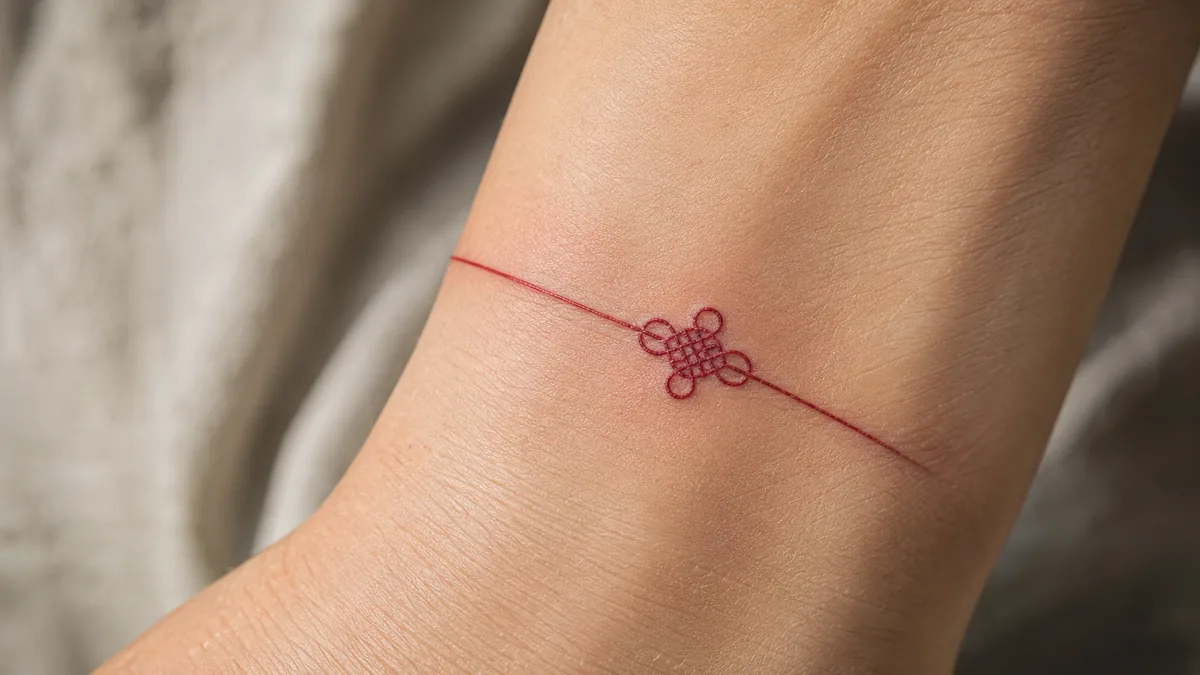
Some connections were written before you were born, this just makes them visible.
The most direct source is the East Asian legend of the red thread of fate. In Chinese mythology, a deity called the Old Man Under the Moon ties a red cord around the ankles of people who are meant to meet. Japanese tradition places the cord on the pinky finger. Both versions share the same idea: the thread connects souls across time and circumstance.
This isn’t invented lore. It’s a centuries-old concept documented in Chinese literature and embedded in Japanese folklore. When tattoo clients reference the red string, this is almost always the mythology they’re drawing from, even if they came to it secondhand through a movie, a book, or a friend’s ink.
Popular Design Variations
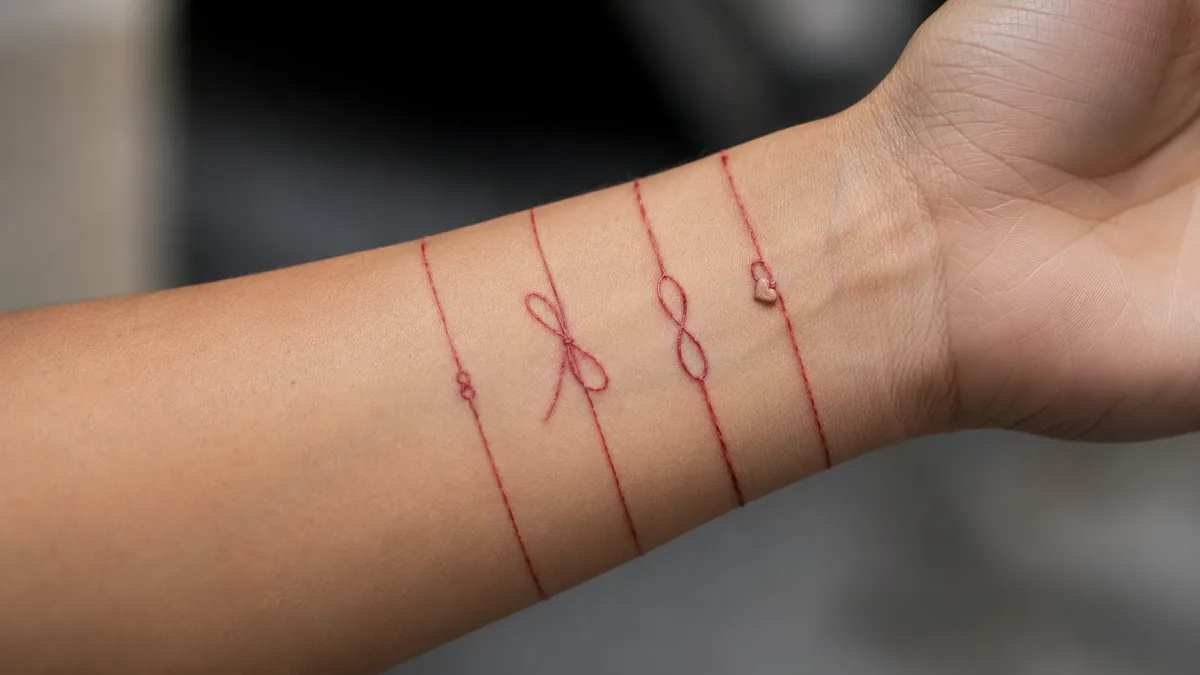
The most classic version is a thin red line wrapped around the pinky finger, sometimes trailing off into a loose knot or fraying end. That placement nods directly to the folklore. You’ll also see it tattooed as a wrapped wrist band, a single looping thread across the forearm, or a more illustrative scene showing two figures connected by a long curving line.
Some clients want matching tattoos with another person, where each person wears one end of the same thread. Others go solo with a knot design that sits on its own. Botanical versions weave the thread through flowers or branches. Keep it clean and intentional. A crooked fine-line thread reads messy; a deliberate one reads powerful.
Fine Line, Bold Line, or Black and Grey

Red strings are most commonly done in fine line with saturated red ink. That combo looks crispy fresh out of the shop, but fine line red ink is one of the harder things to keep looking sharp long-term. Red pigments fade faster than black, and fine line work loses definition in high-wear zones. Plan for touch-ups.
If longevity matters to you, talk to your artist about going slightly thicker on the linework or adding a subtle black outline to lock in the red. Black and grey is also a real option here: a grey thread with shading reads beautifully and ages far more predictably. Bold will hold. That applies to the string just as much as any other design.
Placement, Pain, and How It Ages

The pinky finger is traditional but spicy. Finger tattoos sit on high-wear skin that flexes constantly, and they’re prone to blowout and fading within months. Not a dealbreaker, just a realistic heads-up. The wrist, inner forearm, and collarbone are lower-wear and give the design room to breathe. These spots heal nicer and hold detail longer.
Placement also affects readability. A thread on the inner wrist reads well from close range, intimate and personal. A larger piece on the forearm or upper arm reads from across the room. Think about when and how you want people to notice it. A fine looping thread in a low-traffic spot stays between you and whoever you choose to show it to.
Color Choice and What It Signals
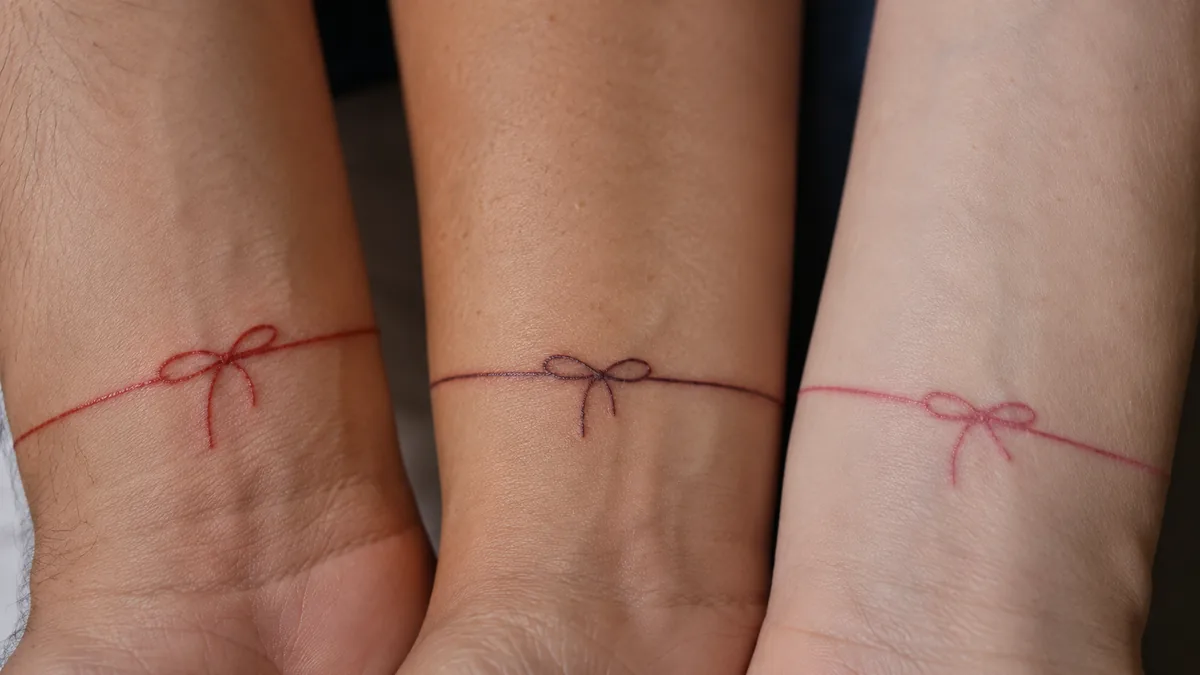
Red is the default because the symbolism is literally built around the color. A saturated red string sits bold against most skin tones when it’s freshly healed. On deeper skin, you’ll want a skilled artist who knows how to pack red ink properly so it shows up with full saturation, not muddy or pink.
Switching to another color changes the meaning or removes it entirely. A gold thread reads as luxury or royalty in some contexts. A black thread reads more somber, sometimes associated with grief or protection depending on the wearer’s intent. If you’re specifically referencing the fate mythology, keep it red. If you’re building your own symbolism, pick the color that fits your story.
Who Gets This Tattoo and How to Make It Yours
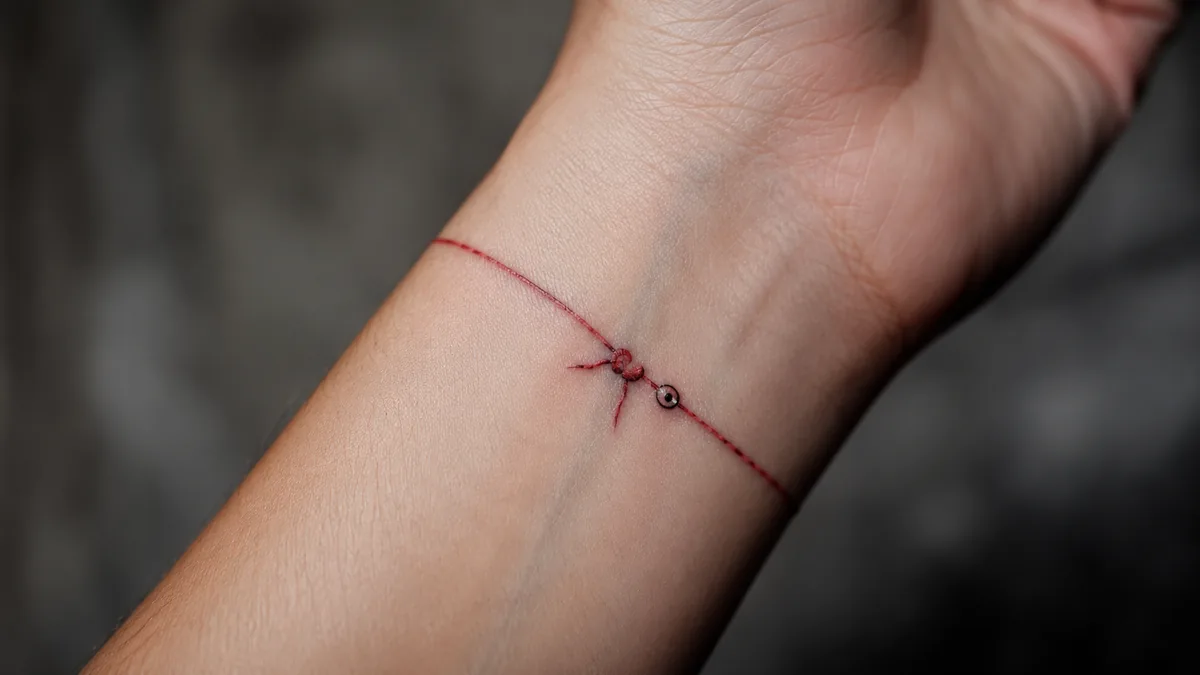
This tattoo spans a wide range of people. You’ll see it on people who found their person and want something permanent to mark that. You’ll see it on people who lost someone and believe that connection doesn’t end. You’ll see it on folks who had a near-miss, a rough chapter they survived, and feel like something was steering them through.
Making it personal is straightforward. Add a significant date along the thread. Let it trail into a meaningful symbol, an anchor, a small bird, a birth flower. Do a matching set with someone else who carries the other end. The design is minimal enough that additions don’t crowd it. Keep the thread itself clean, and everything else becomes context around it.









