
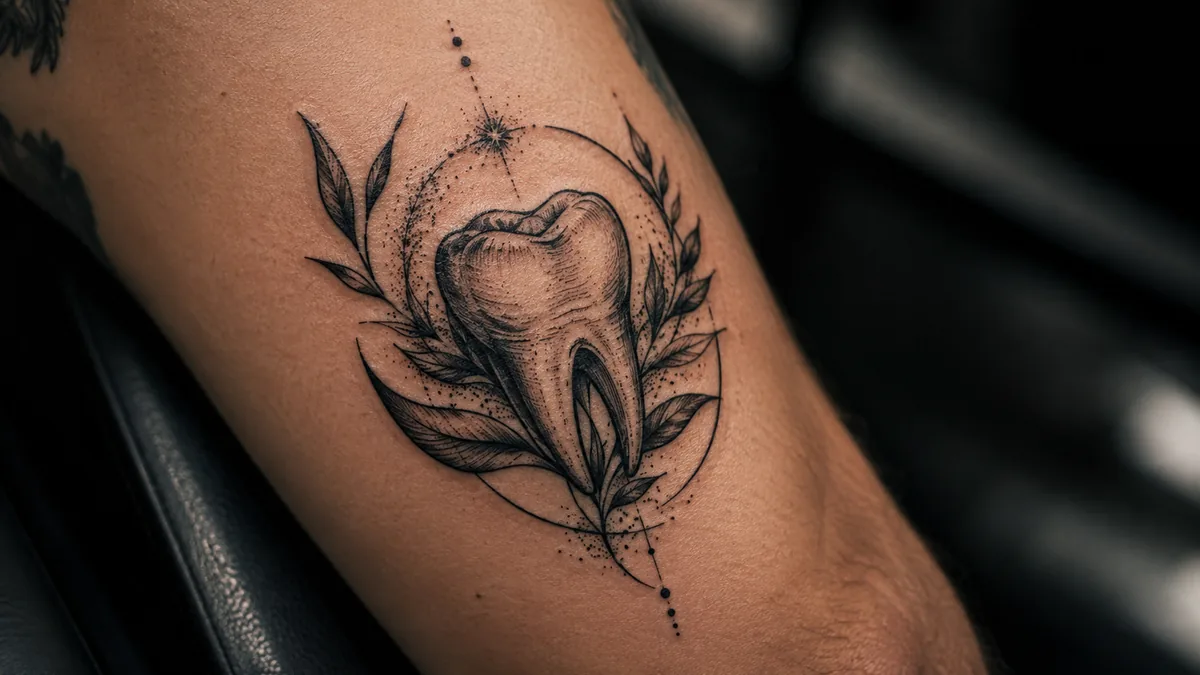
A tooth tattoo is one of those designs that stops people mid-scroll. It’s specific enough to mean something, weird enough to make you look twice. Whether it’s a clean molar floating on a forearm or a cracked canine dripping blood, the tooth carries real weight as a symbol.
the tooth tattoo is about survival, resilience, and the body. Teeth are the hardest things in the human body. They outlast everything. They’re found long after death. That’s not an accident when someone decides to put one on their skin permanently.
Core Meaning: Strength and Survival
Teeth don’t quit. That’s the foundation of this tattoo. They’re built to endure grinding, pressure, years of wear. Getting a tooth tattooed says you’re built the same way. It reads as toughness without needing to shout about it. A lot of people choose it after going through something hard, a loss, a health battle, a rough chapter they came out the other side of.
It also connects to the body in a raw, honest way. Teeth are bone. They remind us we’re physical, mortal, real. Some people lean into that with a more anatomical rendering, showing roots and nerves. That version pushes the symbolism deeper into vulnerability and honesty about what we are underneath.
Memory and Loss
A tooth tattoo is a quiet reminder that you survived what tried to break you.
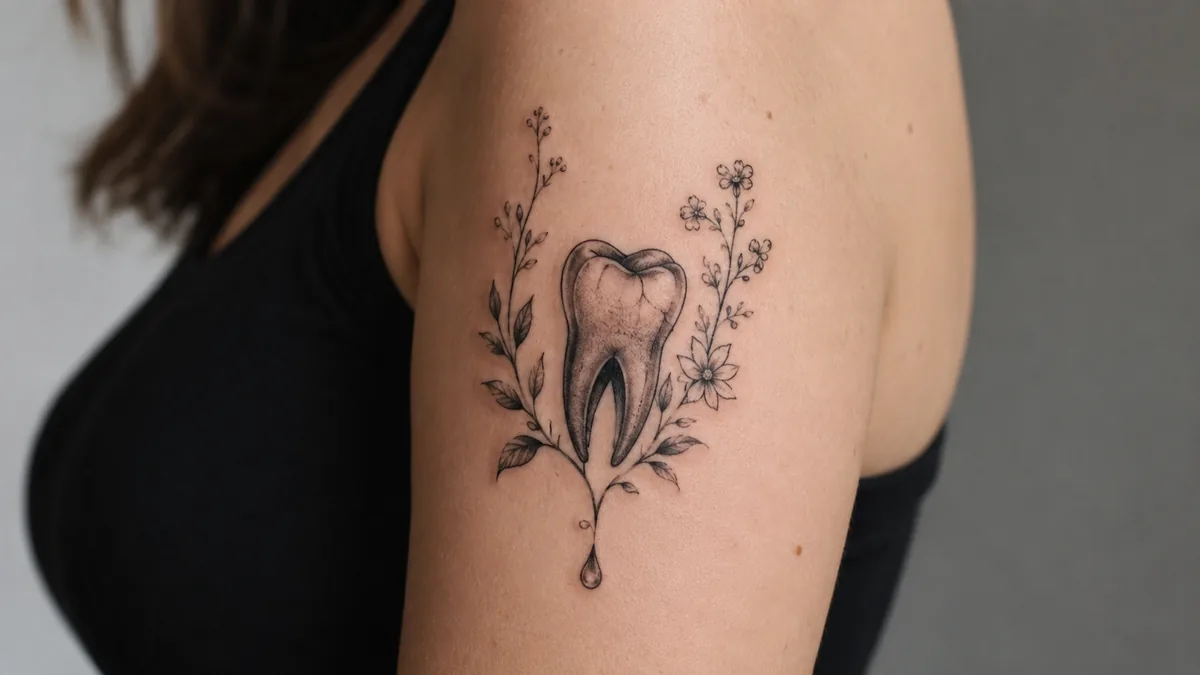
Teeth are personal objects. Baby teeth go in a box. Wisdom teeth get pulled and saved. People lose them in accidents, fights, surgeries. A tooth tattoo can be a direct memorial to a person or a moment. It’s intimate in a way that’s hard to fake. Some clients bring in their own extracted tooth as reference and ask for a portrait-style rendering of the actual tooth.
This makes the tooth tattoo one of the more genuinely sentimental pieces you’ll see in a shop. It doesn’t look sentimental, which is part of why people choose it. It holds grief or memory quietly. No roses, no dates, just this hard little object that survived when other things didn’t.
Dark Humor and Mortality
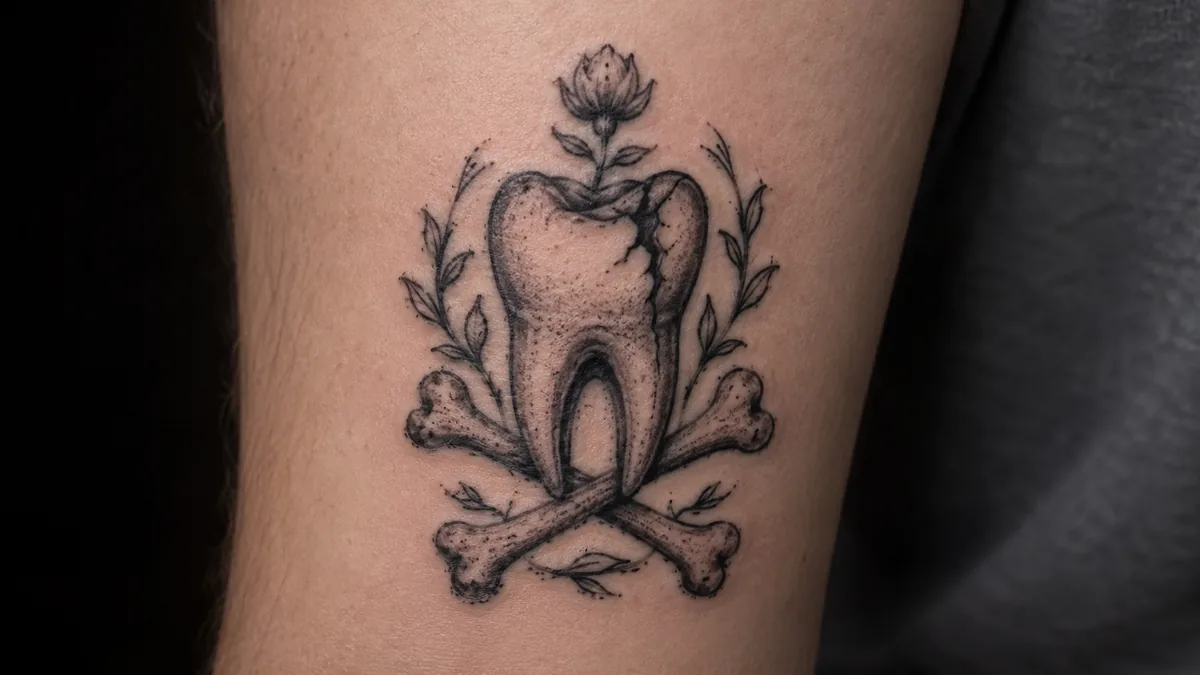
Teeth show up in skulls. They grin at you from memento mori pieces. A single tooth pulls that same thread without going full skull. It’s a nod to mortality with a smirk. A lot of people who get tooth tattoos have that attitude: life is short, bodies decay, might as well find it funny.
You’ll see this play out in designs that add cartoon eyes to a molar, or a tooth with a little face grimacing. It’s self-aware. The person wearing it usually has a dry sense of humor about pain and impermanence. It pairs well with other odd-body imagery like eyeballs, hearts, or bones. The tone is spooky-cute rather than full horror.
Cultural and Historical Context
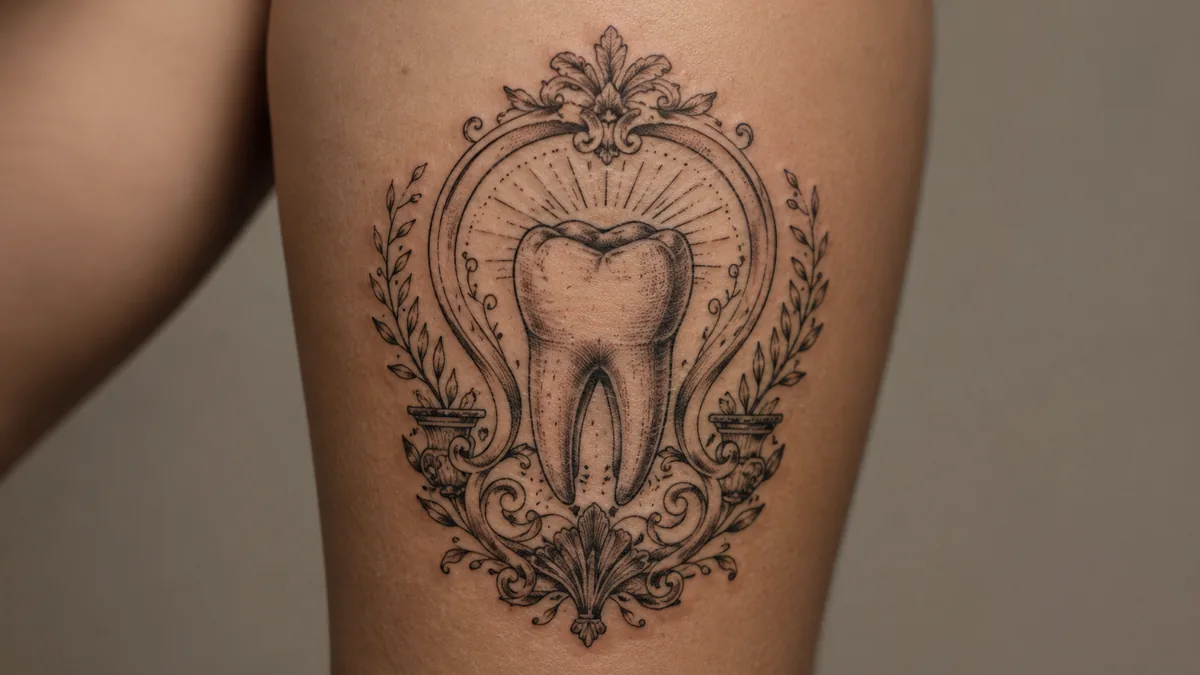
Teeth have appeared as symbols across many cultures, though not always in identical ways. In some Indigenous traditions, animal teeth worn or marked on the body represented the power of the animal. Wearing a predator’s tooth, whether bear or wolf, meant absorbing its strength. That lineage informs how modern people interpret tooth imagery even if they’re not consciously referencing it.
Day of the Dead imagery, rooted in Mexican tradition, uses skulls and teeth as celebrations of the deceased rather than fearful symbols. Some tooth tattoos borrow this framing, especially when done as a tribute piece. It’s worth knowing that context before committing to a design so the tone of your piece actually lines up with what you mean by it.
Popular Design Styles and Variations
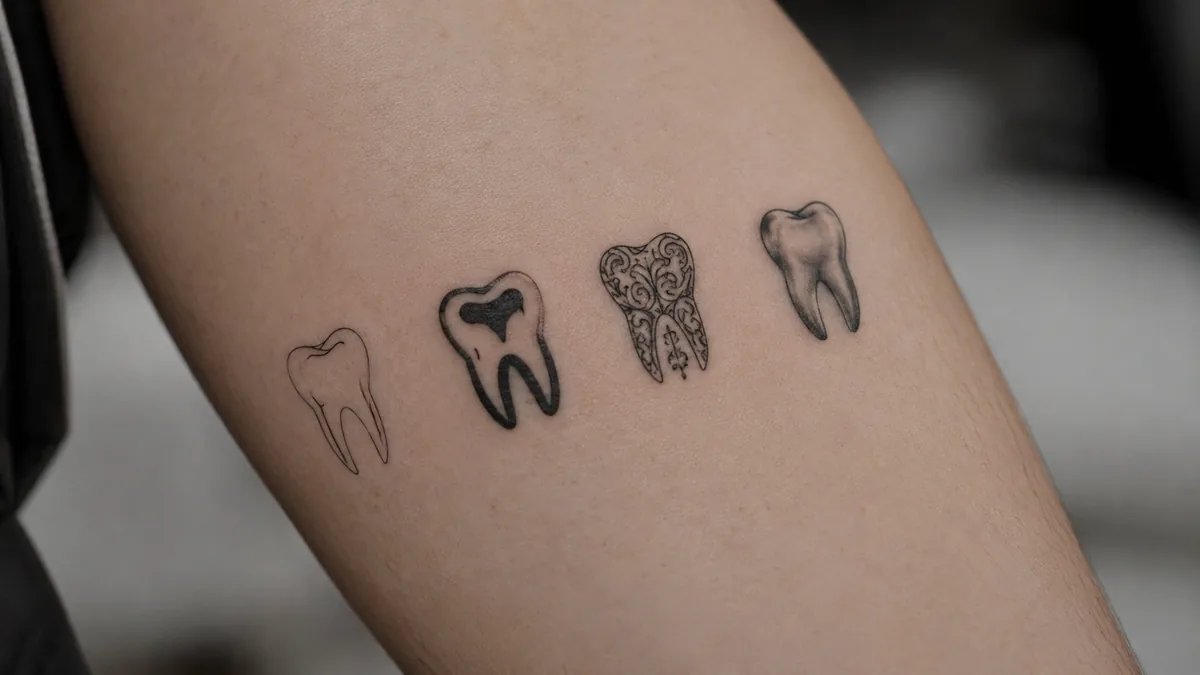
You’ve got a wide range to work with. The anatomical molar, showing every root and chamber, suits black and grey realism and reads incredibly clean on skin. Fine line tooth tattoos have blown up, especially small single-tooth pieces on the wrist or inner arm. They’re delicate and crispy when fresh but need to be executed with real precision or they blur fast.
On the bolder end, traditional and neo-traditional styles take a tooth and saturate it with color, bold outlines, and stylized shading. Those pieces hold much better over time. Bold will hold. You’ll also see the tooth combined with flowers, snakes, lightning bolts, or fire to layer additional meaning. A tooth wrapped in a snake hits different than a plain molar.
Color vs. Black and Grey
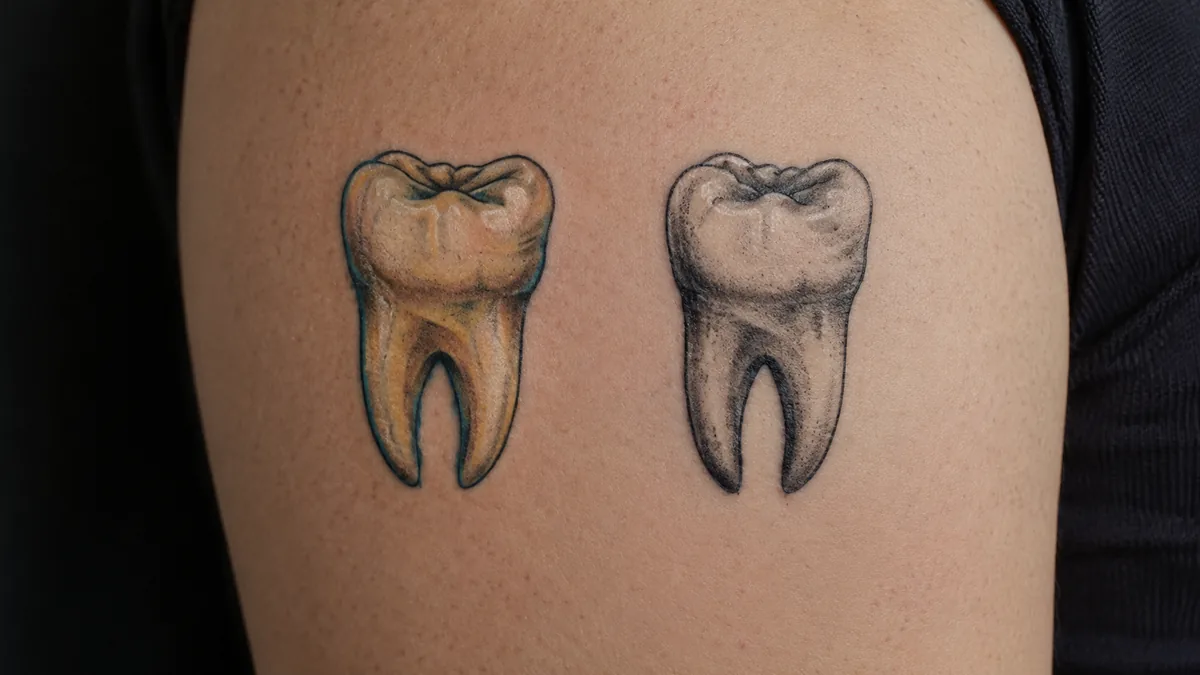
Black and grey is the dominant choice for tooth tattoos and for good reason. Teeth are naturally white and grey, so a black and grey rendering with tight whip shading can look almost photographic. It lets the form speak. A skilled artist can get incredible contrast on a small tooth piece using just black ink and a light hand.
Color works well in traditional or illustrative styles. A golden tooth, a tooth with a red cavity dripping, or a pastel kawaii molar with blush cheeks all use color to change the emotional register. Just know that color, especially lighter pigments, fades faster and needs touch-ups. If you want it to hold and read from across the room years from now, black and grey is the safer bet.
Placement, Pain, and Aging
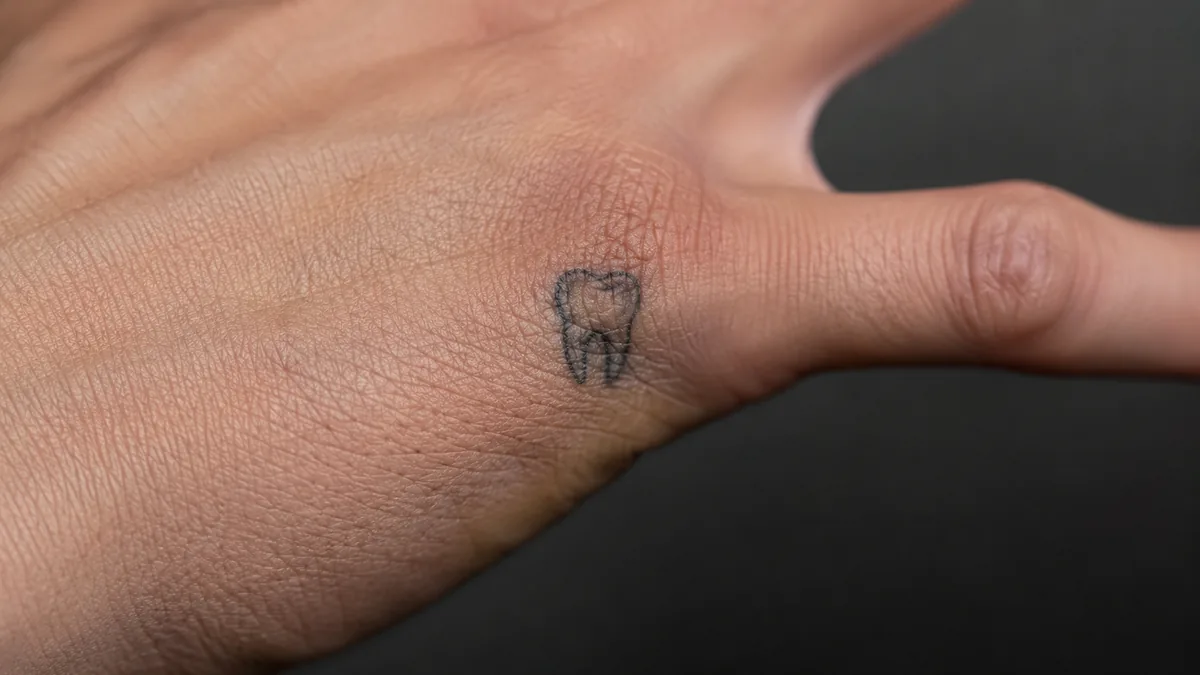
Small to medium tooth designs fit naturally on the forearm, inner wrist, upper arm, calf, and behind the ear. The forearm and outer calf are low-wear, easy to heal, and the tattoo stays crisp longer. Inner wrist and fingers are high-wear zones. Finger tattoos fade and blow out fast. A fine line tooth on a finger will look soft and muddy within a couple of years.
Pain-wise, the inner arm and ribs are spicy. The outer forearm and upper arm are manageable. Behind the ear stings but heals nice if you keep it clean. For a small tooth piece, even a spicy spot is over quickly. Larger anatomical pieces on the ribs or sternum are a longer session and you’ll feel it, but they age beautifully on flat skin with minimal sun exposure.
Who Gets This Tattoo and How to Make It Yours
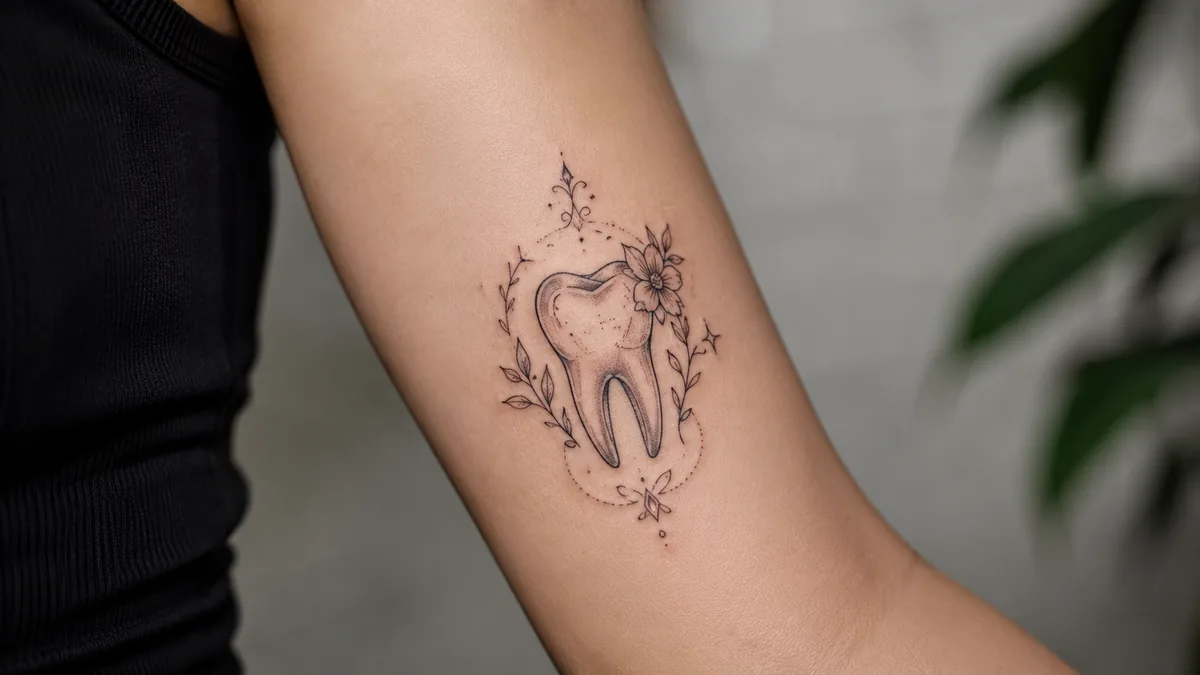
Tooth tattoos attract people who like body-focused, slightly odd imagery. Medical workers, dentists, dental hygienists get them as professional badges. People in recovery get them as survival markers. Artists and creatives get them because the form is just interesting to look at. It crosses a lot of demographics because the symbol is flexible enough to hold very different meanings.
To make it personal, bring something specific to your artist. A photo of a tooth you actually lost. A design element that adds a second layer of meaning. The style you choose matters as much as the image. A fine line tooth says something different than a bold traditional one. Talk to your artist about what you want it to feel like in ten years, not just what it looks like on day one.









