
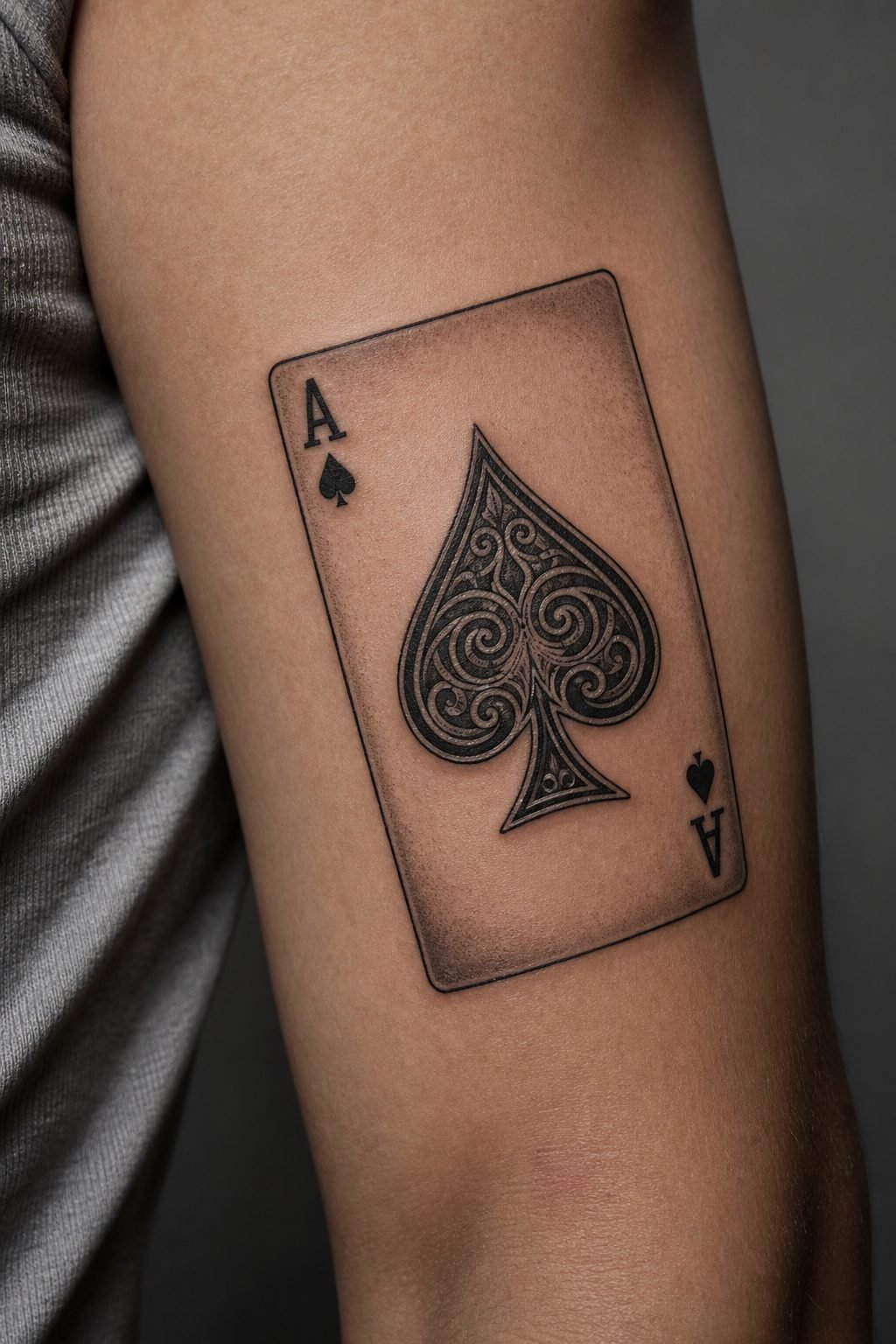
The ace of spades tattoo carries layered meanings that shift depending on context and personal intent. it represents death, finality, and the “death card” reputation from centuries of folklore and military tradition. Yet it also signals good fortune, dominance, and fearless individuality, making it one of the most versatile and recognizable symbols in tattoo culture.
Symbolism & History
The ace of spades has accumulated symbolic weight across multiple domains over hundreds of years. Understanding these origins helps explain why someone might choose this specific card for permanent ink.
- Card lore: In traditional French and English decks, the ace of spades was stamped with a tax stamp, making it visually distinct and associated with authority. Over time, gamblers viewed it as the highest card and a harbinger of winning or losing everything.
- Military tradition: American soldiers in World War II and Vietnam sometimes placed the ace of spades on enemy casualties or wore it as psychological warfare, believing it frightened opposing forces who associated the symbol with death. This practice was later popularized in films and music, cementing the military-death connection.
- Biker and outlaw culture: Post-war motorcycle clubs adopted the ace as a badge of living dangerously and embracing mortality, often pairing it with skulls or flames.
- Music and pop culture: Motörhead’s iconic “Ace of Spades” album and Lemmy Kilmister’s persona turned the symbol into rock-and-roll rebellion, attracting fans who wanted to embody that unapologetic energy.
Common Variations & Styles
Tattoo artists have developed countless visual approaches to the ace of spades, each carrying slightly different connotations. The style you choose shapes how the meaning reads to others.
- Traditional American: Bold black lines, limited color palette, often framed with banners reading “Born to Lose” or “Live to Win.” This style emphasizes heritage and classic tattoo culture.
- Realistic playing card: Highly detailed renderings showing wear, texture, and shadow, sometimes with torn edges or burning effects. These suggest fate’s fragility or a specific memorable hand.
- Skull integration: The spade shape containing or morphing into a skull. This amplifies the death motif and connects to memento mori traditions.
- Minimalist or geometric: Clean lines, single needle work, or abstracted spade shapes. Modern and understated, often chosen for personal rather than public statement.
- Combined elements: Dice, poker chips, roses, or clock faces paired with the ace to create narrative pieces about risk, love, or time running out.
Best Placements
The ace of spades adapts to nearly any body location, though certain placements emphasize particular aspects of its meaning.
- Hand or fingers: Highly visible, suggesting confidence and willingness to show your cards literally and figuratively. Finger-sized aces work best in simple blackwork.
- Forearm: Balances visibility with coverage options, ideal for medium-sized detailed pieces that invite conversation.
- Chest or over the heart: Suggests the tattoo holds deep personal significance, often chosen by veterans or those who have faced mortality directly.
- Thigh or calf: Accommodates larger compositions with surrounding imagery, popular for biker and military-themed full-leg pieces.
- Behind the ear or neck: Subtle placement that still carries edge, frequently chosen by those in music or creative professions.
Who Chooses This Tattoo / Personal Meanings
People drawn to the ace of spades rarely select it casually. The tattoo typically marks a significant philosophy, experience, or identity commitment.
- Gamblers and card players: Often commemorate a pivotal win, loss, or the decision to leave that lifestyle behind. The ace represents both the thrill and the danger.
- Military veterans: Some carry it as a unit identifier, a dark humor nod to combat experience, or a tribute to fallen comrades who played cards during deployment.
- Motorcycle club members: Signifies acceptance of risk and brotherhood within communities that value freedom over longevity.
- Musicians and fans: Honors specific artists or genres, particularly rock, metal, and blues traditions where the symbol appears constantly.
- Individuals facing mortality: Cancer survivors, those who have lost loved ones suddenly, or people with dangerous professions sometimes choose the ace as acknowledgment that death comes for everyone, but living fully remains the choice.
Similar Symbols
Tattoo collectors considering the ace of spades often explore related imagery that shares thematic territory. These alternatives or complements can refine or expand the intended message.
- Joker card: Chaos, unpredictability, and outsider status rather than the ace’s focused power.
- Queen or king of hearts: Romantic risk and emotional gambling, softer than the spade’s starkness.
- Skull and crossbones: More universally recognized death symbol, less nuanced than the ace’s layered history.
- Hourglass: Time running out without the competitive or rebellious undertones.
- Raven or crow: Death omens in folklore, more naturalistic and literary than the manufactured playing card.
Final Thoughts
The ace of spades endures because it refuses single definition. It can threaten or celebrate, mourn or feature, depending on the wearer and the artwork’s execution. Before committing, consider which thread of its long history resonates with your own story, and collaborate with an artist who understands how to translate that meaning into ink that ages as powerfully as the symbol itself.









