
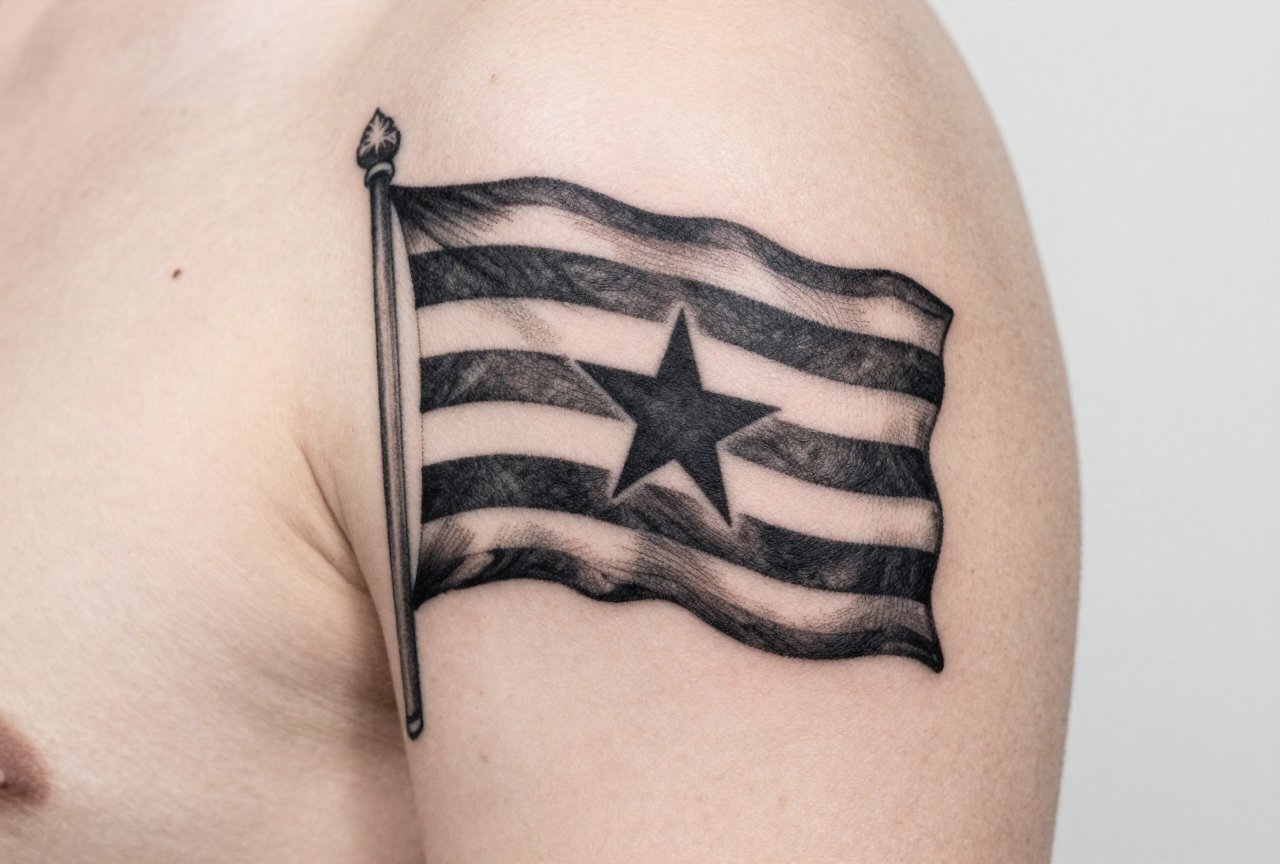
The rebellion flag tattoo carries layered meanings that shift dramatically depending on context, design, and wearer intent. this tattoo symbolizes resistance against authority, defiance of societal norms, and an unwavering commitment to personal freedom. However, the specific interpretation varies widely based on which historical or cultural flag reference the design draws from, making context essential to understanding any individual piece.
Symbolism & History
The term “rebellion flag” most commonly references the Confederate battle flag, though tattoo artists and wearers increasingly apply the phrase to broader revolutionary imagery. This historical association creates complex symbolism that cannot be ignored in American tattoo culture.
For some wearers, particularly in Southern states, the design connects to ancestral heritage and regional identity. The flag emerged during the American Civil War as a military banner for Confederate forces, and its post-war adoption by various groups has loaded it with additional cultural weight through subsequent decades.
Alternative interpretations focus on generalized rebellion concepts divorced from specific historical events. These designs may incorporate modified color schemes, additional imagery, or stylistic alterations that distance the tattoo from its origins while preserving the core theme of resistance. The skull with crossed flags, the anarchy symbol merged with flag elements, and purely abstract “rebel” imagery all represent attempts to capture defiant energy without historical baggage.
Contemporary tattoo culture increasingly grapples with this tension between historical specificity and personal reinterpretation. Many artists now explicitly discuss design origins with clients, ensuring informed choices about permanent body art.
Common Variations & Styles
Tattoo artists execute rebellion flag designs across virtually every established style, each bringing distinct emotional resonance to the concept.
- Traditional American: Bold lines, limited color palettes, and classic imagery like eagles, snakes, or pin-up figures paired with flag elements create timeless, immediately recognizable pieces rooted in tattoo history.
- Realistic: Photographic rendering of fabric texture, weathering, and dimensional folding transforms the symbol into something tangible and visceral, often emphasizing the physical object over abstract concept.
- Black and grey: Stripping away color forces focus on composition and shading, frequently producing more somber, contemplative interpretations that can feel less confrontational than full-color versions.
- Neo-traditional: Expanded color ranges and more elaborate surrounding imagery allow for personalized storytelling, incorporating roses, clocks, banners with names or dates, and other narrative elements.
- Trash polka: The German-born style’s combination of realistic imagery with abstract splatter, brush strokes, and geometric elements creates deliberately chaotic, aggressive pieces that amplify the rebellion theme through visual technique alone.
Modified designs incorporating flames, tearing, or juxtaposition with peace symbols represent attempts to comment on the flag’s contested nature rather than simply displaying it.
Best Placements
The rebellion flag tattoo appears prominently across the body, with placement choices often reinforcing intended messaging.
Large back pieces and chest panels allow for detailed, contextualized designs that incorporate additional symbolism and narrative elements. These placements suggest commitment to the tattoo’s meaning and willingness to engage with viewer reactions.
Upper arms and shoulders remain classic locations for military-derived imagery, continuing a tradition of displaying allegiance or identity in visible yet professionally coverable areas. Forearm and hand placements make bolder statements, prioritizing visibility over discretion.
Smaller designs on wrists, ankles, or behind ears typically represent more personal, private interpretations rather than public declarations. The neck remains a controversial placement that maximizes visibility and inevitably intensifies whatever reactions the design provokes.
Who Chooses This Tattoo / Personal Meanings
Wearers of rebellion flag tattoos represent genuinely diverse motivations that resist simple categorization.
Some individuals trace family military service through Confederate ancestors and view the tattoo as honoring that lineage. Others grew up in environments where the symbol carried primarily regional pride associations, adopting it before encountering broader cultural critiques.
Countercultural adopters specifically seek the provocation the design generates, embracing outsider identity and rejecting mainstream sensibilities. For these wearers, the controversy itself becomes the point, a deliberate opting-out of social approval.
Reformed or evolving perspectives create another category: individuals who got the tattoo at one life stage and now hold different views, sometimes choosing modification, cover-up, or retention as ongoing personal negotiation with past decisions.
Artists report increasing numbers of clients seeking consultations specifically to understand and potentially redirect their impulses toward less loaded imagery that still captures desired feelings of independence or nonconformity.
Similar Symbols
Tattoo enthusiasts drawn to rebellion themes have numerous alternative symbols that communicate resistance without identical historical associations.
- Gadsden flag imagery: The coiled rattlesnake with “Don’t Tread on Me” predates the Civil War and carries libertarian rather than Confederate associations for many viewers.
- Anarchy symbols: The circled ‘A’ and related imagery communicate anti-authoritarian positions with clearer political specificity.
- Pirate flags: Jolly Roger designs offer playful yet defiant energy, often with more universally understood rebellious connotations.
- Revolutionary war imagery: Colonial-era flags and figures provide American historical rebellion without the Civil War’s specific conflicts.
- Personalized resistance imagery: Custom designs incorporating specific life events, overcoming obstacles, or individual definitions of freedom create unique rebellion narratives without borrowed symbolism.
Final Thoughts
The rebellion flag tattoo remains one of American body art’s most contested designs, impossible to evaluate without acknowledging its multiple contexts and evolving interpretations. Whether approached as historical artifact, regional marker, personal statement, or deliberate provocation, this tattoo demands that wearers and viewers alike engage with complexity rather than settle for simple readings. The most successful pieces in this category result from genuine self-reflection about motivation, consultation with knowledgeable artists, and honest acceptance of how the design will function in diverse social environments. Like all meaningful tattoos, its ultimate significance emerges from the specific human story behind the skin, not from any universal dictionary of symbols. For those considering this path, the question worth answering is not what the flag means in general, but what it means for you, and whether that meaning warrants permanent embodiment.
Related Tattoo Meanings
- Let Them Tattoo Meaning: Release, Freedom Boundaries
- Moms Tattoo Meaning: Ink That Honors Motherhood
- Best Friends Tattoo Meaning: Symbols of Unbreakable Bonds
- Explore more









