A scorpion tattoo represents power, protection, resilience, and transformation. Across cultures and centuries, this arachnid has carried deep symbolic weight, standing as a guardian against threats and a marker of personal strength. Today, people choose scorpion ink to signal their ability to survive hardship, defend their boundaries, or honor a powerful life chapter.
Symbolism & History
The scorpion’s symbolic roots stretch back thousands of years. In ancient Egypt, the goddess Serqet wore a scorpion on her head, presiding over protection, magic, and the transition between life and death. Her priests invoked scorpion imagery to guard against venomous threats and evil spirits. Mesopotamian cultures similarly viewed the creature as a potent protective emblem, carving scorpion figures into boundary stones and amulets.
In Greek mythology, the scorpion gained fame through the constellation Scorpius, sent by Gaia to defeat the boastful hunter Orion. This celestial connection linked the creature to fate, cosmic justice, and the inevitability of consequences. The zodiac association persists today, making scorpion tattoos popular among those born under the Scorpio sign (October 23 – November 21), though many non-Scorpios also embrace the symbol for its broader meanings.
Native American traditions, particularly in the Southwest, recognized the scorpion as a creature of survival in harsh environments. Its ability to thrive in deserts and darkness made it a symbol of adaptability and hidden strength. In some Mexican and Latin American folk traditions, the scorpion appears in protective charms and healing rituals, though never as a literal cure for illness.
Key symbolic threads include:
- Protection and defense: The raised stinger signals readiness to guard against threats
- Resilience: Surviving extreme conditions and emerging stronger
- Transformation: Shedding old forms through molting, mirroring personal rebirth
- Intensity and passion: The Scorpio zodiac link to deep emotional power
- Mortality and danger: A memento mori reminding us of life’s fragility
Common Variations & Styles
Scorpion tattoos adapt remarkably across artistic approaches. Traditional American style renders bold, graphic scorpions with thick black outlines and limited color palettes, often pairing the creature with roses, daggers, or banners. This classic look emphasizes the scorpion as a timeless tough-guy emblem.
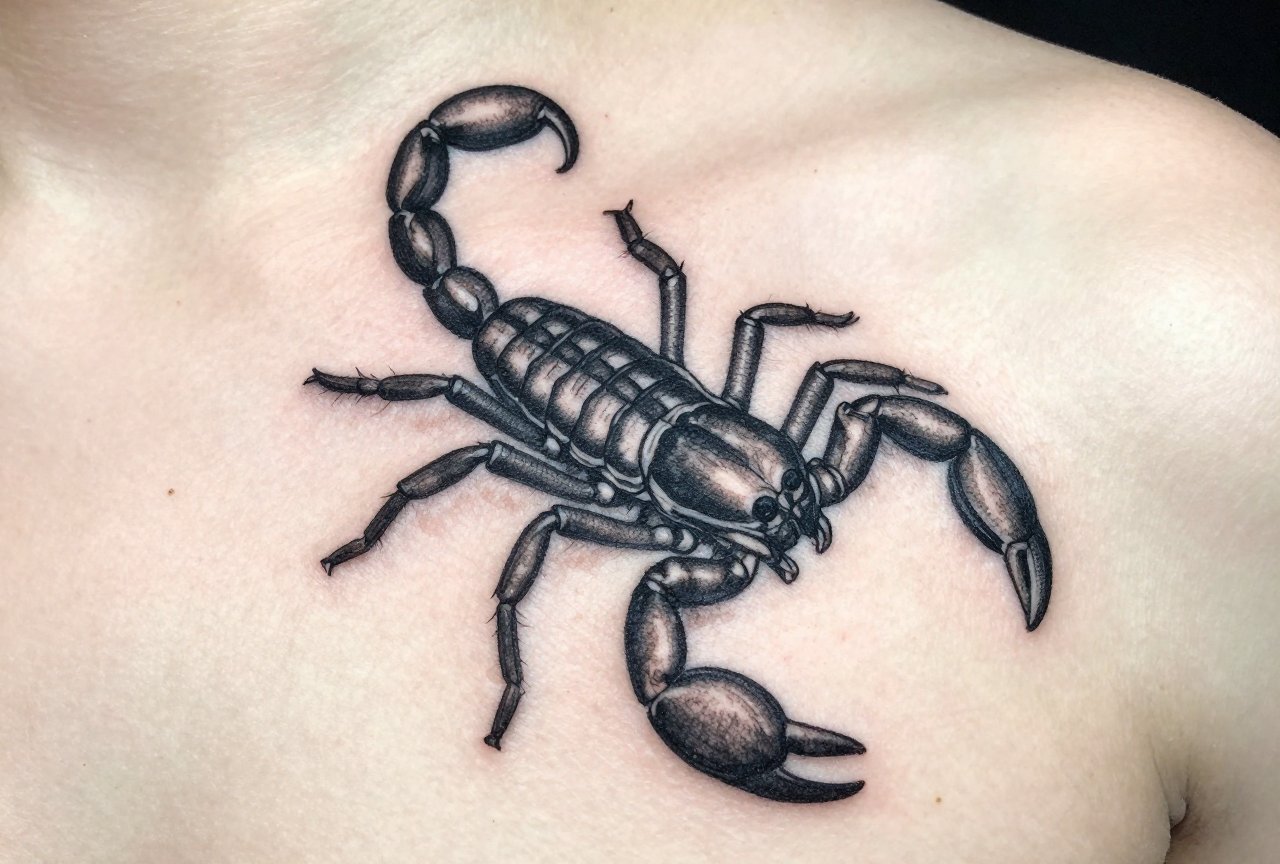
Realistic and neo-traditional approaches capture anatomical detail, highlighting the segmented tail, jointed legs, and menacing pincers. These designs often use dramatic shading to create three-dimensional depth, making the scorpion appear to crawl across skin.
Geometric and tribal variations abstract the form into angular patterns or Polynesian-inspired blackwork. These styles strip away literal representation in favor of symbolic essence, often appealing to those who want the meaning without aggressive imagery.
Minimalist line-work scorpions have surged in popularity, using single continuous lines or delicate stippling. These subtle designs suit professionals seeking meaningful ink that remains easily concealable.
Color choices carry additional weight. Black and grey dominate, reinforcing the scorpion’s association with shadow and mystery. Red accents on the stinger or eyes amplify danger and passion. Some choose gold or desert tones to emphasize the creature’s natural habitat and solar connections.
Best Placements
The scorpion’s elongated shape suits several body locations particularly well. The forearm and calf allow the tail to curve naturally along muscle contours, creating dynamic movement. The shoulder blade and upper back provide flat canvases for larger, more detailed compositions. Neck and hand placements make bold statements, though these highly visible spots require commitment.
Smaller scorpion designs work well on wrists, ankles, behind the ear, or along the collarbone. The ribcage offers a painful but dramatic location, the scorpion’s defensive posture echoing the protection of vulnerable organs. Some choose the lower back or hip, where the tail’s curve follows natural body lines.
Who Chooses This Tattoo / Personal Meanings
Scorpion tattoo wearers span diverse backgrounds and motivations. Military personnel and first responders often select the symbol to represent their readiness to confront danger and protect others. Survivors of trauma, illness, or addiction frequently choose scorpion ink to mark their resilience and the transformation of hardship into strength.
Those with Scorpio sun, moon, or rising signs may feel astrologically drawn to the creature as a personal totem. People who have undergone major life transitions, career changes, or relationship endings sometimes use scorpion tattoos to signify their rebirth and renewed boundaries.
The scorpion also appeals to individuals who identify with its solitary nature, preferring quality connections over social quantity. Its nocturnal habits resonate with night owls, introverts, and those who find their power in darkness rather than spotlight.
Common personal meanings include:
- Overcoming betrayal or backstabbing (the stinger as justified response)
- Embracing one’s “shadow side” or hidden depths
- Honoring a fierce, protective personality
- Marking survival through a literal or metaphorical desert period
- Signaling sexual intensity and passionate commitment
Similar Symbols
Tattoo seekers drawn to scorpion symbolism often consider related imagery. The spider shares web-weaving patience and predatory cunning, though with less defensive emphasis. Snakes offer similar transformation symbolism through shedding, plus broader cultural familiarity. The phoenix represents rebirth more explicitly but lacks the scorpion’s protective edge.
Wolves and bears provide animal alternatives for loyalty and strength, respectively, without the scorpion’s dangerous undertones. For zodiac enthusiasts, the scorpion’s fellow water signs, crab and fish, offer gentler expressions of emotional depth. The eagle, Scorpio’s evolved symbol in some astrological traditions, represents the same powerful potential achieved through higher perspective.
Final Thoughts
The scorpion tattoo endures because it refuses simple categorization. It protects and threatens, survives and transforms, hides in darkness and shines in constellation. Whether rendered in bold traditional lines or delicate minimalist strokes, it carries weight beyond its size. For those considering this ink, the essential question is not whether the scorpion suits you, but which aspect of its multilayered symbolism resonates most deeply with your own story. The best scorpion tattoos emerge when personal meaning meets thoughtful design, creating permanent art that continues to reveal new layers over time.
Related Tattoo Meanings
- Pinoy Tribal Tattoo Meaning
- Spider Tattoo Meaning: Fate, Black Widow and the Web
- Crow Tattoo Meaning: Intelligence, Mystery, Transformation and Omen Sy
- Explore more
Frequently Asked Questions
What does a scorpion tattoo symbolize in different cultures?
In ancient Egyptian culture, scorpions represented protection and were associated with the goddess Serqet. In Native American traditions, they symbolize transformation and survival through harsh conditions.
Is a scorpion tattoo good for protection?
Many people choose scorpion tattoos as talismans believed to ward off negative energy and enemies. The scorpion’s natural defensive armor makes it a powerful symbol of personal safeguarding and boundaries.
What does a scorpion tattoo mean for transformation?
Scorpions shed their exoskeletons multiple times throughout their lives, making them potent symbols of rebirth and personal growth. This meaning resonates with people who have overcome difficult life changes or addiction recovery.
Where is the best placement for a scorpion tattoo to enhance its meaning?
The upper back or shoulder blade emphasizes protection and strength, while the forearm or wrist highlights personal transformation as a visible daily reminder. Some choose the chest near the heart to symbolize fierce loyalty and guarded emotions.