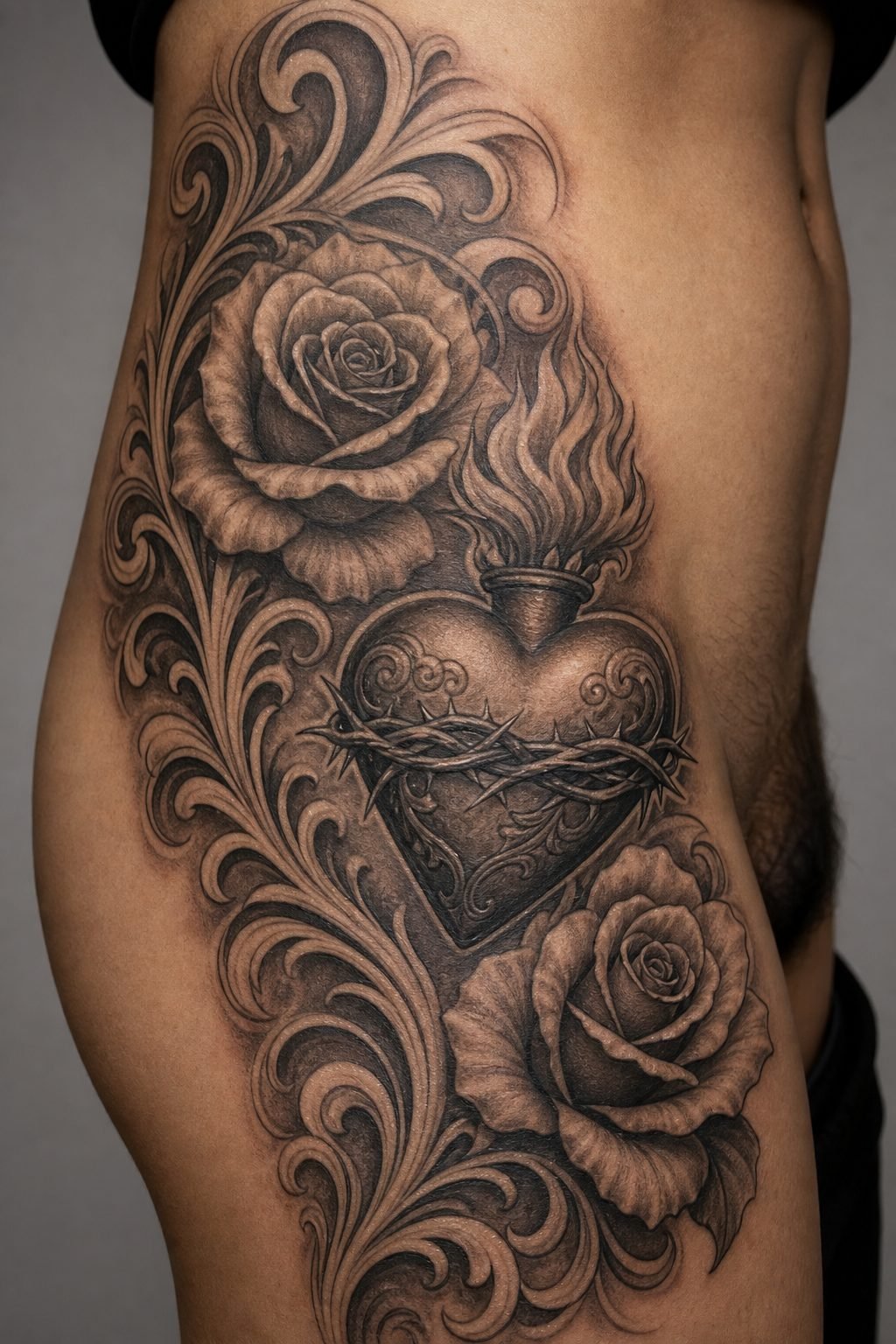
Chicano tattoos are a deeply rooted American tattoo tradition born from Mexican-American culture in the Southwest United States. This style blends religious iconography, fine-line realism, cultural symbolism, and narrative storytelling into powerful black-and-grey compositions tied to identity, struggle, pride, and family. Originating in the 1940s and 1950s within Chicano communities, the aesthetic has moved from underground prison art into one of the most respected and technically demanding styles in contemporary tattooing.
Origins and History
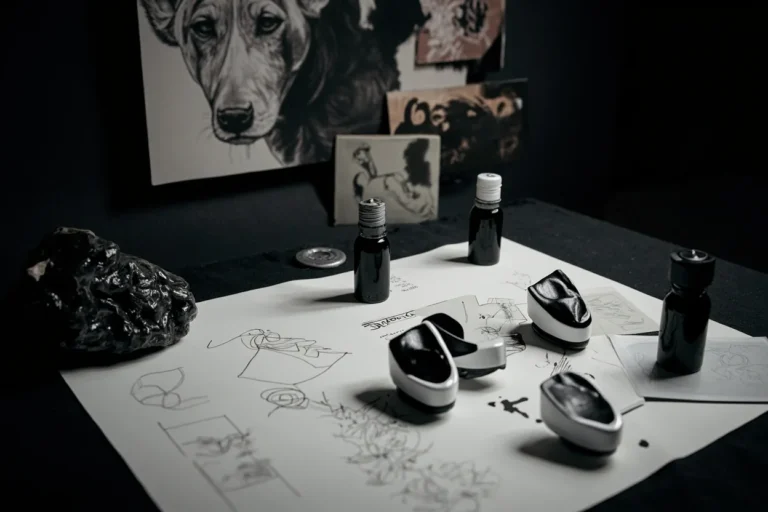
The Chicano tattoo tradition appears to have emerged from Pachuco culture in the 1940s, when Mexican-American youth in Los Angeles, Texas, and Arizona developed distinct visual identities. Early designs were hand-poked or machine-worked using improvised equipment, often in prison settings where tattooing was forbidden. Artists used single needles and soot-based ink to create fine-line portraits, religious figures, and lettering.
By the 1970s and 1980s, the style gained recognition beyond barrio walls. Pioneers like Freddy Negrete and Jack Rudy refined the techniques and opened legitimate studios, bringing Chicano black-and-grey work into fine art spaces. Ed Hardy’s broader push to legitimize tattooing as a fine art discipline helped create cultural space for the style to be taken seriously. The aesthetic spread through hip-hop culture, lowrider magazines, and films, while remaining spiritually connected to its community origins.
Key Characteristics and Motifs
Chicano tattoos carry a specific visual vocabulary and require real technical precision. The style prioritizes smooth grey washes, razor-sharp line work, and photorealistic detail over bold color or heavy outlines.
- Religious imagery: Virgin of Guadalupe, Sacred Heart, praying hands, crucifixes, and rosaries reflect deep Catholic faith
- Portraiture: Realistic faces of family members, lost loved ones, or cultural icons
- Clown faces and masks: Representing the duality of laughter and pain, the classic smile now, cry later symbol
- Lettering and script: Cursive names, dates, quotes, and placas (neighborhood identifiers)
- Payasa girls: Stylized female faces with dramatic makeup, symbolizing beauty and barrio life
- Old English and flowing script: Bold lettering with ornamental flourishes
- Lowrider and street culture: Cars, dice, and urban landscapes that ground the work in place
Color vs Black and Grey
Traditional Chicano tattooing is built on black-and-grey execution. Artists build depth through meticulous shading rather than color saturation, creating a soft, photographic quality that echoes charcoal drawings or old photographs. This approach developed partly from practical constraints: limited ink availability in prison settings made grey wash techniques necessary.
Contemporary artists sometimes incorporate limited color accents, particularly deep reds, blues, or earth tones, though pure black-and-grey remains the standard for most practitioners. Working without color forces artists to master value control, skin tone adaptation, and smooth gradient transitions. If you are looking for authentic Chicano work, understanding grey wash mastery is how you separate skilled artists from imitators.
Placement Considerations
Chicano tattoos traditionally favor large, visible placements that allow for detailed storytelling and dramatic composition. The style’s fine lines and subtle shading require adequate space to age properly and stay readable over time.
- Full sleeves and half sleeves: Ideal for narrative scenes with multiple integrated elements
- Chest and stomach panels: Large surface areas for religious figures or portraits
- Back pieces: Accommodate the most ambitious compositions and the finest detail work
- Neck and hands: Traditional placements for lettering and small symbols, though highly visible and career-relevant
- Full leg sleeves: Increasingly popular for collectors expanding beyond upper body work
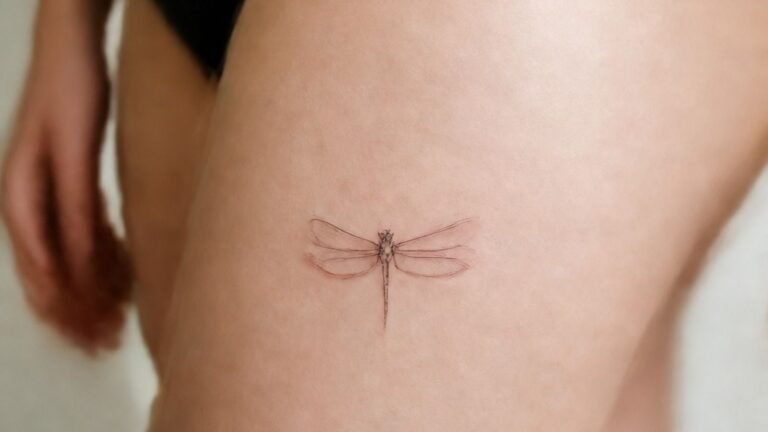
Small, isolated designs generally work against the style. Chicano tattooing is built on cohesive storytelling and flowing composition across larger areas, so cramped placements undercut the work.
Cultural Context: Appreciation and Respect
Chicano tattoos carry weight that purely decorative styles do not. The imagery grew from lived experiences of discrimination, incarceration, family loss, and community pride in Mexican-American communities. That history travels with every Virgin of Guadalupe or placa you put on your skin.
If you are outside this cultural background, that does not automatically close the door, but it does mean you owe the tradition honest engagement. Research what the symbols mean. Work with an artist who has genuine roots in Chicano tattooing, not one who learned the style from social media. Ask questions in your consultation. The artists who specialize in this work tend to appreciate collectors who come in prepared, and they will guide you toward designs that fit your story rather than borrow someone else’s without context.
Finding the Right Artist
Selecting an artist for Chicano work requires more than a quick portfolio scroll. Technical excellence in grey wash, consistent line precision, and cultural fluency all matter.
- Look for healed work photos, not just fresh tattoos, to see how grey washes hold up over time
- Seek artists with documented connections to Chicano tattooing communities or a clear apprenticeship lineage
- Ask in the consultation how elements will integrate with existing work and how the composition will flow
- Confirm experience with your skin tone, as grey wash behaves differently across complexions
- Discuss long-term care: fine-line black-and-grey needs consistent sun protection to preserve subtle values
Respected artists in this tradition often carry long waiting lists, which reflects the time-intensive nature of quality execution. Patience produces better results than rushing to fill an open appointment slot.
Final Thoughts
Chicano tattooing is one of America’s most significant homegrown tattoo traditions. It turned marginalization into visual power and street-level craft into fine art. The style demands technical mastery, cultural awareness, and genuine commitment from both artist and collector. Approach it with respect and knowledge, and you get a tattoo that functions as documentary, devotion, and lasting cultural voice.
Related Style Guides
- Sacred Heart Tattoo Meaning: Divine Love, Sacrifice and Old-School Dev
- 23+ Butterfly Tattoo Designs to Save Before You Sit Down
- 16+ Mandala Mehndi Designs That Prove Symmetry Is Sacred
- Explore more
Frequently Asked Questions
What defines a Chicano tattoo style?
Chicano tattoo style originated in Mexican-American communities and is characterized by fine-line black and grey shading, religious imagery, payasa faces, lowriders, and cultural symbols. It emerged from prison art and Pachuco culture in the 1940s-60s before evolving into a refined fine art form.
Why are Chicano tattoos mostly black and grey?
The black and grey palette originated from prison tattooing where artists had limited access to colored ink, using only soot and pen ink. This constraint became an aesthetic signature, with artists developing sophisticated shading techniques that create remarkable depth and realism.
What is the meaning of a payasa or clown girl tattoo?
The payasa represents the duality of laughter and tears, joy and pain, reflecting the emotional complexity of Chicana women navigating cultural identity. It often symbolizes resilience, the mask worn to hide struggle, and the strength found in maintaining pride through adversity.
Is it cultural appropriation for non-Latino people to get Chicano tattoos?
Many Chicano tattoo artists and community members view this as appropriation when the wearer lacks understanding of the cultural significance, history, and lived experiences behind the imagery. Respectful appreciation means researching the symbolism, supporting Chicano artists, and recognizing that these tattoos carry deep ancestral and community meaning beyond aesthetics.