Everyone walks into a shop with some version of “I want something awesome.” Fair. But awesome on paper and awesome on skin are two different animals. I’ve watched people bring in Pinterest boards that would make a beautiful painting and absolutely miserable tattoos. After years of actually doing this work, here’s what actually makes a design hold up, plus the stuff that gets artists excited to draw for you instead of silently dreading the appointment.
Popular Styles That Actually Age
Some styles look incredible fresh and turn to mush in five years. Others seem boring on Instagram but look better at year ten than year one. Your call.
American Traditional
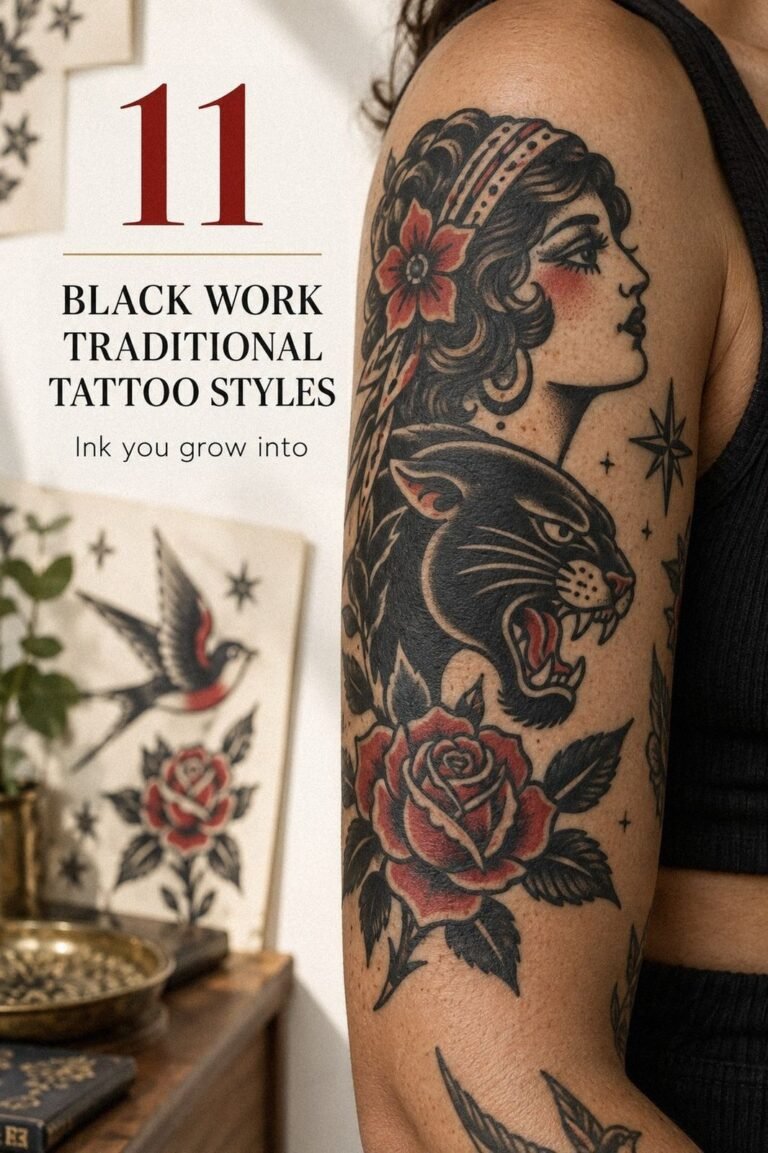
Bold lines. Limited color palette. Heavy black. This stuff was designed to last on sailors who spent months at sea with no sunscreen. The simplicity isn’t laziness, it’s engineering. A good traditional panther or ship will still read clearly when you’re sixty. The downside? It’s not subtle. These tattoos shout. If you want quiet and personal, keep walking.
Japanese (Irezumi)
Large-scale, narrative, built for the body. Dragons wrap arms. Koi swim upstream across thighs. The style accounts for movement and muscle in ways that smaller designs ignore. Takes forever. Costs serious money. Worth it if you’re committed. I’ve seen twenty-year-old Japanese sleeves that look better than six-month-old fine-line work.
Black and Gray Realism
Portraits, animals, dark imagery. When done well, it’s stunning. When done poorly, it’s a muddy mess that no amount of fixing can save. The key is contrast. Without deep blacks anchoring the image, gray wash turns to blue-gray blur over time. Good black and gray artists are sculpting with tone, not just copying a photograph.
- Neo-traditional: Bolder than traditional, more colorful, more illustrative. Holds up well, allows more personal expression.
- Blackwork: Heavy geometric or ornamental patterns. Extremely durable. Painful to sit through. Striking when healed.
- Illustrative: The catch-all for stuff that looks like a drawing or painting. Variable longevity, depends heavily on the artist’s understanding of how ink settles.
Design Ideas That Work on Real Bodies
Here’s where Pinterest fails you. That delicate watercolor butterfly looks amazing on a flat white background. Your arm curves. It tans. It moves. The image needs to account for that.
Flowing With Anatomy
Snakes coil around forearms because forearms coil. Feathers follow the line of the collarbone. Mandalas sit on flat planes, chest, back, thigh. Fighting your body’s geometry makes for awkward tattoos that look wrong from every angle except the one photo you took. I’ve had to gently redirect so many people who want a perfect circle on their shoulder. Shoulders aren’t flat. The circle becomes an oval, or worse, a wobbly egg.
Meaning vs. Aesthetics
Both matter, but aesthetics win long-term. The tattoo you got for your dead dog that looks like a sad potato will bum you out every time you see it. The tattoo you got because you loved how it looked will still please you even if you forget the original reason. I’m not saying meaning is worthless. I’m saying beautiful lasts longer than symbolic in most people’s hearts. Honest truth from someone who’s heard thousands of stories.
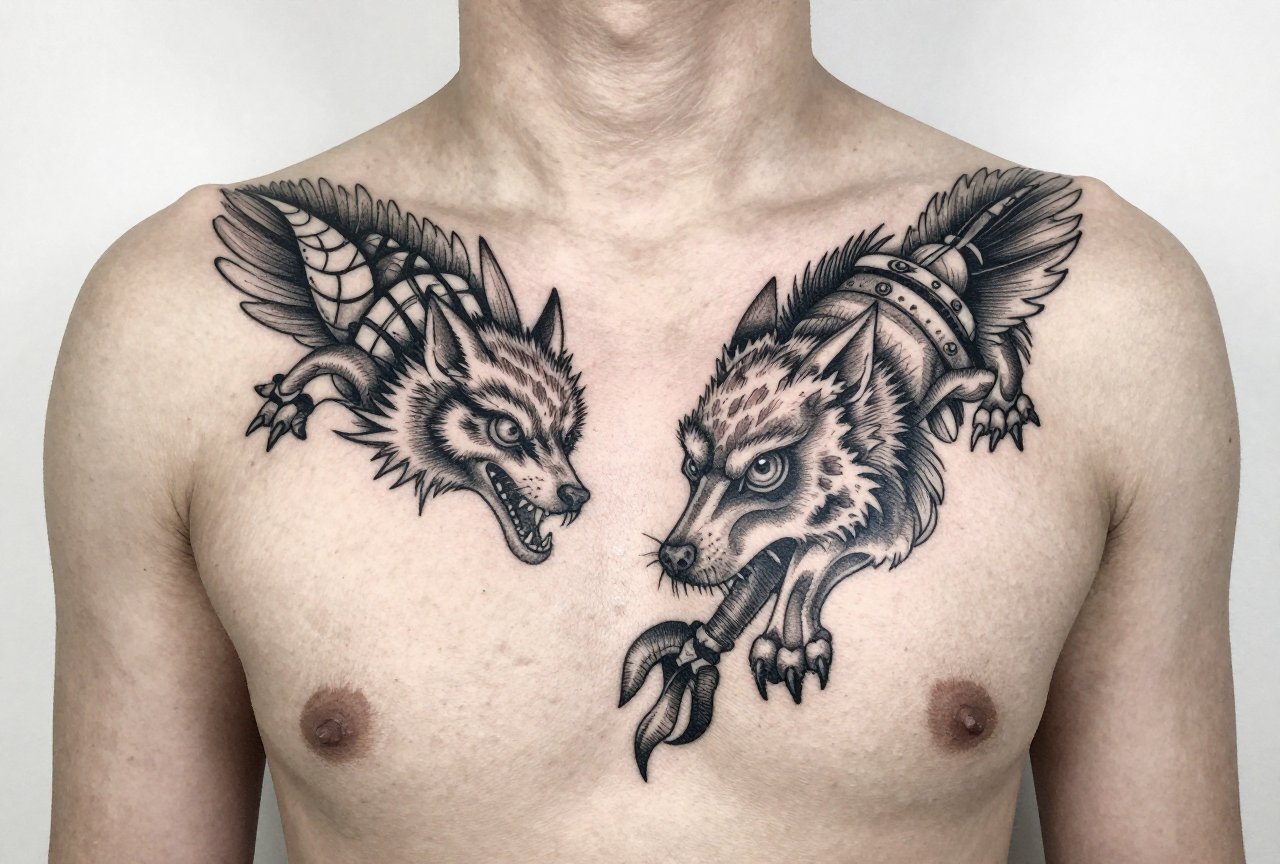
- Animals with personality: A wolf isn’t awesome because it’s a wolf. It’s awesome because the artist captured tension in the shoulders, intelligence in the eyes. Generic animals are wallpaper.
- Botanicals: Leaves, flowers, branches. Incredibly versatile. Can be delicate or bold. Age well if the lines are confident.
- Skulls and dark imagery: Classic for a reason. The best ones aren’t trying to be edgy. They’re beautiful first, dark second.
- Abstract and ornamental: No meaning required. Pure form. Some of the most satisfying work to do and wear.
Best Placements for Longevity
Skin is different everywhere. Some spots blur fast. Others hold detail for decades. This matters more than most people think.
Inner bicep: Protected from sun, minimal stretching. Great for detail. Hurts like hell near the armpit. Worth it.
Thigh: Large canvas, good for complex designs. Inner thigh is sensitive. Outer thigh is manageable. Both age well.
Back: The classic for big work. Flat, stable, easy to heal if you sleep on your stomach for two weeks. (You won’t. You’ll roll over and ruin it slightly. Everyone does.)
Forearm: Visible. Commitment. Heals relatively easily. Sun exposure is your enemy here, sunscreen or long sleeves, no negotiation.
Chest: Center chest can be striking. Sternum is brutal. The skin is thin, the bone is close, and you’ll feel every vibration. Results are gorgeous though.
Hands, feet, fingers, ribs: these are specialty placements. They fade faster, hurt more, and require artists who specifically understand how to adapt designs for those challenges. Don’t let someone practice on your hand because they need portfolio pieces.
Color Choices: What Lasts vs. What Fades
Black is king. Always will be. It stays crisp, it creates contrast, it defines edges. But color has its place.
The Reliable Colors
Dark blues, deep greens, burgundy, brown. These pigments are stable and predictable. A navy blue Japanese wave will look good in fifteen years. A bright sky blue might be pastel in five. Purple is notoriously variable, some brands hold, others disappear.
The Faders
Yellow, light pink, pastel anything. Gorgeous fresh. Demanding long-term. If you want these, you need to commit to touch-ups and sun protection. White ink is basically a magic trick that works for about two years then turns ivory or disappears entirely. I use it for highlights in healed black and gray, not as standalone elements.
Your skin tone matters too. Color reads differently on dark skin than light skin. A good artist knows how to choose pigments that will show up, not just what looks good in the bottle. This is shop-floor reality, not Instagram filter fantasy.
Tips for Choosing Your Design
After all this, here’s how to actually walk into a shop and get something you’ll love.
- Find artists, not shops. The person holding the machine matters infinitely more than the shop’s Yelp rating. Look at healed work, not fresh photos. Ask to see something from a year ago if possible.
- Bring references, not blueprints. “I like the flow of this snake and the color palette of this painting and the mood of this photo” gives an artist room to create something original. “I want exactly this image smaller” kills their enthusiasm and usually produces worse results.
- Size appropriately. Detail needs space. That intricate geometric pattern needs to be big enough for the lines to not bleed together. When in doubt, go bigger. You can always add around it. You can’t un-shrink a blurry mess.
- Think about the rest of your life. Not just “will I still like this at fifty?” but “am I in a career where visible neck tattoos are a problem?” “Do I want to explain this to my kids?” These aren’t reasons to not get tattooed. They’re reasons to choose placement and content intentionally.
- Budget for quality. Good tattoos aren’t cheap. Cheap tattoos aren’t good. This isn’t a sales pitch. It’s math. An experienced artist charging $200/hour is faster, more efficient, and produces better results than someone charging $50 and taking three times as long. Your skin is the canvas. Don’t bargain-shop.
Also: listen to your artist’s advice about placement and sizing. They’re not being difficult. They’ve done this hundreds of times. The client who insists on a tiny detailed piece on their finger despite warnings is the client who comes back angry in two years. Or doesn’t come back because they’re embarrassed. Don’t be that person.
Final Thoughts
Awesome tattoo designs aren’t about finding the perfect image online. They’re about collaboration between your ideas and an artist’s expertise. The best tattoos I’ve done started with someone saying “I love your style, I trust you, here’s what matters to me.” The worst started with “I have this exact picture and I want it exactly here exactly this size.”
Your skin is alive. It changes. The ink moves slightly, settles, softens. Designing for that reality instead of fighting it is what separates tattoos that look good in bathroom mirrors from tattoos that look good in your life. Take your time. Save more money than you think you need. Find someone whose healed work makes you feel something. Then let them do their job.
The awesome part isn’t the design itself. It’s that you carried an idea through to permanence. That’s worth doing right.
More Tattoo Ideas
- Knuckle Tattoo Ideas That Actually Work
- Spiderman Tattoo Ideas That Actually Work
- Forearm Tattoo Ideas for Women
- Explore more
Frequently Asked Questions
What makes a tattoo design actually work versus just looking good on paper?
A design that works accounts for how skin ages, stretches, and holds ink over time. Bold lines, adequate spacing, and proper contrast ensure the tattoo stays readable and attractive for decades rather than blurring into an unrecognizable mess.
How do I know if a trendy tattoo style will still look good in ten years?
Trendy styles like fine-line or watercolor often fade faster and age poorly compared to traditional bold styles. A design that works balances personal meaning with timeless technical fundamentals that outlast passing trends.
Why do some detailed designs look amazing as drawings but terrible as tattoos?
Skin is not paper; it has texture, movement, and a living surface that rejects excessive tiny detail. Designs that work simplify complex imagery into tattooable elements with enough negative space and line weight to heal clearly.
Should I let my tattoo artist change my design to make it work better?
Yes, because artists understand how specific elements translate to skin and can adjust sizing, spacing, and detail to ensure longevity. A collaborative approach typically produces a tattoo that honors your vision while actually functioning as a permanent piece of body art.