
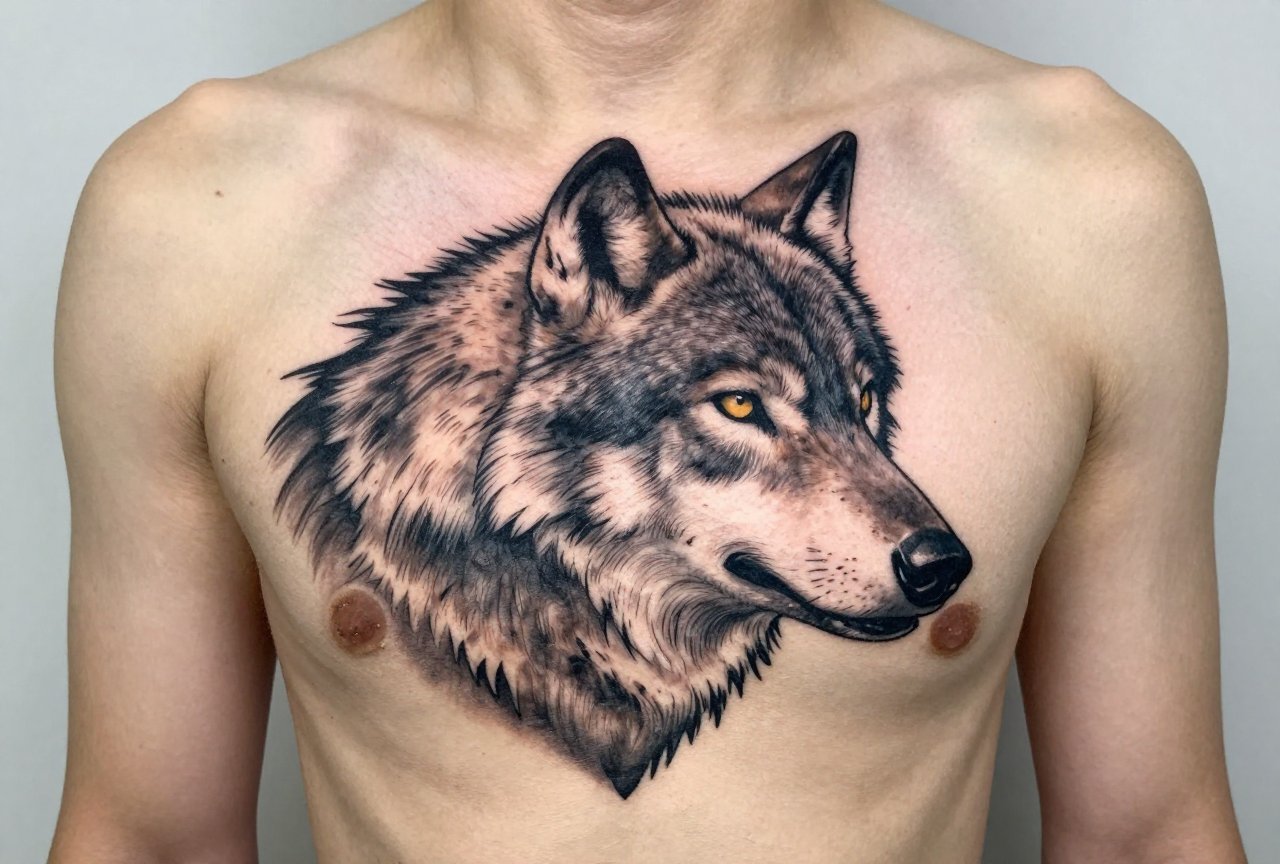
A realistic wolf tattoo isn’t some cartoon grinning at you from a bicep. It’s fur you want to touch, eyes that catch light like actual animal eyes do, breath you can almost see in cold air. The style demands technical obsession, every whisker, every shadow between guard hairs, the way muscle moves under pelt. Get it right and you’ve got a living thing on your skin. Get it wrong and you’ve got a fuzzy dog in a cheap Halloween mask. This guide breaks down what separates the two, where these pieces thrive on the body, and how to find an artist who won’t waste your time or their own.
Origins & History
Photo-realism in tattooing didn’t crawl out of some ancient tradition. It showed up in the late 1960s and 70s when artists like Robert Benedetti and later Paul Booth started pushing what machines and skin could do together. Before that, tattoos were bold lines, limited palettes, symbolic shorthand. The wolf? Always present in older styles, Sailor Jerry’s howling silhouettes, traditional Americana pieces with dagger-through-the-heart drama, but never looked at you like a real wolf would.
The realistic wolf tattoo really found its legs in the 1990s and 2000s as tattoo machines got more precise, needles finer, and artists started studying photography, oil painting, wildlife reference with the same intensity they’d once studied flash sheets. Now you’ve got specialists who barely touch anything else, guys and gals who can render a gray wolf’s winter coat so accurately you expect to find snow in the collar of your shirt.
From Wildlife Art to Skin
There’s a direct line between the wildlife painters of the American West, Carl Rungius, Bob Kuhn, and what the best realistic wolf tattoo artists do today. Same obsession with anatomy, same understanding that fur isn’t a texture but thousands of individual structures catching light differently. The difference is canvas. Skin moves, stretches, sheds, ages. Paint doesn’t. That translation is where the real art lives.
Key Characteristics & Motifs
What makes a realistic wolf tattoo actually realistic? It’s not just “looks like a photograph.” Plenty of bad tattoos look like photographs, bad ones. The good stuff has specific qualities:
- Eye detail: The tapetum lucidum reflection, that green-yellow glow in low light, rendered with white ink highlights or negative space. Eyes sell the whole piece. Artists spend disproportionate time here.
- Fur layering: Undercoat, guard hairs, the way winter pelage gets that frosted tip look. Done with single-needle work, stippling, or whip-shading depending on the artist’s method.
- Facial structure: Wolves aren’t dogs. Narrower chest, longer legs, broader skull, more pronounced brow ridge. Artists who’ve actually studied reference know this. Lazy ones give you a husky with attitude problems.
- Dynamic posing: The classic howl is iconic for a reason, but modern pieces catch wolves mid-stride, head low in tracking posture, ears swiveled to some distant sound. Movement reads better on skin than static poses.
- Environmental context: Snow, pine needles, moonlight through branches, these aren’t backdrop filler. They ground the animal in a world, create depth, give the eye somewhere to travel.
The Snout Problem
Here’s something artists talk about in shops: wolf snouts are hard. The nose leather, the transition from fur to bare skin, the moisture sheen, get any of it wrong and the whole face collapses into dog territory. I’ve watched artists redo a snout four times on practice skin before touching a client. The best shortcut? Study dead wolves if you can, taxidermy if you can’t, and never work from someone’s Instagram filter-blasted pet.
Color vs Black and Grey
This choice changes everything about how your realistic wolf tattoo ages and what it costs you in sessions.
Black and grey is the traditional play. Silver-tipped fur reads naturally in greywash. The tonal range from deep charcoal to skin-tone negative space gives you that misty, dawn-light quality that makes wolves feel like ghosts anyway. It heals more predictably. Touch-ups are simpler. Most serious collectors lean this direction, and most serious wolf specialists prefer working it.
Color realism is harder and riskier. Amber eyes, blood on muzzle from a fresh kill, the blue-shadowed snow at twilight, when it works, it works. But color saturation in fur is a nightmare. Yellows and oranges fade to mustard stains. Reds muddy. Blues can granulate and look like bruising. If you’re going color, find someone who’s already got ten healed wolf pieces in their portfolio, not someone who wants to “try something new” on your back.
Best Placements
Where you put a realistic wolf tattoo determines how much detail survives, how the composition flows, and honestly, how much the artist charges, big flat areas let them work faster and cleaner.
- Thigh: The sweet spot. Flat when standing, curved when seated, enough real estate for a full portrait or running figure. Heals well, doesn’t blow out much, easy to show or hide.
- Upper arm/shoulder: Classic for a reason. The deltoid curve echoes a wolf’s shoulder musculature. Sleeve integration potential. But you’re limited on width, composition gets cramped if the artist isn’t careful.
- Back: The canvas for serious pieces. Full back pieces with wolves in landscape, multiple animals, narrative scenes. Costs more, sits longer, but the impact is undeniable. I’ve seen a back piece with a wolf emerging from fog that still makes me stop walking when I see it in shops.
- Forearm: Risky for detail. Too narrow for full portraits unless you’re going small, and small realism doesn’t age well. Better for partial faces, eye studies, or wolves integrated into larger compositions with other elements.
- Chest: Sternum and pecs can work for frontal portraits, but the stretch and movement means fine detail blurs faster. Not my first recommendation unless you’re already heavily tattooed and know how your skin takes ink.
The Ribs Question
Everyone asks about ribs. Yes, it hurts more. No, that shouldn’t be your deciding factor. The real issue is that rib skin moves constantly with breathing, and the curvature makes consistent depth harder for the artist. Some of the best wolf pieces I’ve seen live on ribs, but they were done by artists who specifically requested that placement because it fit their composition. Don’t force it.
Who It Suits
Not everyone should get a realistic wolf tattoo. The style carries weight, literally, these pieces are dense with ink, and expectations.
You fit this if you want the animal itself, not the idea of it. The wolf as spirit guide, alpha energy, lone wanderer symbolism, that’s all fine, but realistic style demands you also just like looking at wolves. The aesthetic pleasure of fur texture, of catching light on an eye. If you’re purely symbolic, traditional or neo-traditional might serve you better.
You also need patience and budget. Realistic work takes sessions. A full thigh piece might be 15-20 hours. At quality shop rates, that’s real money. The artists who do this well aren’t discounting for your Instagram exposure.
Skin tone matters honestly. Very dark skin can make the subtle greywash transitions that sell realism harder to achieve. Not impossible, artists like Tukoi Oya and others have pushed what’s possible, but you need an artist experienced specifically with your skin, not someone figuring it out live.
Modern Variations
The style keeps moving. Some current directions:
- Double exposure: Wolf silhouette filled with forest, mountain range, star field. Requires two masters in one, landscape and animal realism. Hard to find done well.
- Geometric integration: Realistic face breaking into polygon fragments, or emerging from geometric mandala. The contrast can be striking when the artist understands both languages. Often isn’t.
- Motion blur and speed: Borrowing from wildlife photography, paws extended, snow spraying, the sense of a shutter catching something fleeting. Technically demanding, needs large format to read.
- Micro-realism: Tiny single-needle portraits, sometimes just an eye or nose, sometimes whole tiny figures. Trendy, but I’ll be honest: I don’t trust how these look at ten years. The best artists in this space are selective about placement and size.
Choosing an Artist
This is where most people mess up. They find someone who “does animals” or has a cool Instagram. Wrong filter.
Look for healed photos, not fresh work. Realism looks incredible at week two when it’s still sitting on top of skin. The real test is year two, year five. Good artists post healed work. Great ones have it in their shop books, on returning clients they can connect you with.
Ask specifically about wolf pieces they’ve done. Not “can you do a wolf?”, they’ll say yes to anything. “How many realistic wolves have you completed?” The number matters less than the enthusiasm in the answer. Someone who’s done three and hated them will tell you. Someone who’s done thirty and still gets excited about eye reflection technique, that’s your person.
Consultation red flags: they want to use your reference photo exactly (copyright issues, lazy composition), they don’t discuss how the piece will age with your specific skin, they quote suspiciously low or won’t break down session estimates. Good realistic work is expensive because it’s slow. Anyone rushing is cutting corners you can’t see yet.
Questions to Ask
- What’s your preferred needle grouping for fur texture?
- How do you handle the transition from dense black in the nose to lighter muzzle?
- Can I see a healed piece similar in size and placement to mine?
- What’s your touch-up policy if detail softens?
The answers don’t need to match some script. But you want specificity, not vagueness. “I figure it out as I go” is honest from some artists and terrifying from others. Trust your gut on which you’re hearing.
Final Thoughts
A realistic wolf tattoo is a commitment to a particular kind of beauty, one that lives in observation, in patience, in the accumulated hours of someone staring at reference until they understand how fur actually works. It’s not the most original subject. Wolves are common. But common subjects done uncommonly well are what separate tattoos you live with from tattoos you endure.
Find the artist who lights up talking about eye reflection. Save for the sessions you need. Heal it right, no sun, no picking, no shortcuts. And in ten years, when the piece has settled into your skin like it always belonged there, you’ll have something that doesn’t just represent a wolf. It’ll feel like one chose to stay.
Related Style Guides
- Spiderman Tattoo Ideas That Actually Work
- Forearm Tattoo Ideas for Women
- Interesting Tattoo Ideas That Actually Hold Up
- Explore more
Frequently Asked Questions
How much does a realistic wolf tattoo typically cost?
A realistic wolf tattoo usually ranges from $300 to $1,500 depending on size, detail, and artist expertise. Full sleeve or back pieces by renowned artists can exceed $3,000. Always prioritize quality over price for this intricate style.
What is the best placement for a realistic wolf tattoo?
The upper arm, thigh, and back provide the best canvas for realistic wolf tattoos due to their flat, spacious surfaces. These areas allow artists to capture fine fur details and facial expressions that smaller areas cannot accommodate.
How long does a realistic wolf tattoo take to complete?
A medium-sized realistic wolf tattoo typically requires 3 to 6 hours split across multiple sessions. Larger, highly detailed pieces may take 10 to 20 hours total to achieve the layered shading and texture this style demands.
Black and grey or color for a realistic wolf tattoo?
Black and grey is the most popular choice for realistic wolf tattoos because it mimics natural photography and ages gracefully. Color can work beautifully for blue eyes or autumn backgrounds, but requires more maintenance to keep bold over time.









