Japanese Warrior Tattoos: Style Guide
Japanese warrior tattoos carry some of the most visually arresting and technically demanding imagery in tattooing. Samurai, ronin, and legendary fighters have appeared on skin for centuries, evolving from punitive marks to celebrated art. If you are drawn to the discipline of bushido or the raw visual power of a battle scene, understanding the conventions, history, and execution of this style will help you make informed decisions about your own piece.
Historical Roots and Evolution
The connection between warriors and ink in Japan stretches across a complex history. During the Edo period (1603, 1868), decorative tattooing flourished alongside ukiyo-e woodblock prints. Warriors frequently appeared in these prints, and the imagery naturally migrated onto skin. Earlier centuries had seen tattoos used as punishment, which created lasting social stigma. By the late 1800s, the Japanese government banned tattooing outright, pushing the practice underground and into association with organized crime.
Warrior imagery persisted through these restrictions. Tattoo artists, often linked to the yakuza, continued to produce full-body suits featuring samurai in combat, historical generals, and mythic fighters. The technical standards remained extraordinarily high. This underground preservation ensured that when Japanese tattooing re-emerged globally in the late twentieth century, the warrior tradition arrived intact, executed with methods refined over generations.
From Punishment to Prestige
The transformation of tattooing from criminal marker to respected art form took centuries. Warrior tattoos played a symbolic role in this shift. A samurai on your back could represent personal struggle, loyalty, or defiance against a system that had marked you as outcast. The imagery reclaimed power. Today, most collectors outside Japan approach warrior tattoos without this historical baggage, though Japanese artists often retain awareness of these layers.
Core Imagery and Symbolism
Japanese warrior tattoos draw from several distinct source categories. Each carries specific visual conventions and symbolic associations that serious artists respect and manipulate with intention.
- Historical samurai: Armored figures in o-yoroi or domaru armor, often with kabuto helmets and menpo face guards. These represent discipline, service, and the code of bushido.
- Ronin: Masterless samurai, frequently depicted in travel-worn armor or civilian clothes. The ronin embodies independence, failure, redemption, or outsider status.
- Specific legends: Miyamoto Musashi, the undefeated swordsman; the Forty-Seven Rōnin; or regional heroes. These carry narrative weight and recognizable visual signatures.
- Supernatural warriors: Oni in samurai armor, tengu with their distinctive long noses, or transformed spirits. These blur the line between human martial prowess and otherworldly power.
Secondary elements matter enormously. Cherry blossoms falling around a warrior reference the fragility of life and the acceptance of death. Waves, mountains, or storm clouds establish setting and mood. Dragons or phoenixes paired with warriors suggest ambition, transformation, or divine favor.
Armor and Equipment as Focal Points
Some collectors choose to emphasize the material culture of warfare over the human figure. A katana with visible hamon temper line, a tsuba handguard with specific motif, or a jingasa straw hat can carry as much meaning as a full portrait. These objects allow for smaller compositions that still read clearly as warrior imagery. The technical challenge shifts to rendering metal, lacquer, and fabric textures convincingly.
Technical Execution and Style Variants
Japanese warrior tattoos demand specific technical approaches. The style does not accommodate shortcuts gracefully.
Tebori, the traditional hand-poking method using multiple needle configurations, remains the gold standard for large warrior pieces in Japan. The technique produces softer color gradations and less traumatic skin trauma than machine work, resulting in better long-term color retention. Tebori is slow. A full back piece of a warrior in battle might require hundreds of hours across multiple years. Outside Japan, machine work dominates, and excellent results are absolutely achievable. The key is understanding what the machine does differently: sharper edges, more saturated blacks, sometimes harder color transitions.
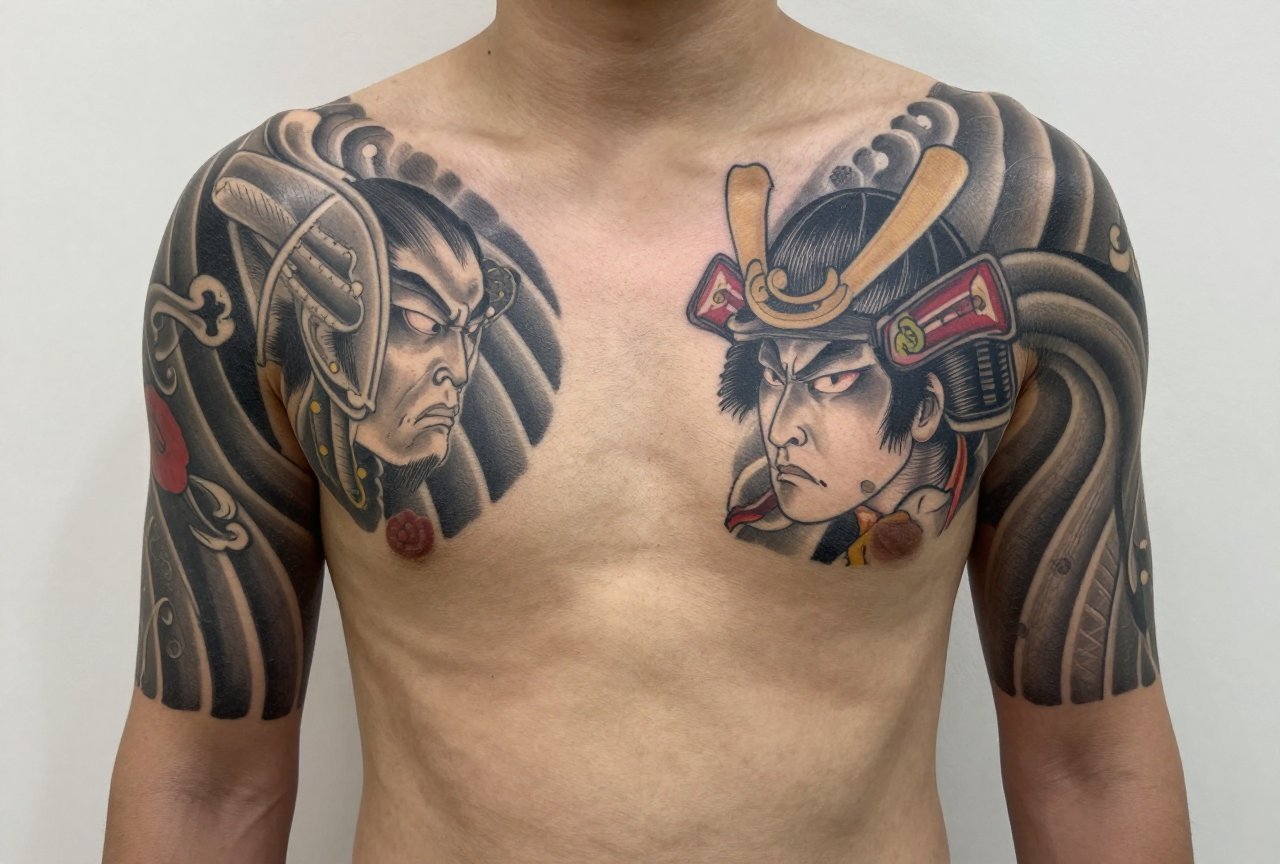
Background treatment separates competent warrior tattoos from exceptional ones. Traditional Japanese composition uses gakubori (solid black backgrounds), kame-no-ko (turtle-shell patterning), or atmospheric elements like wind bars and water. These backgrounds frame the warrior and create depth. A figure floating in undifferentiated space looks unfinished by traditional standards.
Color Palettes and Their Effects
Classic Japanese warrior tattoos employ specific color relationships. Vermilion for armor lacing, indigo and Prussian blue for clothing, muted greens for aged bronze, and warm flesh tones against cool backgrounds. Some contemporary artists push into unusual palettes: desaturated earth tones, limited black-and-grey with selective red accents, or even full color realism hybridized with traditional composition. These variations work when the underlying structure remains sound. Without strong drawing and proper background integration, experimental color reads as gimmick rather than evolution.
Placement and Scale Considerations
Warrior imagery functions at specific scales. The complexity of armor, the narrative potential of battle scenes, and the traditional emphasis on background elements all push toward larger formats.
- Full back: The classic format. Allows full standing or mounted warrior with environmental storytelling. The natural curves of the back accommodate the vertical emphasis of a standing figure.
- Full sleeve: Typically features a warrior in partial view, perhaps emerging from smoke or waves, with the arm’s length supporting vertical or diagonal composition.
- Thigh or calf: Accommodates seated or kneeling warriors, or cropped compositions focusing on upper body and weapon.
- Chest panels: Often paired with a back piece, showing the warrior’s face or a combat moment in a more horizontal format.
Small warrior tattoos present genuine challenges. Facial detail at under three inches becomes mushy over time. Armor texture requires sufficient space to read as material rather than abstract pattern. If you want a small piece, consider the equipment-focused approach: a single katana, a menpo mask, or a mon family crest with warrior associations.
Body Flow and Direction
Traditional Japanese tattooing pays obsessive attention to how images move with the body. A warrior’s gaze should direct the viewer’s eye. The angle of a sword or spear should follow muscular structure rather than fight it. Experienced artists map these relationships during consultation, sometimes adjusting the figure’s pose entirely based on your specific anatomy. This is not artistic caprice; it is functional design that determines how the tattoo ages and reads in motion.
Working With Artists and Cultural Sensitivity
Finding the right artist for a Japanese warrior tattoo requires looking beyond general portfolio strength. Seek specific experience with Japanese iconography, traditional composition, and the technical demands of large-scale work. Ask to see healed photos, not just fresh work. Japanese tattooing relies heavily on how pigment settles and ages.
Cultural questions arise legitimately here. Japanese warrior tattoos are not closed practice in the way some indigenous tattooing is. The tradition has been exported, shared, and transformed for over a century. Still, thoughtless appropriation exists. Avoid combining warrior imagery with unrelated religious symbols, cartoonish treatment of sacred elements, or claims to spiritual connection you do not hold. Respect the history. The imagery carries weight because of its specific cultural formation, not despite it.
Communication with Japanese-trained artists or those working in strict traditional lineages may differ from typical Western tattoo consultation. Some maintain formal relationships between artist and client. The process may unfold more slowly, with less collaborative design input than you expect. This is feature, not flaw. The system exists to protect technical and artistic standards built over decades.
Final Thoughts
Japanese warrior tattoos reward patience and punish haste. The imagery offers extraordinary visual power, technical depth, and historical resonance. Success requires matching your ambition to appropriate scale, selecting artists with demonstrated expertise in this specific tradition, and respecting the cultural framework that produced these images.
A warrior tattoo is not a costume. It is a permanent engagement with concepts of discipline, conflict, mortality, and honor that have occupied Japanese visual culture for centuries. Approach with seriousness, execute with excellence, and the result will endure both physically and meaningfully.
Frequently Asked Questions
How much does a Japanese warrior tattoo typically cost?
Large-scale Japanese warrior work is priced by the session or as a complete project, varying enormously by artist reputation, location, and method. Tebori work by established Japanese masters commands premium rates reflecting years of apprenticeship. Machine work by specialists in this style typically runs higher than general tattooing due to the technical complexity and time investment. Most serious collectors budget for multiple sessions over months or years rather than seeking quick completion.
Can I get a Japanese warrior tattoo if I am not Japanese?
The tradition has been internationally shared for over a century, and Japanese artists themselves have long worked on foreign clients. The key is respectful engagement: understanding the imagery’s origins, avoiding trivializing treatment, and not claiming spiritual or cultural connections you do not possess. Work with artists who demonstrate genuine knowledge of the tradition rather than superficial aesthetic borrowing.
How painful is a large back piece compared to other placements?
The back generally tolerates tattooing well compared to ribs, sternum, or joints, though the spine itself and areas near the shoulder blades can be sensitive. The real challenge of a large warrior back piece is endurance across dozens of sessions, not acute pain in any single sitting. Fatigue, mental strain, and the logistics of healing between appointments often prove more demanding than the tattooing itself.
What should I look for when evaluating an artist’s Japanese warrior portfolio?
Examine healed work, not just fresh photographs. Check for accurate armor structure, convincing facial proportions, and coherent background integration. Ask whether the artist studied with someone connected to Japanese tattooing traditions, or whether their approach is self-developed. Either path can produce excellent results, but the distinction matters for understanding what you are receiving. Be wary of portfolios where every warrior face looks identical, suggesting copied reference rather than understood drawing.