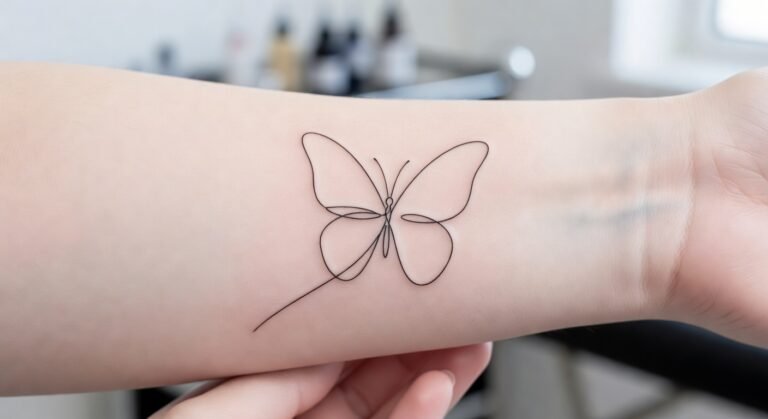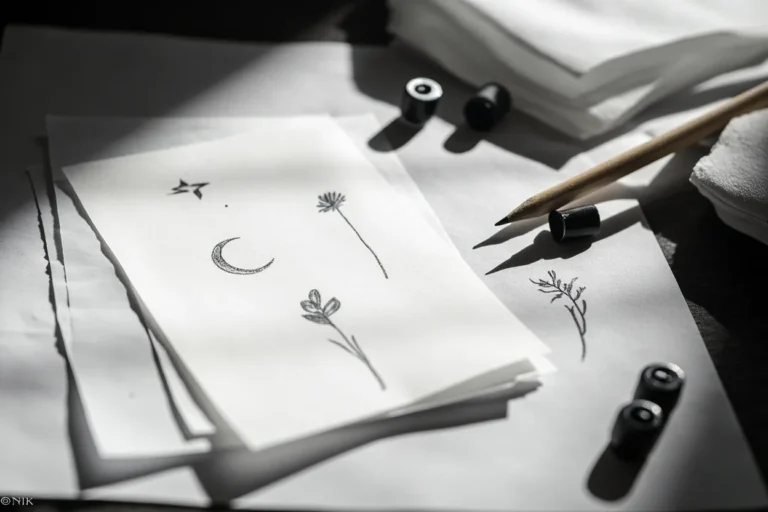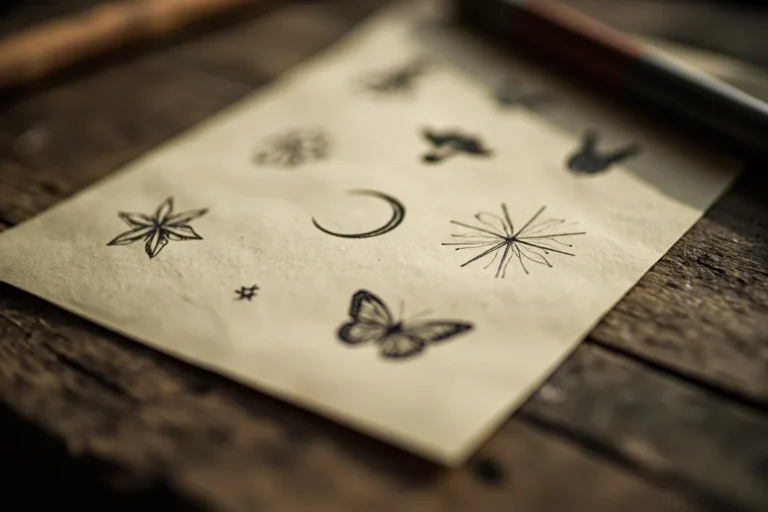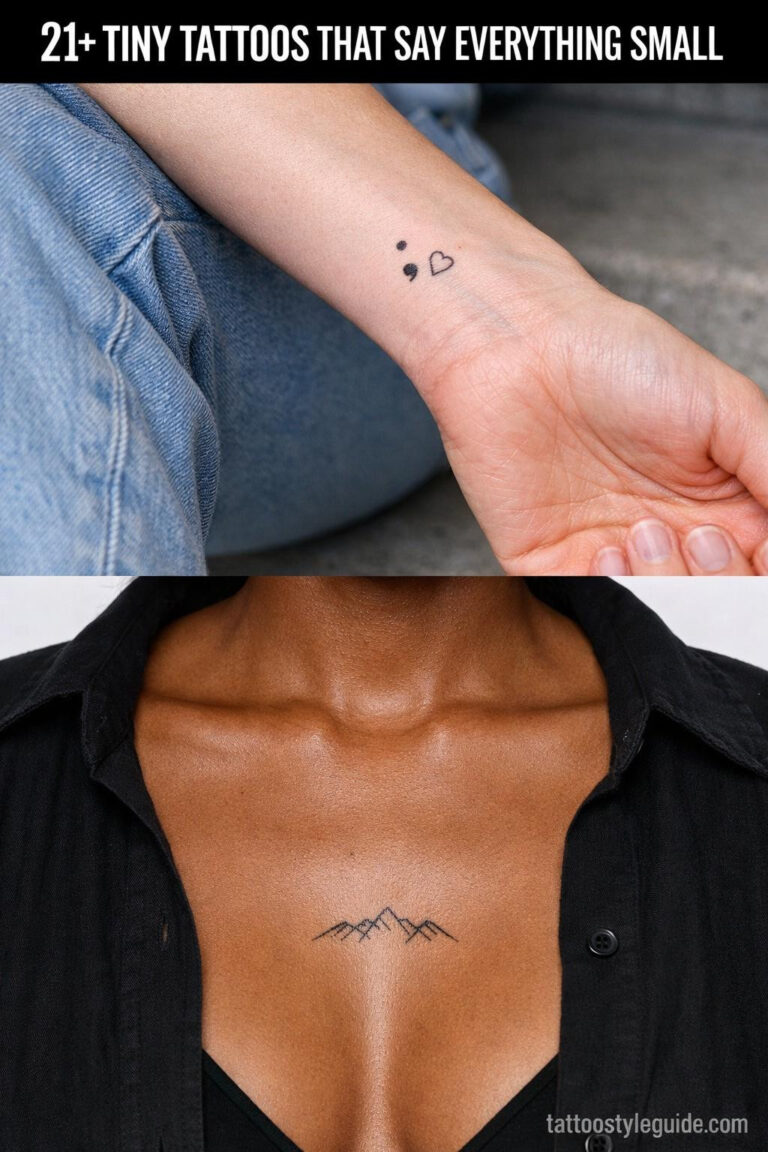
I’ve tattooed thousands of small pieces on women’s arms over fifteen years, and here’s the truth: size isn’t the problem, design density is. A tiny tattoo can look incredible for decades if you respect how skin works, or it can blur into a gray blob in five years if you treat your arm like a piece of paper. Women come into my chair asking for “something delicate” almost daily, and my job is to translate that desire into something that’ll actually hold up. Let me walk you through what works, what doesn’t, and where artists draw the line between pretty and practical.
Popular Styles That Actually Last
Not every trending style survives the reality of living skin. I’ve watched fine-line florals blow up on Instagram and then watched them fade into scratchy nothingness three years later. Here’s what holds up on a small arm scale.
American Traditional and Neo-Traditional
Bold lines. Saturated color. Limited detail. These pieces age like leather, not tissue paper. A small traditional rose on the forearm, maybe two inches wide, will still read as a rose when you’re sixty. The black outline acts like a fence, keeps the color from bleeding into surrounding skin. I tell clients: if you want small and forever, think sailor, not sketch artist.
Blackwork and Ornamental
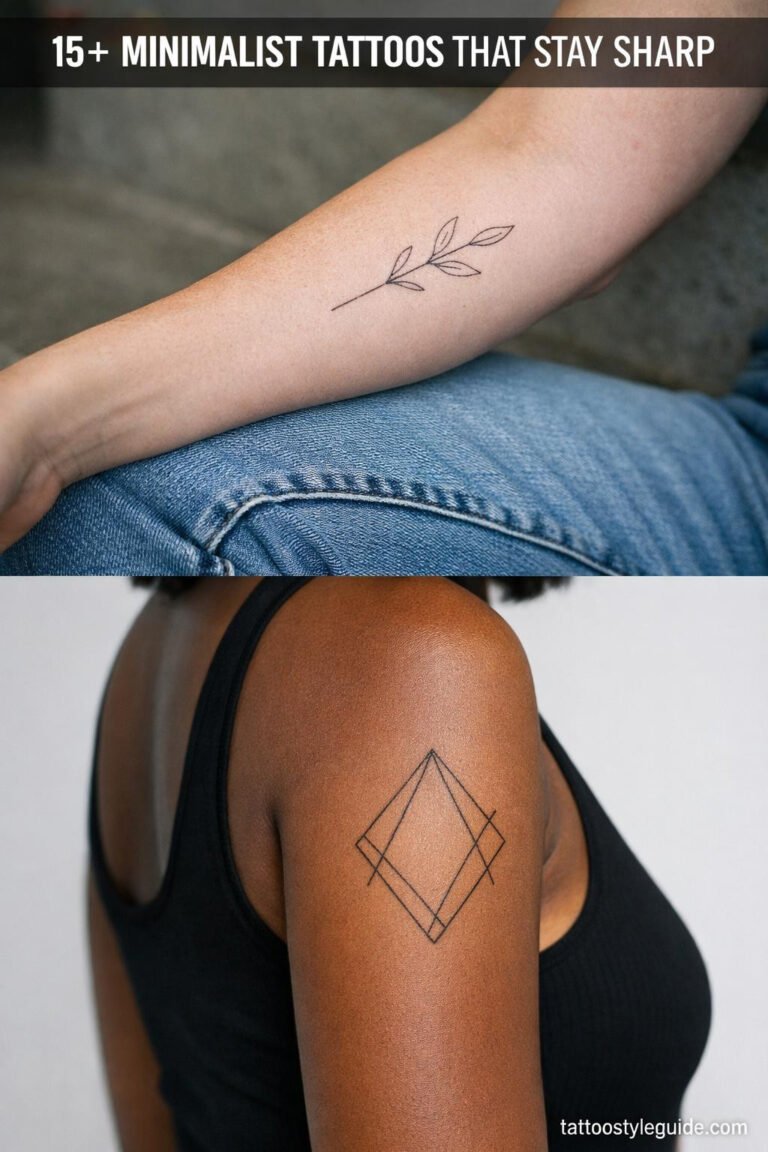
Mandala fragments, dotwork patterns, small geometric cuffs, these thrive on arms because the placement is relatively flat and stable. Elbow skin moves a lot, but the inner forearm? That’s prime real estate. I’ve done countless small ornamental pieces that look virtually unchanged after five years. The key is consistent density. Patchy blackwork looks like a mistake; solid, intentional saturation looks expensive.
- Single needle: Looks ethereal fresh, requires touch-ups, best for patient clients
- Three-round liner: The sweet spot for small detail that stays legible
- Seven mag shader: Faster, bolder, better for soft gradients in tiny spaces
Design Ideas That Work Small
Some imagery naturally compresses well. Others need room to breathe. In my shop, we see this a lot: women bringing reference photos of palm-sized watercolor landscapes and asking for them two inches wide. I have to be honest, it’ll be mud.
Botanicals and Nature Motifs
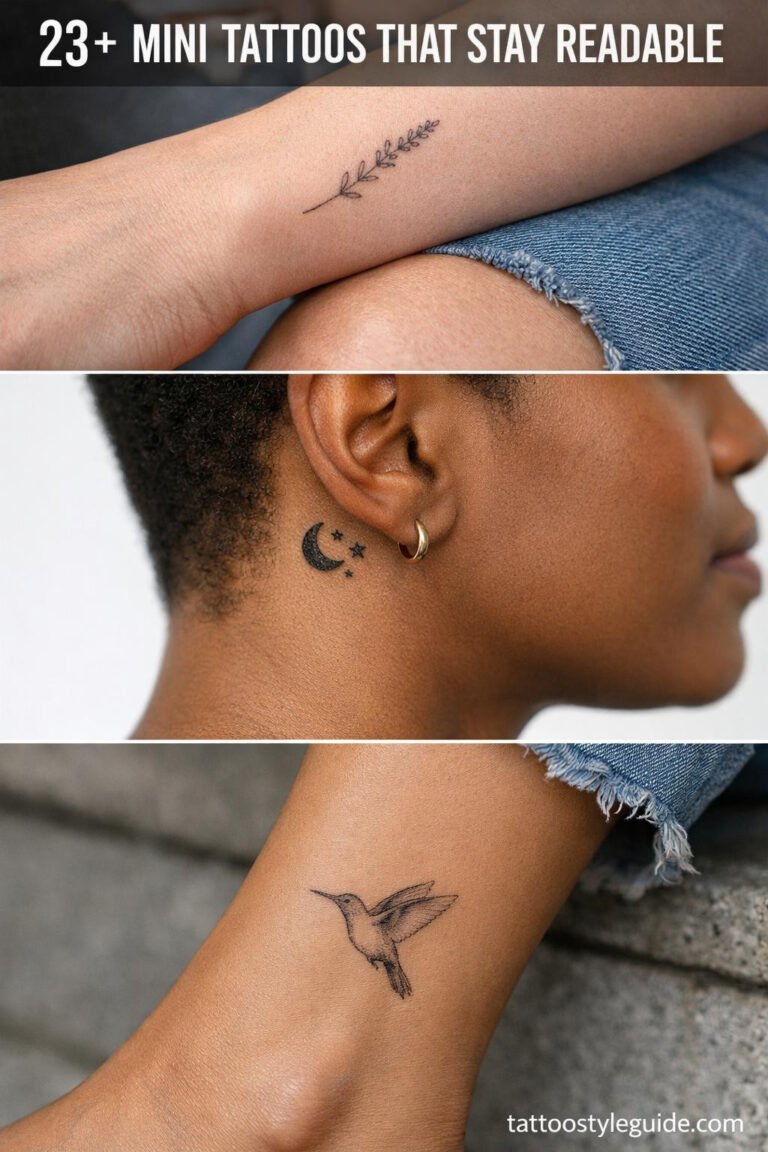
A single fern frond. A tiny olive branch wrapping the wrist. One peony bloom with three leaves. These work because nature already solved the silhouette problem. Negative space becomes part of the design. I tattooed a small lavender sprig on a woman’s inner forearm last month, three inches, black and gray, healed clean. She’ll never need a touch-up.
Animals and Symbols
Small birds in flight. A cat’s profile. A crescent moon with a single star. The trick is choosing the angle that reads instantly. A snake coiled is recognizable; a snake mid-slither at one inch looks like a squiggle. I always ask: if you saw this from five feet away, would you know what it was?
- Script and lettering: needs to be simple fonts, minimum 8-10pt equivalent
- Celestial: moons, stars, planets compress beautifully
- Abstract shapes: triangles, curves, negative space designs age excellently
Best Placements on the Arm
Skin varies across your arm like terrain varies across a landscape. What works on the inner bicep will not work on the top of the wrist. I’ve made mistakes early in my career by not respecting this, and I’ve learned to guide clients toward placements that match their design.
Inner Forearm and Wrist
The inner forearm is the golden zone for small tattoos. Skin is relatively thin but stable, not too much sun exposure if you’re sensible, and it heals flat. The wrist itself is trickier, constant movement, frequent bumping, and that tendon that runs through the center can distort a design. I place small tattoos slightly above or below the wrist bone, never directly on it. A tiny constellation below the wrist, following the natural curve? Perfect. A straight line across the bone? That’s asking for blowout.
Upper Arm and Bicep
More hidden, more protected from sun, but also more prone to stretching with muscle changes. I tattoo a lot of small pieces on the back of the upper arm, delicate florals, small script, tiny geometric accents. The dermis is thicker here, which actually helps small tattoos stay crisp longer. One caveat: the inner bicep is tender and sweaty. Healing requires real diligence.
- Inner forearm: Best visibility, manageable healing, moderate sun exposure
- Back of arm: Protected, subtle, excellent for personal pieces
- Shoulder cap: Curved surface requires design adaptation, but ages well
- Wrist proper: High wear, consider longevity before committing
Color Choices: What Fades and What Stays
Black is the only color that truly lasts. I know that’s not what people want to hear, but I’ve watched enough fifteen-year-old tattoos to say it with confidence. That said, strategic color has its place on small arm pieces.
Red holds better than you’d expect, blood red, not fire-engine. Dark greens and deep blues can stay bold for years if saturated properly. Yellow? White? Those are for clients who understand they’ll be skin-toned in a decade. I did a small pomegranate on a woman’s forearm last year: black outline, deep red seeds, nothing else. It’ll look like a pomegranate forever.
Watercolor-style color without black outlines? I’ve seen it work exactly twice in my career, both times on clients who never sunbathed and moisturized religiously. For most people, it’s a five-year commitment to a faded memory.
- Black and gray: highest longevity, lowest maintenance
- Red accents: durable if deep and saturated
- Pastels: require touch-up plans and realistic expectations
- White ink: becomes skin tone, use only for highlight on darker skin
Tips for Choosing Your Artist
Not every artist wants to do small tattoos. Some find them boring; others know they don’t photograph well for Instagram and skip them. Find someone who genuinely specializes in this scale. I love small work, it’s technical, it’s intimate, and the client interaction is different. You sit closer. You talk more.
Portfolio Red Flags and Green Lights
Look for healed photos, not just fresh work. Any artist can make a tattoo look crisp when it’s swollen and shiny. Ask to see pieces from one, three, five years ago. If they don’t have them, ask why. Green light: an artist who asks about your lifestyle, your sun exposure, your future plans. Red flag: someone who says yes to everything without questions.
Communication and Trust
Small tattoos require precision. You need to feel comfortable saying “that’s not quite right” before the needle touches skin. I always stencil twice for small pieces, checking placement from every angle, sitting and standing. A tiny tattoo in the wrong spot feels enormous. Take your time. Good artists will insist on it.
- Ask specifically about their experience with small-scale work
- Request to see healed examples, not just fresh tattoos
- Discuss touch-up policy upfront, small tattoos often need one
- Bring reference but stay open to the artist’s design modifications
Final Thoughts
Small arm tattoos for women aren’t a lesser category, they’re a discipline. I’ve seen a single inch of perfect blackwork outlast sprawling, poorly-planned pieces ten times its size. The women who sit in my chair and leave with something tiny and intentional understand something crucial: restraint is its own form of boldness. Choose your design with the next twenty years in mind, not the next twenty likes. Respect your skin as the living material it is. And find an artist who treats your small tattoo with the same focus they’d bring to a full sleeve. Because in the end, the size of the tattoo matters far less than the thought behind it.
Frequently Asked Questions
Will a small tattoo on my arm hurt more than a larger one?
Not necessarily. Pain depends on placement and your personal sensitivity, not size. The inner forearm is generally manageable, while the wrist and inner bicep tend to be more intense. Small tattoos just finish faster, so the discomfort is brief.
How much should I expect to pay for a small arm tattoo?
Most reputable shops have a minimum charge, usually between $80 and $150, even for tiny pieces. You’re paying for the setup, sterile supplies, and the artist’s time, not just the ink. Extremely detailed small work may cost more than you’d expect.
Can I get a small tattoo covered up later if I change my mind?
Covering small tattoos is possible but depends on density and placement. Light, fine-line pieces are easier to cover than solid blackwork. I always tell clients to choose something they’d be okay living with, because removal is expensive and cover-ups require more space.
How long does a small arm tattoo take to heal?
The surface typically heals in two to three weeks, but the deeper skin continues settling for two to three months. During that first month, keep it clean, moisturized, and out of direct sun. Don’t submerge it in pools or hot tubs until fully healed.
More Tattoo Ideas
- Small Trad Tattoo Ideas
- State of Florida Tattoo Ideas
- Chicano Tattoo Artists: Style Guide Shop Wisdom
- Explore more