I’ve had a guy in my chair fresh off a WrestleMania weekend, still hoarse from screaming at the top of his lungs, wanting Undertaker’s deadman logo across his shoulder. Another time, a regular brought in her dad’s hand-drawn sketch of Hulk Hogan’s signature from a ’92 house show. Wrestling tattoos hit different. They’re not just about the performer, they’re about where you were when you watched that match, who you were with, how it felt when the ref’s hand hit the mat for three. That emotion matters, but so does the technical reality of how this stuff sits on skin for decades. Let me walk you through what actually works.
Popular Styles
Classic Logo Work
Logos are the bread and butter of wrestling ink. The WWE scratch logo, the old WWF block letters, nWo spray paint, the AEW three letters, clean geometry holds. I’ve tattooed the classic interlocking WWF logo on a forearm that still reads sharp ten years later because the lines were bold and the spacing generous. The problem comes when people want the tiny details: the texture in the Attitude Era scratch, the subtle gradient in modern AEW branding. That stuff falls out. I tell clients to let me simplify, thicken the strokes, give it room to breathe. A logo that looks slightly bolder in the stencil than on screen will age like a champion.
Portrait Realism
Portrait work is where things get dicey. I’ve seen beautiful Macho Man pieces that turned into purple smears because the saturation was too delicate and the scale too small. If you want a face, go big or accept that it’ll soften. The sweet spot is upper arm, thigh, or back, enough real estate for the artist to put in real detail without cramming. Black and grey ages more forgivingly than color portraits, though a well-saturated color piece of someone like The Ultimate Warrior or Rey Mysterio can pop if the artist knows how to pack yellow and red so it doesn’t fade to pink and mustard. Ask to see healed photos, not just fresh work. Any shop worth walking into keeps those.
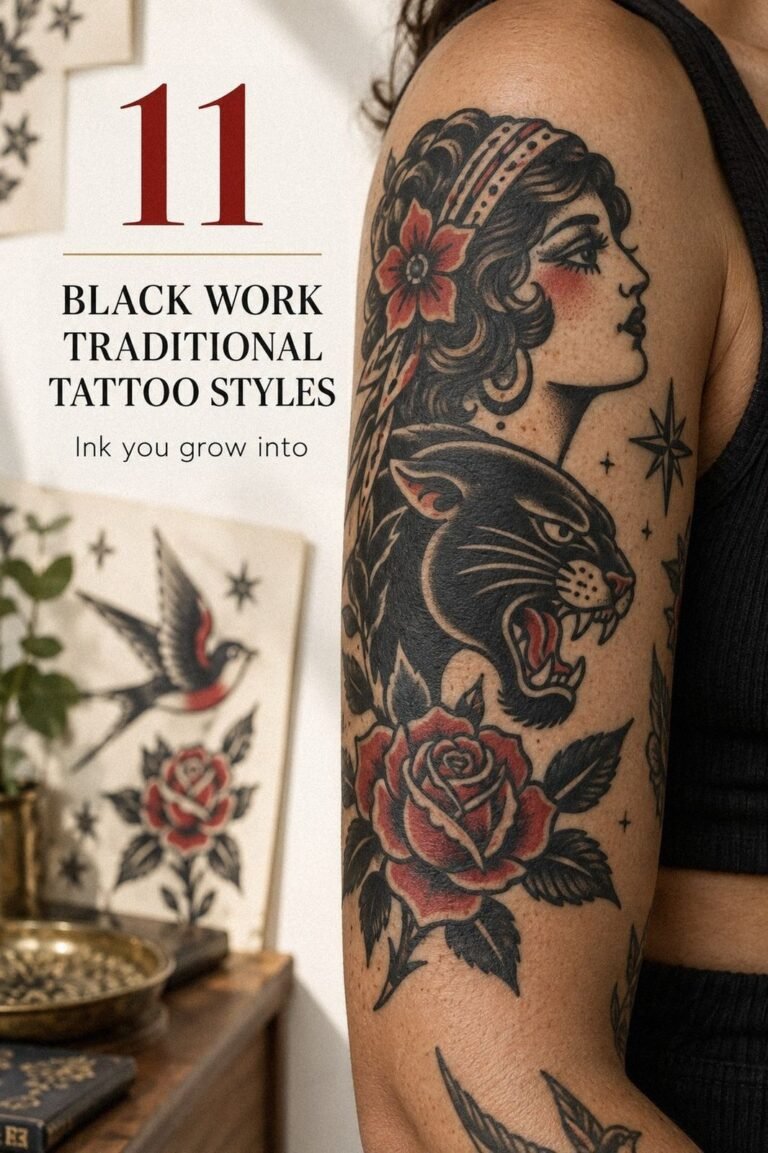
- Traditional American style: bold outlines, limited color, holds forever
- Japanese-inspired: great for larger pieces incorporating masks or dragon motifs
- Blackwork/dotwork: modern, graphic, excellent for logo reinterpretation
- Neo-traditional: allows for more stylized color while keeping readable outlines
Design Ideas
Iconic Moments
Some moments are tattoo shorthand. Hogan bodyslamming Andre. Mankind falling off the cell. The Montreal Screwjob finish. Daniel Bryan’s WrestleMania 30 celebration. These work because even simplified, they’re recognizable. I did a piece of the ring ropes from the angle where Bryan got his head shaved, just three ropes, turnbuckle padding, empty chairs. The client didn’t need the face. The space told the story. That’s the kind of design thinking that separates good wrestling tattoos from generic ones.
Championship Belts
Belts are tricky. The Winged Eagle, the Big Gold, the current WWE Championship, they’re intricate metalwork with tiny text and gem settings. At small sizes, that text becomes gray mush. I’ve had success with belt designs by isolating the central plate, dropping the side plates, and treating the leather strap as negative space rather than black fill. The Big Gold particularly works because that main eagle silhouette is strong even simplified. If you want the full belt across your chest or back, that’s a different conversation. Commit to the size or simplify the design. No middle ground.
- Signature moves simplified: Stone Cold’s middle fingers, Ric Flair’s strut silhouette, The Rock’s eyebrow raise
- Mask designs: Rey Mysterio, Lucha Underground characters, early Kane
- Catchphrases in the wrestler’s actual handwriting if you can source it
- Tag team imagery: Dudley Boyz tables, New Day’s unicorn horns, Edge & Christian’s five-second poses
Best Placements
High-Visibility Spots
Forearms and calves are where most people want their wrestling ink. Makes sense, you want to see it, show it. The forearm’s flat planes work for logos and text. The outer calf gives you a nice canvas for vertical compositions, like a figure standing in entrance pose. I’ve tattooed more than a few “Stone Cold” Steve Austin skulls on calves, and the curve of the muscle actually helps the skull read three-dimensional. Inner bicep is popular for text, but sweat and friction there means softer healing. I warn people: that spot will need a touch-up more often than most.
Large-Scale Commitments
Back pieces, full sleeves, thigh tattoos, these are where you can build a narrative. I worked with a client who wanted his entire back to tell the story of wrestling through generations: his grandfather’s Bruno Sammartino era, his father’s Hogan era, his own Attitude Era childhood, and his son’s current fandom. We used the turnbuckle as a vertical divider, ring ropes as horizontal breaks. Took four sessions. Healed beautifully because each section had enough space and the imagery was bold enough to carry from across a room. That’s the test: can someone recognize it from ten feet away? If not, your design’s too precious.
- Chest: excellent for symmetrical logo work, but painful over sternum
- Ribs: popular for catchphrases, but the stretch and compression there blurs detail over time
- Hands and fingers: I generally talk people out of this unless they’re already heavily tattooed; wrestling ink on hands ages poorly and limits professional options
- Upper thigh: underrated canvas, easy to hide, takes detail well, less sun damage
Color Choices
Red is the wrestling color. It’s also the fastest to fade to pink, especially on lighter skin tones. I push clients toward deeper crimsons, burgundy accents, or using red as an accent rather than a field. The classic nWo black and white is smart design, high contrast, no color to worry about. The Undertaker’s purple and black from the Ministry era looks incredible fresh but that purple shifts to blue-gray within five years unless it’s packed in properly.
Yellow and gold are essential for championship belts and certain characters. On darker skin, these need to be brighter, more opaque. On very fair skin, they can look jarring. I’ve learned to adjust saturation based on the individual, not just copy the reference image. The best wrestling color work I’ve done involved limited palettes: black, red, one accent color. Let the design do the work instead of throwing every hue at it.
- Black and grey: timeless, works for any era, ages best
- Black and red: classic wrestling aesthetic, strong contrast
- Full color: reserve for larger pieces with room to breathe
- White ink: avoid for highlights; it yellows or disappears
Tips for Choosing
Working With Your Artist
Bring references, not demands. The best clients show me the emotion they want and let me figure out the translation. A photo of Bret Hart in the Sharpshooter at WrestleMania 13 is a starting point, not a blueprint. I’ll ask: do you want the moment, the move, the man? Each answer leads somewhere different. Also, understand that wrestlers change. They switch companies, turn heel, retire, pass away. The logo you loved at twenty might represent something complicated at forty. Design for the era that meant most to you, not necessarily the current product.
Longevity Reality
That detailed tattoo of CM Punk’s Pepsi logo with the tiny bubbles? In ten years, those bubbles are gone. The text around his knuckles? “DRUG FREE” becomes “DRUG F___” as the small letters merge. I see this constantly. Plan for the blur. If your design doesn’t work at 70% fidelity, it’s too fragile. I had a client who wanted the exact font from Roddy Piper’s “Hot Rod” shirt. We thickened it, spaced it wider, accepted that the flame details would simplify. Healed, it reads instantly. Fresh, it would have looked slightly too bold. That’s the compromise you make for something that lasts.
- Get the design in two sizes: the one you want and one 20% larger; often the bigger version wins
- Consider the wrestler’s legacy, not just current popularity
- Budget for quality; this isn’t a place for bargain hunting
- Schedule around events; fresh tattoos and wrestling conventions don’t mix well
- Think about cover-up potential; today’s favorite might need reworking someday
Final Thoughts
Wrestling tattoos carry more weight than most pop culture ink because the connection runs deeper. It’s not passive consumption; it’s weekly ritual, live events, community, shared language. I’ve watched grown men tear up explaining why a particular match mattered. That emotion deserves respect in the design process. The best wrestling tattoos I’ve done weren’t the most technically complex. They were the ones where the client knew exactly why they wanted it and trusted me to make it work on skin. Bring that clarity. Find an artist who gets it, who’s willing to say no to the details that won’t last, who’s excited about the subject matter. The result won’t just be a good tattoo. It’ll be a conversation starter, a time machine, a piece of your history that happens to be visible. And isn’t that the whole point?
Frequently Asked Questions
How small can I go with a WWE logo before it becomes unreadable?
For most logos, don’t go smaller than two inches at the narrowest point. Below that, fine details merge during healing. Simplify the design and thicken lines rather than shrinking the reference.
Will a portrait of a wrestler look weird if they change their look later?
Choose an iconic era rather than a current look. The Hulk Hogan of yellow trunks and fu manchu is timeless. Recent iterations might not age as well in either sense.
Can I get a tattoo of a wrestler who passed away without it feeling like a memorial piece?
Absolutely. Focus on their active legacy, signature moves, entrance gear, peak moments, rather than somber imagery. Celebration reads differently than mourning.
How do I find a tattoo artist who actually knows wrestling?
Ask directly. Check their portfolio for sports or pop culture work. Artists who geek out on the subject will ask better questions and push your design further.
More Tattoo Ideas
- Art Chicano Tattoos: A Real Shop Guide
- Hawaii Traditional Tattoos: Complete Style Guide
- Ladies Japanese Tattoos: A Real Shop Guide
- Explore more