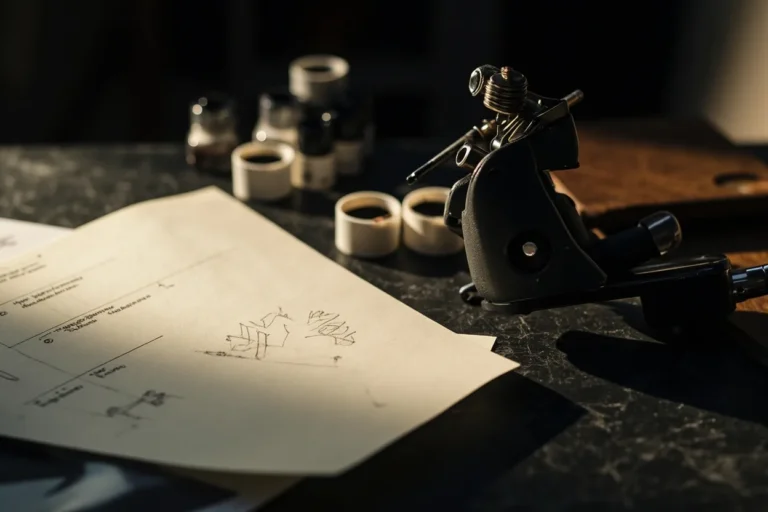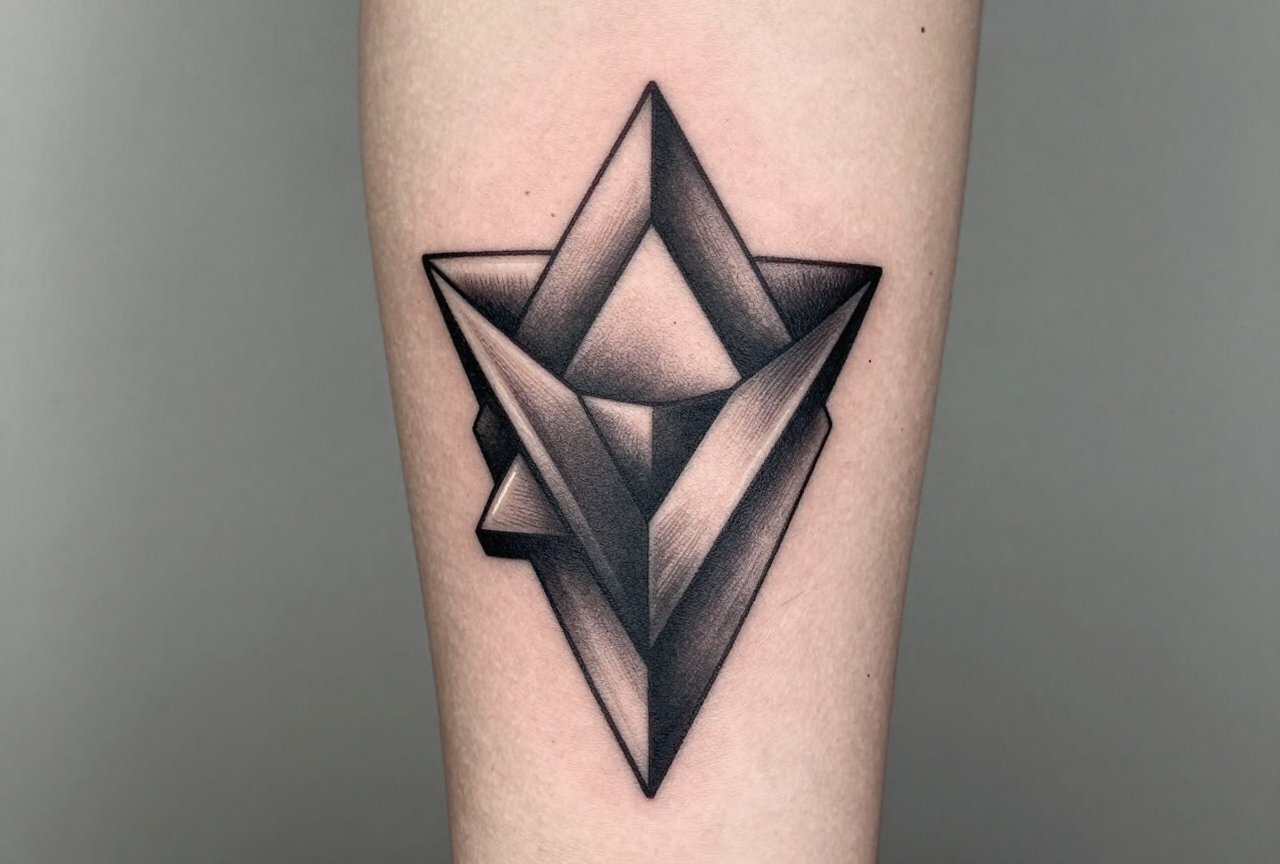
Geometric tattooing isn’t just “shapes on skin.” It’s a discipline where a fraction of a millimeter throws off an entire composition. I’ve watched clients walk in with Pinterest boards full of perfect mandalas and sacred geometry, then realize the artist they picked freehands everything. That’s not how this works. When you’re searching “geometric tattoo artist near me,” you’re really hunting for someone with drafting skills, patience, and the kind of eye that notices when a line’s off by a hair. This guide comes from years of sitting in both the client chair and the artist’s seat, watching what holds up and what turns into a blurry regret.
Origins & History
From Sacred Roots to Shop Culture
Geometric patterns in body art predate electric machines by thousands of years. Polynesian tatau, Berber skin markings, and Buddhist mandalas all relied on mathematical repetition. But the modern geometric tattoo style as we know it exploded in the early 2010s, largely out of Southern California and European blackwork scenes. Artists like Roxx and Gerhard Wiesbeck were doing things with straight lines and dotwork that made traditionalists nervous.
In my shop, we started getting requests around 2013. Clients would bring in photos of hexagonal sleeves and impossible triangles. The first few I attempted taught me fast: this isn’t about artistic flow. It’s about engineering. You can’t hide a wobble in a geometric piece. The line either locks in or it doesn’t.
How It Diverged from Tribal
People confuse geometric with tribal constantly. Tribal is organic, flowing, built for muscle movement. Geometric is rigid, calculated, often deliberately fighting the body’s natural curves. The overlap is black ink and bold shapes, but the mindset is completely different. I’ve had to explain this to clients who want “something tribal but geometric”, those are opposing instincts, and blending them takes serious skill.
Key Characteristics & Motifs
Real geometric work has telltale signatures you can spot immediately:
- Perfect symmetry, mirror lines that actually mirror, not “close enough”
- Dotwork gradients, stippled shading that creates tone without traditional whip shading
- Sacred geometry references, Flower of Life, Metatron’s Cube, Platonic solids
- Impossible geometry, Escher-inspired forms that trick the eye
- Pattern repetition, tessellations that continue seamlessly across skin
The linework is everything. In my chair, I use single-needle configurations for fine detail, but the outline work often demands a 3rl or 5rl to get consistent saturation. I’ve seen artists try to blast geometric lines with a 7mag because they’re used to traditional bold work. The edges feather. The client comes back in six months wondering why their hexagon looks like a stop sign drawn in marker.
Dotwork is its own beast. Each dot needs consistent depth and spacing. Too shallow, it falls out. Too deep, it blows out into a grey smudge. Your artist should be able to show you healed dotwork from at least a year prior. Fresh dotwork always looks crisp. Healed dotwork tells the truth.
Color vs Black and Grey
Why Most Geometric Stays Black
Black ink is predictable. It ages uniformly, maintains contrast against skin, and the precision of geometric work depends on that contrast. Color introduces variables: saturation levels, pigment particle size, how different colors fade at different rates. I’ve done color geometric pieces, jewel-toned mandalas, gradient shifts in sacred geometry, but they’re maintenance-heavy and require touch-ups that blackwork doesn’t.
That said, some artists specialize in color geometry. The Dutch scene, particularly, has pushed this with artists like Ivan Hack. If you’re set on color, your search for a geometric tattoo artist near me needs to narrow specifically to portfolios with healed color geometric work, not just fresh photos.
Black and Grey Techniques
When geometric does use grey, it’s typically through dotwork or very controlled whip shading, not the soft blends you’d see in realism. The gradient needs to stay structured. I tell clients: “Think graphite pencil, not airbrush.” The grey serves the geometry, not the other way around.
Best Placements
Not every spot on your body wants to hold a straight line. Movement, stretching, and skin texture all factor in.
- Forearms, flat planes, minimal distortion, easy to reference for symmetry. Most of my geometric work lands here.
- Calves, stable skin, good for larger compositions that need room to breathe
- Chest panels, the sternum gives a natural centerline for symmetrical work, but it hurts. A lot.
- Upper back, broad canvas, though shoulder blade movement can warp lines over time
- Hands and fingers, popular, risky. The skin regenerates fast, lines blur, and perfect geometry becomes approximate geometry within a few years. I warn every client who asks.
I’ve tattooed geometric sleeves that flow from shoulder to wrist. The challenge is maintaining pattern scale as the canvas narrows. Your artist needs to plan for distortion, not just copy a flat design. What looks perfect on paper warps around a tricep.
Who It Suits
Geometric work reads differently on different people. The style tends to suit:
- People who want visual structure over narrative imagery
- Those drawn to mathematics, architecture, or engineering
- Clients who prefer blackwork’s longevity
- Anyone wanting large-scale coverage that connects as a cohesive pattern rather than separate pieces
I’ve also found it attracts people who want tattoos but fear commitment to figurative imagery. A mandala doesn’t age like a portrait of your ex. It remains abstract. That psychological distance matters to some clients.
But it doesn’t suit everyone. If your skin keloids easily, the repeated trauma of dotwork can trigger problems. If you want soft, organic flow, geometric will fight your aesthetic. I’ve talked clients out of geometric work when their reference folder was all watercolor florals. Listen to your artist when they push back.
Modern Variations
Geometric Meets Organic
The current trend is hybrid work: geometric frameworks with organic interiors. Think hexagonal cells holding floral designs, or animal silhouettes built entirely from triangles. This is where the style gets interesting but also where artists fake expertise. The geometric structure has to be flawless, or the organic elements just highlight the errors.
3D and Optical Illusions
Some artists are pushing into forced perspective and impossible objects. These pieces require the client to hold specific poses during design, because the illusion only works from one angle. I’ve done a piece that reads as a cube from straight-on but collapses into lines from the side. The client loved it. It took three sessions of meticulous measurement.
Choosing an Artist
This is where “geometric tattoo artist near me” gets complicated. Proximity means nothing if the skill isn’t there. Here’s what I actually look for when recommending colleagues:
- Portfolio specificity, not three geometric pieces among fifty trad designs. Dedicated focus.
- Healed photos, fresh work lies. Ask for one-year healed shots of fine lines and dotwork.
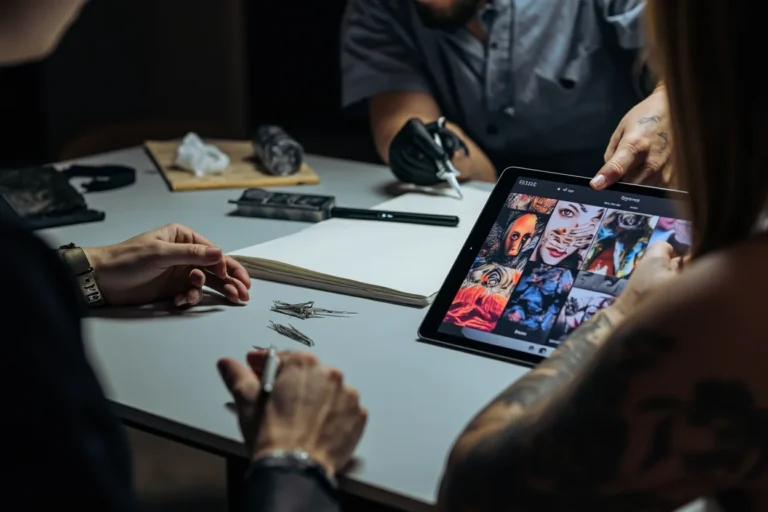
- Drawing process, do they draft digitally? Use stencils? Freehand geometric work is a red flag unless they’re genuinely exceptional.
- Machine setup, rotary machines with consistent stroke lengths help, but I’ve seen coil purists nail geometry too. The tool matters less than the hand.
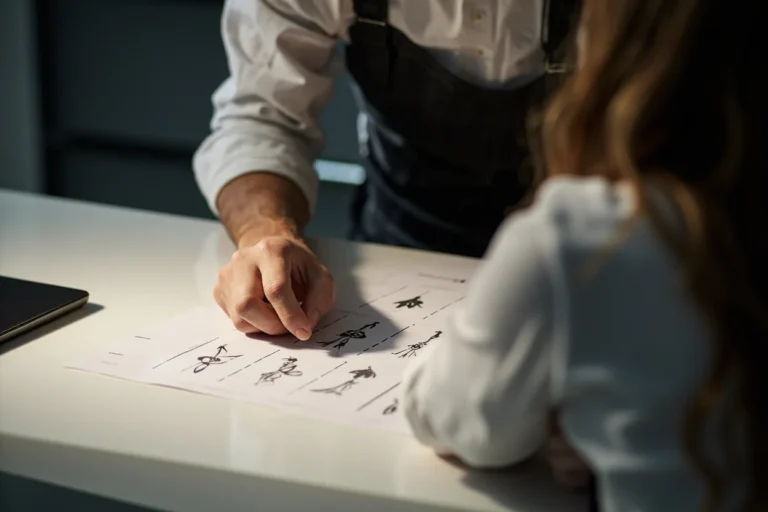
- Consultation depth, a good geometric artist measures, plans, and often wants a separate design session. Walk-ins for large geometric work are usually disasters.
We see this a lot in shops: someone finds an artist on Instagram, drives two hours, and never asked about healed work. Six months later they’re in my chair asking for a coverup of blown-out lines. The best geometric artist might be worth traveling for. I’ve had clients fly from other states for specific pieces. That’s not pretension, that’s understanding what their skin will carry for decades.
Ask about their stencil application. Geometric stencils need to be precise, and skin shifts during transfer. Experienced artists account for this. New artists don’t know to check.
Final Thoughts
Searching “geometric tattoo artist near me” is the start of a process, not the end. The style demands more than most tattoo categories. It requires an artist who thinks like a draftsman, works like a machine, and still understands that human skin isn’t graph paper. I’ve been tattooing long enough to watch trends come and go, but geometric work has evolved rather than faded because the foundation is solid: mathematics, precision, and the human compulsion to find order in chaos.
Your tattoo will outlast the search. Make sure the artist you find respects that timeline.
Frequently Asked Questions
How do I tell if a geometric artist’s lines are actually straight?
Look at their healed portfolio photos, not fresh work. Hold a straight edge to your screen, phone photos can distort, but obvious waves show up. Ask to see pieces from multiple angles, not just the single perfect shot.
Why does geometric tattooing cost more than other styles?
The design time is longer, the stencil application is more involved, and the tattooing itself is slower. A palm-sized geometric piece often takes longer than a traditional piece twice its size because there’s no room for error or improvisation.
Will my geometric tattoo stretch if I gain muscle or lose weight?
Some distortion is inevitable with any significant body change. Geometric pieces on stable areas like forearms and calves handle change better than stomach or upper arm placements. The key is avoiding areas where you know you’ll fluctuate.
Can geometric tattoos be covered up if I change my mind?
Dense black geometric work is among the hardest to cover. The solid saturation leaves little room for new design elements. Always consider this before committing to large-scale black geometric pieces, especially on highly visible areas.
Related Style Guides
- Neo Traditional Tattoo Artists: A Working Guide
- Realistic Dandelion Tattoos: A Working Artist s Guide
- Realistic Palm Tree Tattoos: A Working Artist s Guide
- Explore more