I’ve had the Daredevil horn symbol in my chair more times than I can count. Sometimes it’s a diehard fan who read every Frank Miller run, sometimes it’s someone who just loved the Netflix show. Either way, they want the same thing: a piece that captures that gritty, Catholic-guilt, Hell’s Kitchen energy without looking like a sticker slapped on skin. Let me walk you through what actually works, what ages well, and what I tell clients when they sit down with that red-and-black reference photo.
Popular Styles
Traditional American
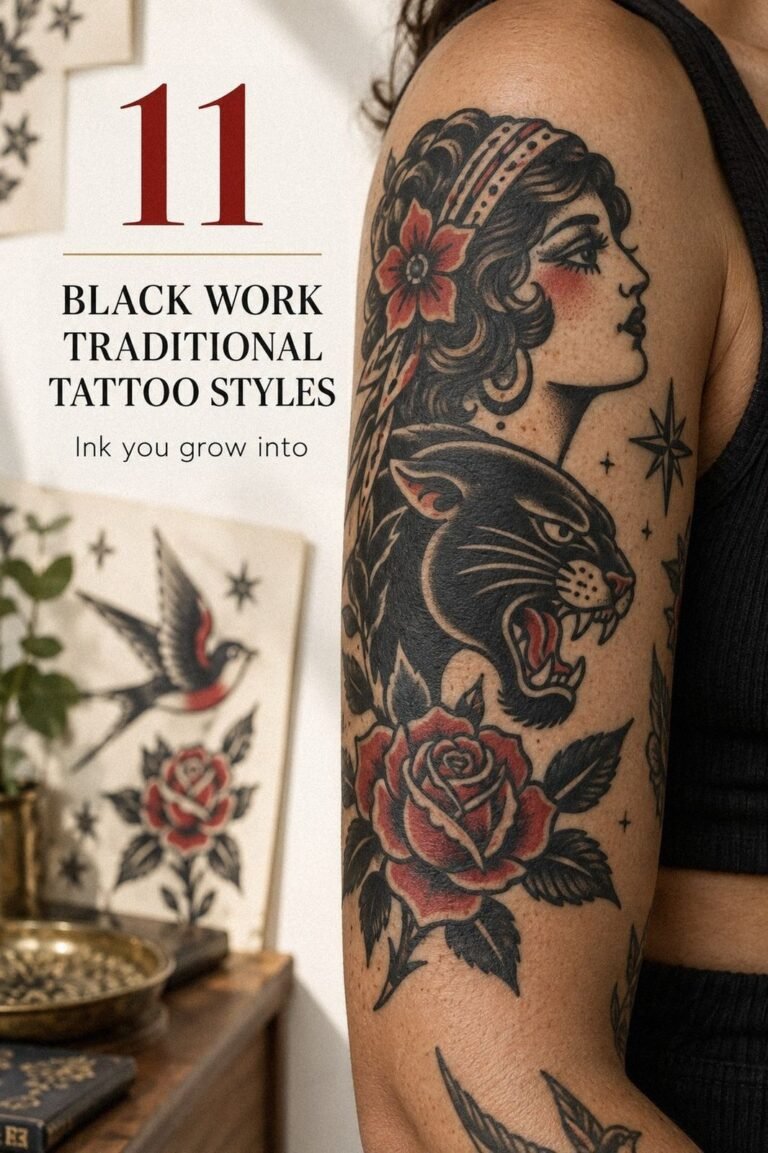
The bold lines and limited color palette of traditional American tattooing actually suit Daredevil imagery surprisingly well. I’ve done horned masks with thick black outlines, solid red fill, and maybe a touch of yellow for the eyes. The style forces simplicity, which means the design reads immediately from across a room. Traditional doesn’t do subtle shading well, so we lean into the graphic quality: stark black horns against that crimson face. It heals clean. I’ve watched ten-year-old trad pieces hold up on forearms because the skin didn’t have to carry delicate gray washes that fall out.
Black and Gray Realism
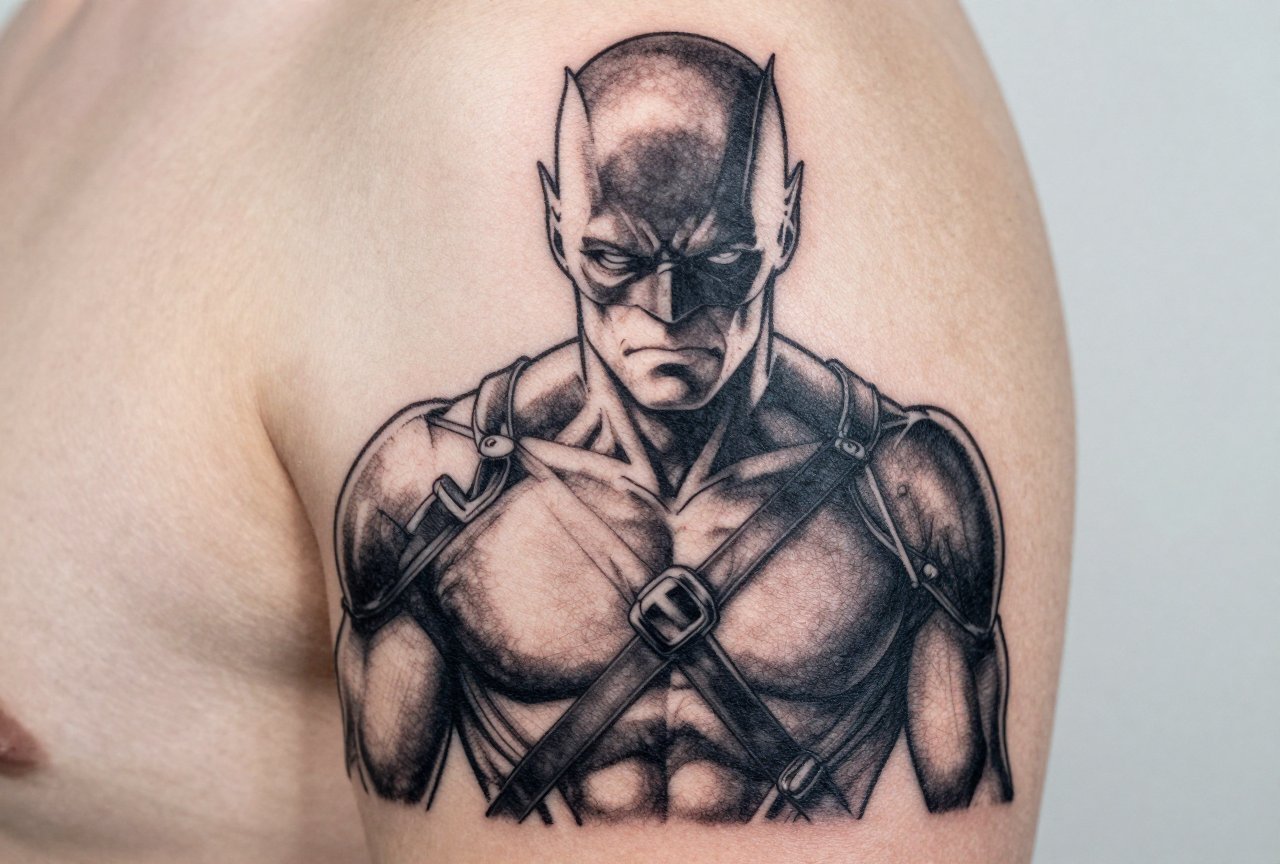
Charlie Cox’s weathered face, the texture of that leather suit, the bruises. Realism lets you play with all of it. But here’s what I warn people: realism on small scale becomes mud. I’ve seen beautiful Matt Murdock portraits the size of a baseball turn into gray blobs after five years. If you want realism, commit to size. A full-sleeve piece with the skyline, the church, the mask, now we’re talking. The skin has room to breathe. We can build depth with soft blacks and whip shading that actually stays readable as it settles.
- Neo-traditional: bolder colors, more illustrative, horns as decorative motif
- Japanese-inspired: not my usual lane, but I’ve seen Daredevil reimagined as a kabuki demon mask
- Graphic blackwork: pure silhouette, high contrast, very modern shop aesthetic
Design Ideas
Iconic Symbols
The interlocking DD logo. The horned mask silhouette. The cross from St. Agnes. These are the heavy hitters, and they’re popular for good reason. I’ve tattooed the DD symbol on wrists, ribs, behind ears. It works because it’s already designed like a tattoo, clean geometry, immediate recognition. One client wanted the symbol broken and cracked, which we did with negative space and skin breaks. The “damaged hero” thing, but subtle. Another guy got just the horns as a hand-poked piece above his ankle, tiny and deliberate.
Scene Work and Narrative Pieces
Bigger skin, bigger story. I’ve worked on a full back piece that started with young Matt at the boxing gym, transitioned through the chemical accident, ended with the red suit emerging from shadow. Took four sessions. The client sat like a rock. Scene work demands a strong artist who understands composition, where the eye travels, what to detail and what to let dissolve. We see this a lot with comic panel tattoos too: specific frames from Miller, Bendis, Waid runs, reimagined as continuous skin flow rather than literal boxes.
- Blind justice scales crossed with billy clubs
- The red suit hanging like a ghost, empty, symbolic
- Hell’s Kitchen street signs, wet pavement, neon
- Blood splatter forming the horn shape
- Father Lantom’s church interior with light through stained glass
Best Placements
High Visibility Spots
Forearms are the obvious choice. I’ve probably done thirty Daredevil pieces on inner forearms. The skin there takes line work well, heals predictably, and the client gets to see it without a mirror. But here’s the shop reality: forearms fill up fast. If someone’s building a larger Marvel sleeve, we start mapping early. Where does Daredevil live among Spider-Man, Punisher, maybe a Kingpin portrait? The placement becomes about flow, not isolation.
Intimate and Concealed Areas
Ribs. Thighs. The chest over the heart. These spots carry weight for a character so defined by Catholic suffering and secret identity. I’ve done the horned mask on ribs where the client said it hurt like hell but meant something, Matt’s pain, his endurance. The chest piece works for the lawyer-by-day duality: shirt on, professional; shirt off, the devil revealed. Skin quality matters here. Ribs move, stretch, heal weird sometimes. I always book a touch-up for rib pieces because the settling is unpredictable.
- Upper arm/shoulder: classic hero placement, room for detail
- Calf: great for vertical compositions, the full figure standing
- Hand/fingers: the billy club wrapped around a finger, but I warn about fading
- Behind ear: tiny horns, very popular with younger clients, quick to do
Color Choices
The Red Problem
That specific Daredevil crimson? It’s a nightmare. Red pigment is notoriously tricky. Some brands fade to pink. Some hold but spread slightly, blurring edges. I’ve settled on a few reliable reds after years of testing, but I always tell clients: this red will not stay this red. It will soften. It will warm. The black horns will stay black. The contrast between stable black and settling red actually mimics the character pretty well, something once bold, now worn.
Working With Limited Palettes
The best Daredevil pieces I’ve done use restraint. Red, black, skin tone. Maybe a touch of white for highlights that will mostly disappear. When clients ask for full color backgrounds, green city glow, purple Kingpin suit, blue night sky, I push back gently. The character is defined by restriction. His world is dark. The tattoo should feel that way. I’ve done one piece with just black and negative space, no red at all, and it was somehow more Daredevil than the bright crimson versions.
- Black and gray with selective red: the “Sin City” approach, very effective
- Muted burgundy instead of bright red: ages to a dignified tone
- All black: relies on texture and line weight, surprisingly powerful
Tips for Choosing
Finding the Right Artist
Not every tattooer wants to do Marvel work. Some old-school shops turn up their noses. I don’t get it, good imagery is good imagery. But you want someone who actually knows the source. I’ve had clients show me reference and I can tell immediately if they read the comics or just watched the show. The best artists ask questions: which era? Which tone? Miller’s noir or Waid’s swashbuckling? Your answers shape everything. Look at portfolios for comic work, for graphic black and red, for how they handle solid color fields.
Reference and Customization
Bring reference, but don’t demand replication. I’ve had people hand me a panel and say “exactly this.” I explain: that’s printed paper. Skin is alive. The translation requires adaptation. Lines thicken. Colors shift. What works at comic scale needs rethinking for bicep scale. The best client I had brought twenty images, talked for an hour, then said “I trust you to make something that feels like this.” That’s the sweet spot. We designed a piece with the horns as architectural elements, the DD as negative space in a cathedral window, his father’s boxing robe as draped fabric below. His idea, my interpretation.
- Consider the long arc: will you still want Marvel ink at fifty?
- Think about coverage: employment realities still exist for visible hero tattoos
- Budget for quality: this is permanent; the cheapest option ages poorly
- Plan the session: detailed work takes time, multiple sittings, healing between
Final Thoughts
I’ve tattooed the devil on priests’ sons and lawyers and kids who just loved the fight choreography. The character endures because the imagery is flexible, catholic guilt, urban decay, blind justice, redemptive violence. Your Daredevil tattoo can whisper or scream. It can hide or announce. What matters is that the person wearing it understands why they chose it, and that the artist respects the material enough to translate it honestly onto skin. The best compliment I’ve gotten? A client who said his healed piece looked like it had always been there, like he’d earned it. That’s the goal. Not reproduction. Resonance.
Frequently Asked Questions
Will a Daredevil tattoo with a lot of red need more touch-ups than other colors?
Red pigment does fade faster than black, and cheaper reds can shift to pinkish tones. I book touch-ups for red-heavy pieces as standard practice, usually at six months to a year. Quality ink and good aftercare help, but expect some softening over time.
Is it weird to get a comic character tattoo if I only watched the Netflix show?
Not at all. I’ve had clients who never touched a comic book. What matters is your connection to the character, not gatekeeping. Just know your reference so the artist can match the tone, show visual examples of what drew you in.
Can I combine Daredevil with other Marvel characters in one piece?
Absolutely, but plan the composition. Random characters scattered like stickers look disjointed. I prefer thematic grouping, street-level heroes, Catholic imagery, or a specific storyline. Flow matters more than checklist completion.
How small can a detailed Daredevil mask tattoo be before it blurs?
For solid black horns and simple red fill, you can go palm-sized. For detail inside the mask, eyes, texture, expression, I wouldn’t go smaller than a fist. Below that, lines spread and features merge within a few years. I’ve seen it happen.
More Tattoo Ideas
- Marvel Tattoo Ideas That Actually Work
- Sunlight Tattoo Designs That Actually Work
- Tattoo Patterns and Designs: Real Shop Inspiration
- Explore more