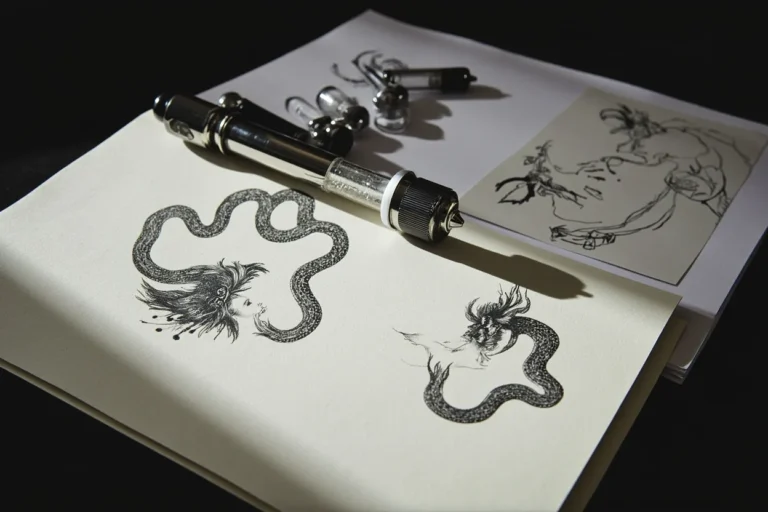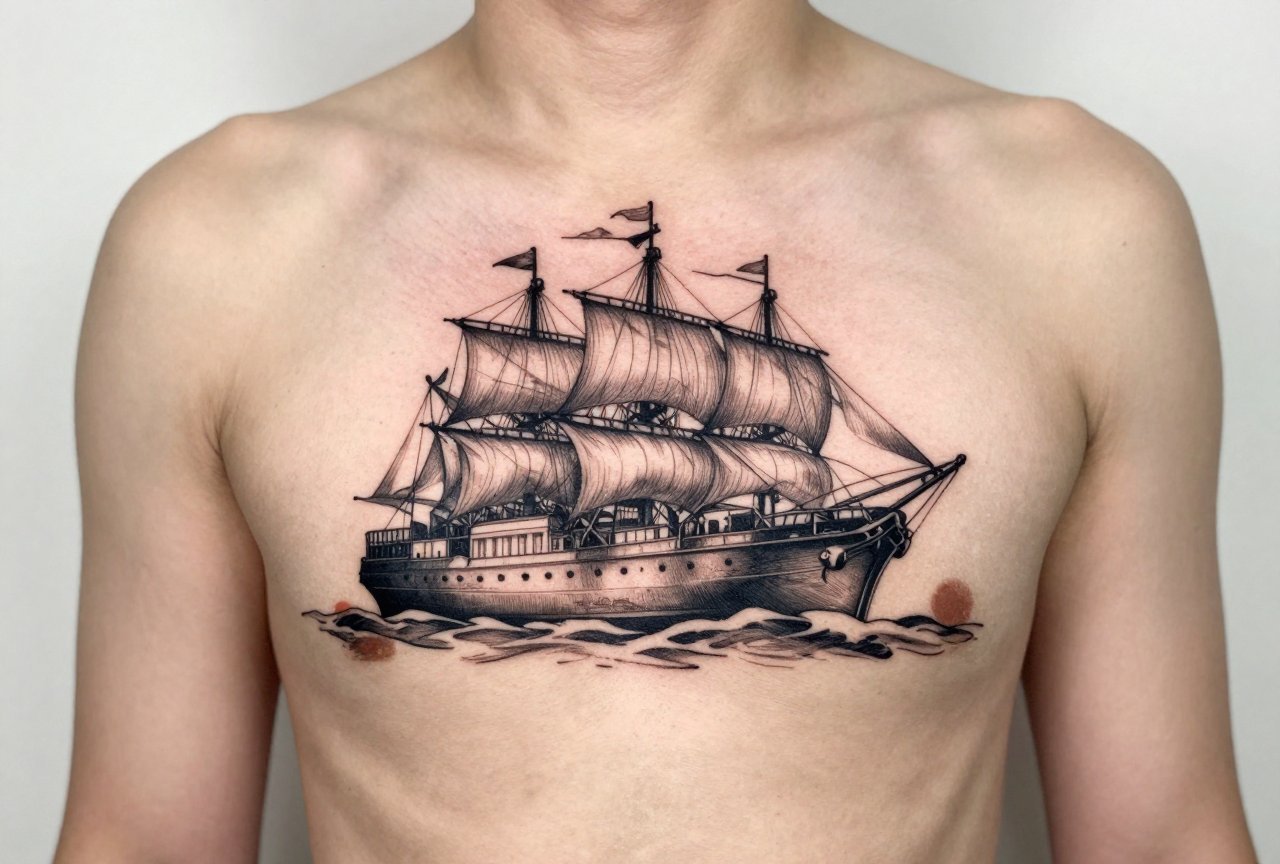
A ship tattoo means movement through life’s unknowns. It stands for the journey itself, not the destination, with all its storms, calms, and course corrections. I’ve tattooed enough of these to know: nobody gets a ship sitting still.
Symbolism & History
Ships were among the first tattoo images ever worn. Sailors in the 1700s marked their skin with what they’d actually seen, mermaids, anchors, and yes, the vessels that carried them through typhoons and doldrums alike. A fully-rigged ship meant you’d sailed around Cape Horn. That wasn’t decoration. That was proof.
What the Ship Actually Represents
Freedom, obviously. But also the burden of steering your own course. The ship doesn’t move without effort, sails trimmed, wheel held, watch kept. I tell clients who want something “meaningful but not corny” that a ship works because it’s active. It’s doing something.
- Journey: Literal travel, life transitions, or personal growth
- Resilience: Surviving what the water threw at you
- Homecoming: The ship returns, or it doesn’t, both stories matter
- Self-direction: Captain of your own life, tired as that sounds
The Sailor’s Legacy
Traditional American tattooing basically built its visual language around maritime life. Sailor Jerry, Bert Grimm, the whole lineage, these guys were tattooing on servicemen who’d seen actual oceans. That history lives in the bold lines and limited palettes we still use. When someone asks for a “traditional ship,” they might not know they’re requesting a specific heritage. I explain it. Most dig it.
Common Variations & Styles
Not all ships are created equal, and the style changes the meaning more than people expect.
Traditional American
Think bold black outlines, limited red and green, maybe a banner reading “Homeward Bound” or “Hold Fast.” These read immediately. From across a room, you know what it is. The skin ages them well, thick lines hold. I’ve seen traditional ships twenty years old that still sing. The tradeoff: less detail, more symbol.
Realistic/Black and Grey
Full sails, rigging you can count, storm clouds with actual volume. These take longer, hurt more, and require an artist who understands perspective at skin-scale. The meaning shifts toward the specific vessel, maybe your grandfather’s Navy ship, maybe a tall ship you crewed once. Personal. Detailed realism also fades differently; fine lines blur, grey washes settle into the skin’s own tone. I warn clients: that hyper-detailed piece will soften. Plan for it.
Minimalist and Fine Line
Single needle, maybe an inch wide. Elegant. Fragile. I’ve done these on wrists, behind ears, along collarbones. They whisper instead of shout. The meaning here tends toward aspiration, the ship you haven’t sailed yet, the journey you’re starting. Know that fine line ships can age into vague boat-shapes if the artist doesn’t build in enough structural weight. I use slightly heavier line on the hull, keep the sails airy.
- Ship in a bottle: Contained adventure, nostalgia, something precious protected
- Ship with compass: Direction plus vehicle, double navigation
- Sinking or broken ship: Loss, survival, what didn’t kill you
- Ship with kraken/octopus: The struggle against forces that could swallow you
Best Placements
Ships need space to breathe. The hull has horizontal weight; the masts reach vertical. Square-ish overall composition, which limits some spots.
Thigh and calf: My favorite for medium-sized pieces. The muscle curve gives the hull natural dimension. Calf especially, standing, the ship reads upright; seated, it wraps slightly. Dynamic.
Forearm: Classic placement, visible, enough flat real estate for a smaller traditional ship. Watch the wrist bone; detail there hurts and doesn’t hold as clean.
Chest: Broad canvas. A ship here can have real presence, sails full, moving with your breath. I’ve done chest pieces where the mast aligns with the sternum line, subtle, but the wearer feels it.
Ribcage: Painful. Worth it for some. The ship follows the rib curve, literally riding the body. Long sessions. Bring headphones.
Back: For the committed. Full scene potential, ocean, sky, other vessels. I’ve worked 15-hour back pieces that started with a ship and grew into maritime worlds.
Avoid: tiny ships on fingers (become blobs), neck ships unless you’re fully covered elsewhere (job market reality, sorry), anywhere the skin stretches drastically and unpredictably (stomach, I’m looking at you).
Who Chooses This Tattoo / Personal Meanings
In my chair, ship people fall into patterns. Not stereotypes, patterns.
The Traveler
Backpacked Southeast Asia, worked on a fishing boat in Alaska, can’t stop moving. The ship marks what they already know: leaving is possible, returning is optional. Often paired with coordinates or dates.
The Survivor
Divorce, recovery, prison, illness, something that required actual navigation through darkness. These clients often want the storm visible. Dark water. Torn sails that still hold. I don’t ask; they tell. The ship becomes their way of saying “I was there and I kept going” without the words.
The Romantic
Never sailed. Might get seasick in a bathtub. But they love the idea, the romance of wind and canvas, of purpose without destination. These pieces tend toward the beautiful rather than the brutal. Mermaids, sunsets, calm seas. Valid. Not every tattoo needs to document trauma.
Shop culture note: we see this a lot with Navy and Coast Guard veterans. They’ll sit in the chair and debate whether their ship was a frigate or destroyer, whether the artist got the mast configuration right. I listen. Accuracy matters to them. It’s not just a tattoo; it’s their actual ship, their actual years.
Similar Symbols
Clients sometimes waver between a ship and related imagery. Here’s how I guide them.
- Anchor: Stability, staying put. The opposite energy. Some people need both, ship for the journey, anchor for the harbor.
- Compass: Direction without the vessel. More abstract, smaller, less narrative.
- Swallow: Traditional sailor tattoo for distance traveled (5,000 miles per bird). Lighter, more hopeful. Ships carry more weight.
- Lighthouse: Guidance from outside. The ship is self-guided. Different relationship to agency.
- Wave: The environment, not the actor. Often paired with ships, rarely alone.
I’ve had clients combine ship and anchor on opposite forearms, left for movement, right for roots. Works. The body becomes the story.
Final Thoughts
A ship tattoo means you’re going somewhere, have been somewhere, or survived the trip you didn’t choose. It works because it’s specific and universal at once, everyone understands a ship on water, but your particular ship, your particular water, belongs to you.
Pick an artist who knows maritime imagery, or at least respects its history. Bring reference: a photo, a painting, a memory. Let them adapt it to how skin actually works. The best ship tattoos don’t look like stickers. They look like they sailed there.
I’ve watched clients stare at their fresh ship in the mirror, still wrapped, eyes tired from the session. There’s something about this image that hits different. Maybe it’s the scale, human against ocean, wood against water, will against weather. The ship doesn’t promise safety. It promises the attempt. That’s enough.
Frequently Asked Questions
Does a ship tattoo have to be nautical or sailor-themed?
Not at all. Plenty of people who’ve never been on a boat get ship tattoos for the metaphor, life’s journey, personal transitions, resilience through storms. The meaning lives in what it represents to you, not your maritime resume.
How well do detailed ship tattoos age over time?
Fine lines and intricate rigging will soften and blur as skin ages and sun exposure accumulates. I always build ships with bold enough structure in the hull and major masts so the image remains readable even when detail fades. Plan for the long haul, not just the fresh photo.
What’s the most painful spot for a ship tattoo?
Ribcage and sternum are brutal, thin skin over bone, plus the session runs long for any meaningful ship size. Thigh and outer calf hurt less and give the artist better working conditions. Your artist can advise based on the specific design size.
Can a ship tattoo cover up old work?
Often yes. The ship’s hull and sails create natural dark areas that can incorporate existing tattoos, and the composition’s horizontal structure helps disguise older pieces beneath. Bring your existing tattoo to consultation; a good artist will map the coverage honestly.
Related Tattoo Meanings
- Supernatural Tattoo Meaning: Symbols, Styles Ink That Lasts
- Tattooed Tattoo Meaning: Ink About Ink
- Three Swords Tattoo Meaning: Symbolism, Styles What Artists Know
- Explore more