
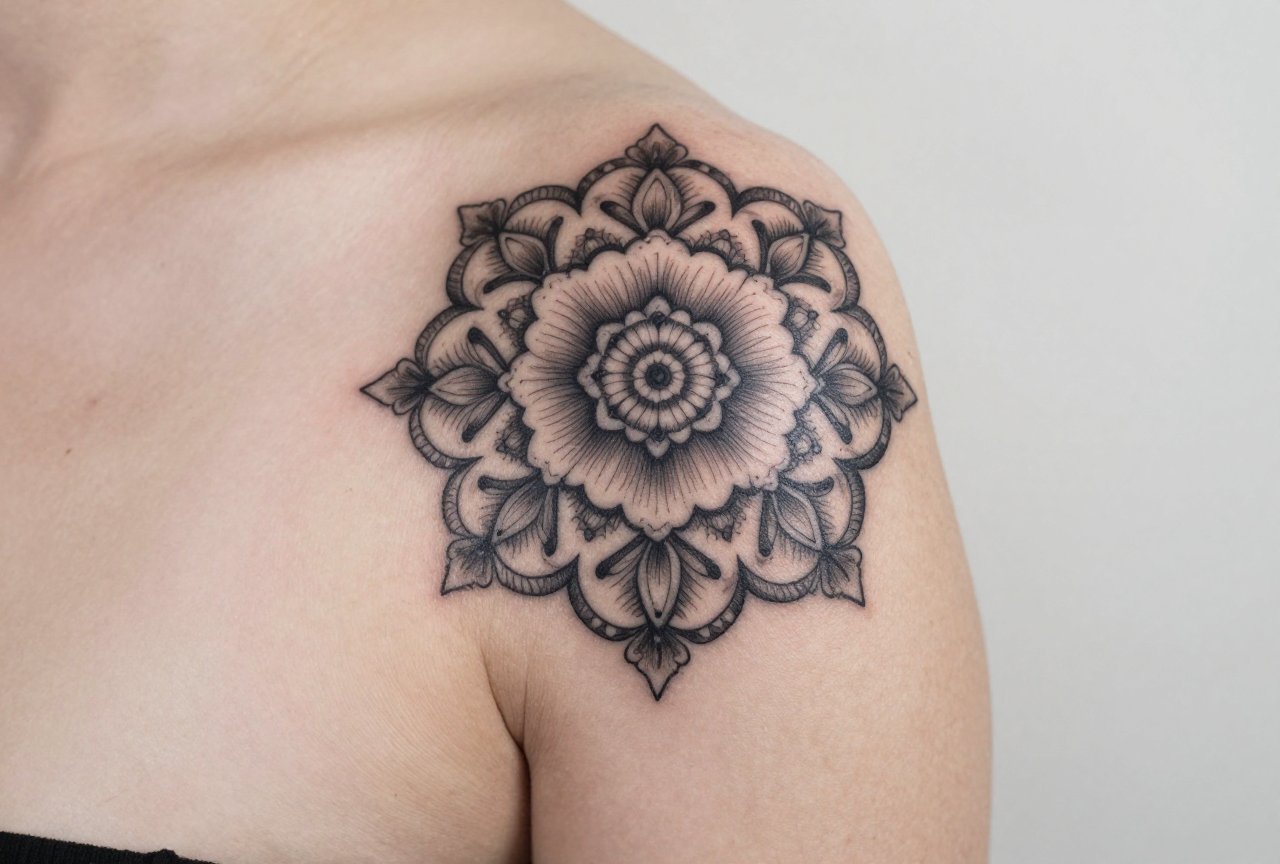
Filigree tattoo meaning starts with the craft itself: those hair-thin lines of twisted metal that jewelers have bent into lace-like patterns for centuries. On skin, it translates to an ornamental style built from flowing curves, tight spirals, and negative space that lets the body breathe through the design. Most people who sit in my chair for filigree aren’t after a single fixed meaning, they’re drawn to what the technique represents: patience, refinement, and the beauty of something fragile that endures.
Symbolism & History
From Goldsmith Benches to Tattoo Shops
Real filigree started in ancient metalwork, gold and silver threads soldered into patterns that looked impossibly delicate but held their shape. I’ve tattooed pieces where clients brought in their grandmother’s brooch, wanting that exact lattice translated to their shoulder. The meaning shifts when it hits skin. Metal filigree is about wealth and display; tattoo filigree becomes about permanence through change. You’re taking something meant to be admired on a shelf and making it part of your living, sweating, moving body.
The historical weight matters. Mediterranean and Middle Eastern goldsmiths perfected this technique thousands of years ago. Celtic knotwork shares DNA with filigree, those endless interlocking lines. When someone asks for filigree with a cross or a memorial date woven in, they’re often connecting to that lineage without knowing the specifics. I don’t lecture them on history. I just make sure the line weight can hold.
What the Lines Actually Say
Spirals suggest growth and return. Repeated loops can mean cycles, seasons, grief, recovery. The openwork, the gaps between lines, speaks to me about vulnerability. I’ve had clients who’ve been through heavy stuff choose filigree specifically because it looks broken apart but isn’t. The pattern holds despite the holes. That’s not symbolism I invented; it’s what people tell me when we’re three hours into a rib piece and they’re finally relaxed enough to talk.
- Delicate strength: Thin lines that don’t snap, mirroring how people see themselves after hardship
- Transformation: Metal becoming pattern becoming skin, material shifting through states
- Intentionality: Nothing in filigree is accidental; every curve serves the whole
- Time investment: Both the original craft and the tattoo require slow, focused labor
Common Variations & Styles
How Line Work Changes the Meaning
Traditional filigree tattooing uses single-needle or tight three-round liner work. The thinner the line, the more elegant and fragile it reads. I’ve watched clients’ faces when I show them healed photos of ultra-fine filigree versus bolder versions, same pattern, completely different emotional weight. Thin feels whispered. Bold feels declared.
Shading changes things too. Some filigree stays pure line, letting the skin tone create the pattern. Others get soft gray wash behind certain loops, making them pop forward. I did a piece last year where we shaded only the outer edge of a sleeve filigree, so it looked like lace catching light. The client said it reminded her of morning sun through her kitchen curtains, a specific memory, not generic “beauty.”
Mixed Elements
Filigree rarely stands alone in modern tattooing. Common combinations shift the meaning:
- Filigree + flowers: Growth emerging from structure; often memorial pieces for mothers
- Filigree + skulls or anatomical hearts: The decorative meets the visceral, memento mori with elegance
- Filigree + script: Words given architectural support; names, dates, short phrases
- Filigree + geometric frames: Order containing chaos; popular with people in recovery
We see this a lot in my shop: someone starts wanting “something pretty” and ends up with a hybrid piece that tells their actual story. The filigree becomes the connective tissue between symbols that might otherwise clash.
Best Placements
Where the Body Meets the Pattern
Filigree flows with anatomy or fights it. I tell clients straight: ribs and hips let the curves follow natural contours, but the healing is rough, constant movement, fabric rubbing, sweat pooling in those fine lines. Wrists and forearms heal easier but age faster; sun exposure blows out delicate work. Behind the ear looks stunning for Instagram, but I’ve had to redo those pieces more than almost anywhere else.
The back and thigh give you real estate for filigree to breathe. A full thigh piece with negative space can look like actual lace laid on skin. Upper arms and shoulders hold line work well long-term; the skin’s relatively stable, and clients can control sun exposure with sleeves.
Placement affects meaning too. Thigh filigree often reads private, intimate, something for the wearer and chosen viewers. Forearm filigree is public declaration. I’ve tattooed both, and the pre-session conversations are completely different. Thigh people talk about self-ownership. Forearm people talk about visibility and not hiding anymore.
Who Chooses This Tattoo / Personal Meanings
The Clients in My Chair
After fifteen years, I see patterns. Filigree attracts people who’ve outgrown their earlier tattoos and want something that feels grown, women especially who got small pieces in their twenties and now want sleeves that read as cohesive. Men come in for filigree too, often mixed with darker imagery; they want the contrast, the tension between hard and soft.
The personal meanings I hear:
- Surviving something that should have broken them, “the cracks didn’t make it fall apart”
- Reconnecting with craft heritage, grandparents who sewed, baked, built
- Transitioning, literally or figuratively, filigree as the “becoming” between before and after
- Control after chaos, the precision soothes; every line is a decision made and kept
A client last month told me her filigree sternum piece was about “being decorated without being consumed.” That’s the kind of meaning I can’t invent for marketing. It comes from the sitting, the needle, the hours of conversation.
What Artists Actually Say
Shop culture around filigree is specific. We respect the technique because it punishes sloppy work. A wobble in a tribal piece might read as intentional; in filigree, it’s obvious disaster. Artists who specialize in this style tend to be meticulous, sometimes obsessive. I’ve heard colleagues call filigree “meditation with consequences”, you can’t zone out, but the focus itself becomes the point.
Similar Symbols
Clients considering filigree often look at related styles. Understanding the differences helps clarify what they actually want:
- Mandala: Radial symmetry, often spiritual or meditative meaning; filigree is more organic and flowing
- Lace tattoo: Direct fabric reference, usually softer and more nostalgic; filigree carries more metalwork edge
- Celtic knotwork: Interlocking with no clear beginning or end; filigree allows more open space and variation
- Arabesque/Islamic geometric: Mathematical precision, often religious context; filigree is more freeform and personal
- Art Nouveau lines: Similar flowing curves, but usually narrative with figures; filigree stays abstract and ornamental
I steer people toward filigree when they want meaning without literal imagery. When someone says “I don’t want a thing, I want a feeling,” that’s filigree territory.
Final Thoughts
Filigree tattoo meaning isn’t fixed in a dictionary. It’s built in the collaboration between artist and client, in the specific curves chosen, the placement on the body, the stories told while the machine runs. What connects all good filigree work is intention, the sense that nothing is arbitrary, that beauty requires structure, that thin lines can hold weight.
If you’re considering this style, bring reference but also bring patience. Good filigree can’t be rushed. The healing tests your commitment; those fine lines need care. And years from now, when the edges have softened slightly, the meaning often sharpens. I’ve had clients return to add to filigree pieces, not cover them. That says something. The pattern grows with them, becomes part of their longer story rather than a frozen moment. That’s the real meaning, I think, not what the tattoo symbolizes on day one, but what it accumulates over the years you live inside it.
Frequently Asked Questions
Does filigree tattoo meaning change if I use color instead of black and gray?
Color shifts the emotional temperature. Black filigree reads classic, architectural, timeless. Warm tones like gold or copper suggest heirloom and warmth. Cool colors or pastels can feel more contemporary and playful. I usually advise starting black and gray if the meaning is serious or memorial, you can always add color later, but removing the commitment is harder.
Will fine filigree lines blur together as I age?
They’ll soften, yeah. All tattoos do. But well-executed filigree with proper line weight and spacing ages better than you’d expect. I tell clients to think five-year increments, not forever. Sunscreen is non-negotiable. The meaning doesn’t disappear when the edges blur; it just becomes part of your skin’s history, like laugh lines.
Can filigree work cover up an old tattoo I regret?
Sometimes, but it’s tricky. Filigree needs negative space to function; covering solid black requires heavy fill that kills the delicacy. I usually suggest laser fading first, or incorporating the old piece as a dark element surrounded by filigree rather than trying to hide it completely. The best cover-ups tell a new story with the old one.
Why do filigree tattoos cost more than simpler designs?
Time and precision. A palm-sized filigree piece can take longer than a bold graphic three times its size. One shaky line ruins the whole composition. You’re paying for the artist’s steady hand and the mental focus required. In my shop, we quote filigree by estimated hours, not by size alone. The result is worth it if the meaning matters to you.
Related Tattoo Meanings
- Rock of Ages Tattoo Meaning: Faith, Strength Timeless Ink
- Diddy Back Tattoo Meaning: Symbolism Style Guide
- Teardrops Face Tattoo Meaning: Symbolism, History Style Guide
- Explore more









