
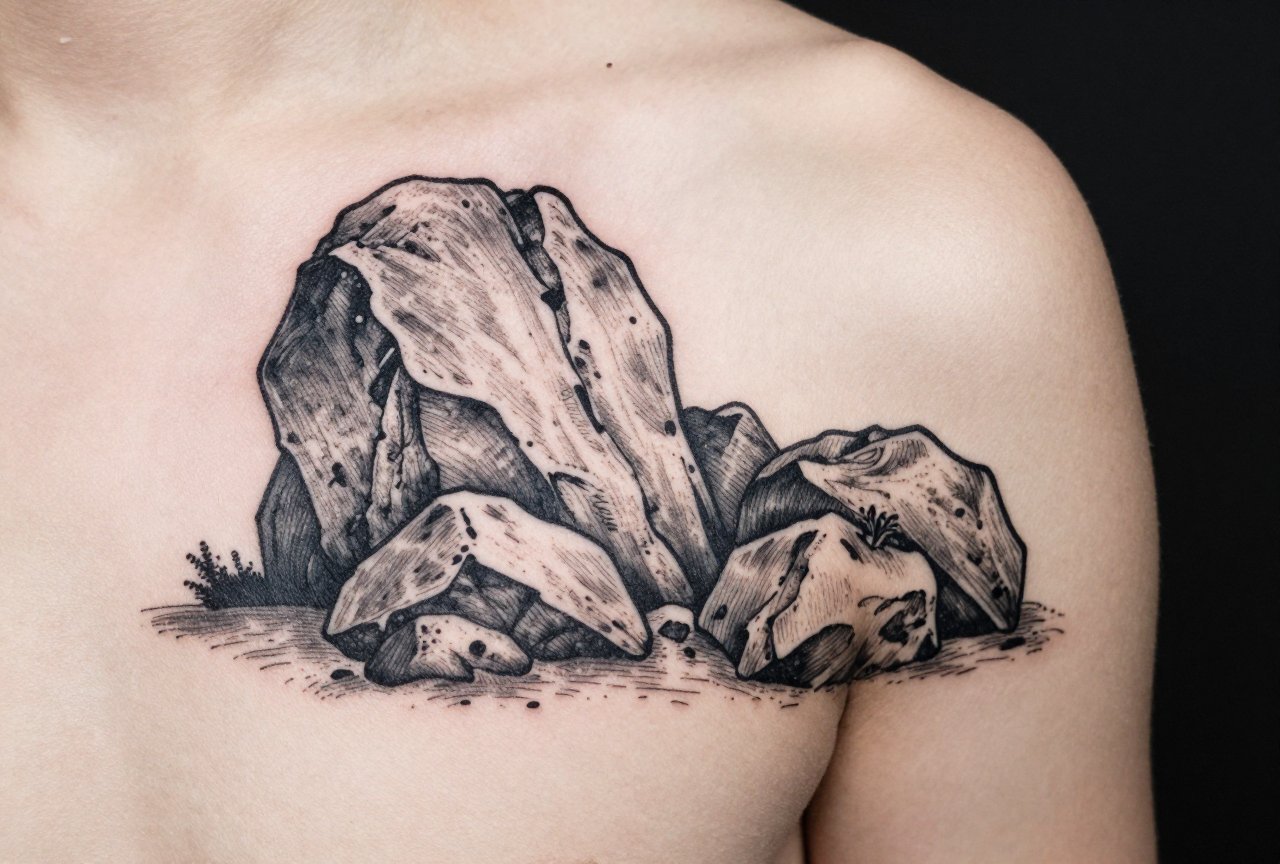
Rock of Ages Tattoo Meaning: Faith, Strength & Timeless Ink
Some images lodge themselves so deeply in visual culture that they outlast their original context. The Rock of Ages tattoo belongs to this rare category. Drawn from a hymn that crossed oceans and centuries, the motif, a figure clinging to a cross emerging from stone, carries weight for believers and secular collectors alike. Understanding what separates meaningful execution from hollow repetition demands looking at craft, history, and skin itself.
Key Characteristics
Recognizing authentic Rock of Ages imagery requires attention to specific compositional elements. The core scene depicts a solitary human figure, often robed, grasping a cross that rises from or is embedded in rugged stone. Waves, storm clouds, or breaking darkness typically surround this central image, creating tension between turmoil and refuge.
Traditional Elements
Classic renditions maintain several consistent features:
- The cross as both structural anchor and spiritual symbol
- Craggy, almost geological stone rendering with heavy shadow
- Atmospheric disturbance, wind, water, or shadow, contrasted with the figure’s stability
- Facial expression suggesting exhaustion mixed with resolve
Lettering frequently accompanies the image, sometimes integrated into the stone itself. “Rock of Ages, cleft for me” remains the most common textual addition, though some collectors prefer abbreviated phrases or omit words entirely.
Composition and Flow
Successful placement respects the vertical thrust of the cross. The design naturally suits forearms, calves, and rib panels where length accommodates the full dramatic scene. Compressed versions for smaller areas risk losing the narrative tension between human frailty and divine permanence that defines the motif’s power.
Color vs Black and Grey
This particular design presents a fascinating split in execution approaches. Each path carries distinct advantages and considerations worth weighing before committing.
Black and grey dominates historical examples and contemporary traditional work. The technique’s strength lies in its capacity for atmospheric depth, stormy skies, wet stone, the play of light on desperate features. Single-needle shading can achieve remarkable subtlety in the figure’s drapery and the stone’s weathered surface. For collectors drawn to the design’s 19th-century origins, this approach honors the visual language of that era.
Color introduces different possibilities. Strategic crimson in the robe or crossbeam draws immediate focal attention. Ochre and umber tones warm the stone, making it feel less abstract and more geological. Some artists employ limited color palettes, perhaps just the figure’s garment against monochrome surroundings, to create selective emphasis without overwhelming the composition’s gravity.
Critical consideration: skin tone significantly impacts color longevity. Lighter complexions preserve subtle hues longer; deeper tones may require bolder saturation or benefit from the inherent contrast of black and grey. Discuss specific pigment choices with your artist during consultation rather than assuming universal solutions.
Similar & Related Symbols
The Rock of Ages occupies a neighborhood of religious imagery with which it shares DNA, yet maintains distinct identity. Understanding these relationships helps clarify whether this specific design serves your intentions or if a related motif better fits.
The anchor cross, popular among sailors and those drawn to maritime heritage, shares the theme of stability amid chaos. However, it lacks the human figure and the specific narrative moment that gives Rock of Ages its emotional punch. The praying hands design focuses on devotion rather than desperate clinging, different spiritual posture entirely.
Calvary crosses and crucifixion scenes depict Christ’s suffering directly, whereas Rock of Ages positions the viewer as the suffering figure seeking refuge. This shift from observing divine sacrifice to experiencing personal salvation marks a crucial theological and aesthetic distinction.
Secular imagery sometimes overlaps visually. The man against nature trope, think Caspar David Friedrich’s wanderer above fog, shares compositional DNA without religious content. Some collectors blend these traditions, keeping the dramatic structure while omitting specifically Christian elements.
How It Ages on Skin
Longevity concerns deserve serious attention with this detailed design. The Rock of Ages contains precisely the elements that challenge aging: fine lines in facial features, subtle gradations in stone texture, small text, and intricate background atmosphere.
Technical Predictors
Bold line weight in the cross and major stone contours provides structural insurance. These heavy elements will remain readable even as finer details soften. The figure’s silhouette matters more than facial specificity over decades, ensure the posture reads clearly at distance.
Text integration presents particular risk. Small lettering blurs faster than imagery. If words matter deeply, consider larger scale or placement where the design can expand. Some experienced collectors opt for the image alone, letting the visual narrative carry meaning without textual dependency.
Sun exposure accelerates degradation of all elements. Given this design’s typical placement on arms and legs, high-exposure areas, diligent protection becomes non-negotiable for preservation. The atmospheric background, often rendered in soft grey wash, shows fading earliest and may require periodic refreshing.
Who Chooses This Tattoo
Patterns emerge among collectors drawn to this specific imagery, though individual motivation always varies. Religious commitment represents the most straightforward path, those for whom the hymn holds personal significance, who have experienced the refuge it describes.
Yet substantial numbers arrive through different doors. Some connect to the design’s working-class heritage, particularly its prevalence among sailors and soldiers who carried it across centuries. The motif’s appearance in flash sheets from the 1920s through 1950s gives it vintage credibility appealing to traditional tattoo enthusiasts regardless of belief.
Others respond to the universal visual grammar: human vulnerability against enduring structure. The image communicates without requiring shared doctrine. Grief, recovery from addiction, survival through instability, these experiences translate into the figure’s desperate grip without necessitating theological framework.
Age distribution skews slightly older than average tattoo demographics, perhaps reflecting the design’s weight and the life experience required to feel its resonance genuinely rather than performatively.
Choosing the Right Artist
Not every capable tattooer should execute this piece. The Rock of Ages demands specific competencies beyond general technical proficiency.
Seek portfolios demonstrating command of figurative work, human forms in dynamic poses, emotional facial rendering, drapery that suggests movement and weight. The stone texture requires almost geological observation, different from smooth shading or flat color packing. Background atmosphere separates masters from competent practitioners; the storm must feel imminent, not merely decorative.
Traditional or neotraditional specialists often possess the most relevant experience, though some realism artists adapt successfully. Request to see healed examples specifically, not just fresh photography. The wash techniques that create atmospheric depth look dramatically different at six weeks versus six years.
Consultation quality predicts execution quality. Artists who ask about your connection to the imagery, who discuss compositional adjustments for your specific body geometry, who warn about aging vulnerabilities, these signals indicate appropriate seriousness. Beware those treating it as mere flash to be stamped without adaptation.
What to Remember
The Rock of Ages endures because it compresses profound human experience into immediate visual impact. Whether approached as sacred declaration, heritage connection, or existential symbol, its power depends on respectful execution rather than casual adoption.
Prioritize structural boldness that will outlast detail softness. Consider your relationship to the imagery honestly, this design carries enough weight that superficial engagement becomes visible over time. Invest in artists who demonstrate specific competence with figurative, atmospheric work rather than general technical polish.
Most importantly, recognize that the best Rock of Ages tattoos honor tradition without being imprisoned by it. The figure still clings; the storm still rages. Your version participates in that ongoing narrative, adding your particular grip to a long line of seekers.
Frequently Asked Questions
Does a Rock of Ages tattoo require religious belief?
No. While the imagery originates in Christian hymnody, many collectors connect to its broader themes of refuge and endurance. The visual language of human vulnerability against enduring structure transcends specific doctrine. What matters is genuine personal connection rather than performative adoption.
What’s the typical cost range for quality execution?
Given the detail required, expect substantial investment. Full forearm or calf pieces from experienced specialists typically require multiple sessions. Pricing varies dramatically by region and artist reputation, but this is not a design where bargain hunting serves your long-term satisfaction. Consultation reveals specific projections based on your chosen scale and complexity.
How painful is this placement compared to other tattoos?
Pain varies by individual and specific location. The rib panel, common for vertical compositions, ranks among more challenging areas due to proximity to bone and respiratory movement. Outer forearm and calf present more manageable experiences for most. The extended session time required for detail work may fatigue you before specific locations do.
Can the design be modified to remove religious elements?
Yes, though modifications require thoughtful execution to avoid visual incoherence. Some collectors substitute the cross with a natural rock formation or abstract anchor point. Others retain the composition’s structure while altering the figure’s context. Work with artists experienced in meaningful adaptation rather than simple deletion, which can leave the image feeling hollow or incomplete.









