A teardrop face tattoo can have more than one explanation. An Illinois police bulletin records both memorial use and an association with killing, with a warning that filled and outline drops were not used consistently. Those examples do not establish the history of the person wearing a particular tattoo.
Symbolism & History
The dated accounts here describe particular settings, rather than a verified first origin for the teardrop tattoo.
- Historical police account: The 1992 Illinois bulletin reports a memorial interpretation and an association with killing in the gang setting it covers.
- Gang identification: The 2016 National Gang Intelligence Center article requires other indicators when considering gang identification. It does not establish affiliation from a tattoo alone.
- Memorial interpretation: You might choose the shape to remember someone. The Illinois account of mourning does not establish that memorial teardrops predate prison or gang uses.
- Personal interpretation: You can decide what the shape represents in your own design and explain it in your own words.
You might read a tear shape as an image of sorrow. That is a possible response to the image; the wearer may give it a different explanation.
Common Variations & Styles
Filled and empty teardrops are different visual forms. In its April 1992 bulletin, the Illinois State Police described filled drops in connection with killings and outlines as memorials, but explicitly said the use was inconsistent. This is a dated account of a gang setting, rather than a universal rule for reading a face.
- Single filled teardrop: The interior is filled with a solid area of color.
- Outline only: The contour remains visible while the center is left unfilled.
- Multiple teardrops: Several drops form a row or cluster. Their number may be a personal design choice.
- Colored variations: Color can be chosen for a personal association or for the design itself. Agree on that intention when planning your own reference.
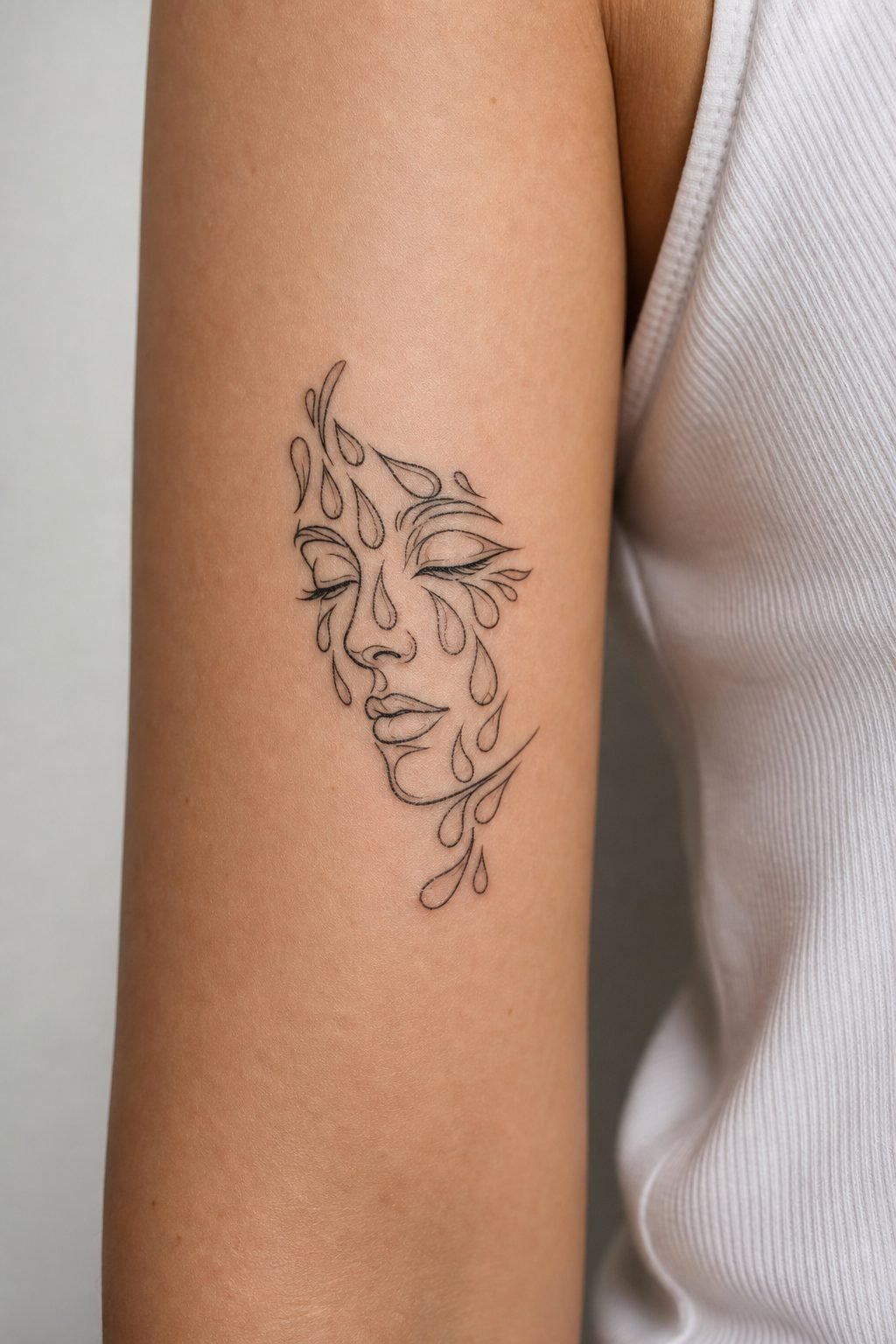
- Stylized or decorative: Incorporating filigree, geometric framing, or blending into larger face tattoos that contextualize the drop within a broader narrative.
- Crossed-out teardrop: A line is drawn through the drop. Treat this as a custom addition and ask what it is intended to express.
The National Gang Intelligence Center’s 2016 guidance notes that some tattoo designs are used by gang and nongang members and must be considered alongside other indicators. That is a reason to keep a description of the mark separate from claims about the wearer’s history.
Best Placements
While the classic placement sits directly beneath the eye, artists and clients have explored several positions that modify the symbol’s impact.
- Directly under the eye (inner or outer corner): Most visible and traditional. The inner corner placement draws more attention to the eye itself; outer corner placement follows natural tear tracks.
- On the cheekbone below: Slightly lower placement softens the intensity while maintaining facial visibility. Easier to incorporate into larger designs.
- Temple area: At the side of the face. This location does not supply a personal explanation for the image.
- Behind the ear: A position behind the ear. Its visibility depends on the particular design and what covers it.
The position of a facial tattoo is one part of the design, alongside its shape and the explanation you choose to give. It does not establish why someone chose the image.
Who Chooses This Tattoo / Personal Meanings
A personal explanation can differ from the meanings reported in historical gang references. If you are choosing the design yourself, decide which connection you want to express. The following are possible themes for a design conversation.
- Personal memorial: You could dedicate the image to a person you want to remember, with a detail or explanation that you choose.
- An experience you want to mark: If a particular experience makes the shape meaningful to you, you can give it that personal connection.
- An artistic reference: You might prefer the tear shape as an image or as part of a larger composition.
- A name or date: A chosen name, date or other detail can make your intended reference more specific. Its significance may still need an explanation.
- A private explanation: You can keep a reason for the design private. Sharing the story is your choice.
The wearer’s explanation supplies personal context. If you are interpreting someone else’s tattoo, keep what they have told you separate from an assumption based on its appearance.
Similar Symbols
If you are considering related imagery, compare the shape and the personal meaning you want to give it.
- Hourglass: Time passing, mortality, memento mori tradition.
- Broken chains or shackles: Liberation from imprisonment, addiction, or abusive situations. More explicitly narrative than the teardrop’s ambiguity.
- Crying eye: The traditional Sailor Jerry motif of a weeping eye, often within a heart or cloud. Romantic and melancholic rather than hardened.
- Semicolon: Modern mental health awareness symbol, specifically suicide prevention and continuation of life.
- Specific dates or names: A name or date can identify a reference you choose to include. Its significance may still need an explanation.
A different image gives you another way to express a personal reference. It does not guarantee how an observer will interpret the design.
Final Thoughts
A teardrop is a simple shape with interpretations that depend on context. When considering a reference, separate the visible choices from the meaning supplied by its wearer or creator. If you choose it for yourself, describe the connection you want the design to express. Changing the fill, color or position does not by itself establish how everyone else will read it.
Related Tattoo Meanings
- Russian Mafia Tattoo Meaning: A Guide to Prison Ink Symbolism
- Tear Drop Left Eye Tattoo Meaning: Symbolism History
- Tears Tattoo Meaning: Symbolism, History Variations
- Explore more
Frequently Asked Questions
What does a teardrop face tattoo actually mean?
The Illinois bulletin reports more than one interpretation and warns that filled/outline use was inconsistent. A personal explanation needs context; a teardrop by itself does not establish a killing, prison history or gang membership.
Is it safe to get a teardrop tattoo if I haven’t been to prison?
The references used here do not establish a prison-time requirement for getting a teardrop tattoo or predict a safe outcome. Discuss the design and its local context with the artist. A person’s actual or assumed prison history is not a safety guarantee.
Which side of the face does the teardrop go on and does it matter?
The 1992 Illinois bulletin linked cheek placement to conventions of the groups it described. It did not provide a universal left-eye/right-eye translation. Side alone does not establish what a person’s tattoo means.
Can I get a teardrop tattoo in a different style to avoid the criminal association?
A different style changes the drawing, but it does not guarantee that observers will read it as free of prison or gang associations. Choose the visual details for your intended design and discuss them with the artist, without relying on color, geometry or a different location as protection from every possible interpretation.