A complete tattoo setup runs anywhere from $500 for a bare-bones beginner kit to $15,000+ for a pro’s full station. Most working artists I’ve known spent around $2,000-$4,000 getting their initial gear together, then add hundreds monthly in supplies. What you actually need depends on if you’re apprenticing, doing cosmetic work, or building a private studio. Here’s the real breakdown from someone who’s bought this stuff for years.
Your Core Machines: The Big Expense
This is where your money goes first. I’ve tattooed with $80 Amazon specials and $1,200 custom builds, and the difference is real.
Coil vs. Rotary: What You’re Actually Paying For
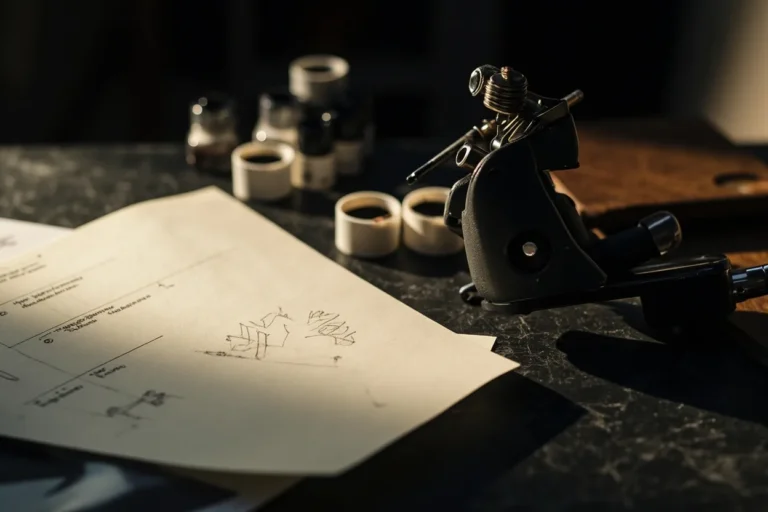
Coil machines, the classic buzzy ones you hear in shops, run $150-$500 for quality builds. I learned on coils. They’re heavy, they rattle your hand, but they push lines like nothing else. A solid Micky Sharpz or VladBlad coil will outlast three cheap rotaries. Rotaries are quieter, lighter, and more versatile. Most artists I work alongside switched years ago. Good rotaries start around $200 (FK Irons, Bishop, Cheyenne) and climb to $800+ for adjustable stroke models. I tell clients who ask about my setup that my daily driver is a rotary I dropped $450 on five years ago. Still runs perfect.
For a beginner, budget $300-$600 for your first reliable machine. Don’t buy the $50 eBay kit. I’ve seen those seize up mid-tattoo. Not fun when someone’s skin is open.
Pneumatic and Wireless Options
Air-powered machines (Neuma, etc.) are rare now. Wireless battery packs are the current thing, $150-$300 extra on top of your machine. I resisted forever, but going cordless changed how I move around clients. Worth it if you’re doing long sessions and hate the cord dance.
Needles, Cartridges, and Disposable Supplies
This is your recurring hemorrhage. We see this a lot: new artists blow their whole budget on a fancy machine, then can’t afford to actually tattoo anyone.
- Standard needle packs: $15-$30 per box of 50. You’ll use 3-10 needles per tattoo depending on size.
- Cartridge systems: $25-$50 per box of 20. Most pros use these now, safer, faster to swap. I go through two boxes a week easily.
- Tubes and grips: Disposable runs $0.50-$2 each. Stainless steel reusable with autoclave is cheaper long-term but requires sterilization equipment.
Monthly supply costs for a working artist: $200-$600 easy. Apprentices doing practice skin and occasional friends might spend $50-$100. I track my supply spending obsessively. Last month: $340 in cartridges, ink, and barrier film.
Ink: Cheap vs. Quality
Bottle of black ink: $15-$40. Color sets: $80-$300 for a basic palette. I’ve got maybe $900 in my ink collection after fifteen years.
What Actually Matters in Ink
Here’s what I tell clients when they ask about my ink: cheap ink fades muddy. Period. I’ve watched $5 eBay black turn greenish-gray in two years. Quality brands like Eternal, Intenze, or Dynamic stay crisp. For color work, I only use specific brands for specific tones, my magentas come from one manufacturer, my teals from another. That’s the reality of color mixing.
Starter ink investment: $150-$400 for a basic workable set. Black-and-gray artists need less. Color specialists need more.
Power Supplies and Foot Pedals
The thing nobody photographs for Instagram. A reliable power supply: $100-$300. I started with a $40 no-name that fluctuated voltage and made my lines wobble. Upgraded to a Critical within a year. Foot pedals: $30-$80. Clip cords: $15-$40. These seem small until they fail mid-session. I keep backups of everything now. Learned that the hard way at 11 PM with a half-finished back piece.
Your Station Setup: Furniture and Environment
Clients don’t see your machine internals, but they feel your chair.
- Client chair: $300-$1,200. Hydraulic tattoo chairs with adjustable armrests are worth every penny. I’ve tattooed people in kitchen chairs. Never again.
- Artist stool: $80-$250. Your back will thank you. I’m forty-three and still working because I invested early.
- Workstation/armrest: $100-$400. Adjustable height is non-negotiable for proper line work.
- Lights: $80-$300. LED ring or adjustable arm lamps. Shadows kill detail.
Full station furniture: $600-$2,000. Shop owners spend more. Home studio artists sometimes improvise, but your body pays eventually.
Hygiene and Safety Equipment
Non-negotiable. Apprentices sometimes try to skip this. Don’t.
- Autoclave: $1,500-$3,000 for a proper statim. Some shops share. Apprentices usually don’t need their own immediately.
- Barrier film, clip cord covers, machine bags: $30-$60 monthly.
- Gloves: $15-$25 per box. Nitrile only. I go through a box every week or two.
- Green soap, disinfectants, aftercare supplies: $40-$80 monthly.
Without proper hygiene setup, you’re not tattooing. You’re risking infection and your license. In my chair, everything that touches skin is either sterile or single-use. No exceptions.
Apprenticeship vs. Self-Taught: Different Budgets
Here’s the shop culture reality. Most apprenticeships supply some equipment or let you use shop gear while learning. You might spend $500-$1,000 on personal basics. Self-taught artists (controversial, but they exist) buy everything themselves, $2,000-$5,000 to get functional.
I apprenticed in 2008. Spent my first year using the shop’s coils, buying my own needles and ink. Saved for my own machine. That’s still the standard path in most reputable shops. Anyone selling you a “complete tattoo artist kit” online is lying. Real training requires real mentorship.
The Hidden Costs Nobody Talks About
Stencils and transfer paper: $20-$50 monthly. I draw most stencils by hand now, but paper and thermal printers add up. Practice skin and fruit: $30-$100 while learning. Real skin is different, but you burn through fake skin first. Drawing tablets for design work: $200-$800. I use mine daily. Computer and printer for references: already own, but factor it in. Continuing education: conventions, seminars, $200-$1,000 yearly. I still take seminars. The best artists I know never stopped learning.
Key Takeaways
Minimum viable tattoo equipment: $1,500-$2,500 for a functional, safe setup. Comfortable professional station: $4,000-$8,000. Top-tier everything: $12,000+. Monthly operating costs for working artists: $200-$600 in supplies alone. The machine matters less than your hands, but cheap equipment fails at the worst moments. Buy once, cry once on the big items. Prioritize hygiene supplies over flashy gear. And find proper training, no equipment list replaces apprenticeship.
Frequently Asked Questions
Can I start tattooing with a cheap kit from Amazon?
You can, but every working artist I know who started cheap upgraded within months. Those kits often have inconsistent machines, questionable ink, and no reliable needle sourcing. Budget at least $300 for a decent starter machine from a real tattoo supplier, not a general marketplace.
Do I need my own autoclave as an apprentice?
Usually no. Most reputable shops have shop sterilization equipment that apprentices use under supervision. You’ll need to learn proper sterilization technique, but the big investment comes later if you open your own space.
How long does tattoo equipment last?
Quality machines last years with maintenance, my main rotary is five years old and going strong. Needles are single-use. Power supplies and foot pedals typically run 3-5 years. Furniture is the long-term investment; good chairs last a decade.
What’s the first thing I should upgrade if I’m on a tight budget?
Your machine and your needles. Everything else can be improvised temporarily, but inconsistent voltage or dull needles show immediately in your work and heal poorly. Clients remember bad lines, not your budget stool.
Related Tattoo Guides
- How to Become a Licensed Tattoo Artist: A Real Shop Guide
- How to Become a Tattoo Removal Technician: A Real Guide
- Why You Shouldn t Build a Homemade Tattoo Gun
- Explore more