
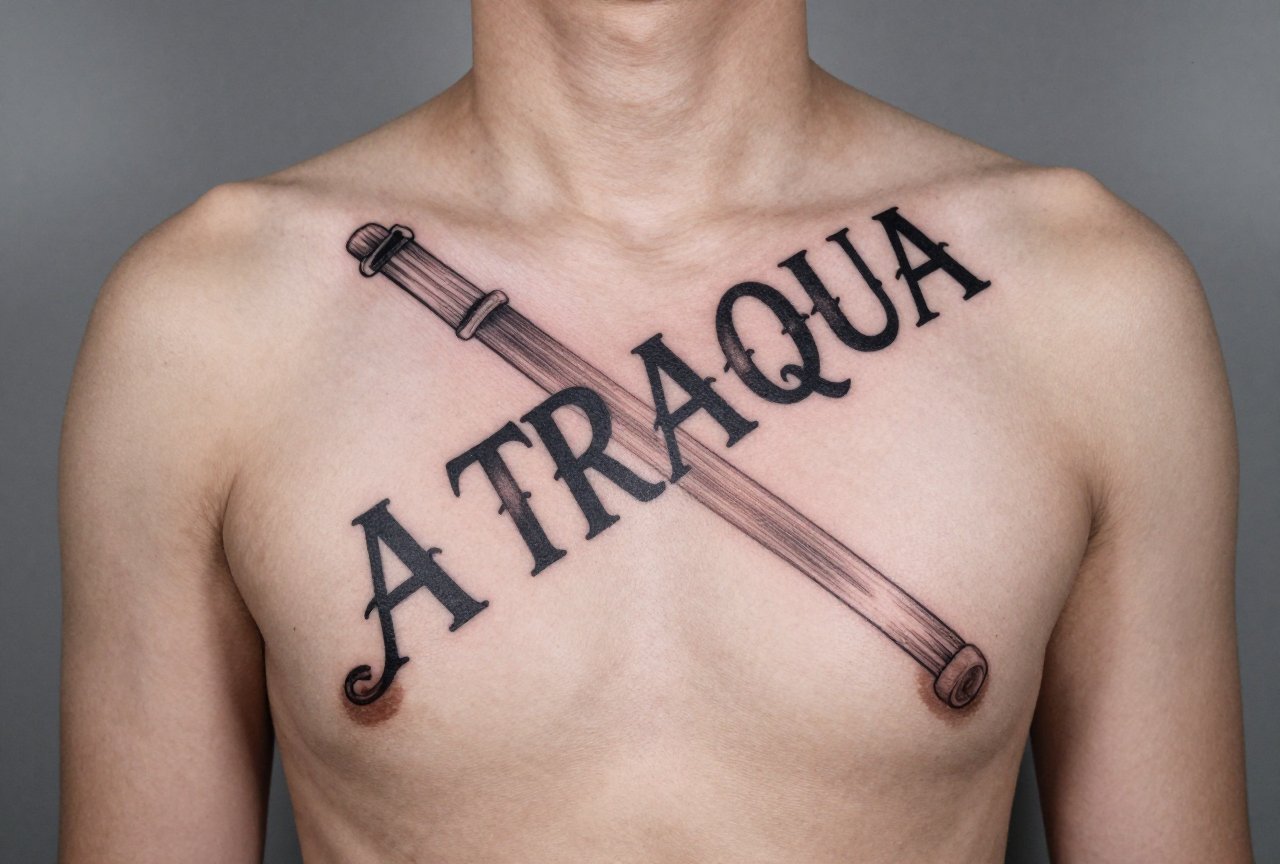
The Tren de Aragua tattoo carries heavy, specific meaning: it signals membership or allegiance to the Venezuelan criminal organization of the same name, born in the Aragua state prison system around 2014. These aren’t decorative pieces. They’re identity markers, territorial claims, and in many cases, permanent records of affiliation that can follow someone across borders and decades. I’ve had these designs come through my chair, and I always pause the consultation when certain imagery appears.
Symbolism & History
Origins in the Venezuelan Prison System
Tren de Aragua started inside Tocorón prison, a facility that the gang effectively controlled for years. The name itself, “Train of Aragua”, references both the state and the idea of an unstoppable, moving force. Early tattoos were crude, done with whatever materials prisoners could access: guitar strings for needles, melted plastic for ink, soot mixed with water. I’ve seen survivors of that system with faded, blown-out blue-black lines on their hands and necks, the pigment migrating through sun-damaged skin. Those pieces tell a different story than the cleaner work done later in clandestine shops.
The gang expanded rapidly as Venezuela’s crisis deepened. Millions fled, and the organization followed, embedding itself in Colombia, Peru, Chile, and now deep into the US. The tattoo traveled with them. What began as prison culture became transnational branding.
Core Imagery and What It Signals
The most recognizable Tren de Aragua tattoo features the letters TDA or the full name, often accompanied by a stylized train. The train motif matters, it’s not random. It represents movement, expansion, the idea that the organization reaches everywhere. Some versions include the number 22, referencing the gang’s internal structure or specific codes. Others incorporate Venezuelan flag colors, though this gets complicated; plenty of Venezuelan expats get patriotic tattoos without gang affiliation, so context matters.
I’ve had clients request train imagery that had nothing to do with this gang. A railworker. A guy whose grandfather worked the Caracas metro. You learn to ask questions without accusation. “What’s the story behind this?” I’ll say, watching their face more than their words. The ones with genuine personal meaning light up with specifics. The others get vague.
Common Variations & Styles
Tren de Aragua tattoos vary by geography and the artist’s skill level. In Venezuela and border regions, they tend toward:
- Blackletter/script: Aggressive, heavy lettering with sharp terminals, often on the neck, hands, or face. Fast to apply, hard to hide, impossible to deny in a police lineup.
- Train silhouettes: Side-view locomotives with smoke, sometimes with human figures falling or being pulled under. The violence is explicit. I’ve only seen these in photos, never had someone request one directly in my shop.
- Minimalist codes: Small TDA somewhere hidden, behind the ear, inside the lip, on the ribcage. These are for people trying to maintain plausible deniability while still signaling to those who know.
- Combined imagery: Tren de Aragua elements mixed with Santa Muerte, 18th Street, or MS-13 references. The gang has alliances and rivalries, and the tattoos reflect this network.
In US cities, I’m seeing more attempts to disguise the imagery. A train that looks generic until you notice the specific wheel configuration. Letters hidden inside larger designs. Artists here are sometimes unknowingly complicit, someone brings a reference photo, says it’s “Venezuelan pride,” and the piece goes on a bicep or calf where it’s easily covered.
Best Placements
Placement tells the story that style can’t.
- Face and neck: Hardcore commitment. These members aren’t trying to reintegrate into straight society. The ink is meant to intimidate, to mark territory in prison or on the street.
- Hands and knuckles: Functional visibility. Hands are always in sight during transactions, confrontations, greetings. These tattoos work like a handshake for those who recognize them.
- Chest and back: Larger pieces for higher-ranking members. More canvas means more detail, more narrative. I’ve heard of full-back trains with each car representing a different operation or territory.
- Hidden spots: Ribs, inner bicep, thigh. For members who need to cross borders, work regular jobs, or maintain family relationships outside the organization. The tattoo exists but doesn’t govern every interaction.
Line versus shading matters for longevity. The crude prison work tends to be single-needle outline that blurs within five years. Shop-done pieces with proper shading and color packing hold definition longer but also require more sessions, more money, more exposure to artists who might ask questions someone doesn’t want to answer.
Who Chooses This Tattoo / Personal Meanings
The Coerced and the Willing
Not everyone wearing this ink chose it freely. In Tocorón and other controlled facilities, getting marked was sometimes a condition of survival. I’ve tattooed over gang tattoos for people trying to leave that life, never Tren de Aragua specifically, but the pattern is universal. The cover-up is always darker, always bigger, always more complex than the original. You can’t just laser off something that represents a death sentence if certain people see you without it.
The Children of the Crisis
There’s a generation of Venezuelan youth who grew up watching Tren de Aragua become the only power structure that functioned in their collapsed neighborhoods. For some, the tattoo represents protection they actually received, identity they genuinely feel, belonging that was otherwise absent. I don’t excuse the violence, but I understand the human need behind it. When I explain to younger artists why we don’t do certain work, this context matters. It’s not just “gang bad.” It’s recognizing that some clients are traumatized, not evil.
Similar Symbols
Tren de Aragua doesn’t exist in isolation, and its imagery overlaps with other organizations. Confusion can be dangerous.
- MS-13 (La Mara Salvatrucha): Also uses MS, 13, and clique-specific identifiers. The Salvadoran gang predates Tren de Aragua and has deeper roots in US cities. Their tattoos tend toward more elaborate figural work, devils, women, religious imagery.
- 18th Street (Barrio 18): Numerical focus, often XVIII or 666. The two gangs are rivals, and mistaken identity has literal life-or-death consequences.
- Santa Muerte: The skeletal folk saint appears across Mexican and Central American criminal culture. Some Tren de Aragua members incorporate her, but she’s also genuinely devotional for millions of ordinary people. Context is everything.
- Generic Venezuelan pride: Flag colors, map outlines, “Venezuela” script. These can look similar to coded gang work, especially to untrained eyes. I’ve had to gently explain to a nervous client that their patriotic piece wasn’t what they feared, while another time I had to decline work that was clearly organizational.
Final Thoughts
Tren de Aragua tattoos are documents, not decorations. They record specific moments in a country’s collapse, specific choices made under pressure most of us can’t imagine. As artists, we have to know what we’re putting on skin, who it connects our client to, and what doors it might close, or open that shouldn’t be. I don’t judge everyone who walks in with existing ink from that life. People change. But I do judge the decision to apply it without understanding, or worse, knowing and not caring because the money’s green.
If you’re researching this because you saw something on someone you know, or you’re considering a train tattoo and want to make sure you’re not accidentally signaling something dangerous, talk to a Venezuelan tattoo artist if you can find one. They’ll know the nuance that Google can’t provide. And if you’re an artist reading this, develop the habit of asking origin stories. Not to police, but to understand. The skin is the story, but we choose whether to be its editors or its amanuenses.
Frequently Asked Questions
Can someone have a Tren de Aragua tattoo without actually being in the gang?
Sometimes, especially if they were coerced in prison or grew up in areas where the gang controlled daily life. But generally, wearing this ink without connection is dangerous, it signals membership to rivals and law enforcement alike, and there’s no ‘fan’ status in this culture.
How do tattoo artists handle it when someone requests obvious gang work?
Most established shops decline. We might say we’re ‘not comfortable with the imagery’ or simply refuse without explanation. In my experience, pressing too hard for details can escalate things, so we learn soft deflections while staying firm on the refusal.
What’s the difference between a Tren de Aragua tattoo and normal Venezuelan patriotic tattoos?
Patriotic pieces usually feature the flag, map, or national symbols without organizational codes. Tren de Aragua work specifically includes the train motif, TDA lettering, or the number 22 in contexts that reference the gang rather than the region. When in doubt, a Venezuelan artist can spot the difference immediately.
Can these tattoos be safely removed or covered up?
Laser removal is possible but expensive, painful, and requires multiple sessions over years. Cover-ups need to be significantly larger and darker. For someone trying to leave gang life, the tattoo can be a genuine safety risk during the removal process, visible fading signals defection to those still inside.
Related Tattoo Meanings
- Triple Cross Tattoo Meaning: Faith, Family Heritage
- Penguin Tattoo Meaning: Loyalty, Resilience Playful Spirit
- Acorn Tattoo Meaning: Growth, Strength Hidden Potential
- Explore more









