
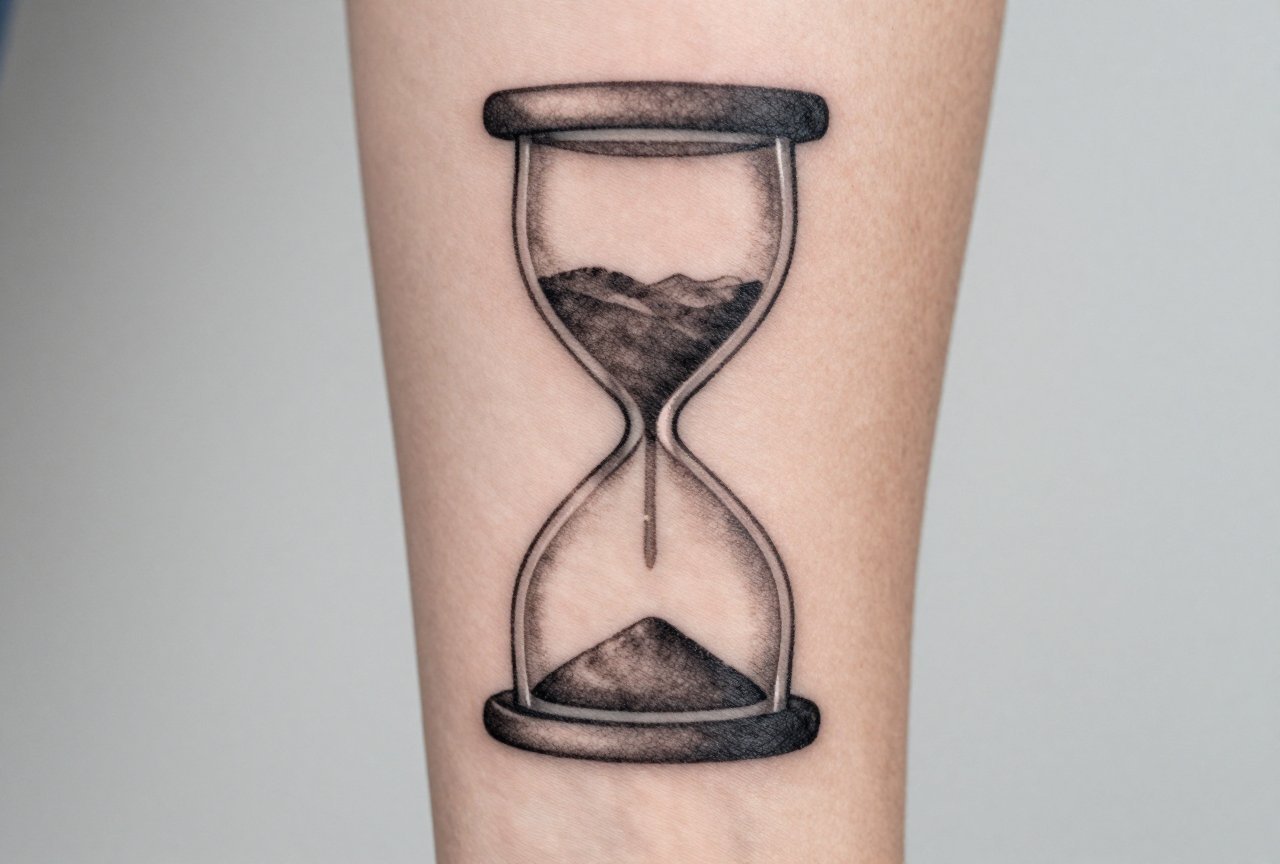
The hour glass tattoo is one of those designs that hits different once you sit with it. it means time running out, memento mori, carpe diem, the whole deal. But I’ve tattooed enough of these to know the meaning shifts hard depending on who’s in my chair. Sometimes it’s grief. Sometimes it’s a wake-up call. Sometimes it’s just someone who thinks sand timers look cool as hell, and honestly? Fair.
Symbolism & History
People have been marking their skin with time symbols forever. The hour glass specifically blew up in the 17th and 18th centuries, showing up in European art alongside skulls and extinguished candles. Sailors got them. Soldiers got them. Anyone who’d seen death up close and needed a permanent reminder that their own sand was falling.
What I tell clients: this isn’t just a “death tattoo.” It’s a life tattoo. The flip side of the same coin. I’ve had people tear up in consultation talking about parents they lost, kids they almost didn’t get to see grow. The hour glass becomes a private conversation with themselves.
The Memento Mori Tradition
Memento mori, remember you will die, sounds grim until you realize it’s actually motivational. Romans had it figured out. Medieval monks had it figured out. The point isn’t to depress you; it’s to sharpen you. I’ve seen this land especially hard with people in recovery, people who’ve survived something, people who hit thirty and realized they’d been sleepwalking. The hour glass says: this is finite. Move.
Carpe Diem & Living Presently
Flip the script entirely. Some clients want the hour glass cracked, broken, sand spilling everywhere, screw the timer, live now. Others want it perfectly intact, balanced, almost meditative. The symbolism bends to the person. That’s what makes it a classic.
Common Variations & Styles
I’ve tattooed hour glasses in pretty much every style that walks through a shop door. Here’s what actually works and what ages like milk.
- Traditional/Americana: Bold lines, limited color palette, maybe a banner with dates or names. Holds up beautifully. The thick black outlines fight fading better than anything.
- Realism: Glass reflections, individual grains of sand, wood texture. Stunning fresh. But I’ve watched fine sand details blur into gray mush after five years. If you want realism, go bigger and expect a touch-up conversation.
- Blackwork/dotwork: Stippled sand, geometric framing. Clean, graphic, ages gracefully. The stippling creates texture that doesn’t rely on hair-thin lines.
- Neo-traditional: Jewel tones, ornamental elements, maybe flowers or candles integrated. Popular right now. The color pops but plan for saturation loss in lighter pigments.
- Minimalist/line work: Single needle, delicate, often tiny. I try to talk people out of micro hour glasses unless they’re willing to accept it as a temporary piece. Lines spread. Sand becomes smudges.
Adding Personal Elements
We see this a lot: roses for love or loss, skulls for the mortality angle, wings for freedom or religious faith, clocks or pocket watches layered in for extra time obsession. I tattooed one with a newborn’s footprints where the sand should fall, new father, terrified and thrilled. Another had flames around the glass, burning time, something about not wasting his twenties. The customization is where meaning gets specific.
Best Placements
Hour glasses work vertically. That’s the obvious thing everyone figures out fast. But there’s more to it.
- Forearm: Classic. Visible, easy to show or hide with a sleeve. The vertical shape fits the bone structure. I’ve done dozens here.
- Upper arm/shoulder: More space for detail, especially if you’re adding surrounding elements. Good for larger traditional or neo-trad pieces.
- Ribcage: Painful. Always painful. But the vertical stretch of the ribs matches the form perfectly. Clients who want private, intimate meaning often choose here.
- Thigh: Underrated. Lots of real estate, less sun exposure than arms, holds detail well. Plus you can actually look at it yourself.
- Back of calf: Another vertical win. Easy to heal, decent visibility. I’ve had runners get these, time moving, body moving, makes sense.
- Chest/sternum: Bold choice. Central, over the heart. Usually means something heavy. I’ve done memorial pieces here.
Small spots, wrists, ankles, behind the ear, can work but require serious style compromise. Simplify or suffer the blur.
Who Chooses This Tattoo / Personal Meanings
In my chair, the hour glass doesn’t attract one type. That’s what I love about it.
I’ve tattooed them on nineteen-year-olds who’ve lost friends to overdose. On fifty-year-olds celebrating survival. On people marking sobriety anniversaries, divorce finalizations, career changes. The through-line is transition. Something ended. Something’s beginning. The sand is always moving.
Shop culture-wise, we don’t judge the why. I’ve had artists roll eyes at infinity symbols or dreamcatcher requests, trend fatigue, mostly, but the hour glass rarely gets that treatment. It carries weight. Even when someone picks it off the wall without deep thought, the symbol itself has enough gravity that they grow into it.
Grief & Memorial
This is probably the most common deep meaning I encounter. Dates worked into the wood frame. Names on banners. Sometimes the top bulb fuller than the bottom, representing a life mostly lived. Sometimes the reverse, a child lost too soon. These sessions are quiet. I don’t play the usual shop playlist loud. The needle buzz fills the space.
Transformation & New Beginnings
Flip the hour glass, literally the image some clients request. The sand reset. I’ve done these for people leaving prison, leaving cults, leaving marriages. The visual of starting fresh, even knowing time keeps running, hits different when you’ve actually had to rebuild.
Similar Symbols
Clients often come in considering multiple options. Here’s how I break it down in consultation:
- Clocks/pocket watches: More mechanical, more specific. Often feel personal or inherited. Less universal than the hour glass, more tied to individual moments.
- Skulls: Pure memento mori, no time-passing element. More confrontational, less nuanced. The hour glass softens the message with process, time moving, not just ending.
- Sundials: Rare but cool. Requires sun, requires patience. More poetic, less common. I’ve only done two in fifteen years.
- Candles: Flame as time. Similar aging concerns to hour glasses, wax drips, melting details blur. But the living element appeals to some.
- Ouroboros: Cyclical time versus linear. The hour glass says “this ends.” The snake eating its tail says “this repeats.” Different philosophy entirely.
Some clients combine. Hour glass with skull. Hour glass with phoenix. The tension between ending and renewal is the whole point.
Final Thoughts
The hour glass tattoo endures because it’s honest. No sugarcoating. Time passes. People die. Opportunities close. But the flip side, literally, you can flip it, is that new sand starts every time you choose to. I’ve watched clients stare at fresh hour glass tattoos in the mirror and something shifts in their posture. Shoulders drop. Breath deepens. It’s not just ink.
If you’re considering one, sit with the image. Don’t rush the design. The meaning will clarify if you give it time, which, of course, is the whole joke. Bring reference. Bring story. A good artist will listen and build something that actually belongs to you, not just another Pinterest clone. And expect it to evolve. What the hour glass means at twenty-five won’t be what it means at fifty. That’s not a bug. It’s the feature.
Frequently Asked Questions
Does an hour glass tattoo always mean death or can it be positive?
It absolutely doesn’t have to be dark. I’ve tattooed them for new beginnings, sobriety milestones, and fresh starts. The meaning bends to your story, some clients want the reminder to live fully, not mourn endings.
How well do detailed hour glass tattoos age over time?
Fine sand details and thin glass reflections tend to blur after several years. I usually recommend bolder lines, slightly larger scale, or dotwork textures that hold up better as skin naturally changes.
What’s the most unique hour glass variation you’ve actually tattooed?
One client had me put their grandmother’s actual handwriting inside the glass bulbs as the sand, memorial dates and a short note. Another wanted the hour glass melting like Dali’s clocks, transformation instead of measurement.
Is there a traditional placement that has special meaning?
Over the heart on the chest carries weight for memorial pieces. I’ve also seen the back of the neck used to mean “time behind me”, looking forward, not back. But honestly, meaning lives in the person, not the spot.
Related Tattoo Meanings
- Incubus Tattoo Meaning: Dark Desire Personal Power
- Japan Dragon Tattoo Meaning: Power, Wisdom Protection
- Katana Tattoo Meaning: Honor, Discipline the Warrior Spirit
- Explore more









