
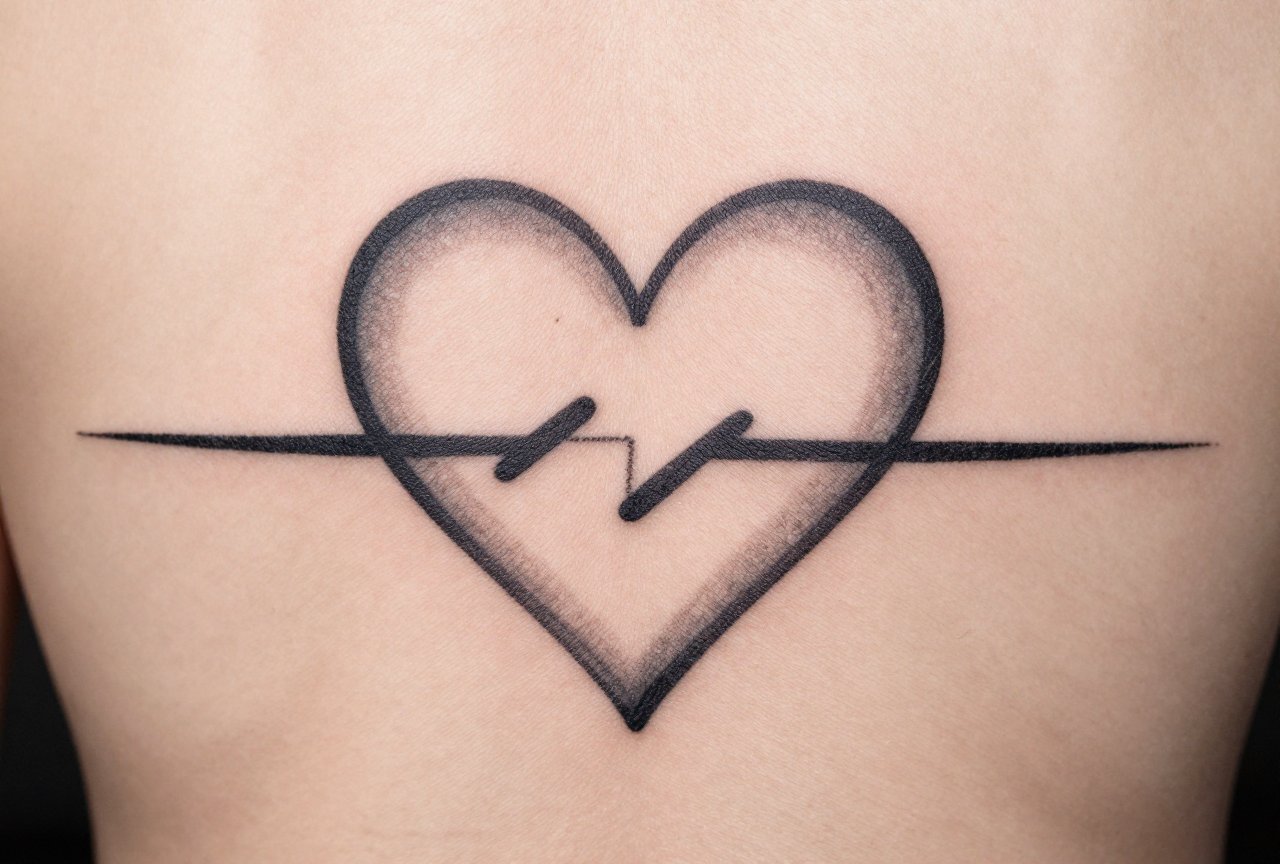
The heartagram is a fusion of a heart and a pentagram, created by HIM frontman Ville Valo in the late ’90s. It represents the intersection of love and life, softness and edge, the tender and the macabre. I’ve tattooed this symbol on metalheads, grieving parents, and couples who wanted something darker than a standard heart.
Symbolism & History
Where It Actually Came From
Ville Valo drew the first heartagram around 1996 for his Finnish rock band HIM. He wanted a logo that captured their sound: romantic lyrics wrapped in gothic metal. The heart stands for love, the pentagram for life, death, and the heavier things. The vertical line of the pentagram becomes the heart’s center seam. Simple geometry, but it stuck.
By the early 2000s, Bam Margera plastered it on skate decks and Viva La Bam. That MTV exposure pushed it way beyond metal circles. I’ve had clients walk in who discovered it through Jackass reruns, others who’ve been HIM fans since Razorblade Romance dropped. Both stories are valid. The symbol outgrew its origins.
What It Means to Different People
In my chair, I’ve heard three main threads:
- Love and loss together. The heart for someone living or gone, the pentagram for mortality, for the shadow side.
- Subcultural identity. Goth, metal, skate, punk, it’s a shorthand for “I found my people.”
- Personal duality. Sweet but sharp. Caring but guarded. The symbol holds contradiction without resolving it.
One client, a hospice nurse, got it tiny behind her ear. She said her work taught her that love and death aren’t separate rooms, they’re the same house. That’s the kind of meaning that keeps this symbol alive long after any band’s relevance fades.
Common Variations & Styles
Linework vs. Filled
The classic is a clean black outline: heart shape with the pentagram integrated, no fill. It reads instantly, ages clean, and works at small sizes. I’ve done these at 2 inches on wrists and they hold up because the negative space does the work.
Filled versions, solid black heart with white or negative-space pentagram, hit harder visually but demand more skin real estate. At 3 inches plus, the fill stays even. Smaller than that, black ink can blur into soup over five years. I tell clients: if you want it filled and tiny, expect a touch-up or go lighter on the fill density.
Stylistic Twists
- Traditional/Americana: Thicker lines, limited color, maybe a banner with a name. Holds up forever.
- Neo-traditional: Added roses, daggers, ornamental framing. The heartagram becomes part of a larger romantic-gothic composition.
- Fineline/single needle: Delicate, almost wire-thin. Popular with clients who want it feminine but still dark. Needs larger size to age well.
- Dotwork/stipple: The pentagram lines formed from dense stippling. Gorgeous, slow to tattoo, requires an artist who actually enjoys suffering.
- Color variants: Red heart with black pentagram is classic. All black is more versatile. I’ve seen purple for HIM loyalty, but that’s rarer now.
One variation I steer people away from: trying to cram too many elements inside the symbol. Wings, flames, a banner, a skull. The heartagram’s power is its simplicity. Clutter kills it.
Best Placements
Small and clean: wrist, inner forearm, behind the ear, ankle, collarbone. These spots suit the linework version. The symbol’s symmetry means it doesn’t fight the body’s curves too hard.
Medium, with detail: outer forearm, upper arm, calf, ribs. Room for fill, for ornamental additions, for the symbol to breathe.
Large and statement: chest center, back between shoulder blades, thigh. I’ve done one across a client’s upper back with a mandala frame, four hours, sat like a stone. The pentagram’s points radiate well in bigger compositions.
Placement reality: fingers and hands. I get asked. The heartagram’s fine points blur on finger skin. The heart’s lobes, the pentagram’s angles, they need stable canvas. If you must, go bold and simple, expect fading, and know you’ll be back.
Who Chooses This Tattoo / Personal Meanings
What I Actually See in Shops
It’s not just goth kids anymore. In the last few years, I’ve tattooed heartagrams on:
- A 45-year-old software engineer who saw HIM in Helsinki in ’99
- A couple who wanted matching tattoos but hated traditional hearts
- A recovering addict who said the symbol reminded her she could love life without loving it lightly
- A father memorializing a daughter who drew it constantly in her notebooks
The common thread isn’t subculture. It’s people who want their sentiment to have teeth. A plain heart feels too soft. A plain pentagram feels too aggressive. The heartagram holds both without choosing.
What Artists Notice
We see this a lot with symbols that escaped their origins. Like the Nirvana smiley or the Misfits skull. The heartagram traveled from band logo to cultural shorthand to personal emblem. Clients under 25 often don’t know HIM at all. They found it on Pinterest, felt something, and made it theirs. That’s how symbols live. No gatekeeping from me, meaning is what you bring to it.
That said, I do mention the origin if someone seems unaware. Not to police them, but because I’ve had clients come back annoyed that nobody told them. Knowledge is part of informed consent in tattooing.
Similar Symbols
Clients sometimes confuse or compare the heartagram to related imagery:
- Heart with horns: Different symbol entirely, often associated with the band Heart or general devil-may-care attitude. No pentagram structure.
- Pentagram alone: Wiccan, occult, or metal signifier depending on orientation and context. Lacks the romantic element.
- Heart with infinity loop: Mainstream love symbol. Softer, no edge, no mortality.
- Anatomical heart tattoos: Scientific, visceral, different emotional register. Some clients pivot to these wanting something more “real.”
- The “love heart” with flames: Old school tattoo staple. Shares the romantic-gothic overlap but no geometric structure.
I’ve had clients bring in heartagram references wanting something “like this but more original.” We often land on custom hybrids: heart plus their own sigil, or the heartagram integrated into a larger personal symbol. The form is a starting point, not a prison.
Final Thoughts
The heartagram endures because it does something most symbols don’t: it holds contradiction without resolving it. Love and death. Softness and edge. The mall and the mosh pit. I’ve watched it migrate from band merch to memorial tattoo to aesthetic choice, and the meaning keeps regenerating.
If you’re considering one, think about scale and longevity. Bold lines last. Fine detail fades. Placement matters more than most people expect. And the meaning, whether it’s HIM nostalgia, personal duality, or something you can’t quite name yet, that’s yours to carry.
I’ve tattooed symbols I didn’t personally connect with, and symbols that hit me hard mid-session. The heartagram sits in between: I respect its journey, I know its technical challenges, and I always want to hear why you want it. That’s the part that stays when the machine stops buzzing.
Frequently Asked Questions
Do I need to be a HIM fan to get a heartagram tattoo?
Not at all. The symbol has outgrown its origins. I’ve tattooed it on people who’d never heard the band. What matters is what it means to you, not passing a fandom test.
How small can a heartagram tattoo be before it starts to blur?
I recommend at least 2 inches for clean linework. Smaller than that, the pentagram’s angles and the heart’s lobes lose definition over time. Fine-line versions need even more room to breathe.
Will a heartagram tattoo look dated in a few years?
Any symbol tied to pop culture carries that risk, but the heartagram’s simple geometry helps it age better than wordier trends. I’ve seen 15-year-old ones that still read clearly because the design was bold and well-placed.
Can the heartagram be customized without losing its meaning?
Absolutely. Add elements that reflect your story, floral frames, specific colors, integrated initials. Just don’t overcrowd the core symbol. The heartagram’s power is in its clean fusion of two forms.
Related Tattoo Meanings
- Hour Glass Tattoo Meaning: Time, Mortality Personal Symbolism
- Huda Love Island Tattoo Meaning: Symbolism Style Guide
- Incubus Tattoo Meaning: Dark Desire Personal Power
- Explore more









