
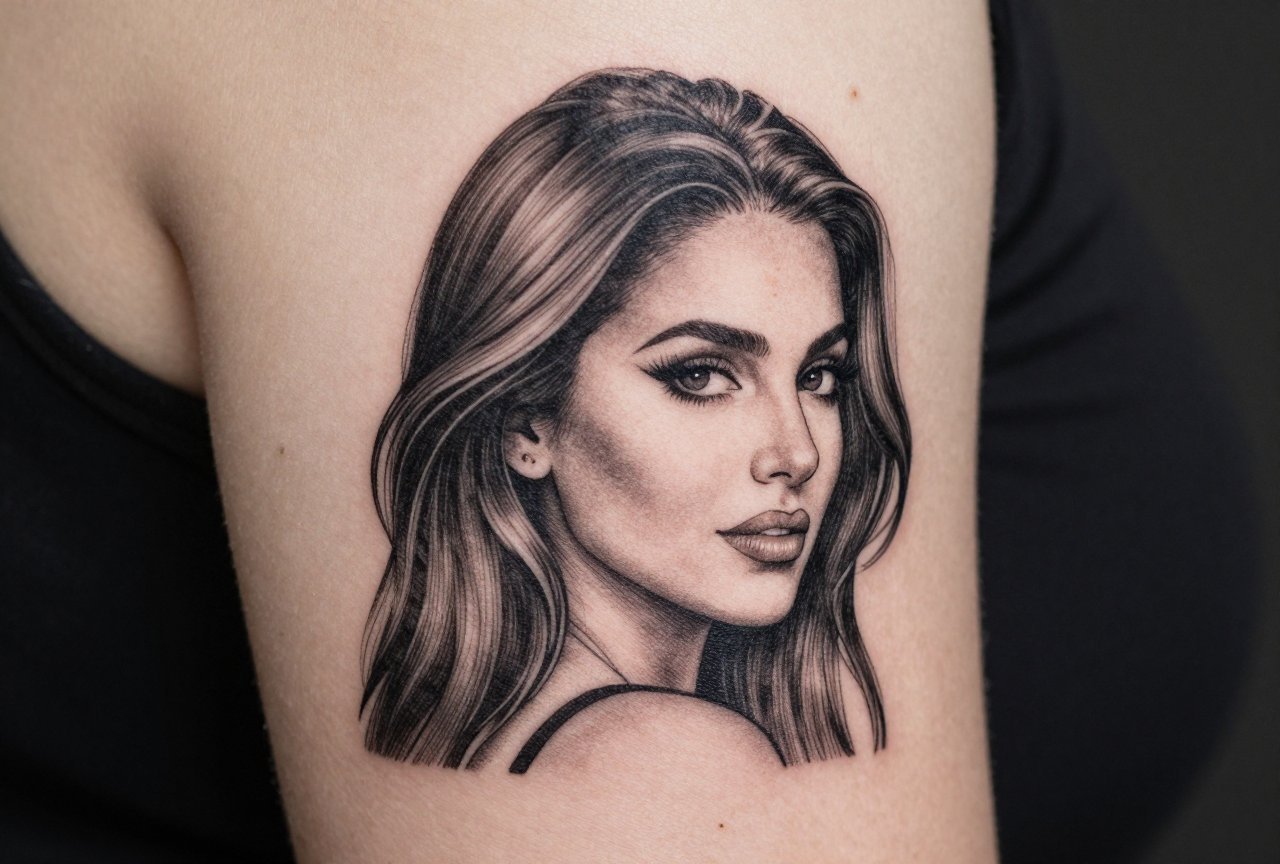
Huda’s tattoo from Love Island is Arabic script reading “حب” (pronounced “hubb”), meaning “love.” It is small, elegant, and gained attention after appearing on the reality show. The meaning runs deeper than romance alone: it can signal self-love, cultural connection, or the choice to wear a concept that crosses language barriers.
Symbolism and History
What the Arabic Script Represents
Arabic calligraphy has centuries of history as an art form, often linked to contexts where non-figurative visual expression carried special weight. The word “hubb” covers romantic love, familial love, and spiritual love, much as the English word “love” does, though different cultures emphasize different layers.
People get this script tattooed for varied reasons. Some who grew up with Arabic see it as heritage reclaimed, especially if they felt pressure to downplay their background. Others find the aesthetic first, then connect with the meaning. Both approaches are valid, but the script must be verified. I have seen situations where someone wanted a phrase they could not confirm, and the appointment had to pause until a fluent speaker could check the design.
- The flowing curves of Arabic script create natural movement that flatters the body’s lines
- Calligraphy traditions range from rigid Kufic to fluid Thuluth, each carrying different energy
- “Hubb” uses the root letters ح-ب-ب, related to words for beloved and affection
Reality Show Amplification
Love Island turned this piece into a widely recognized image. Huda wore it visibly, conversations followed, and screenshots circulated. In my shop, I noticed that people were not only copying the tattoo itself but responding to what it seemed to represent: openness about emotion, confidence in sentiment. The show made visible vulnerability feel acceptable.
Common Variations and Styles
Script Choices That Change the Vibe
The original Huda tattoo uses simplified modern script, clean and readable. Clients wanting something more traditional sometimes ask for Thuluth with its dramatic verticals, or Naskh for balanced, classical proportions. I have done “hubb” in two-inch wrist pieces and in eight-inch shoulder designs. Size changes the effect: the same word feels intimate small, declarative large.
Line weight matters more than people expect. Thin single-needle work looks delicate for roughly two years, then begins to blur. I have explained this to clients who bring reference photos of fresh tattoos. The Huda original is bold enough to age well, but I have seen copies that were too fine and became illegible by year five. Shading behind the script can help longevity, though it shifts the aesthetic from crisp to softer.
- Minimalist outline: clean, modern, risks aging poorly if too thin
- With dotwork or geometric framing: adds visual weight, popular alongside mandala-adjacent styles
- Watercolor splash background: trendy, but those colors often fade unevenly
- Combined with English translation: explicit, loses some mystery
Color versus Blackwork
Black ink on lighter skin gives the strongest contrast for Arabic script. I have done it in deep red for clients wanting something different; this works, but softens faster. One client chose white ink on her forearm, subtle and nearly invisible depending on light, which was her specific intention. The same word becomes a completely different statement based on execution.
Placement and Practical Considerations
Where It Goes
The original sits on Huda’s upper arm or shoulder area, visible in sleeveless moments, coverable otherwise. That balance works for television and for professional life. In my experience, clients choose this placement for the same reasons.
Wrist and forearm placements dominate requests. They start conversations. One client told me she liked checking her own wrist during difficult moments, a private mantra made visible. Behind the ear works for smaller pieces; I have done “hubb” there at about one inch tall, tucked into the hairline. Ribs and sternum carry more pain but offer intimate, hidden quality. The word faces you when you look down, which some people specifically want.
- Inner bicep: classic, easy to show or hide, moderate pain
- Collarbone: elegant line following the bone, but this spot fades faster from sun exposure
- Ankle: popular, though bone proximity makes the session tougher than many expect
- Along the spine vertically: dramatic, uses the script’s natural flow
Healing Factors
Placement affects healing. Shoulder pieces often heal cleanly because clients can keep clothing off them. Wrists get bumped, rubbed, and sun-exposed. Where you put it changes how it lives with you, not only how it looks.
Who Chooses This Tattoo
The Love Island Devotees
These clients arrive with screenshots, sometimes still watching the show. They want connection to that specific moment and person. Questions about whether this is “cringe” come up; my answer is no. Tattoo culture contains endless pop culture references that become personal. The point is honesty about motivation. If you genuinely respond to the symbol, proceed. If you are chasing a celebrity connection that will not last, wait.
The Cultural Reclaimers
Some of the most meaningful sessions with this design have been with Arab clients who felt disconnected from language or heritage. The tattoo sometimes becomes a starting point: they learn to write it, then to speak more, sometimes reconnecting with family. Others choose it for universal love concepts, self-love after difficult relationships, love for children, love as resistance in hard times. The word holds these meanings. Clients often volunteer their stories while I work, and I have heard genuine, moving ones.
Related Symbols and Alternatives
Other Paths
If “hubb” resonates but feels too specific, related options exist. The Arabic word for peace, “salam,” shares flowing aesthetic with different energy. “Sabr” (patience) comes up frequently. Hebrew script tattoos operate in similar territory: ancient language, modern skin, personal meaning layered over cultural weight.
Non-script alternatives include the heart symbol in its endless variations, the infinity loop, paired birds, clasped hands. None carry the specific cross-cultural bridge that Arabic script does. For clients wanting that particular blend of aesthetic beauty and linguistic depth, I steer them back toward calligraphy.
- “Ishq” (عشق): deeper, more passionate love, sometimes considered more intense than hubb
- “Habibi/habibti” (my beloved): more personal, gendered
- Full phrases from poetry: Rumi lines are perennial favorites, though sources need careful verification
What to Remember
Huda’s tattoo works because it is simple and loaded simultaneously. Three letters, one concept, many personal readings. It has moved from trend into the permanent vocabulary of requested designs, something that keeps appearing in shops because it answers a real need.
What I tell clients who want this: find a tattooer who understands Arabic script, not only someone who can copy a font. The connections between letters, the spacing, the baseline flow: get these wrong and it is not merely ugly, but potentially incorrect in ways that matter. I have fixed other artists’ Arabic work where letters were disconnected or reversed. Research the artist. Ask to see healed photos. Know why you want it beyond the screenshot that brought you in.
The best tattoos from reality TV moments become yours through intention. This one has that potential.
Frequently Asked Questions
Do I need to speak Arabic to get this tattoo?
No, but you should understand and respect what you are wearing. I have tattooed this on non-Arabic speakers who connected with the meaning of love universally. Verify the script with a native speaker or knowledgeable artist. I have seen bad translations walk into my shop, and prevention is simpler than cover-up.
How do I find an artist who can do Arabic script correctly?
Ask to see healed photos of their Arabic or calligraphy work, not just fresh tattoos. Check that they understand how letters connect and flow at baseline. If they treat it like a font to trace rather than a script to understand, look elsewhere.
Will a thin, delicate version age well?
Generally no. Extremely fine lines in Arabic script blur within a few years and can become illegible. The original Huda tattoo has enough weight to hold up. If you want delicacy, discuss slightly bolder line weight with your artist, or accept that touch-ups will be needed.
Is it disrespectful to get Arabic script if I am not Arab or Muslim?
This varies by individual and community. Some see it as appreciation, others as appropriation. The respectful path is to learn the context, verify accuracy, and avoid treating the script as mere decoration. If you are uncertain, consult Arab friends or community members you trust.









