
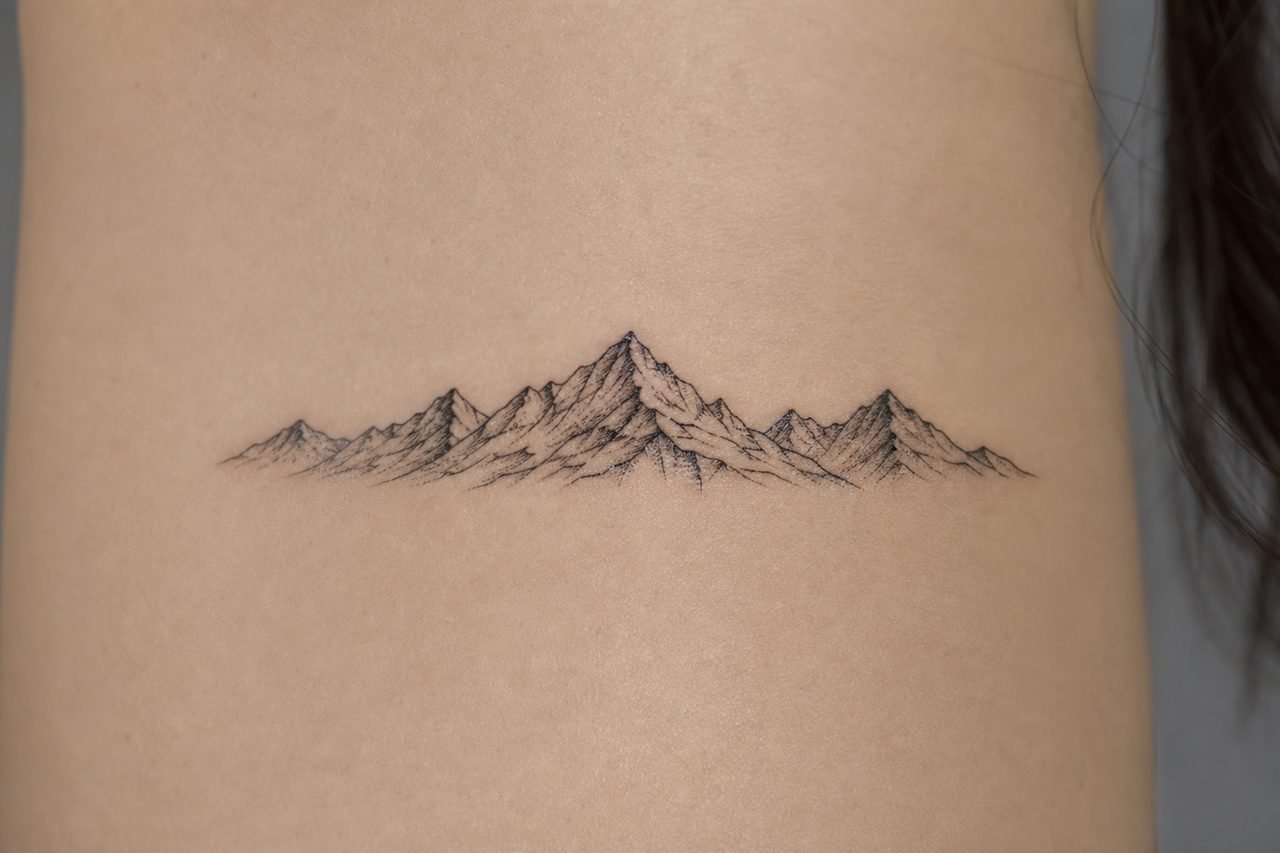
A mountain tattoo typically represents strength, perseverance, and the pursuit of lofty goals. It speaks to someone who has overcome obstacles or who continues climbing toward personal growth. For many, it captures a love of nature, a spirit of adventure, or a reminder that the hardest journeys yield the most rewarding views.
Symbolism & History
Mountains have commanded human reverence across virtually every culture. In ancient Greek mythology, Olympus served as the home of the gods. Hindu tradition places Mount Meru at the center of the universe. Japanese culture honors Mount Fuji as a sacred symbol of immortality and national identity. Norse legends spoke of giants and gods inhabiting rocky peaks. These associations with divinity, permanence, and transcendence give mountain imagery a deep reservoir of meaning.
Symbolically, mountains represent:
- Resilience and endurance: Rock faces withstand storms, erosion, and time itself
- Ambition and aspiration: The summit represents goals worth striving toward
- Spiritual elevation: Rising above earthly concerns toward clarity or enlightenment
- Obstacles overcome: Every climb involves struggle; reaching the top signals triumph
- Grounding and stability: Despite their height, mountains remain firmly rooted
In tattoo culture, mountain imagery gained significant traction during the 2010s alongside the broader popularity of nature-themed and geometric designs. The rise of outdoor recreation culture, social media sharing of hiking achievements, and a collective cultural shift toward mindfulness and intentional living all contributed to its appeal.
Common Variations & Styles
Mountain tattoos adapt remarkably well to diverse artistic approaches. The style you choose significantly shapes the emotional tone of the piece.
Minimalist line work reduces peaks to clean, elegant contours. This approach suits professionals seeking subtle ink or those who prefer understated symbolism. Single-needle techniques create delicate, almost sketch-like results.
Geometric designs fracture mountain forms into triangles, polygons, and crystalline patterns. These often incorporate dot work, mandala elements, or sacred geometry principles. The style bridges natural imagery with mathematical precision, appealing to those who value both logic and wilderness.
Realistic landscapes render specific peaks with photographic detail. Artists might include snow caps, alpine meadows, dramatic skies, or reflection scenes in mountain lakes. These pieces demand larger canvases and skilled color work.
Blackwork and silhouette styles emphasize bold contrast and dramatic shapes. Solid black peaks against negative space create striking, readable designs that age well.
Combined imagery frequently pairs mountains with compasses, arrows, trees, or celestial elements. Each addition layers meaning: a compass suggests direction, trees indicate growth, moons or stars evoke guidance through darkness.
Best Placements
Mountain tattoos work across nearly any body location, though certain placements enhance specific design choices.
Forearms and calves provide excellent vertical space for peak compositions. These visible locations suit those who want their ink as a daily personal reminder. The natural musculature can complement the rising form of mountain ranges.
Ribs and sides accommodate larger landscape scenes with multiple peaks, skies, and foreground elements. These placements offer privacy and can follow the body’s natural curves.
Upper arms and shoulders suit medium-sized pieces that may extend into half-sleeve territory. The rounded surface can create interesting perspective effects.
Wrists, ankles, and behind the ear work for minimalist single-peak designs. These small-scale tattoos function as quiet, personal talismans.
Back pieces and chest plates allow for ambitious panoramic vistas or symmetrical mountain-and-sky compositions. The broad, flat surfaces support detailed, expansive artwork.
Who Chooses This Tattoo / Personal Meanings
Mountain tattoos attract remarkably diverse wearers, though certain life experiences commonly precede the choice.
Outdoor enthusiasts and athletes frequently choose peaks to commemorate significant climbs, thru-hikes like the Appalachian or Pacific Crest Trails, or powerful wilderness experiences. The tattoo becomes a permanent badge of physical accomplishment and environmental connection.
People navigating major life transitions often gravitate toward mountain imagery. Recovery from addiction, surviving illness, ending relationships, or career changes all involve uphill struggles that the mountain metaphor captures precisely. The tattoo marks not just survival but active ascent.
Travelers and nomads may collect mountain tattoos from different regions, creating a personal atlas of experiences. Each peak represents a specific place and moment in their wandering lives.
Some choose mountains purely for aesthetic appreciation, drawn to the graphic power of triangular forms and natural grandeur. Others connect to cultural or familial heritage from mountainous regions, the tattoo serving as geographical identity.
Importantly, the meaning often evolves after getting the tattoo. Initial motivations of adventure or aesthetics deepen as life presents new challenges, the ink accumulating personal significance through lived experience.
Similar Symbols
Mountain tattoos share thematic territory with several related symbols. Understanding these connections helps distinguish or complement your design choice.
Forests and trees emphasize growth, rootedness, and seasonal cycles rather than vertical striving. They suit those who value community and steady development over dramatic peaks.
Ocean waves represent emotional depth, change, and the unconscious. Where mountains suggest determined upward movement, waves capture fluid acceptance of life’s rhythms.
Compasses and maps focus on navigation and journey rather than destination. They appeal to those still seeking direction rather than celebrating arrival.
Phoenix and rising imagery shares the theme of overcoming adversity but emphasizes rebirth and transformation rather than steady climb.
Pyramids and ziggurats carry similar geometric power but with more explicit cultural and historical specificity. They may resonate with those drawn to ancient civilizations.
Final Thoughts
Mountain tattoos endure because they balance universal accessibility with deeply personal interpretation. The same peak can symbolize conquered trauma for one person, wanderlust for another, and spiritual aspiration for a third. Their graphic simplicity translates across artistic styles, from tiny minimalist wrist marks to sprawling back pieces. When considering this design, reflect on whether you connect more to the struggle of the climb, the triumph of the summit, or the solid permanence of the stone itself. The best mountain tattoos emerge when wearers identify which aspect of the metaphor truly belongs to their story, then trust a skilled artist to render that meaning visible.
Related Tattoo Meanings
- Tattoo Symbols Tattoo Meaning: Decoding Personal Ink Language
- Thai Sak Yant Tattoo Meaning: Sacred Geometry Spiritual Protection
- Little Tattoo Meaning: Symbolism of Small, Intentional Ink
- Explore more
Frequently Asked Questions
What does a mountain tattoo symbolize?
A mountain tattoo typically symbolizes strength, resilience, and the ability to overcome obstacles. It also represents adventure, exploration, and the journey of personal growth through life’s challenges.
Where is the best placement for a mountain tattoo?
Popular placements include the forearm, upper arm, calf, and back due to their natural vertical space that complements mountain shapes. Smaller designs work well on wrists, ankles, or behind the ear for a more subtle look.
Can a mountain tattoo be combined with other elements?
Yes, mountain tattoos pair beautifully with suns, moons, trees, compasses, and geometric patterns to add deeper personal meaning. Many people also incorporate quotes or coordinates of meaningful locations they have visited.
What style works best for a mountain tattoo?
Mountain tattoos work in nearly every style including minimalist linework, realistic black and grey, bold traditional, and delicate watercolor. The best style depends on your personal aesthetic and how much detail you want in the final piece.









