
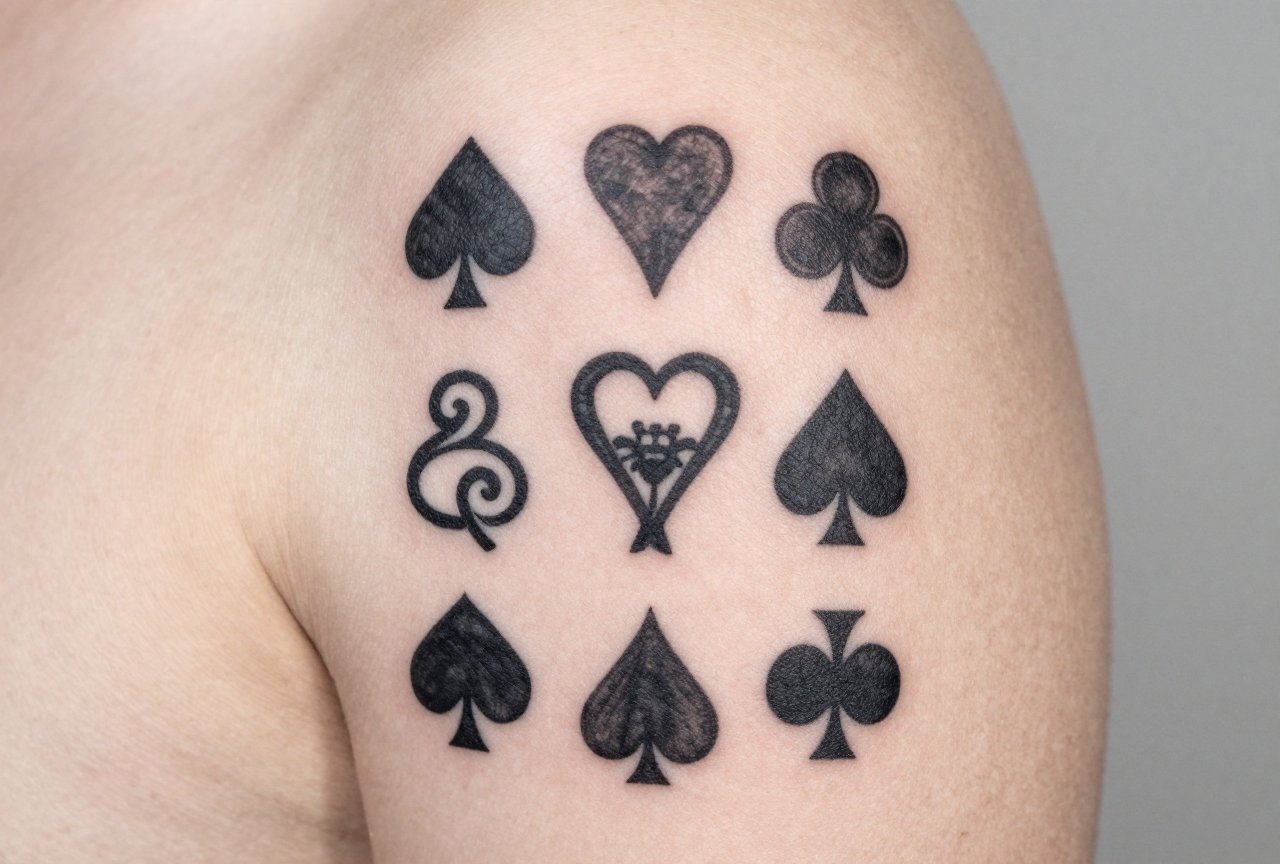
Tattoo symbols refer to the practice of using specific images, characters, or icons to communicate personal meaning, cultural heritage, or spiritual beliefs through body art. Rather than depicting literal scenes or portraits, symbolic tattoos rely on visual shorthand that carries emotional weight for the wearer. These symbols can range from ancient cultural motifs to personally invented icons that hold significance known only to the individual.
Symbolism & History
Humans have used symbolic markings for thousands of years, with evidence of tattooed symbols appearing on mummified remains from ancient Egypt, Ötzi the Iceman, and indigenous cultures worldwide. The power of symbolic tattoos lies in their ability to compress complex ideas into simple, enduring images.
Common categories of tattoo symbols include:
- Spiritual and religious icons such as crosses, om symbols, hamsa hands, or mandalas that represent faith and protection
- Nature elements like trees, waves, mountains, or animals that symbolize growth, resilience, or connection to the natural world
- Cultural heritage markers including tribal patterns, Celtic knots, or indigenous designs that honor ancestral roots
- Abstract geometric shapes that represent balance, infinity, or cosmic order
- Text and numerals such as dates, coordinates, or single words that anchor memories or values
The historical function of symbolic tattoos often involved protection, status identification, or rite-of-passage marking. Sailors famously collected nautical symbols like swallows and anchors to denote experience and safe return. Prison and military cultures developed elaborate symbolic vocabularies that communicated rank, achievements, or affiliations.
Common Variations & Styles
Tattoo symbols adapt to virtually every artistic style, allowing for deeply personal expression within established visual traditions.
- Minimalist line work reduces symbols to their essential outlines, emphasizing clarity and subtlety
- Blackwork and dotwork build symbols through dense patterns or stippled textures, creating depth without color
- Traditional American employs bold lines and limited color palettes to make symbols immediately readable and time-resistant
- Fine-line single needle creates delicate, precise symbols suited for smaller placements and understated aesthetics
- Watercolor and illustrative approaches surround symbolic forms with flowing color or narrative detail
- Biomechanical and surreal styles transform familiar symbols into unexpected hybrid forms
Some wearers combine multiple symbols into cohesive compositions, while others prefer isolated icons that stand alone as meditative focal points. The choice between complexity and simplicity often reflects how publicly or privately the wearer wishes to share their symbol’s meaning.
Best Placements
Symbol placement significantly impacts both visibility and personal significance. Small, highly personal symbols frequently appear on inner wrists, behind ears, along collarbones, or on fingers where the wearer sees them regularly but others may not immediately notice.
Larger symbolic pieces or collections of symbols suit the upper arm, forearm, thigh, back, or chest, providing adequate space for detail and contextual elements. The ribcage and sternum remain popular for symbols with deep emotional weight, as these placements connect symbolically to the heart and breath.
Some cultural traditions specify placement rules, such as Polynesian tattooing where symbol position indicates genealogy and social standing. Contemporary wearers often honor or adapt these traditions with research and respect for their origins.
Who Chooses This Tattoo / Personal Meanings
People drawn to symbolic tattoos typically value intentionality and narrative in their body art. First-time tattoo recipients often choose symbols as manageable entry points that carry clear personal significance without requiring large commitments.
Common motivations include commemorating life transitions, honoring deceased loved ones, marking recovery from difficult periods, expressing identity aspects not immediately visible, or creating permanent reminders of values like courage, patience, or authenticity. Some collectors develop personal symbol systems over years, with each new tattoo adding to an evolving visual autobiography.
The meaning of tattoo symbols frequently shifts over time. A symbol chosen during one life chapter may accumulate additional layers of significance as the wearer revisits and reinterprets their ink. This evolving relationship distinguishes symbolic tattoos from purely decorative body art.
Similar Symbols
Tattoo symbols overlap substantially with related tattoo categories. Lettering and quote tattoos share the compression of meaning into minimal form, though they rely on textual rather than visual language. Portrait tattoos can function symbolically when they represent ideals or relationships rather than literal likenesses.
Amulet and talisman tattoos explicitly claim protective or luck-bringing functions, making their symbolic intent overt. Memorial tattoos often incorporate symbols alongside names or dates. Spiritual tattoos frequently merge symbolic and devotional purposes.
The semicolon tattoo, popularized by mental health awareness movements, demonstrates how contemporary symbols emerge and spread through communities, eventually becoming widely recognized shorthand for specific experiences and solidarity.
Final Thoughts
Tattoo symbols offer perhaps the most flexible and enduring approach to meaningful body art, adapting ancient visual languages to intensely personal contemporary needs. The best symbolic tattoos balance recognizable cultural resonance with individual significance, creating images that communicate across contexts while remaining deeply specific to the wearer.
Before committing to symbolic ink, research the historical and cultural dimensions of your chosen symbol, particularly if it originates from traditions outside your own heritage. Consider how the symbol might read to others and whether that external interpretation aligns with your intended meaning. Most importantly, choose symbols that genuinely resonate rather than following trend cycles, as the permanence of tattooing rewards authenticity over novelty.
Whether a single small icon or an elaborate symbolic composition, this tattoo approach invites ongoing reflection and interpretation, turning the body itself into a living document of what matters most to the individual wearing it.
Related Tattoo Meanings
- Spiritual Symbols Tattoo Meaning: Sacred Ink Across Cultures
- Thai Yantra Tattoo Meaning: Sacred Geometry Spiritual Protection
- Thai Sak Yant Tattoo Meaning: Sacred Geometry Spiritual Protection
- Explore more









