
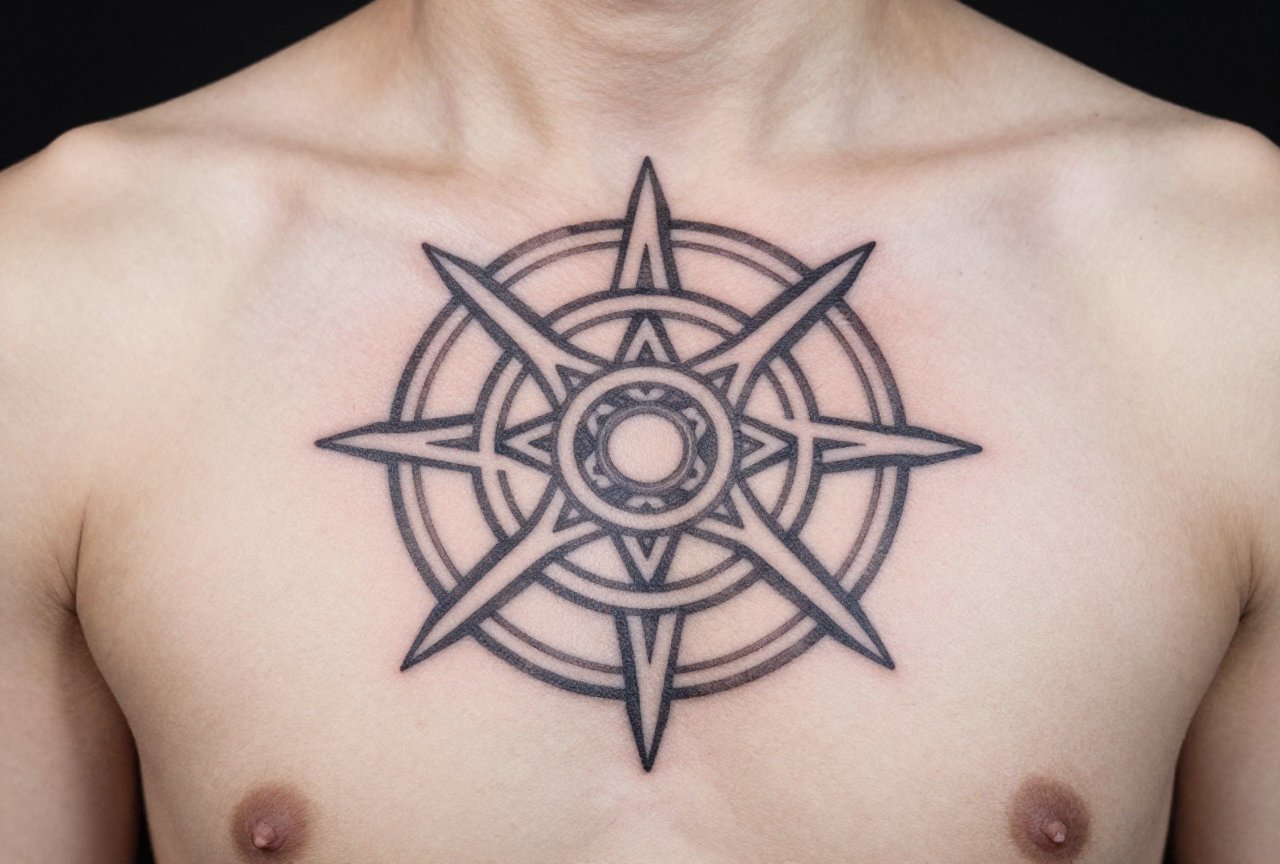
A Thai yantra tattoo is a sacred geometric design rooted in Buddhist and Hindu-Brahmin traditions that serves as a spiritual emblem of protection, fortune, and personal power. These intricate patterns, known as sak yant in Thai, combine mathematical precision with religious symbolism to create wearable talismans. Each yantra functions as a visual mantra, encoding specific blessings and energies that the wearer carries on their skin.
Symbolism & History
The yantra tradition stretches back over two thousand years to ancient India, where geometric diagrams were used in tantric practices to focus meditation and invoke divine forces. When Buddhism spread to Southeast Asia, these designs traveled with it, merging with indigenous Thai spiritual beliefs and animist practices. The result is a uniquely Thai expression of sacred art that persists today.
Central to every yantra is the concept of cosmic order. The designs typically feature:
- Geometric enclosures: Squares, circles, and triangles that create sacred boundaries containing spiritual energy
- Deity representations: Stylized images of Buddha, Hindu gods, or mythical creatures like the garuda or hanuman
- Pali or Sanskrit script: Mantras and katha (chants) that activate the tattoo’s power
- Elemental symbolism: Representations of earth, water, fire, and air woven into the pattern
Traditional sak yant are administered by ajarn (masters) who undergo years of spiritual training, including meditation, celibacy, and mastery of specific magical formulas. The tattooing process itself is ritualistic, often beginning with prayers and ending with a blessing that “awakens” the design.
Common Variations & Styles
While traditional Thai yantra tattoos maintain strict geometric rules, contemporary adaptations have expanded the visual vocabulary. The most recognized designs include the Hah Taew (five lines), each line carrying a distinct blessing for qualities like success, love, or protection from harm. The Gao Yord (nine peaks) represents the nine sacred peaks of Mount Meru, the cosmic axis in Buddhist cosmology, and offers comprehensive protection.
The Paed Tidt (eight directions) features eight mantras radiating outward, safeguarding the wearer from threats coming from any compass point. Animal yantras remain especially popular: the tiger represents strength and authority, the gecko brings good fortune in love and business, and the hanuman embodies devotion, courage, and martial prowess.
Modern interpretations sometimes blend yantra geometry with other tattoo styles. Some artists incorporate dotwork, blackwork, or even watercolor techniques while preserving the core symbolic structure. However, purists argue that only traditionally rendered and blessed yantras carry authentic spiritual significance.
Best Placements
Placement carries meaning in the yantra tradition. The upper back and shoulder blades are considered highly auspicious, as they position the sacred design where it can “watch over” the wearer. Many practitioners believe the back’s proximity to the heart and spine creates stronger energetic connection.
The chest and ribs are favored for protective yantras that shield vital organs. Arm placements, particularly the forearm and bicep, allow the wearer to “activate” the design by pressing it during prayers or moments of need. Some designs specifically dictate placement: certain hanuman yantras belong on the thigh to invoke the monkey god’s jumping power, while others suit the throat or crown of the head.
Lower body placement remains controversial. Traditional belief holds that sacred designs should not sit below the waist, as this is considered disrespectful to the spiritual energy contained within. Contemporary wearers sometimes disregard this guideline, though those seeking traditional blessing typically respect it.
Who Chooses This Tattoo / Personal Meanings
The appeal of Thai yantra tattoos crosses demographic boundaries. Muay Thai fighters have long favored these designs, continuing a tradition where warriors sought magical protection in combat. Many fighters believe specific yantras make their skin harder to cut or their strikes more powerful.
Western travelers to Thailand often return with yantra tattoos as permanent souvenirs of spiritual seeking. For these wearers, the design frequently represents a powerful journey or commitment to Buddhist principles like mindfulness and compassion. Some appreciate the aesthetic without claiming spiritual belief, though this approach can generate tension with traditional practitioners.
Thai nationals may receive yantras as rites of passage, family traditions, or responses to specific life challenges. Business owners seek fortune-bringing designs, couples request binding love yantras, and individuals facing danger or illness pursue protective variants. The personal meaning evolves with the wearer’s life circumstances and relationship to the tradition.
Similar Symbols
Sacred geometry appears across tattoo traditions worldwide, offering points of comparison and contrast. Tibetan Buddhist thangka designs share the yantra’s function as portable spiritual technology, though they typically favor more figurative imagery. Hindu mandala tattoos similarly use concentric geometric patterns to represent cosmic order and aid meditation.
The Sri Yantra, a specific Hindu tantric design of interlocking triangles, predates and influences Thai yantra traditions. Japanese horimono tattoos sometimes incorporate Buddhist talismanic elements, though these emphasize narrative and pictorial content over pure geometry. Contemporary Western “sacred geometry” tattoos draw on these Eastern traditions while often stripping away specific religious context in favor of universal mathematical principles.
Celtic knotwork and Nordic rune tattoos offer European parallels where interlaced patterns carry protective and symbolic meaning. The key distinction remains the yantra’s integration of written mantra, deity invocation, and formal blessing ritual.
Final Thoughts
The Thai yantra tattoo occupies a unique position at the intersection of art, mathematics, and spirituality. Its enduring popularity speaks to a human desire for meaning that transcends mere decoration. Whether approached as devout spiritual practice, cultural appreciation, or aesthetic choice, the yantra demands respect for its deep historical roots and living traditions. Those considering this tattoo benefit from researching its origins, understanding the responsibilities that traditional practitioners associate with wearing sacred designs, and choosing artists who honor the form’s integrity. In an era of rapidly trending tattoo styles, the yantra’s two-millennia lineage offers something increasingly rare: a design that carries the accumulated weight of genuine cultural and spiritual significance.
Related Tattoo Meanings
- Thai Sak Yant Tattoo Meaning: Sacred Geometry Spiritual Protection
- Chinese Writing Tattoo Meaning: Symbolism, Styles Personal Significa
- Asian Tattoo Meaning: Symbolism, Culture, and Personal Expression
- Explore more









