China tattoos cover a wide range of designs, and that range matters for meaning. You’ve got Chinese characters, traditional Chinese motifs like dragons, koi, peonies, phoenixes, and lotuses, plus literal fine-china porcelain imagery. Each carries its own symbolism, and mixing them up is a fast way to end up with something that means nothing.
Some people want a connection to Chinese culture, ancestry, or philosophy. Others are drawn to specific symbols for their standalone meaning, like strength, luck, or rebirth. A few are after the aesthetic of blue-and-white porcelain as art on skin. Whatever direction you’re taking, knowing what you’re putting on your body permanently is step one.
Core Meanings Behind China Tattoos
The word ‘china’ in tattoo culture usually points in one of two directions: Chinese cultural symbols or fine porcelain imagery. Chinese character tattoos traditionally carry meanings tied to virtue, nature, or personal values. Symbols like the dragon represent power, protection, and good fortune. The phoenix stands for renewal, resilience, and transformation. The lotus signals purity rising through hardship. None of that is made up. These are meanings rooted in thousands of years of Chinese symbolism.
Fine china porcelain imagery, specifically the blue-and-white patterns from Ming dynasty ceramics, carries its own read. Delicacy, refinement, precision. The contradiction of something fragile that survives centuries. That tension, beautiful and breakable, is exactly why people find it meaningful as a tattoo concept. It reads as strength wrapped in elegance, which lands differently depending on the person wearing it.
Cultural and Historical Background Worth Knowing
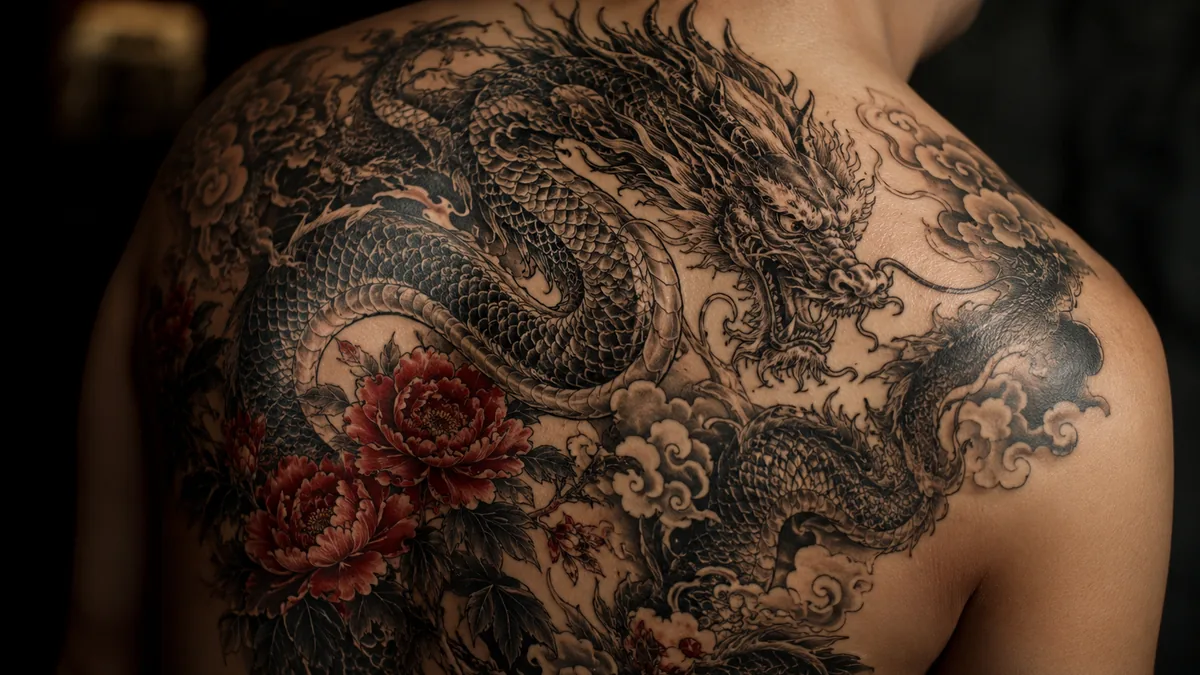
The dragon means power in China. On your skin, it better mean something to you too.
Chinese tattooing has its own long history, though it looked very different from what Western collectors get today. In ancient China, tattoos were sometimes used as criminal punishment or to mark social status. Meanwhile, Chinese symbols and imagery traveled globally through trade routes and diaspora communities, embedding themselves in Western tattoo culture by the 20th century. That context matters if you’re getting Chinese characters specifically.
Blue-and-white porcelain, the visual most people associate with ‘fine china,’ originated during the Tang dynasty and peaked in the Ming dynasty around 1368-1644. It spread across Europe through trade and became synonymous with luxury, precision craftsmanship, and cultural prestige. When this imagery shows up in tattoos today, it pulls that history with it. That’s not decoration. That’s a real cultural artifact on your skin.
Popular Design Variations
Chinese character tattoos remain one of the most common requests globally, though they’ve also produced some of the most famous mistranslation disasters in tattoo history. If you’re going this route, verify the meaning with a native speaker and a second source before you commit. Beyond characters, traditional Chinese motifs translate beautifully into large-scale pieces. Full back dragons, sleeve koi and lotus compositions, and peony clusters are all proven formats that give a skilled artist serious room to work.
On the porcelain side, blue-and-white china-pattern tattoos are a growing niche, especially in fine-line and illustrative styles. Artists recreate the intricate floral and geometric patterns of Ming-era ceramics directly onto skin. Some collectors request cracked porcelain effects, suggesting something precious and still intact despite damage. That variation hits particularly hard as a piece about personal resilience. It’s specific, it’s original, and it tells a real story.
Style Choices: Fine Line, Traditional, or Black and Grey
Style changes everything about how a China tattoo reads and how long it holds. Fine-line work suits porcelain pattern imagery perfectly. The delicate linework mirrors the precision of actual hand-painted ceramics. But fine line fades faster, especially on high-wear zones like hands, fingers, and feet. If you want that crispy porcelain look to last, talk to your artist about slightly heavier line weight than you think you need. Bold will hold. That rule doesn’t stop applying just because the design is delicate.
Black and grey is the natural home for Chinese dragons, phoenixes, and large illustrative pieces. The depth of a well-executed black and grey dragon, with whip shading and smooth gradients, is hard to beat for impact. Traditional and neo-traditional styles work for koi and peony designs because the saturated color and bold outlines age reliably. Watercolor-influenced porcelain pieces look stunning fresh but require a solid black outline underneath or they’ll spread and bleed under the skin over years.
Color vs. Black and Grey for China Imagery
If you’re going for authentic blue-and-white porcelain imagery, the color palette is basically decided for you. Cobalt blue on a white or light skin background, or worked into negative space for darker skin tones, is the move. A skilled artist can nail the graduated blues of hand-painted ceramics in tattooing. That said, the blue pigments in tattoos shift over time. Expect some fading and slight color migration after years, especially with direct sun exposure. Sunscreen is your best friend.
For traditional Chinese motifs, full color is classic and it reads from across the room, which matters for large pieces. Saturated red and gold on a dragon, or deep pink and green on a peony, carries serious visual weight. Black and grey gives the same subject a more personal, contemplative feel. Neither option is wrong. It’s more about whether you want the piece to announce itself loudly or pull people in close. Talk it through with your artist based on placement and scale.
Best Placement and How It Ages
Scale and placement should be decided together. A Chinese dragon or full porcelain-pattern piece needs real estate. The back, chest, full sleeve, or thigh all give the design room to breathe and read properly. Cramming intricate Chinese-pattern work into a small space is how you end up with a blurry mess in five years. Fine details in china-style patterns especially need space or the lines bleed into each other as the skin ages and spreads slightly. Your artist will tell you the same.
High-wear zones are risky for detailed China work. Hands, inner wrists, and ankles see a lot of sun and friction and they heal unevenly. The ribcage is spicy but the skin there holds ink beautifully and doesn’t distort much over time. Upper arm and thigh are lower-wear and lower on the pain scale, which makes them solid choices for first-time large pieces. The inner bicep heals nice and stays protected from sun. For fine-line porcelain work specifically, avoid extremities if longevity matters to you.
Who Gets China Tattoos and How to Make It Personal
Chinese-American and Asian-American collectors often get these tattoos as a direct expression of heritage and identity. The symbolism connects them to family history, ancestral homeland, or cultural pride. That context gives the tattoo weight that goes beyond aesthetics. Non-Asian collectors who choose Chinese imagery need to approach it thoughtfully, meaning they should understand what the symbol actually means, not just that it looks cool. A dragon chosen because it represents protection hits differently than one chosen because it filled the space.
To make a China tattoo yours, get specific. Don’t pick a generic dragon from a flash sheet if you can commission an artist to design something that incorporates your family name in characters, a specific regional pattern, or a motif tied to a real moment in your life. Reference actual historical ceramics if you’re going the porcelain route. Show your artist images of the exact patterns that speak to you. The more specific the reference, the more original and meaningful the finished piece. That’s what separates a real tattoo from a tourist souvenir.