
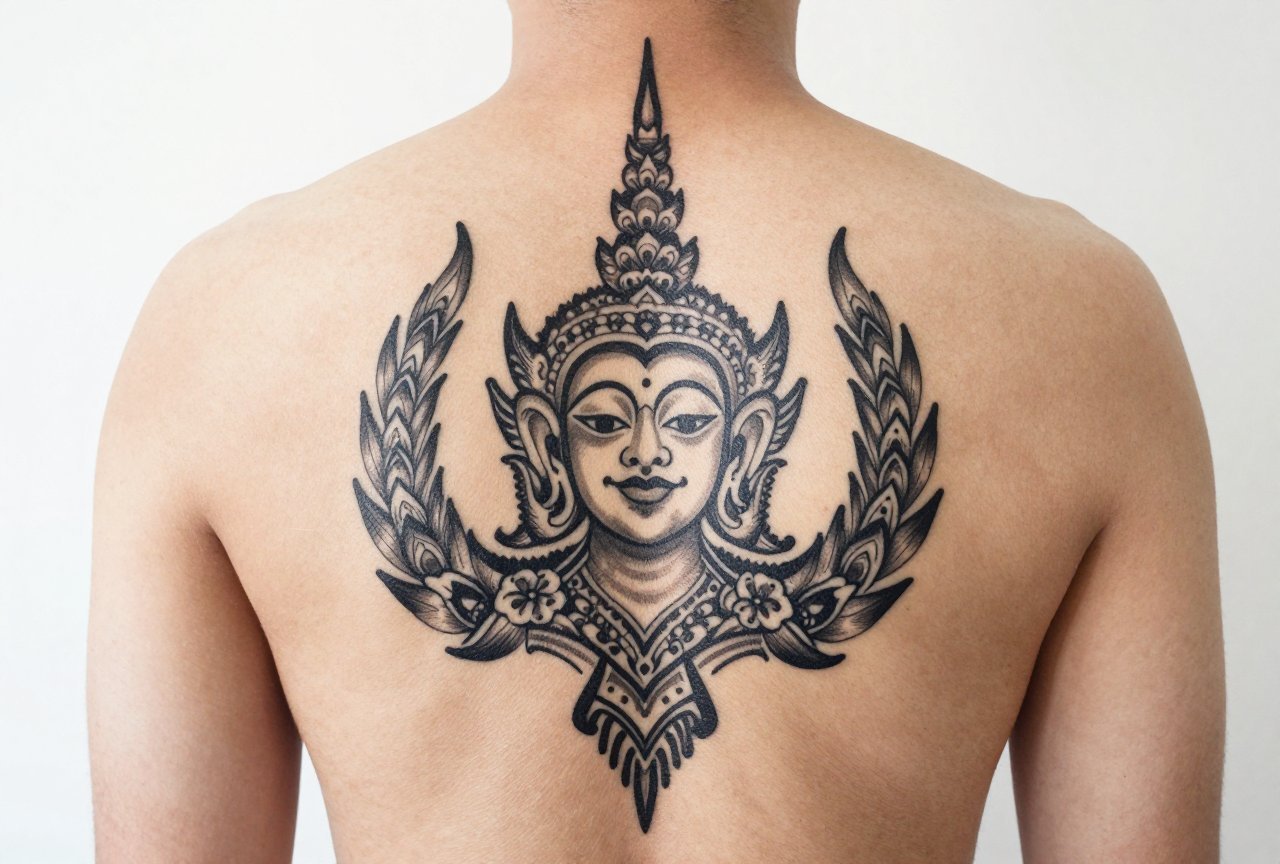
A Thai Sak Yant tattoo is a sacred geometric design rooted in Buddhist and animist traditions, typically believed to offer spiritual protection, good fortune, and personal power to the wearer. These intricate patterns are traditionally hand-poked by monks or ajarns (master practitioners) using a long metal needle called a khem sak, with each design carrying specific symbolic meanings and magical purposes.
Symbolism & History
Sak Yant, also known as Yantra tattooing, dates back over two thousand years in Southeast Asian culture. The practice blends Theravada Buddhism, Hindu-Brahmanism, and ancient animist beliefs from the region. The word itself breaks down meaningfully: sak means “to tattoo” or “to tap,” while yant derives from the Sanskrit yantra, referring to a mystical diagram or instrument.
Historically, Sak Yant served warriors and soldiers heading into battle. The tattoos were believed to provide invulnerability against weapons, enhance courage, and ensure safe return. Today, the tradition extends far beyond military applications, though the core spiritual framework remains intact.
Key symbolic elements include:
- Geometric patterns: Triangles, squares, and circular formations represent the universe, sacred spaces, and cosmic order
- Scriptural text: Pali or Khmer inscriptions containing Buddhist mantras, blessings, or protective verses
- Mythical creatures: Tigers, hanuman (monkey gods), nagas (serpents), and garudas each carry distinct protective qualities
- Directional lines: Specific arrangements guide spiritual energy and focus intention
The act of receiving a Sak Yant is itself a ritual. Traditional practitioners often recite blessings during the process, and wearers may need to follow certain precepts or behavioral guidelines to maintain the tattoo’s perceived effectiveness.
Common Variations & Styles
Several Sak Yant designs have become internationally recognized, each with specialized meanings:
- Hah Taew (Five Lines): Perhaps the most popular design, featuring five vertical lines of sacred script. Each line traditionally corresponds to different blessings: protection, success, attraction, fortune, and charisma
- Gao Yord (Nine Peaks): A mountain-like formation representing the nine sacred peaks of Mount Meru in Buddhist cosmology, symbolizing stability, power, and comprehensive protection
- Paed Tidt (Eight Directions): A circular design with eight points representing the cardinal and intercardinal directions, believed to safeguard travelers and guide those who wander
- Suea (Tiger): Projects authority, fearlessness, and strength; often chosen by those in leadership roles or dangerous professions
- Hanuman: The monkey god represents devotion, agility, and fighting spirit; popular among martial artists
- Naga: The serpent deity symbolizes wealth, protection in water, and transformation
Contemporary adaptations sometimes simplify traditional designs for aesthetic preferences, though purists emphasize that spiritual potency requires adherence to authentic form and proper ritual context.
Best Placements
Traditional Sak Yant placement follows specific conventions rather than arbitrary preference. Certain designs belong on particular body regions according to established practice:
- Upper back and shoulders: Common for larger protective designs like Gao Yord; considered a position of strength and shielding
- Center of chest or sternum: Sacred heart-area placement for spiritual connection and core protection
- Forearms and biceps: Popular for Hah Taew and animal motifs; visible but traditionally acceptable
- Neck and throat area: Reserved for advanced practitioners and specific protective purposes; considered highly significant
- Top of head: Extremely sacred placement, rarely done and typically only for devoted practitioners
Lower body placements are generally avoided in traditional practice, as they are considered disrespectful to the sacred nature of the designs. This stems from cultural norms about the body and spiritual hierarchy.
Who Chooses This Tattoo / Personal Meanings
The contemporary Sak Yant wearer spans diverse backgrounds. Understanding motivations helps explain the design’s enduring appeal:
- Spiritual seekers: Individuals drawn to Buddhist philosophy who want tangible connection to practice
- Travelers and expatriates: Those who have spent significant time in Thailand or Southeast Asia, seeking to commemorate powerful experiences
- Martial artists: Muay Thai fighters have historically worn Sak Yant for ring protection and competitive edge; the tradition continues globally
- People seeking protection: Those in dangerous lines of work, or individuals who have experienced trauma and seek symbolic safeguarding
- Cultural appreciators: People with Thai heritage or deep respect for the artistic tradition
Personal meaning often evolves. Initial attraction might be aesthetic or trend-driven, while ongoing relationship with the tattoo frequently deepens into genuine spiritual engagement. Many wearers report that the tattoo is a reminder of personal intentions, ethical commitments, or pivotal life transitions.
Similar Symbols
Sak Yant exists within a broader family of protective and spiritual markings across cultures:
- Tibetan Buddhist thangka and mantra tattoos: Similar scriptural and geometric protective intentions, though distinct visual language
- Hindu yantra tattoos: Shared Sanskrit roots and geometric sacred diagrams, particularly Shri Yantra designs
- Polynesian tribal markings: Comparable spiritual protection and status functions, though entirely different visual systems
- Japanese irezumi protective motifs: Shared warrior-protection history, with Fudo Myoo and other Buddhist guardians
- Khmer traditional tattoos: Closely related Southeast Asian practice with overlapping designs and ritual structure
These parallels highlight a universal human impulse to mark the body with symbols believed to carry power beyond the physical. Sak Yant distinguishes itself through its specific integration of Buddhist mantra, regional mythology, and the living tradition of ritualized application.
Final Thoughts
The Thai Sak Yant tattoo carries layered significance: geometric beauty, spiritual aspiration, cultural heritage, and personal transformation. Whether approached as devout practice, aesthetic choice, or meaningful souvenir, the design rewards informed engagement. Those considering Sak Yant benefit from researching authentic practitioners, understanding traditional protocols, and reflecting honestly on their own motivations. The most resonant Sak Yant tattoos emerge where personal meaning meets respectful relationship with a tradition far older and deeper than any single wearer’s story. Approach with curiosity, commit with intention, and wear with awareness of the living cultural stream you enter.
Related Tattoo Meanings
- Chinese Writing Tattoo Meaning: Symbolism, Styles Personal Significa
- Asian Tattoo Meaning: Symbolism, Culture, and Personal Expression
- Elephants Tattoo Meaning: Symbolism, Styles Significance
- Explore more









