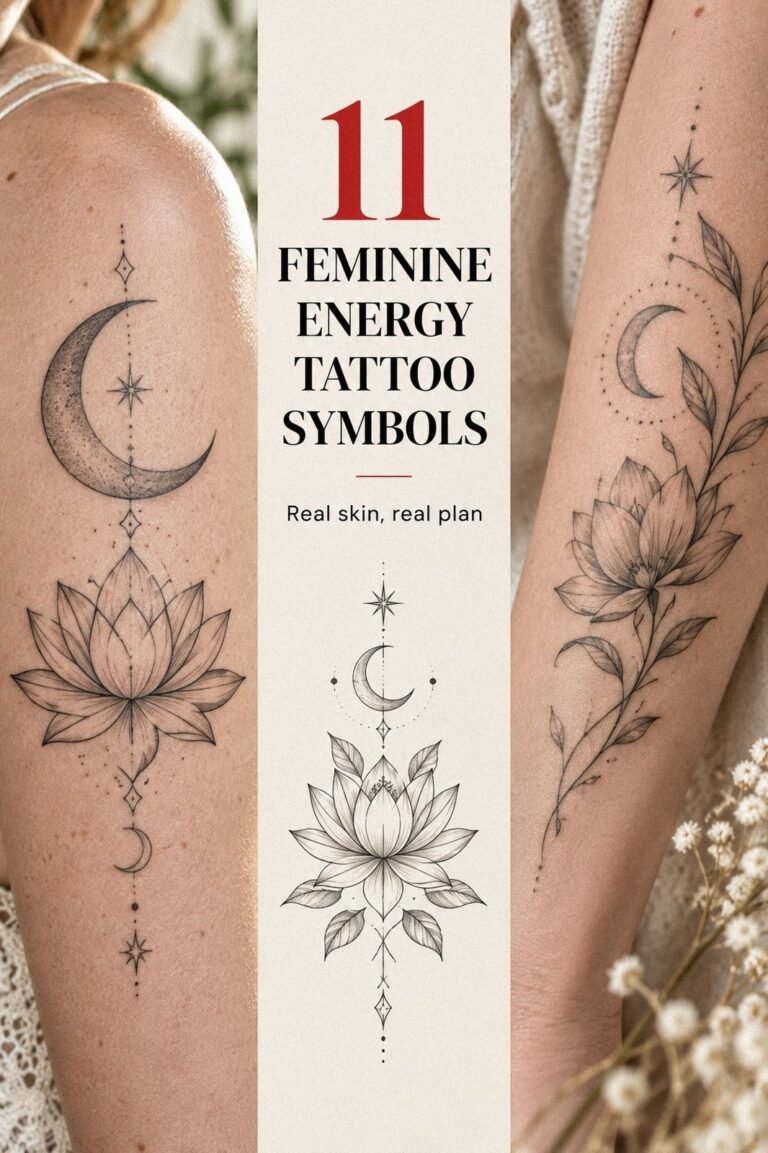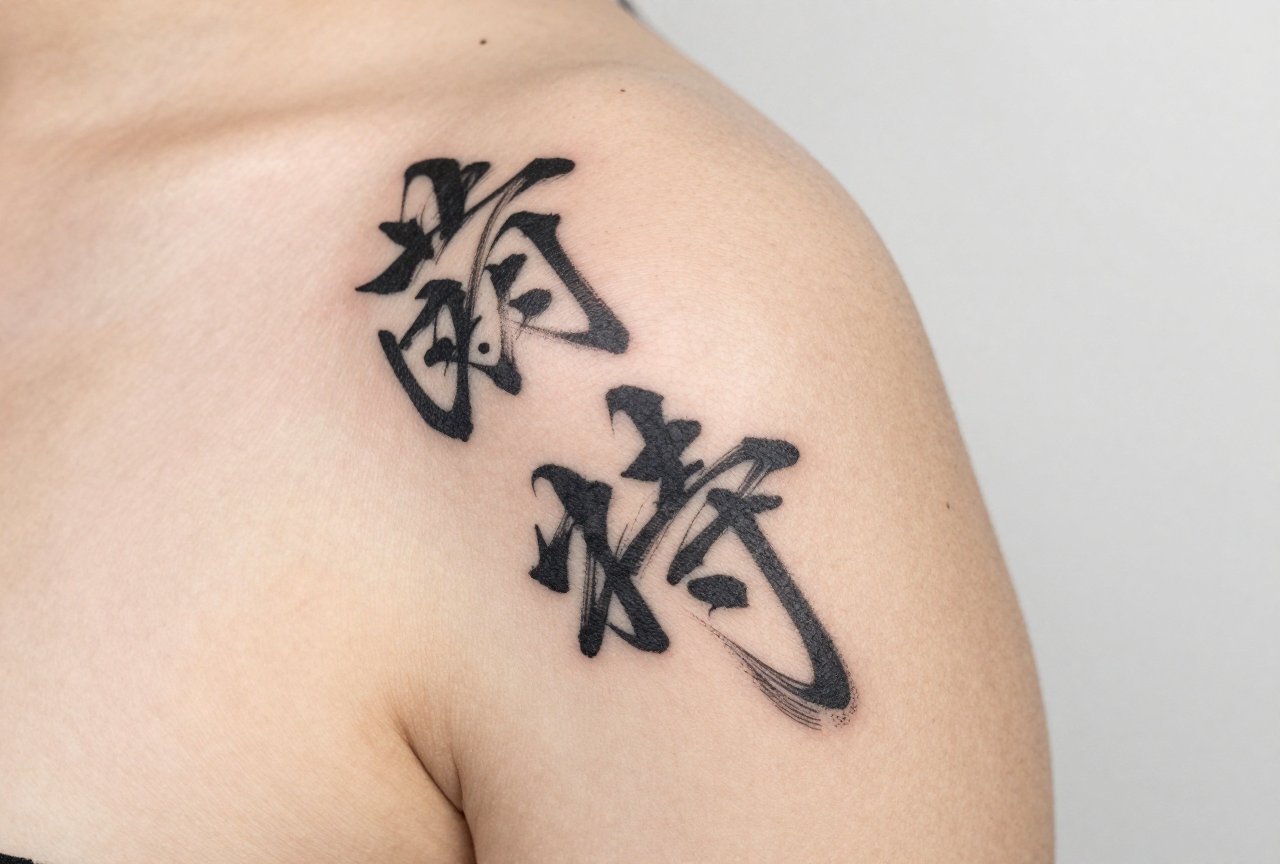
A Chinese writing tattoo is a design that uses Chinese characters (hanzi) to express personal values, life philosophies, or meaningful concepts through an elegant, visually striking script. Unlike purely decorative tattoos, these pieces typically carry specific semantic weight, with each character functioning as a compact symbol packed with cultural and linguistic history. The meaning depends entirely on the chosen characters, ranging from single-concept words like “strength” (力) or “love” (爱) to multi-character phrases, names, or philosophical quotations.
Symbolism & History
Chinese characters are among the world’s oldest continuously used writing systems, with origins stretching back over 3,000 years to oracle bone inscriptions. This deep history gives the script an inherent gravitas that appeals to many tattoo collectors. The symbolism operates on multiple levels:
- Logographic power: Each character represents a complete word or concept, making it information-dense compared to alphabetic scripts
- Calligraphic tradition: The art of Chinese calligraphy (shufa) is revered as a high art form, with different brush styles conveying different emotional tones
- Cultural bridge: For those with Chinese heritage, these tattoos can express cultural pride or ancestral connection
- Exoticism and aesthetics: The non-Latin script offers visual mystery and clean geometric beauty that works well in tattoo form
Historically, Chinese characters were sometimes used in tattooing as marks of punishment or group identification, but modern usage is overwhelmingly personal and voluntary. The script’s adoption in Western tattoo culture accelerated during the 1990s and early 2000s, though it remains consistently popular due to its timeless visual appeal.
Common Variations & Styles
Chinese writing tattoos vary considerably in execution, with each style carrying different aesthetic connotations:
- Traditional calligraphy styles: Kaishu (regular script) offers clarity and balance; xingshu (running script) flows with connected energy; caoshu (cursive script) maximizes abstraction and artistic interpretation
- Seal script (zhuanshu): An ancient, highly stylized form with rounded, symmetrical lines that resembles pictographs more than modern writing
- Single characters vs. phrases: Solo characters like “dragon” (龙), “phoenix” (凤), or “eternity” (永) work as standalone icons; phrases might include four-character idioms (chengyu) or longer quotations
- Combined imagery: Characters integrated with traditional Chinese painting elements like bamboo, plum blossoms, or mountain landscapes
- Negative space or brushstroke effects: Some artists mimic the faded, bleeding quality of ink on rice paper for atmospheric texture
Red ink is sometimes used for its association with luck and prosperity in Chinese culture, though this requires careful discussion with your artist about pigment behavior in skin.
Best Placements
The vertical or horizontal nature of Chinese characters influences ideal placement. Vertical arrangements naturally suit the arm’s length, ribcage, or outer calf. Horizontal compositions work well across the upper back, collarbone area, or forearm. The spine offers a dramatic canvas for longer phrases. Smaller single characters fit elegantly behind the ear, on the wrist inner surface, or along the finger side. Because character legibility matters, areas with significant skin movement or frequent sun exposure may require touch-up consideration over time.
Who Chooses This Tattoo / Personal Meanings
The demographic for Chinese writing tattoos is broader than stereotype suggests. Collectors include:
- Heritage bearers: Chinese diaspora members reconnecting with language roots, sometimes choosing characters their grandparents might have used
- Martial artists: Practitioners of kung fu, tai chi, or qigong selecting concepts like “discipline,” “empty mind,” or specific style names
- Philosophy enthusiasts: Admirers of Taoism, Confucianism, or Buddhism incorporating teachings from texts like the Tao Te Ching
- Aesthetic-driven collectors: Those drawn purely to the visual balance and cultural weight of the script
- Memorial tattoos: Names or dates rendered in characters to honor Chinese heritage family members
Personal meanings frequently center on transformation, resilience, or life direction. Someone recovering from hardship might choose “rebirth” or “perseverance.” A traveler might select “wanderer” or “destiny.” The most successful pieces emerge when the meaning genuinely precedes the aesthetic choice rather than selecting characters for appearance alone.
Similar Symbols
Related tattoo traditions offer comparable depth with different cultural origins:
- Japanese kanji: Functionally identical characters for many concepts, though pronunciation and some cultural associations differ; Japan’s tattoo history connects more strongly to organized subculture
- Korean hanja: Increasingly rare in modern Korea but historically used; similar visual character set
- Sanskrit devanagari: Indian script used for spiritual concepts, mantras, and names with comparable ancient lineage
- Arabic calligraphy: Flowing script often used for religious poetry and names, with strong visual rhythm
- Hebrew script: Biblical passages, names of God, or Kabbalistic concepts rendered in ancient letterforms
- Thai sak yant: Sacred geometric designs incorporating Pali script in Buddhist protective talismans
Final Thoughts
Chinese writing tattoos endure because they merge linguistic precision with visual poetry. The best pieces result from genuine research, consultation with native speakers or qualified translators, and collaboration with artists experienced in the specific brush dynamics of East Asian scripts. Whether marking heritage, philosophy, or personal transformation, these characters carry weight that transcends their physical size, making them one of tattooing’s most meaning-dense traditions.
Related Tattoo Meanings
- Chinese Words Tattoo Meaning: Symbolism Ink
- Asian Tattoo Meaning: Symbolism, Culture, and Personal Expression
- Lightning Bolt Tattoo Meaning: Power, Speed Sudden Change
- Explore all tattoo symbol meanings