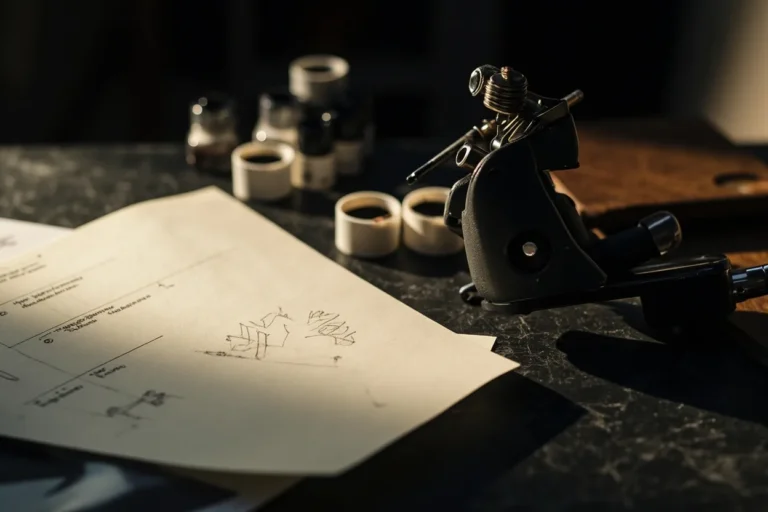
The direct answer is simple: tatuaje (tah-too-AH-hey) is the standard Spanish word for tattoo. The verb is tatuarse, “me voy a tatuar” means “I’m going to get tattooed.” But if you’re walking into a shop in East LA, Miami, or talking to a Mexican artist about a flash sheet, you’ll hear a lot more than just that textbook word. I’ve spent years in shops where Spanish mixes with English constantly, and knowing the real vocabulary, the slang, the regional quirks, the respectful way to ask, matters more than you’d think.
The Core Words Every Collector Should Know
Let’s start with what you’ll actually need. I’ve had clients walk in and say “quiero un tattoo”, which is fine, Spanglish is everywhere, but using the proper word shows respect and gets you better communication with the artist.
- Tatuaje, tattoo (noun, masculine: “el tatuaje”)
- Tatuarse, to get tattooed (reflexive verb)
- Tatuar, to tattoo someone else
- Tatuador/a, tattoo artist (use tatuadora for women)
- Tinta, ink
- Aguja, needle
- Máquina, machine/gun (though “machine” is preferred in most shops now)
- Piel, skin
- Diseño, design
- Boceto, sketch/drawing
“Me quiero hacer un tatuaje”, I want to get a tattoo. “¿Cuánto cuesta este diseño?”, How much is this design? These basics will get you through a consultation anywhere from Tijuana to Madrid.
Regional Variations You’ll Hear
Mexican Spanish dominates US tattoo culture, but you’ll catch differences. In Spain, some artists say “tatuarse un dibujo”, literally “to tattoo oneself a drawing.” In Argentina, I’ve heard “tatuar” used more casually as the reflexive: “me tatué ayer.” Caribbean Spanish often drops syllables; “tatuaje” becomes “tatuá” in rapid Dominican speech. None of this is wrong. It’s just alive.
Shop Slang and What Artists Actually Say
This is where it gets useful. I’ve tattooed in shops where the morning conversation is 70% Spanish, and the vocabulary goes way beyond textbook stuff.
- Chicano lettering, “letras chicanas” or “placas” (the style, the culture, the whole aesthetic)
- Black and grey, “negro y gris” or sometimes just “black and grey” because the term is borrowed
- Shading, “sombreado” or “degradado”
- Line work, “líneas” or “contorno”
- Fill, “relleno”
- Stencil, “plantilla” or just “stencil”
- Touch-up, “retoque”
- Cover-up, “cobertura” or “tapar” (to cover)
- Fresh, “fresco” (newly done, still healing)
- Healed, “curado” or “sanado”
I tell clients: “lo dejamos fresco”, we leave it fresh, meaning just done, raw, that shiny plasma look. “Ven cuando esté curado”, come back when it’s healed. These are the phrases that build trust. An artist who sees you know the process, not just the word, treats you differently.
Numbers, Sizes, and Placement Talk
“Quiero algo pequeño aquí”, I want something small here. Point to your antebrazo (forearm), muñeca (wrist), clavícula (collarbone), costilla (rib). “Dolor” is pain, but artists often say “pica”, it stings, it bites. “Aquí pica más”, this spot hurts more. I’ve had clients ask “¿duele mucho?” and I answer honestly: ribs pica, forearm is manageable, palm is its own universe.
Talking Aftercare Without Sounding Lost
This is where language gaps actually matter. I’ve seen people misunderstand instructions because they nodded along without really getting it. Here’s the vocabulary that keeps your tattoo clean.
- Cuidado posterior, aftercare (formal)
- Cuidados, aftercare (casual, what you’ll hear: “sigue los cuidados”)
- Jabón neutro, unscented soap
- Humectar, to moisturize
- Crema, cream/lotion
- Costra, scab
- Pelar, to peel
- No rascar, don’t scratch
- Proteger del sol, protect from sun
- Tapar, to cover (with clothing, not plastic wrap long-term)
In my chair, I say: “lávalo con jabón neutro, fino fino, no lo frotes. Humecta poquito, no mucho. Deja que se pele solo.” Wash it with unscented soap, gentle gentle, don’t scrub. Moisturize a little, not much. Let it peel on its own. That “poquito”, a little bit, is key. Over-moisturizing is a real problem I see, especially with nervous first-timers who think more cream equals better healing.
Respect and Culture in Spanish-Speaking Shops
Here’s something the dictionary won’t teach you. Latino tattoo culture in the US has deep roots in Chicano art, prison aesthetics, religious iconography, and family tribute pieces. Walking in with the right words matters, but walking in with the right attitude matters more.
We see this a lot: collectors who want “something tribal” or “a sugar skull” without knowing the history. If you’re asking for “una catrina” or “la Virgen de Guadalupe,” understand these aren’t just cool images. They’re loaded. I’ve had artists refuse pieces because the client clearly didn’t respect the source. Learn the word, but also learn the weight.
Basic respect phrases: “con permiso” (excuse me/pardon), “gracias por tu tiempo” (thanks for your time), “me encanta tu trabajo” (I love your work, genuine compliment, not empty flattery). Don’t throw around “ese” or “vato” unless you’ve actually earned the familiarity. I’ve watched white tourists try too hard and get iced out immediately.
Spanglish: The Real Language of Many US Shops
Let’s be honest. In most California, Texas, Arizona, Florida shops, the language is mixed. “Voy a hacer las líneas, then we shade.” “Trae tu aftercare stuff.” “Ese color está sick.” This isn’t bad Spanish or bad English. It’s its own thing, functional and alive. Don’t correct it. Don’t perform. Just communicate. I’ve had entire consultations in this fluid middle space, and they work beautifully because everyone’s focused on the same thing: making the skin look right.
Practical Phrases for Your Appointment
Print these in your head. I’ve heard every variation, and these are the ones that actually get used.
- “¿Tienes disponibilidad?”, Do you have availability?
- “¿Cuánto me cobras por esto?”, How much would you charge for this?
- “¿Puedes hacerlo más grande/pequeño?”, Can you make it bigger/smaller?
- “¿Me lo puedes dar en otra parte?”, Can you place it somewhere else?
- “No me gusta esta parte”, I don’t like this part (speak up during the stencil phase, not after)
- “¿Cuánto tiempo toma?”, How long does it take?
- “Necesito un descanso”, I need a break
- “Me mareo un poco”, I’m feeling a bit dizzy (say this, don’t tough it out)
- “¿Cuándo puedo nadar?”, When can I swim? (answer: usually 2-4 weeks, healed)
That last one comes up constantly. Pool chemicals, ocean bacteria, lake whatever, all bad for fresh work. I tell clients “dos semanas mínimo, mejor un mes.” Two weeks minimum, better a month. The Spanish word for patience is paciencia, and you’ll need it.
Key Takeaways
Tatuaje is your foundation word. Build from there with tatuador, tinta, aguja, diseño, cuidados. Learn the regional flavor of wherever you’re getting work done, Mexican Spanish dominates US shops, but Caribbean and South American artists bring their own terms. Respect the culture behind the imagery; knowing the word for catrina doesn’t mean you understand Día de los Muertos. Use Spanglish naturally if that’s the shop’s rhythm, don’t force it if it’s not. Most importantly, communicate clearly about placement, pain, time, and aftercare. A good tattoo in any language starts with honesty between artist and skin.
Frequently Asked Questions
Is ‘tattoo’ just ‘tatuaje’ everywhere, or are there other words?
Tatuaje is the universal standard, but you’ll hear ‘tinta’ as slang in some Central American circles, and ‘marcado’ in very old-school Mexican contexts. In Spain, ‘tatuarse un dibujo’ appears occasionally. Stick with tatuaje and you’ll be understood everywhere.
How do I say ‘I’m getting tattooed tomorrow’ naturally?
Me tatúo mañana or me voy a tatuar mañana. The first is more casual, the second more deliberate. In Mexico, me voy a hacer un tatuaje mañana is probably what you’ll actually hear.
What’s the polite way to ask a Spanish-speaking artist about their rates?
¿Cuánto cobras por este diseño? or ¿Cuál es tu precio para esto? Avoid sounding like you’re bargaining unless they explicitly offer. Good artists set prices and stand by them; respect that.
How do I describe the style I want if I don’t know the Spanish term?
Bring reference photos. Say something like ‘quiero algo como esto’, I want something like this, and point to the line weight, the shading density, the overall feel. Visual communication beats vocabulary gaps every time. Most artists prefer seeing what you mean over hearing you guess terms.
Related Tattoo Guides
- How to Sharpen Maybelline Tattoo Studio Eyeliner
- Tattoo Pain Threshold: What to Actually Expect
- Average Tattoo Cost Per Hour: A Real Shop Guide
- Explore more