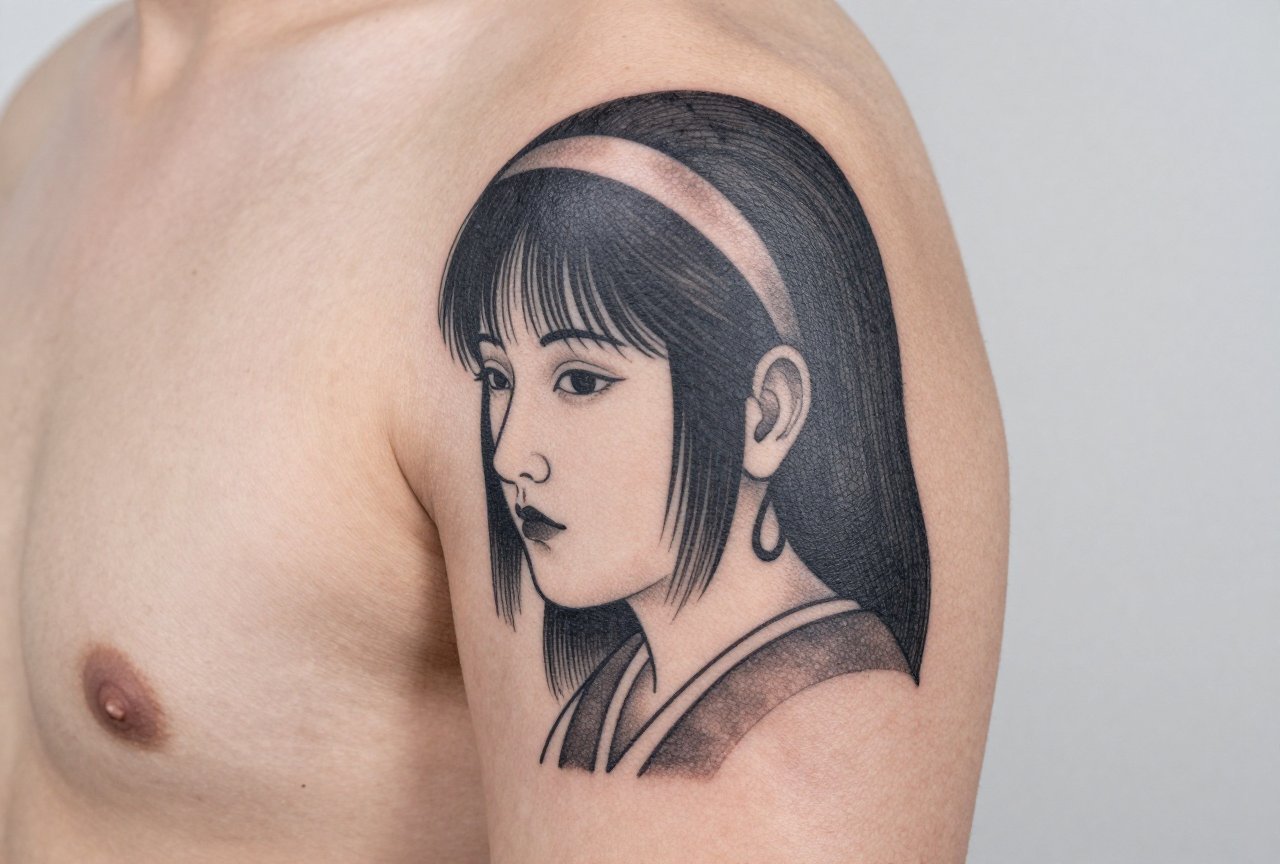
Suminagashi tattoo meaning centers on the Japanese art of floating ink, marbling patterns created by dropping ink on still water and capturing the unpredictable swirls. On skin, it translates to embracing chaos while finding control, accepting that beauty emerges from disorder you can’t fully command. The design speaks to people who’ve learned that life doesn’t follow straight lines.
Symbolism & History
Where It Comes From
Suminagashi dates back to 12th-century Japan, originally used for decorating paper and calligraphy. Monks and nobles watched ink spread across water, each pattern impossible to replicate. That irreproducibility was the point. I’ve had clients sit in my chair who’ve spent years in rigid careers, law, finance, military, and they describe this tattoo as permission to stop controlling everything.
The technique itself carries weight. You drop sumi ink onto water thickened with moss, blow gently or drag a hair across the surface, then lay paper to capture what forms. No two pulls match. Tattooing this requires artists to mimic that spontaneity while working in a medium that demands precision. The tension between those two things, planned placement, unplanned pattern, mirrors the symbolism.
What It Represents Today
- Acceptance of impermanence: The pattern lasts on paper only once; on skin, it fades and shifts with you
- Chaos within structure: The organic forms exist inside a body that has edges, bones, limits
- Meditation and presence: Creating suminagashi requires stillness; wearing it can remind you to slow down
- Individuality: No two suminagashi tattoos should look identical, by design and by philosophy
I tell clients who want this: the best versions lean into the irregularity. Artists who try to “perfect” the pattern lose what makes it meaningful.
Common Variations & Styles
Traditional Black and Gray
Pure sumi ink tones, no color. This stays closest to the original paper art. The black pools and fades into gray washes, sometimes with visible brushstroke textures. In my shop, we see this most on people who want the tattoo to read as fine art rather than “tattoo art.” It ages exceptionally well, black ink holds, and the soft gradients actually improve as they settle into skin over five to ten years. The lines blur slightly, which suits the subject.
Color-Infused and Contemporary
- Indigo and ultramarine: References Japanese aizome dyeing traditions
- Metallic gold accents: Suggests kintsugi, another Japanese repair aesthetic
- Full spectrum: Some clients want oil-slick rainbows; this works better in larger pieces where colors can breathe
Color versions require more maintenance. The softer pigments in pastel or diluted tones fade faster than solid black. I warn people: that ethereal quality you love at month three will soften further. Plan for touch-ups, or embrace the fade as part of the impermanence theme.
Combined Imagery
Popular combinations include koi fish swimming through the marbled pattern, lotus flowers emerging from ink pools, or geometric frames containing the chaos. The contrast between organic flow and hard edges creates visual tension that translates well to skin. I’ve tattooed suminagashi backgrounds behind cranes, behind script, behind entire back pieces. The negative space matters as much as the ink.
Best Placements
Suminagashi needs room to flow. The pattern wants to spread, not compress.
- Forearm to wrist: Mimics the original horizontal paper format; the swirl follows the arm’s natural line
- Upper arm/shoulder cap: Allows circular compositions that wrap with the muscle
- Ribcage: The curve of ribs gives the ink natural movement; painful placement, but worth it for the shape
- Thigh: Large canvas for detailed pulls; heals well, less sun exposure than arms
- Back: Full back pieces can incorporate multiple “pulls” as if laid across the spine
Small placements struggle. I’ve done suminagashi on ankles and behind ears, but the detail gets muddy. The pattern needs enough space to show the ink pooling, the thin tendrils, the moments where black concentrates and where it ghosts away to nothing. On fingers or wrists, it becomes abstract smudge rather than recognizable technique.
Healing reality: large gray-wash areas scab unevenly. The soft gradients look patchy during weeks two through four. Clients panic. I reassure them: the ink settles, the skin regenerates, the pattern emerges. Patience is literally built into the meaning.
Who Chooses This Tattoo / Personal Meanings
Common Client Stories
In my chair, suminagashi attracts a specific energy. Not the first-timer looking for flash art. These are people who’ve thought about the concept, sometimes for years.
- Recovering perfectionists: People who’ve burned out, crashed, rebuilt. The tattoo marks a decision to stop white-knuckling life
- Artists and designers: They recognize the technique and want to wear their craft philosophy
- Grief and transition: Several clients have described the swirling pattern as how their mind felt during loss, disordered, then slowly forming new shapes
- Japanese heritage: Some connect to cultural practice directly, though I always check that they’re not appropriating without understanding
One client, a therapist, described her suminagashi sleeve as “the visual for what I tell patients about holding uncertainty.” Another, a former pro athlete, got it after injury ended his career, the pattern represented his identity dissolving and re-forming.
What Artists Actually Discuss
Shop talk about suminagashi often centers on technical execution. We compare how to get that watery transparency: dilution ratios, needle configurations, whether to whip-shade or use mag shaders. The meaning comes up too. I’ve heard artists refuse clients who want the look without the philosophy, who want “something pretty and Japanese” without engaging what the pattern represents. Good shops will ask why this design, specifically. The answer matters.
Similar Symbols
Suminagashi sits in conversation with other aesthetics that balance chaos and intention.
- Smoke and wisps: Less structured, more atmospheric; lacks the contained pool quality
- Watercolor tattoos: Similar technique, Western origin; often brighter, less disciplined in composition
- Kintsugi: Another Japanese repair aesthetic, but emphasizes fracture and mending rather than flow
- Rorschach inkblots: Symmetrical, psychological; suminagashi is asymmetric and organic
- Abstract expressionism: Pollock’s drips share the energy, but suminagashi requires stillness to create, it’s meditative where action painting is explosive
Clients sometimes confuse suminagashi with smoke or watercolor. I clarify: smoke rises, disperses, leaves. Watercolor bleeds aggressively at edges. Suminagashi pools, swirls, finds temporary form. The distinction matters for both placement and personal meaning.
Final Thoughts
Suminagashi tattoo meaning lives in the gap between what you plan and what actually happens. The original art form demands you release control the moment ink hits water. Tattooing it demands the opposite, steady hands, deliberate placement, while visually suggesting spontaneity. That paradox is the point.
I’ve watched clients stare at their finished piece in the mirror, searching for meaning in the specific swirl pattern. The meaning isn’t in reading it like tea leaves. It’s in choosing to wear something that celebrates unpredictability in a medium, tattooing, that is permanent, deliberate, and controlled. The contradiction is honest. Life is planned and unplanned, both at once.
If you’re considering this design, spend time with the actual technique. Watch videos of suminagashi being made. Notice how the artist breathes across the surface, how they wait, how they accept what forms. That patience is what you’re asking to carry. Make sure you want it.
Frequently Asked Questions
Does a suminagashi tattoo have to be black ink?
Traditional suminagashi uses black sumi ink, and purists prefer this for authenticity. However, contemporary artists use color successfully. The key is maintaining the translucent, water-born quality that defines the technique.
How do I find an artist who actually understands this style?
Look for portfolios showing fluid gray-wash work, not just geometric precision. Ask if they’ve studied Japanese tattooing or suminagashi specifically. A good artist will discuss the technique’s history, not just show you Pinterest examples.
Will the soft gray areas fade to nothing over time?
Gray wash settles and softens, but quality work doesn’t disappear. Expect the high-contrast areas to hold longest, with the lightest grays becoming subtler. This actually suits the aesthetic, it’s meant to look like ink dispersing in water.
Can suminagashi be combined with text or other symbols?
Yes, and often beautifully. The marbled pattern works as background, negative space, or surrounding flow. The combination works best when the secondary element has clean edges that contrast with the organic swirl, creating visual dialogue rather than competition.
Related Tattoo Meanings
- Symbolisms of Death Tattoo: Meaning, History Personal Stories
- Three Dot Hand Tattoo Meaning: Symbolism, Styles Placement
- Thunderbolt Tattoo Meaning: Power, Speed Sudden Change
- Explore more