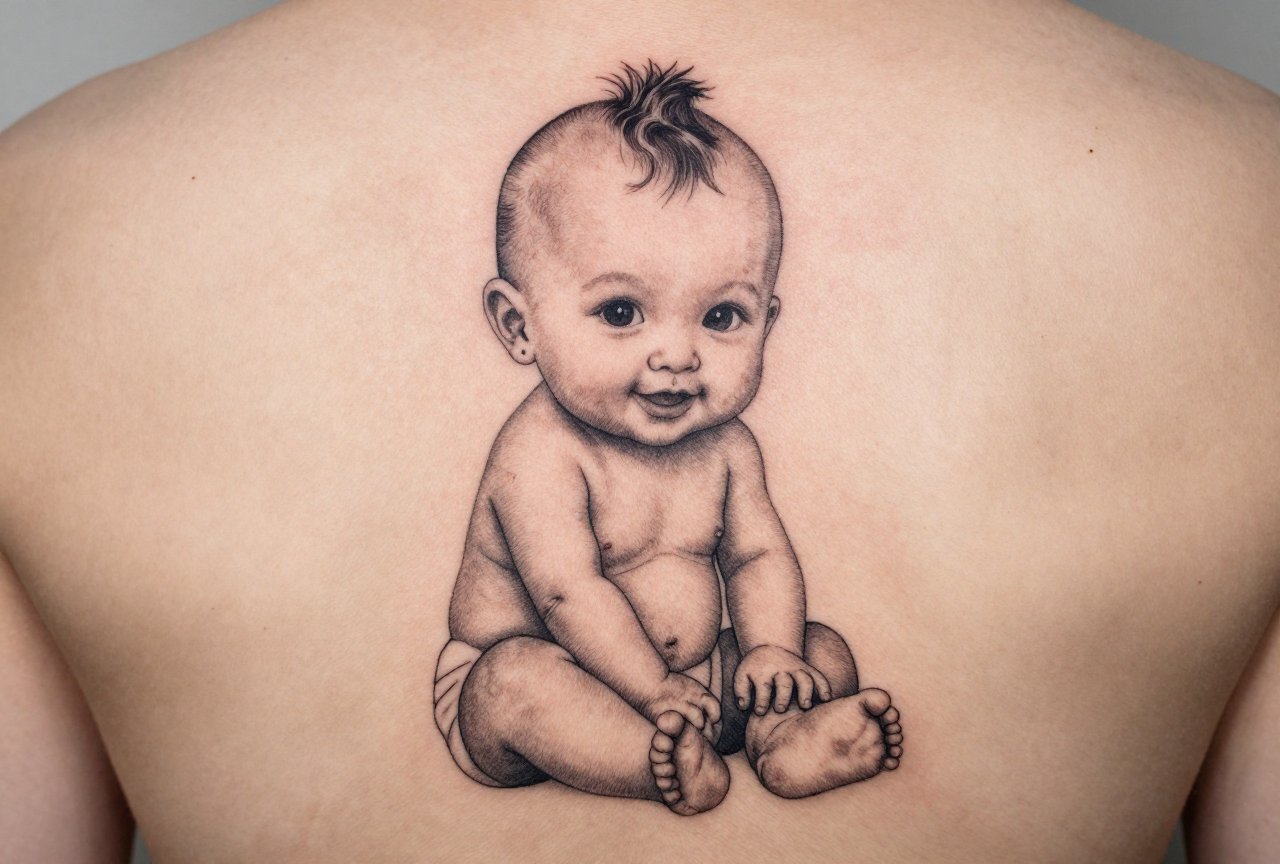
Steve-O’s baby portrait tattoo is one of the more discussed pieces in celebrity ink. The design shows his own face rendered as a grotesque infant, sprawled across his shoulder and upper arm in full color, with a circus banner reading “Yeah Dude” arching beneath it. If you are researching distorted portrait work, self-referential concepts, or comedic tattoos with actual depth, this piece is worth studying closely.
The Circus Freak Aesthetic and Where It Came From
Steve-O (born Stephen Glover) built his public identity around sideshow spectacle long before the baby tattoo existed. Rather than getting a flattering portrait or a symbol that said something tasteful about his values, he reportedly chose to immortalize himself as a grotesque infant, complete with exaggerated proportions pulled from vintage carnival poster art. The connection to American circus tradition runs deliberately through the piece. Sideshow performers have historically leaned into discomfort and spectacle to hold an audience. The baby tattoo does exactly that.
What Jackass Has to Do With It
Steve-O built his career on putting his body through public punishment for entertainment. The baby tattoo works as a permanent extension of that logic, a visual punchline he cannot take back. Most celebrity tattoos mark a relationship, a role, or a milestone. This one marks a philosophy of public existence: the deliberate, ongoing conversion of self into spectacle. The circus typography, the lurid color, the deliberate ugliness of the design all connect the dots from stunt work to skin.
Artistic References Linked to the Style
Artists and tattoo historians have linked the visual style to a few specific traditions: Victorian circus advertising, the underground comix movement of the 1960s and 70s, and the “ugly realism” current that picked up traction in American tattooing during the 1990s. Some observers have noted echoes of John Wayne Gacy’s self-painted clown portraits, though Steve-O’s version replaces menace with pure absurdity. The tattoer who executed the piece worked in a style that prioritized immediate impact over technical polish, which is arguably the right call for this particular subject.
Placement and Technical Execution
The tattoo takes up the full shoulder cap and extends onto the upper bicep, with the banner curving underneath. That placement gives maximum visibility in sleeveless situations, which fits Steve-O’s general habit of performing without much clothing. If you are thinking about a similar placement, a few practical points are worth knowing before you commit.
- Minimum size: The distortion effects and banner lettering need room to read. Under roughly six inches in height, the facial features start to lose definition.
- Color shift over time: The piece uses heavy saturation in flesh tones, yellows, and reds. These will shift significantly over years. Factor in touch-up sessions from the start.
- Skin tone adaptation: The original design uses a pale, almost jaundiced baby skin tone. On darker complexions, the color relationships need careful adjustment by the artist.
- Feature distortion aging: The features are already pushed to caricature. As the ink spreads, that distortion will increase. Depending on the original execution quality, this will either intensify the effect or destroy it.
The “Yeah Dude” lettering is harder to pull off than it looks. Banner-style text on a curved body surface requires tight control of line weight and letter spacing to stay readable. Many artists underestimate how much the illusion of fabric draping complicates the job.
Reading the Symbolism
There are several legitimate interpretations of this tattoo, and they do not cancel each other out. The infant image has been linked to arrested development, a subject Steve-O has discussed openly in the context of addiction recovery and delayed emotional maturation. The circus frame places that arrested state on public display, which is more or less what his entire career has done. “Yeah Dude” started as a vocal tic and became a catchphrase. On the banner, it reads like a personal philosophy reduced to two words.
The Identity Collapse Problem
Most public figures maintain a gap between their performing self and their private one. Steve-O’s tattoo closes that gap permanently. He cannot step outside the character because the character is physically fused with his body. For performers thinking about identity-merging tattoos in a similar vein, this is either the clearest possible commitment or a warning about what happens when the persona outlasts the performance context.
The Defensive Use of Absurdity
I think one of the more underappreciated aspects of this tattoo is how it functions as a preemptive move. By making himself ridiculous on his own terms, Steve-O removes the option for others to do it first. The grotesque baby is armor made from exposure. Anyone who has spent time around stand-up comedy or physical performance recognizes the logic: you tell the joke about yourself before the audience gets the chance. Here, that logic is permanently encoded into skin.
How It Sits Among Other Celebrity Tattoos
Steve-O’s baby does not fit neatly into the standard celebrity tattoo categories. It is not a commemorative portrait of a family member. It is not a spiritual symbol. It belongs to a narrower category of self-referential comedic work, which includes pieces like:
- Johnny Depp’s “Wino Forever” modification of a romantic tribute, turning a mistake into a running joke
- Ed Sheeran’s Heinz ketchup bottle, which uses a brand preference as a statement of identity
- Various regretted pieces that performers have repurposed through self-deprecating commentary
What separates Steve-O’s baby from those is scale and integration. The others are footnotes to a larger public image. His functions as a structural pillar of it, referenced across media appearances, merchandise, and public discussion for over two decades.
The Effect on Tattoo Shop Culture
The piece generated real client interest during the 2000s and early 2010s. Artists in American shops reported a noticeable uptick in requests for distorted portraits, exaggerated self-images, and circus-adjacent aesthetics. The results were mixed. It expanded what clients were willing to consider as subject matter. It also produced a wave of poorly thought-out imitations that lacked the conceptual coherence of the original. Comedic tattooing is not structurally simpler than serious work. The humor has to come from somewhere real, or it just looks like a mistake.
Practical Advice If You Are Drawn to This Style
Artist selection: Not every portrait specialist can handle effective distortion. The skill set overlaps more with caricature and traditional American tattooing than with photorealism. Look specifically for portfolios showing exaggerated proportions, expressive faces, and confident color work. Artists coming from illustration, animation, or street art backgrounds often make the transition more naturally than those trained exclusively in realistic approaches.
Conceptual longevity: Comedic tattoos age differently than neutral or serious ones. A joke that reads well at 25 can become exhausting at 55. The Steve-O baby survives partly because its layers of meaning extend beyond the immediate gag: the career reference, the sideshow tradition, the genuine grotesqueness that holds up as a visual statement independent of punchline. Simpler joke tattoos tend to sour faster.
Visibility and context: Distorted portrait work on the shoulder draws attention and generates conversation. For some professional and social contexts, that is an asset. For others, it creates friction. The shoulder placement allows coverage when needed and deliberate display when wanted, which is worth weighing when choosing your spot.
Color aftercare: Heavy saturation pieces like this need rigorous aftercare from day one. The yellows and pale flesh tones are especially prone to uneven healing and early fading. Plan for more maintenance than you would with black-and-grey or smaller color work.
What This Tattoo Actually Gets Right
Steve-O’s baby portrait works because every element serves a coherent purpose. The distorted proportions, the carnival banner typography, the color palette, the shoulder placement: none of these are arbitrary. Together they document a specific approach to public identity that he has maintained across decades. The piece functions as comedy, self-portrait, career record, and genuine aesthetic choice simultaneously.
I find it genuinely rare to see a tattoo where the concept, execution, and placement all pull in exactly the same direction. This one does. The lesson it offers to anyone considering similar work is not to copy the specific design but to understand the discipline behind it: know what personal narrative you are encoding, select an artist whose technical vocabulary matches what that narrative actually needs, and accept that the most lasting tattoos often require some willingness to be seen as something other than polished or safe.
The baby was never meant to be beautiful. Its staying power comes from that refusal. Steve-O’s circus freak ink will be there long after the television appearances have wound down and the stunts are no longer physically possible. What it preserves is not a moment in a career but a fundamental position on what you are willing to be in public. That kind of commitment, more than any specific design choice, is what separates tattoos you carry for decades from ones you start covering up after five years.
Frequently Asked Questions
Who tattooed Steve-O’s baby portrait?
Steve-O has referenced the artist in various interviews over the years, though the tattoer’s name tends to receive less coverage than the image itself. The work was executed in a traditional American style with heavy color saturation and confident line work, not by a photorealism specialist.
Has Steve-O said anything about regretting this tattoo?
In interviews, Steve-O has generally treated the baby portrait as consistent with his overall approach to life and public performance rather than defending or regretting it specifically. He has spoken with more ambivalence about other pieces in his collection, which suggests this one sits comfortably within his personal narrative.
What should I know before getting a distorted comedic portrait tattoo?
Make sure the concept has multiple layers of meaning beyond the immediate joke. Find an artist with experience in caricature or exaggerated proportions, not purely realistic portraiture. Budget for more touch-up maintenance if the piece uses heavy color saturation. And think about how the humor will read across decades, not just months.
How does the Yeah Dude banner lettering hold up over time?
Banner lettering on a curved surface requires precise spacing and consistent line weight to stay readable as the ink matures. Without periodic maintenance, the smaller letter elements in similar pieces typically start blurring within five to ten years. The original has reportedly been touched up to keep it sharp.