
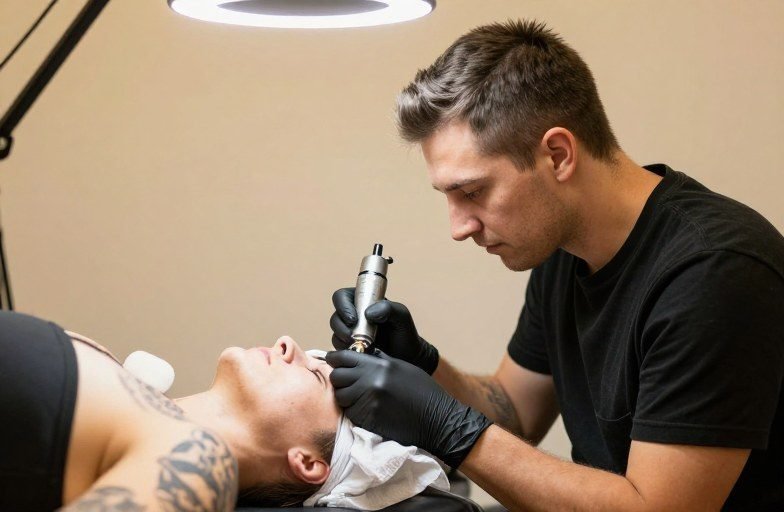
Make Tokyo Great Again tattoos borrow the slogan format from American political rhetoric and redirect it toward Tokyo, Japan’s capital. Most people who get this design aren’t making a literal political statement, they’re expressing affection for the city, nostalgia for a version of Tokyo they experienced or imagined, or satirizing how political slogans get exported globally. The meaning sits somewhere between earnest city pride and ironic commentary on how American political language gets repurposed everywhere.
Symbolism & History
From Campaign Slogan to Tattoo Trope
The phrase structure “Make [Place] Great Again” has detached from its original political context and become a recognizable template worldwide. In Tokyo specifically, the tattoo often surfaces among expatriates who lived there, Japanese Americans reconnecting with heritage, or travelers who found something in the city that changed them. The phrase can signal a romanticized past, bubble-era Tokyo, pre-pandemic nightlife, or a personal golden age spent in Shibuya or Shinjuku.
Some trace the tattoo’s emergence to the mid-2010s, when the original political slogan saturated global media and meme culture followed. Tattoo artists in Tokyo itself began seeing requests from foreign clients, then Japanese clients, each bringing different intent. The design’s meaning depends heavily on who’s wearing it and where they’re standing when someone asks.
Layered Irony vs. Straightforward Pride
There’s a genuine tension in this tattoo that makes it interesting. The irony can be:
- Political: mocking how American political theater exports itself
- Cultural: poking at nostalgia for a “greater” Tokyo that maybe never existed uniformly
- Personal: half-joking about wanting to return to a specific time in one’s own life
- Aesthetic: using the bold, blocky typography because it reads well as tattoo lettering
Not everyone who gets this design intends multiple layers. Some just love Tokyo and want a recognizable, visually punchy tribute. The ambiguity is part of what makes the tattoo socially interesting, it forces a question, starts a conversation.
Common Variations & Styles
Typography-First Designs
The most common execution mimics the original campaign hat: bold sans-serif caps, red text on white or skin-tone negative space, sometimes with a curved baseline echoing the hat’s embroidery. Tattooers often modify this, switching to kanji for “Tokyo” (東京), adding hiragana, or rendering the whole phrase in Japanese phonetics (メイクトウキョーグレートアゲイン). The typography itself carries weight: clean vector-style lines age better than overly detailed serif fonts, which tend to blur and fill in over years.
Integrated Imagery
More elaborate versions incorporate Tokyo-specific visuals:
- The Tokyo Tower or Skytree silhouetted behind or within the text
- Cherry blossoms framing the lettering, softening the political edge
- Neon-sign aesthetics: electric color, glow effects, kanji mixed with English
- Maneki-neko, koi, or other Japanese iconography subverting or embracing the slogan’s earnestness
- Distressed or weathered textures suggesting vintage signage or protest placards
Color choices matter practically. Bright reds and strong blacks hold up; pastels and neons fade faster and require more frequent touch-ups. If you’re considering the neon-sign look, know that those glowing effects rely on white ink highlights that yellow or disappear on most skin tones within a few years.
Best Placements
Lettering tattoos need space to breathe. The Make Tokyo Great Again phrase is long, four words minimum, often five with “Tokyo” in kanji adding visual density.
- Upper arm/shoulder: Classic for slogan tattoos. The curved surface follows the natural flow of the phrase. Outer bicep gets seen; inner bicep stays more private. Either works, but outer placement means you’re explaining it regularly.
- Forearm: High visibility, which is either the point or a problem. Good for bold, readable designs. Bad if your workplace isn’t tattoo-friendly or if you tire of explaining the irony.
- Chest: Wide canvas allows larger lettering and integrated imagery. The sternum area hurts more, but the flat plane keeps text from distorting.
- Thigh: Underrated for text. Large, relatively flat, easy to show or hide. Good for designs with accompanying imagery that needs spread.
- Calf: Similar advantages to thigh, more commonly visible in shorts weather. The muscle curve can warp straight lines if the artist doesn’t account for movement.
Avoid wrapping continuous text around cylindrical areas like wrists or ankles unless the design is specifically curved. Straight lines forced around small diameters read awkwardly and age poorly as skin shifts.
Who Chooses This Tattoo / Personal Meanings
Demographics and Intent
The typical wearer falls into a few overlapping groups: former English teachers who spent formative years in Japan, Japanese Americans exploring heritage, anime and manga enthusiasts who’ve visited or dream of visiting, and people who simply found Tokyo powerful during travel. The tattoo functions as shorthand for complex feelings about place, time, and identity that would take too long to explain unprompted.
When the Meaning Shifts
Context changes interpretation. On a white American in Tokyo, the tattoo might read as presumptuous or genuinely affectionate depending on delivery. On a Japanese person in Los Angeles, it might signal homesickness or cultural commentary. On someone with no Tokyo connection, it risks reading as pure meme consumption, empty trend-following. The design works best when there’s some authentic tether to the city, even if that tether is complicated or ironic.
Some wearers report the tattoo becoming more meaningful over time as Tokyo itself changes, neighborhoods gentrify, favorite spots close, the city they knew becomes inaccessible. The tattoo then shifts from joke or tribute to memorial, which is a common trajectory for place-based tattoos generally.
Similar Symbols
If the full phrase feels too politically loaded or verbally clunky, related designs capture similar territory:
- 東京 (Tokyo) alone: Clean, flexible, no borrowed political baggage. Works in endless typographic styles.
- Specific ward names: Shibuya, Shinjuku, Harajuku, more specific, more personal. Less recognizable to outsiders, which may be preferable.
- Coordinates: Tokyo’s latitude/longitude in minimal numerals. Subtle, requires explanation, avoids language politics entirely.
- Maneki-neko with city elements: Traditional imagery plus modern location reference.
- Other “Make [X] Great Again” parodies: Exist for countless cities, often with local tattoo scenes developing their own variations. The format travels.
These alternatives share the core impulse, marking connection to a place, without the specific rhetorical weight of the political slogan format.
Final Thoughts
The Make Tokyo Great Again tattoo sits at an interesting intersection: political meme, travel souvenir, identity marker, and aesthetic choice all at once. Its meaning isn’t fixed, it depends on the wearer’s history with Tokyo, their intent going in, and how the world around the tattoo changes after the ink settles. Like many text-based designs, it risks dating itself as political language shifts. The bold, graphic quality of good lettering work gives it staying power regardless of specific interpretation.
If you’re considering this design, the most important decision isn’t the exact wording but the honest assessment of why you want it. Irony fades faster than ink. The tattoos that hold up are the ones with some genuine root, even if that root is complicated, even if you’d rather explain it as a joke. A good tattoo artist will help you find the visual language that matches your actual intent, not the intent you think sounds cooler.
Frequently Asked Questions
Is this tattoo making a political statement?
Usually not directly. Most people use the slogan format ironically or affectionately toward Tokyo itself, not to endorse the original political context. The meaning depends heavily on the individual wearer and their personal history with the city.
Will this tattoo age badly as political culture changes?
Any text-based tattoo tied to current language risks feeling dated, but strong lettering design with good spacing and bold lines ages better than the specific reference. The visual impact often outlasts the cultural moment.
Should I include kanji in the design if I don’t read Japanese?
Be cautious. Kanji carry specific meanings and connotations; incorrect characters or awkward combinations are common mistakes. Work with a tattooer who can verify Japanese text, or stick to English lettering to avoid unintentional errors.
How visible should I make this tattoo given the political slogan reference?
Consider your daily environment. Highly visible placements like forearms invite regular questions and assumptions. If you’d rather control when and how you explain the design, upper arm, thigh, or chest placements offer more privacy.
Related Tattoo Meanings
- Meliodas Tattoo Meaning: Demon Mark, Dragon s Sin Loyalty
- Mike Tyson Face Tattoo Meaning: Tribal Mark, Modern Icon
- Mjolnir Tattoo Meaning: Thor s Hammer Symbolism Style Guide
- Explore more









