
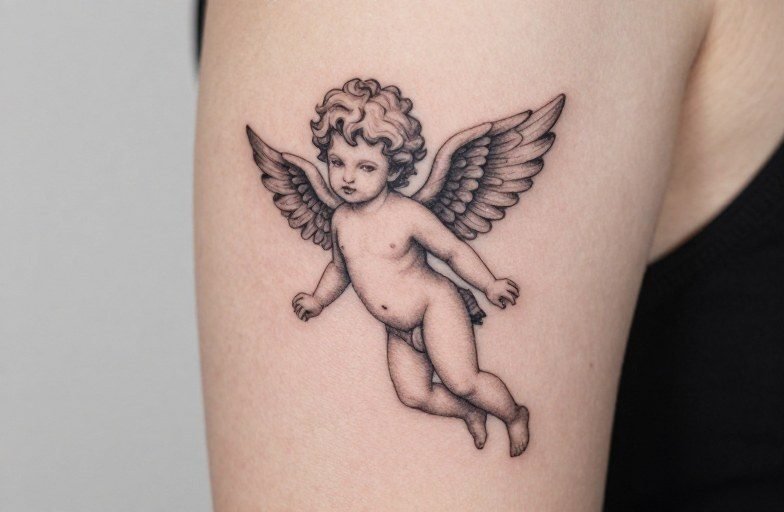
The cupid tattoo carries layered significance rooted in Roman mythology but reimagined through centuries of art and pop culture. this figure represents desire, attraction, and the unpredictable nature of love, often depicted as a winged child or youth armed with bow and arrows. Modern wearers choose cupid for reasons ranging from romantic commemoration to ironic detachment, making it one of the more emotionally versatile designs in tattooing.
Symbolism & History
Understanding what cupid communicates requires looking past the Valentine’s Day greeting card version. The Roman deity Cupid, derived from the Greek Eros, was no harmless cherub. Classical sources often linked him to chaotic, even destructive passion, forces beyond human control. This darker undertone gives the tattoo surprising depth for those who want to acknowledge love’s capacity to wound as well as connect.
Classical Roots vs. Modern Interpretation
Renaissance and Baroque artists frequently depicted cupid as mischievous, sometimes cruel, playing tricks on gods and mortals alike. The “love is blind” motif, cupid with eyes covered, emerged from this tradition, suggesting desire operates beyond reason or sight. Some trace the chubby, infantile version to Victorian sentimentalism, which softened the figure considerably. Today’s tattoo imagery draws from both streams: you might see a detailed Renaissance-style cupid with realistic anatomy and dramatic shadow, or a simplified neo-traditional version with bold outlines and limited color.
Arrow Symbolism
The arrows deserve separate consideration. In myth, cupid carried two types: gold-tipped arrows causing uncontrollable desire, and lead-tipped ones inducing aversion. Tattoo compositions sometimes include both, creating visual tension. A single arrow through a heart remains the most recognizable configuration, though standalone arrow elements allow for smaller, more discreet placement. The arrow’s direction matters too, pointing upward suggests aspiration or pursuit; downward, a love already struck or perhaps love’s fall.
Common Variations & Styles
Cupid imagery adapts across tattoo traditions with distinct results. Your chosen style fundamentally changes what the tattoo communicates.
- Traditional/Americana: Bold black outlines, limited red and flesh-tone palette, simplified features. Reads as nostalgic, slightly ironic, or working-class romantic. Holds up well over decades due to heavy line weight.
- Black and Grey Realism: Photographic detail, dramatic lighting, often referencing classical sculpture. Conveys seriousness, art-historical awareness, or personal significance treated with weight.
- Fine Line/Illustrative: Delicate, sketch-like quality, sometimes incorporating botanical or ornamental elements. Tends toward feminine-coded aesthetics, though the distinction matters less than it once did. Requires more frequent touch-ups as thin lines spread and fade faster.
- Neo-Traditional: Expanded color palette, stylized proportions, decorative backgrounds. Balances readability with artistic interpretation. The cupid’s expression often becomes exaggerated, mischievous, sly, or melancholic.
- Trash Polka/Contemporary: Splattered ink, geometric fragments, photographic elements combined with abstraction. Positions cupid within modern visual chaos, often commenting on love’s disposability or intensity in digital culture.
Compositional choices matter significantly. Cupid alone emphasizes the figure’s agency, the active shooter of arrows. Cupid with a partner (often Psyche) shifts focus to relationship and mutual transformation. Broken arrows, torn wings, or weeping cupid subvert the romantic expectation entirely, signaling loss, cynicism, or survived heartbreak.
Best Placements
Where cupid sits on the body affects both visibility and symbolic reading. The figure’s vertical orientation, with wings above, feet below, naturally suits certain locations.
High-Visibility Placements
Forearms and calves accommodate the full figure with bow drawn, allowing dynamic action poses. These areas show easily, making the tattoo a deliberate statement about the wearer’s relationship to love’s themes. The outer upper arm (bicep/deltoid) offers similar space with slightly more concealment option. Chest pieces center the heart literally beneath the image, an obvious but effective correlation; sternum and sternum-adjacent placements work particularly for cupid with drawn bow, the arrow pointing toward the heart.
Intimate and Concealed Options
Ribs and side torso follow the body’s natural curve, letting wings wrap slightly around the form. These placements hurt more due to bone proximity and thinner skin, but they’re genuinely private, shown only by choice. Thighs offer substantial canvas with easier concealment than arms. Ankles and wrists suit simplified arrow motifs or tiny cupid silhouettes rather than detailed renderings; at small scale, the figure becomes emblem rather than narrative.
Consider how the tattoo ages. Wings with extensive feather detail blur over time as ink spreads slightly in skin. Bold-line traditional versions maintain readability longer. Areas with frequent sun exposure (forearms, hands) fade faster regardless of style.
Who Chooses This Tattoo / Personal Meanings
People select cupid for genuinely diverse reasons, and the tattoo functions differently across contexts. Romantic partners sometimes get matching or complementary cupid designs, one with bow, one with arrow, or cupid and Psyche figures. The risk here is obvious: relationship tattoos carry inherent uncertainty, and cupid’s association with fickle, unpredictable love adds an almost ironic layer to this choice.
Parents occasionally choose cherubic imagery connecting to children, though “cupid” specifically implies desire rather than parental love; the distinction matters to some, blurs for others. Queer wearers have reclaimed cupid from heteronormative Valentine’s iconography, using the figure to assert desire outside traditional frameworks. The angelic/putto form carries religious residue too, some trace it to Christian cherubim, which creates productive tension for secular or anti-religious wearers.
Perhaps most interesting is the ironic or melancholic cupid: figures with cigarette, empty bottle, bandaged wing, or tear. These speak to love’s disappointments without surrendering to pure cynicism. The tattoo becomes a way of acknowledging vulnerability without performing it. This registers differently than a broken heart motif, more literate, less immediately legible to casual viewers.
Similar Symbols
Cupid exists within a broader visual vocabulary of love and desire tattoos. Understanding adjacent symbols helps clarify whether cupid specifically serves your intention.
- Hearts (anatomical or stylized): More direct, less narrative. The stylized heart requires no explanation; the anatomical heart suggests vulnerability, literalness, or medical connection. Neither carries cupid’s mythological weight or mischief.
- Eros (Greek counterpart): Often depicted as older youth rather than infant, sometimes with butterfly wings. Appeals to those wanting classical specificity over Roman/pop-cultural familiarity. Less immediately recognizable to general viewers.
- Psyche: Cupid’s mortal lover, whose story involves forbidden sight, betrayal, and eventual apotheosis. A less common tattoo choice, often paired with cupid rather than standalone. Emphasizes the beloved rather than the lover.
- Angels/putti generally: Religious or funerary contexts predominate. Without bow and arrows, the figure reads differently, guardian, messenger, soul. Cupid’s weapons distinguish him functionally.
- Arrow motifs alone: Stripped of the figure, arrows become more ambiguous, direction, movement, Native American reference depending on styling. Cupid’s arrow specifically means love struck, not merely journey or protection.
Final Thoughts
A cupid tattoo succeeds when the wearer understands which cupid they’re invoking, the classical troublemaker, the sentimental Victorian infant, the pop-culture Valentine’s mascot, or some personal hybrid. The figure’s long visual history means viewers will bring their own associations; you can’t fully control reception, but you can shape it through style, composition, and placement choices. Like love itself, the tattoo works best when approached with clear eyes about its capacity to delight, wound, and transform.
Frequently Asked Questions
Does a cupid tattoo always mean I’m in a relationship?
Not at all. Many people choose cupid to acknowledge love’s power generally, past relationships, or even their own independence from romantic pursuit. The arrow’s direction and the figure’s expression can shift meaning significantly.
Will a detailed realistic cupid look bad in ten years?
Fine details in wings and facial features do soften over time as ink naturally spreads in skin. Bold outlines and strong contrast between light and dark areas hold definition longer. Expect to need touch-ups eventually, especially on sun-exposed areas.
What’s the difference between cupid and a cherub tattoo?
Cherubim are biblical angelic beings with four faces and multiple wings, radically different from the chubby infant form. The putto, a Renaissance artistic convention, merged with cupid imagery over centuries. Most tattoo artists understand “cherub” to mean the winged infant form, but purists distinguish the classical deity from religious iconography.
Can cupid work in a sleeve with unrelated themes?
Yes, though it requires thoughtful integration. Cupid pairs naturally with roses, doves, scrollwork, and classical architectural elements. In more modern or aggressive sleeves, a traditional-style cupid can create productive contrast, something artists call “sweet against street.” Discuss transitional elements with your artist.
Related Tattoo Meanings
- Kiss Tattoo Meaning: Romance, Rebellion, and Rock History
- Baby Angel Tattoo Meaning: Grief, Innocence Protection
- Dear Hongrang Tattoo Meaning: Symbolism, Styles Placement Guide
- Explore more









