Japanese tattooing, commonly called irezumi, is one of the most technically demanding and visually striking traditions in the medium. Great Japanese tattoos aren’t merely collections of popular imagery, dragons, koi, cherry blossoms, executed with a needle. They’re architectural compositions built to wrap around the body, to flow with muscle and bone, to age with structural integrity across decades. The difference between a competent Japanese-style piece and a truly great one comes down to understanding the rules of the tradition: how backgrounds create movement, how negative space functions as actively as ink, and how the relationship between foreground subject and surrounding elements determines whether a tattoo looks like a sticker or a living surface.
Origins & History
From Punishment to Prestige
Japanese tattooing carries a complex history often linked to the Edo period’s urban culture, though some trace elements back to earlier centuries. What began as a form of criminal marking gradually transformed into an elaborate decorative art among working-class and entertainment districts. By the 18th and 19th centuries, full-body suits, horimono, had become associated with specific subcultures, including firefighters and, later, organized crime. The tradition survived periods of official suppression, with tattooing pushed underground during the Meiji era when Japan sought to present a modernized face to Western powers. This history matters because it shaped the visual language: the bold outlines necessary for hand-poking, the limited color palettes derived from available pigments, and the compositional logic of large-scale work meant to be revealed or concealed.
Tebori and Machine Work
Traditional tebori, hand-poking with a bundle of needles attached to a bamboo or metal handle, remains practiced by a small number of specialists. The technique produces a softer, more diffuse quality in shading and color saturation compared to machine work. Most contemporary Japanese tattoos, including excellent ones, are executed with coil or rotary machines. The distinction between “authentic” and derivative has less to do with tool choice than with understanding compositional principles. A machine artist who grasps how wind bars, clouds, and water waves structure a back piece produces better Japanese work than a tebori practitioner copying forms without comprehending their spatial function.
Key Characteristics & Motifs
Great Japanese tattoos operate through a recognizable but flexible visual system. The motifs carry specific associations, but their power depends on execution and context within the larger composition.
- Dragons (ryu): Typically rendered with three claws, winding through clouds or water. The body should flow dynamically, never static. Scales are often simplified patterns rather than realistic texture.
- Koi and carp: Associated with perseverance, commonly shown swimming upstream or transforming into dragons. The body twist, seeing both sides of the fish, demonstrates technical skill.
- Tigers (tora): Stripes function as design elements that shape the animal’s form. Fur texture varies by region and artist preference, from fine stippling to bold graphic treatment.
- Phoenix (hō-ō): Elaborate tail feathers create opportunities for color gradation and movement. Often paired with paulownia motifs.
- Oni and guardian figures: Demon faces, Fudō Myō-ō, and other protective beings require expressive linework in the face; flat rendering reads as cartoonish.
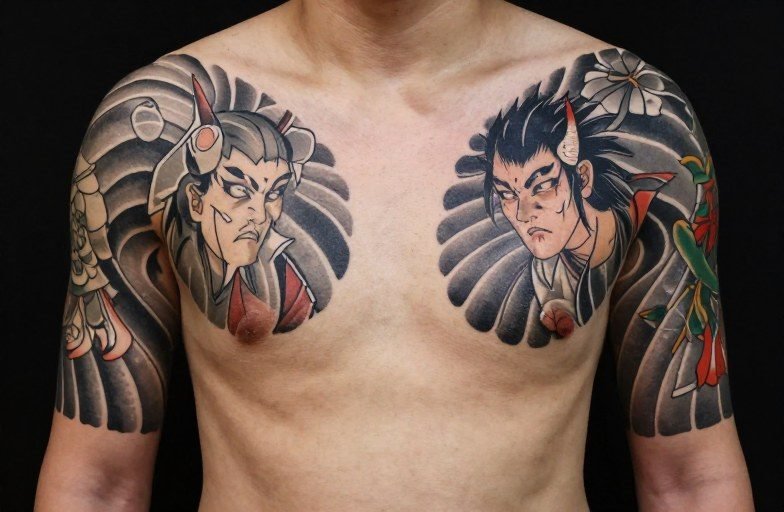
- Background elements: Wind bars, clouds, waves, and cherry blossoms aren’t filler, they’re structural. They direct the eye, fill awkward spaces between major motifs, and create the sense of atmosphere that separates Japanese work from Western-style collage.
The background determines success. A common failure in mediocre Japanese tattoos is treating the subject as isolated against empty skin. In strong work, the background wraps and connects, creating continuous flow even when the body moves.
Color vs Black and Grey
Traditional Japanese color work, often called “old school” or simply “traditional” in Western shops, relies on specific relationships: saturated reds against deep greens, bold yellows, and black. The palette is limited compared to neo-traditional or new school styles, which forces discipline. Colors are flat and graphic, with minimal blending. Shading tends toward hard edges rather than smooth gradients.
Black and grey Japanese work has gained significant traction, particularly for clients who prefer subdued visibility or work in conservative professional environments. The challenge here is maintaining readability without color’s contrast assistance. Strong black and grey Japanese requires exceptional line weight variation, thick outlines for major forms, delicate lines for detail, and careful use of grey wash to create depth without the color cues that traditionally separate foreground from background. Some artists working exclusively in black and grey develop distinctive approaches to texture that reference sumi-e ink painting, though this is a modern interpretation rather than historical continuity.
Healing considerations differ slightly. Saturated color areas, particularly reds and yellows, can scab more heavily and require stricter aftercare to prevent patchy healing. Black and grey generally settles more predictably, though heavy black backgrounds demand careful moisturizing to avoid cracking during the healing phase.
Best Placements
Japanese tattooing was developed for the body as a whole, not as isolated pieces. This creates tension with contemporary preferences for discrete, concealable work.
- Full back (shōbu-gawa): The classic canvas. A single large subject, dragon, phoenix, Fudō, surrounded by background elements. The spine becomes a central axis; the shoulder blades provide broad planes for major forms.
- Sleeves (kote): Proper Japanese sleeves extend onto the chest or back, often connecting to a larger composition. A sleeve that stops at the shoulder line looks unfinished in traditional terms, though this is increasingly accepted as a practical compromise.
- Legs: Thighs offer excellent large-scale surfaces; calves work well for vertical subjects like ascending koi or serpentine dragons. The knee is traditionally avoided or covered with a specific protective motif.
- Front torso: The stomach and ribs present technical challenges due to stretching and movement, but allow for powerful symmetrical compositions.
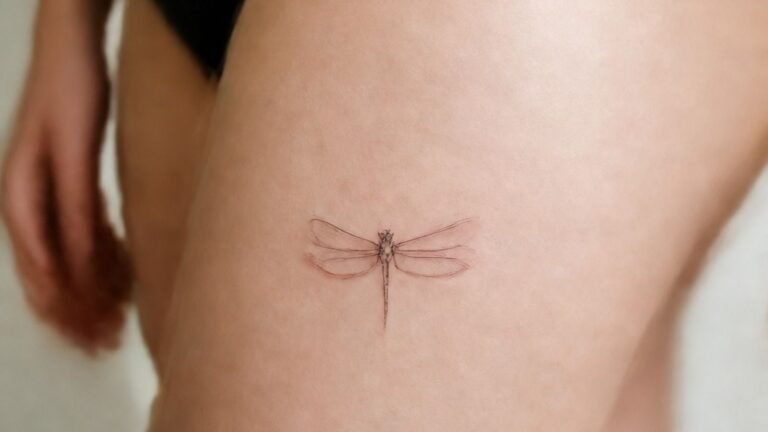
- Small placements: Single-motif Japanese work on forearms, ankles, or behind ears exists but sacrifices the tradition’s compositional strength. These read as borrowed imagery rather than integrated design.
Flow matters more than in most styles. A dragon’s head positioned at the shoulder should direct the eye down the arm or across the back, not confront the viewer frontally without spatial context.
Who It Suits
Japanese tattooing demands commitment in time, money, and skin real estate. A substantial back piece requires dozens of sessions across months or years. The aesthetic is bold and immediately recognizable, not easily hidden or explained as generic decoration.
Skin type affects outcomes. The heavy linework and saturated color fields that define the style can blur over time on skin that ages poorly or suffers significant sun damage. Lighter skin tones generally hold red and yellow more vibrantly; darker skin requires artists skilled in adapting contrast and potentially shifting color choices toward what will remain visible. The tradition’s graphic boldness actually serves darker skin well when approached thoughtfully, as the strong outlines maintain readability even where color subtleties might be lost.
Body shape influences composition. Japanese tattooing developed on specific physiques; adapting the tradition to very different builds, extremely muscular, very thin, or with significant weight fluctuation, requires an artist who understands how the background patterns stretch and compress, not just how to scale a dragon template.
Modern Variations
Contemporary Japanese tattooing includes several identifiable branches, each with different relationships to tradition.
Strict traditionalists maintain close adherence to Edo-period and early 20th-century reference material, often working primarily in tebori or machine techniques that closely mimic tebori’s soft saturation. Motif choices follow established patterns; innovation occurs in subtle technical refinement rather than conceptual departure.
Japanese-informed contemporary work borrows the compositional logic, background integration, bold outlines, specific motifs, while introducing personal imagery, unconventional color, or mixing with other stylistic elements. This risks dilution when executed without deep understanding, but produces vital new work when the artist genuinely comprehends the underlying structure.
Neo-Japanese or illustrative Japanese pushes further, maintaining recognizable motifs while rendering them with techniques from other traditions: realistic shading, unconventional perspective, or mixed media effects. The best of this work respects the original spatial relationships even while transforming surface appearance.
Global travel has complicated these categories. Artists trained in Japan, often through lengthy apprenticeship, may work anywhere; Western artists who’ve studied extensively in Japan bring specific technical knowledge back to their home shops. The question isn’t geography but whether the artist has internalized why Japanese tattoos look the way they do, not merely what they look like.
Choosing an Artist
Evaluating a prospective artist for Japanese work requires looking past flash sheets and Instagram highlights.
- Request to see healed work, not just fresh photos. The crisp lines and saturated color of a fresh tattoo settle substantially; an artist’s understanding of how ink ages in skin separates competent from excellent work.
- Examine background elements specifically. Many artists can render a decent dragon or koi from reference; far fewer construct convincing wind, water, and cloud patterns that unify a composition.
- Ask about their compositional process. Do they design for your specific body, or adapt existing templates? Both approaches work, but the answer reveals their working method.
- Look for line consistency in curves. Japanese tattooing relies heavily on confident, unwavering curved lines, serpentine dragon bodies, wave crests, wind bars. Hesitation or wobble destroys the graphic authority.
- Consider their willingness to decline. An artist who refuses to execute a small, isolated Japanese motif because it won’t work compositionally is showing integrity, not inflexibility.
Price correlates with experience in this specialty more than in general tattooing. The technical demands and time investment mean established Japanese specialists command significant rates. This isn’t markup for exoticism; it reflects the years required to develop competency in a tradition with complex formal rules.
Final Thoughts
Great Japanese tattoos reward patience, both in the years of an artist’s development and in the months or years a collector commits to a large piece. The tradition offers something rare in contemporary tattooing: a fully developed visual system with internal coherence, where every element serves compositional function rather than mere decoration. That system can accommodate individual expression without collapsing into generic eclecticism, but only when the people making and wearing the work understand what holds it together. The best Japanese tattooing doesn’t look backward nostalgically; it applies hard-won technical knowledge to living bodies in the present, with results that will still read clearly decades from now.
Frequently Asked Questions
How long does a full Japanese back piece typically take to complete?
A substantial back piece usually requires 40 to 80 hours across multiple sessions, often spanning one to three years depending on session frequency, complexity, and how quickly your skin accepts ink. Rushing the process compromises healing and final quality.
Can Japanese tattoos be easily covered up if I need to hide them for work?
Full traditional Japanese work is inherently difficult to conceal due to its scale and common placement on arms, back, and legs. Partial coverage with clothing is possible, but the tradition’s visual impact comes from visibility, consider this commitment carefully before beginning.
Why do some Japanese tattoos look blurry or faded after a few years while others stay crisp?
Longevity depends on initial line weight, ink saturation, aftercare during healing, and ongoing sun protection. Thin lines and delicate shading blur faster; the bold outlines and flat color fields of traditional Japanese work actually age well when executed with proper depth and protected from UV exposure.
Is it disrespectful to get Japanese tattoo motifs if I’m not Japanese?
The question of cultural appropriation in Japanese tattooing is debated within the community. Most contemporary Japanese artists welcome sincere international clients who approach the tradition with respect and commitment to quality. Avoiding specific religious imagery you’re not prepared to understand, and choosing an artist who studies the tradition seriously, demonstrates that respect more than ethnicity does.
Related Style Guides
- Avatar Tattoo Designs: Ink Worthy of Pandora
- Awesome Tattoo Ideas for Women
- Bob Marley Tattoo Ideas for True Fans
- Explore more