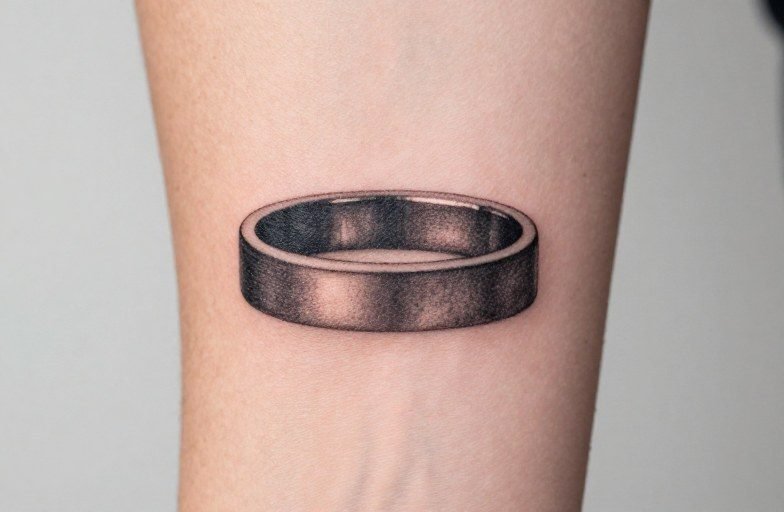
A solid band tattoo is a continuous, unbroken ring of ink, usually a thick line or filled stripe that wraps around a finger, wrist, arm, or leg. the meaning centers on permanence, commitment, and the unbroken passage of time. Unlike imagery-heavy tattoos, the solid band strips symbolism down to its essential geometry: a circle with no beginning and no end.
Personal & Modern Meanings
People choose solid bands for intensely personal reasons that rarely require explanation. The design’s simplicity becomes its strength, you’re not projecting a narrative for others to read.
Commitment & Partnership
Finger bands have emerged as alternatives or additions to wedding rings. The appeal is practical and symbolic: metal rings slip off, get lost, or interfere with work. Ink doesn’t. Couples often match placement, left ring finger, traditionally, but increasingly choose different locations that feel right individually. The commitment reads as deliberate because removal is costly and painful. That friction is part of the point.
Milestones & Memorial
A single band can mark a year sober, a survived crisis, a completed chapter. Multiple stacked bands sometimes track time, one ring per significant event. The visual language is private; only the wearer knows what each band counts. This makes the tattoo simultaneously conspicuous and hidden, which suits people who process experience internally rather than performatively.
Design Tips & Pairings
The solid band demands precision. A wobbly line or uneven fill ruins the effect instantly because there’s no detail to distract the eye.
Line Weight & Fill
- Single needle or fine line: Elegant, subtle, but fades faster and blurs over time. Best for fingers where bold ink can look heavy.
- Thick filled band (8mm+): Reads from distance, holds contrast decades longer. Requires confident placement, you’re committing serious skin real estate.
- Double or triple parallel bands: Creates rhythm and negative space. More visually interesting than one solid stripe without sacrificing restraint.
Pairing bands with other elements requires care. A band above or below a larger piece can ground it, like a visual period at the end of a sentence. Bands framing script or small imagery work better than bands intersecting complex designs, the geometry fights the organic shapes.
Healing Reality for Bands
Wrapped bands heal differently than flat areas. The ink sits on skin that flexes constantly, wrist rotation, finger bending, ankle movement. This means more touch-ups, especially for finger bands where circulation is poorer and abrasion is constant. Expect some fall-out. Plan for a session 6-8 weeks after initial healing to tighten lines that didn’t hold.
Mythology & Folklore
The unbroken circle appears across cultures, though specific solid band tattoo traditions are harder to pin down definitively.
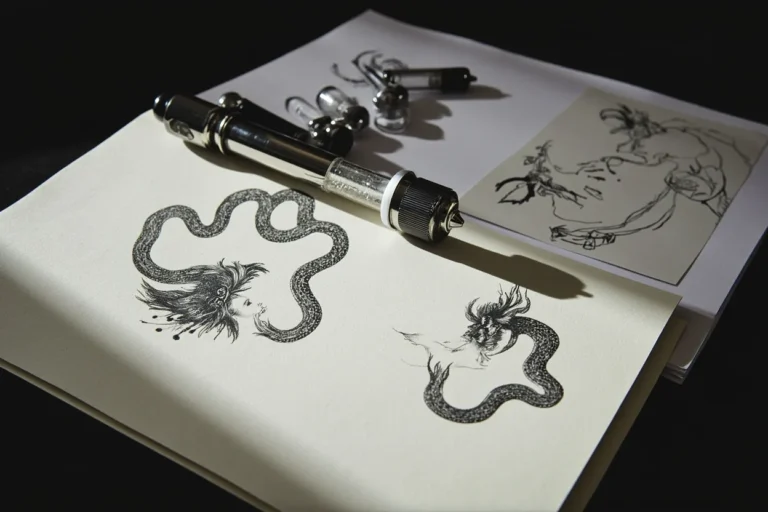
Ouroboros imagery, the serpent eating its tail, often linked to cyclical renewal and eternal return, shares the band’s circular logic. Some trace Celtic knotwork and ring patterns to similar concepts of interconnection and infinite loops, though these were decorative as much as symbolic. In maritime contexts, a rope bracelet tattoo supposedly marked a sailor who had crossed the equator or served a set term, but documentation is spotty and much of this lore was retroactively romanticized.
What persists across these fragments is the circle’s universal pull. Human eyes seek completion; the band satisfies that neurologically before any cultural reading kicks in. The tattoo inherits this ancient visual weight whether the wearer studies mythology or not.
Color vs Black and Grey
Color transforms the band’s register completely. Black reads as serious, formal, timeless. Color, especially red, blue, or green, introduces specificity and energy.
Black & Grey
Most solid bands stay black. The pigment (usually carbon-based) ages predictably: softening to charcoal, then blue-grey as it settles deeper in the dermis. This 10-20 year shift is normal, not failure. Greywash bands (shaded rather than solid) create depth but lose the stark graphic punch. They’re less common for this reason.
Color Applications
- Red bands: Often associated with vitality, warning, or cultural heritage (Henna-inspired traditions, though actual henna is temporary and plant-based).
- White ink bands: Subtle, raised-scar appearance, but frequently disappear or yellow unevenly. Most artists discourage white-only bands.
- UV-reactive bands: Nearly invisible in daylight, glow under blacklight. The ink is less stable, harder to apply evenly, and some people react badly. A novelty, not a reliable choice.
Color bands need larger scale to read well. A 3mm red finger band becomes a pink smudge in five years. If you want color, go thicker or accept maintenance.
Who Chooses This Tattoo
There’s no single demographic. The solid band attracts people who value restraint over accumulation, designers, engineers, musicians, athletes, parents, people in professions where visible tattoos are complicated. The band can be hidden or displayed easily by sleeve position or jewelry.
What unites most recipients is a preference for symbolism that doesn’t perform. The band doesn’t ask “ask me about my tattoo.” It sits there, complete, requiring no conversation. This appeals to people who find narrative tattoos exhausting or who’ve outgrown the phase of explaining themselves.
There’s also a practical cohort: people who want a tattoo but can’t commit to imagery. The band is the gateway, low risk, high control, easy to build around later if desired.
Best Placements
Placement determines how the band reads socially and how it ages physically.
Finger & Thumb
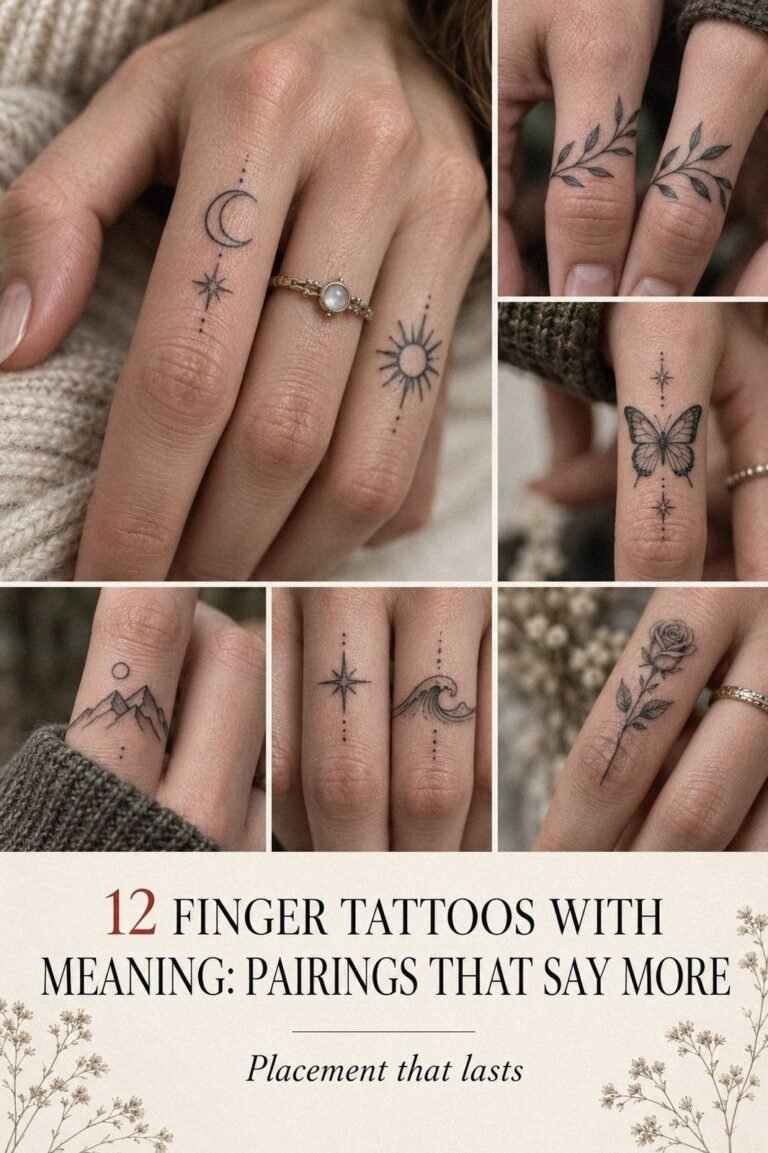
Most visible, most symbolic (ring finger connection), most problematic. Fingers shed ink rapidly. The sides of fingers rarely hold solid fill. Many artists won’t do finger bands or will warn aggressively. If you proceed, expect a faded look within 2-5 years and budget for regular refresh sessions. The thumb base rotates constantly, worse healing than the ring finger.
Wrist & Forearm
Classic placement. The wrist band sits at a natural transition point, hand to arm, action to body. Forearm bands (2-4 inches above wrist) allow watch or bracelet coverage. Both locations heal well, hold ink reliably, and offer enough circumference for the band to read as circular rather than flat stripe.
Upper Arm & Calf
More muscular, more movement. The band must be sized to the flexed state, or it pinches visually when the muscle contracts. Calf bands work well for people who want leg tattoos but avoid knee and foot trouble zones. Upper arm bands pair naturally with sleeve development, you can build outward from the band.
Ankle & Above
Ankle bands are delicate, feminine-coded in Western contexts but increasingly neutral. Higher on the thigh, the band becomes intimate, rarely seen, chosen for personal rather than social signaling. The thigh’s stability makes for clean healing and long-term crispness.
Key Takeaways
The solid band tattoo distills tattooing to its fundamental transaction: permanent mark, personal meaning, visual economy. It works because it refuses to do too much. The meaning is built in, continuity, commitment, completion, not pasted on through imagery.
If you’re considering one, prioritize technical execution over concept. A mediocre band looks mediocre forever; there’s no detail to hide behind. Research artists with proven geometric work. Budget for touch-ups, especially on fingers or high-flex areas. And know that the band’s power is partly its silence, it doesn’t explain, it persists.
Frequently Asked Questions
Do solid band tattoos hurt more than other designs?
Pain depends on placement, not design. Finger and wrist bands hurt because bone sits close to skin with little padding. Thicker bands require more passes with the needle, which can extend session time but don’t necessarily increase intensity per moment.
Will a finger band tattoo fade completely?
Finger bands rarely disappear entirely, but they fade unevenly and blur faster than most placements. Expect the sides of the finger to lose ink first. Plan for a touch-up within 1-3 years to maintain solid appearance.
Can I get a solid band tattoo if I need an MRI?
Black tattoo ink contains iron oxide in some formulations, which can theoretically cause MRI complications, but modern inks rarely trigger issues. Inform your technician; they may use a cloth wrap or select different settings. The risk is minimal, not zero.
How thick should a solid band tattoo be?
Thickness depends on placement scale and personal build. On fingers, 2-4mm reads clearly without overwhelming. On forearms or calves, 8-15mm creates bold presence. The band should relate to the limb’s diameter, too thin on a thick arm disappears; too thick on a narrow wrist looks like a cuff.
Related Tattoo Meanings
- Spqr Tattoo Meaning: Roman Identity, Rebellion, and Ink
- Stargazer Lily Tattoo Meaning: Symbolism Style Guide
- Stars Behind Ear Tattoo Meaning: Symbolism Style Guide
- Explore more