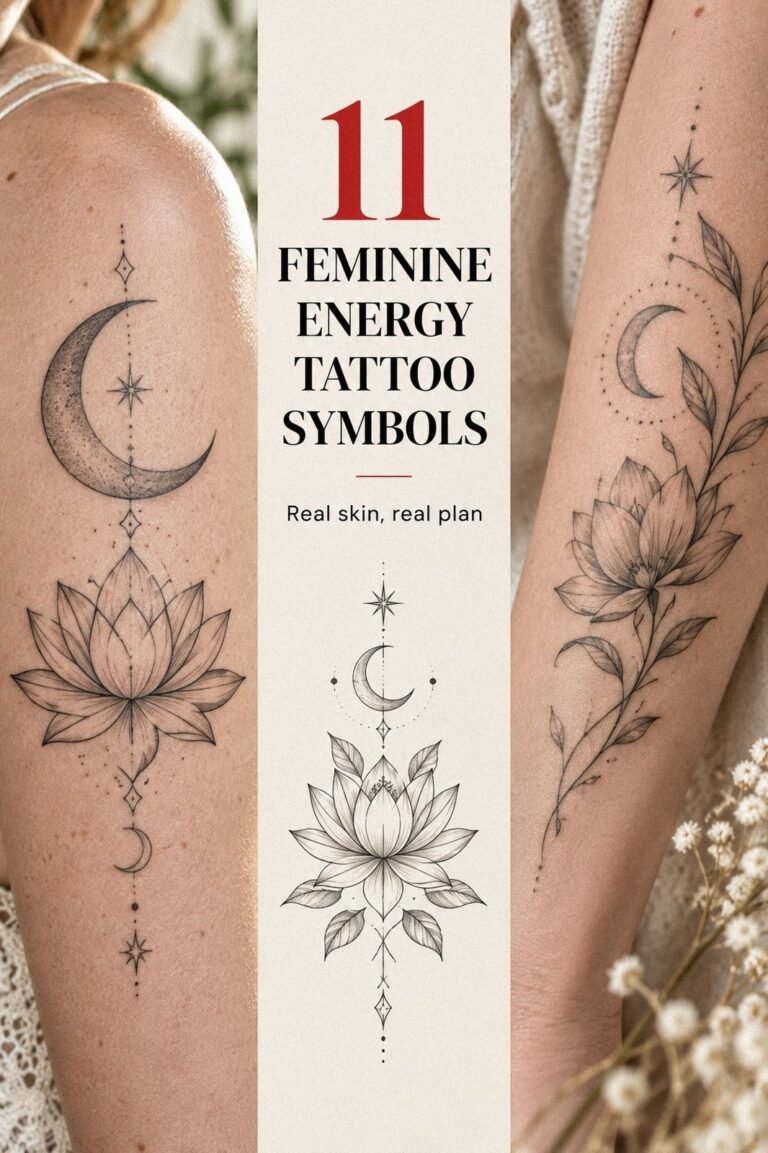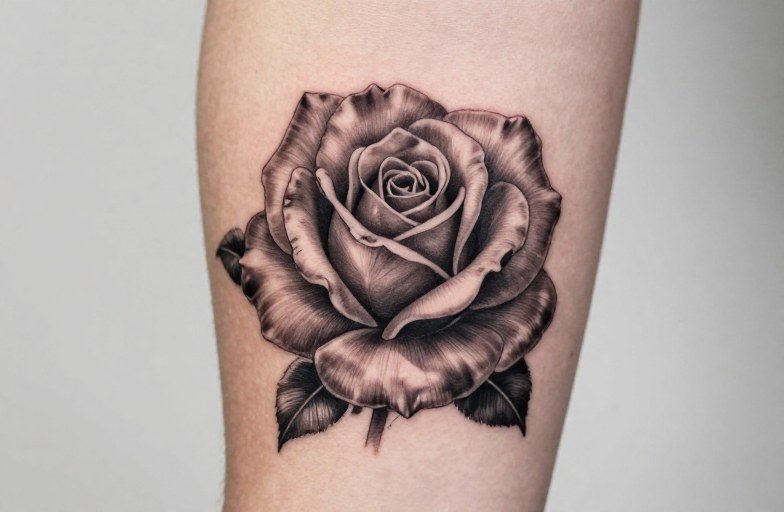
A clock paired with roses carries layered meaning: the clock marks time’s passage, while roses represent beauty, love, and the natural cycle of life and death. Together, they form a meditation on mortality, memory, and what endures. The combination resonates because it balances something mechanical and exact with something organic and fragile.
Symbolism & Core Meaning
The Clock: Time as Theme
Clocks in tattooing rarely celebrate punctuality. Instead, they serve as memento mori, reminders that time runs out. A stopped clock can mark a specific moment: a birth, a death, a turning point. Hands set to a particular hour give the tattoo private significance without requiring text. Pocket watches, grandfather clocks, and melting clocks each carry slightly different connotations. The pocket watch suggests heritage and personal history; the melting clock, often linked to Dalí’s imagery, evokes time’s fluidity and subjective experience. Roman numerals add classical weight; plain Arabic numerals read more modern and direct.
The Rose: Beauty with Thorns
Roses in Western tattoo tradition carry well-established associations: love, passion, beauty, and pain. The thorns complicate the bloom. A rose past its peak can symbolize lost love or fading youth; a bud suggests potential or new beginnings. In the clock-and-rose pairing, the flower typically softens the timepiece’s severity, adding emotional warmth to an otherwise stark symbol. The rose also implies natural cycles, blooming, wilting, returning, against the clock’s linear, irreversible march.
Combined Meaning
Together, these elements ask: what lasts? The clock measures what the rose transcends. Some wear this pairing to honor someone lost, time stopped, love remains. Others use it as a personal reminder to value present moments. The symbolism is flexible enough to accommodate grief, romance, or existential reflection without requiring explanation.
Common Variations & Styles
Traditional and Neo-Traditional
American traditional builds this combination from bold black outlines, limited color palettes, and stylized roses with pronounced thorns. The clock face stays simple, readable, graphic. Neo-traditional allows more detail: ornamental clock housings, jewel tones, softer shading on petals. Both styles age well because the heavy line work holds up as skin changes. Fine-line versions exist but require touch-ups sooner; single-needle petals blur faster than solid traditional fills.
Realism and Photo-Style
Realistic clocks demand technical precision, glass reflections, metal textures, readable numerals. Photorealistic roses need careful attention to petal layering and color gradation. This style works best at larger sizes (forearm, thigh, upper back) where detail doesn’t collapse. Small realistic clocks often become illegible as ink spreads slightly over years. Black and grey realism emphasizes volume and shadow; color realism can achieve striking bloom effects but fades faster on sun-exposed skin.
- Broken or cracked clocks: time interrupted, trauma survived, life altered
- Clocks with missing hands: living outside measured time, refusing constraint
- Roses growing through/around the clock: nature reclaiming order, love persisting
- Dove or banner additions: memorial pieces, names or dates integrated
- Skull merged with clock face: more explicit mortality reminder
Personal & Modern Meanings
Contemporary wearers often strip away historical symbolism and use this combination for intensely personal statements. A clock stopped at a child’s birth time, roses in that child’s favorite color, the meaning is obvious to the wearer, opaque to strangers. This privacy is part of the appeal. The tattoo reads as decorative to casual observers but functions as a coded diary entry.
Recovery and Transformation
Some choose this imagery to mark sobriety anniversaries, survival from illness, or escape from destructive relationships. The clock marks “before and after”; the rose acknowledges that beauty and growth remain possible. This usage has grown more visible in recent years as tattooing has become more accepted in professional contexts, allowing people to wear recovery narratives openly.
Romantic and Partnership Meanings
Couples occasionally get matching or complementary clock-and-rose pieces, though this carries risk if the relationship ends. More commonly, one partner memorializes another, spouse, parent, child, using birth and death times, or simply significant shared hours. The rose’s color shifts the emotional register: deep red for romantic love, white for purity or memorial, yellow for friendship and familial bonds, black for grief.
Who Chooses This Tattoo
This combination crosses demographic lines more than many motifs. It appeals to first-timers seeking meaningful imagery and to collectors adding another symbolic piece. Men often gravitate toward pocket watches with mechanical detail, roses secondary and sometimes desaturated. Women more frequently choose the rose as primary focus with the clock integrated into the composition. These are tendencies, not rules, skilled artists adjust balance to individual preference regardless of gender.
Placement Patterns
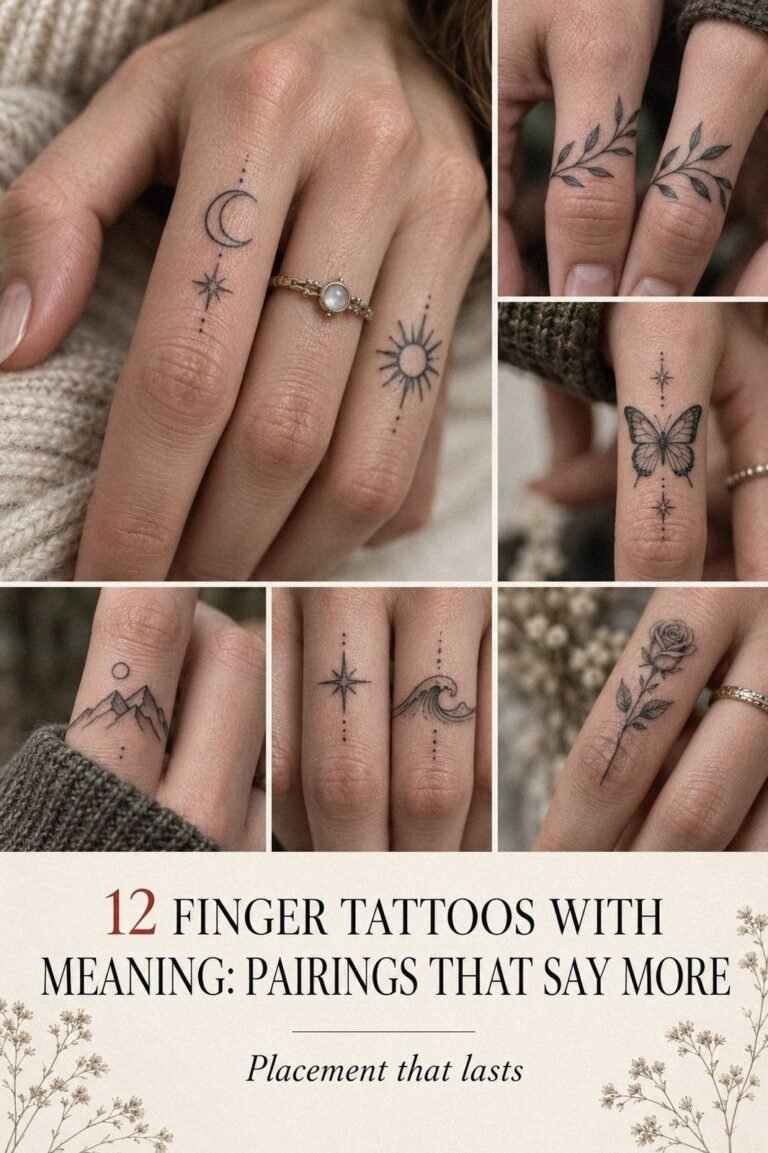
Forearms allow the elongated shape of a hanging pocket watch with trailing roses. Upper arms and shoulders accommodate round clock faces with radial rose arrangements. Chest pieces center the clock over the heart with roses spreading outward. Ribs and thighs suit larger, more detailed compositions where the artist can develop full background. Hands and fingers rarely work for this combination; the detail collapses at small scale and finger tattoos blur rapidly with constant use and sun exposure.
Similar & Related Symbols
The clock-and-rose pairing sits within a broader family of time-and-mortality imagery. Hourglasses function similarly but feel more antique, less personally specific. Sundials connect to nature and patience but lack the clock’s immediate recognizability. Watches on wrists (rather than pocket watches) read more contemporary, sometimes suggesting hustle culture or time anxiety rather than reflection.
Roses paired with skulls make mortality more explicit and aggressive. Roses with daggers introduce betrayal or protection themes. Roses alone, without the time element, stay more purely romantic or decorative. The clock’s addition forces the flower into temporal context, beauty is fleeting, love is measured, youth has an endpoint.
- Compass with roses: direction and love combined, travel and return
- Anchor with roses: stability through emotional storms
- Butterfly with clock: transformation within limited time
- Candle with roses: life burning down, illumination before extinction
Color vs Black and Grey
Color Considerations
Red roses carry the strongest immediate recognition but require maintenance. Red pigment fades toward pink or orange depending on the specific ink and skin chemistry. Yellow roses brighten compositions but can heal to a mustard tone. Purple and blue roses, while visually striking, read as more fantastical and less traditionally symbolic. Color clocks with gold or bronze housings create warmth; silver and steel tones feel cooler, more detached.
Black and Grey Advantages
Black and grey ages more gracefully on most skin tones, especially with heavier black saturation in the clock structure. Greywash roses achieve soft, dimensional petals without color commitment. This palette suits memorial pieces by defaulting toward somberness, though skilled artists can build surprising warmth through contrast and texture alone. On darker skin, black and grey with solid blacks ensures the design remains visible over decades; color sometimes requires more frequent refresh sessions.
Skin undertone matters for both approaches. Cool undertones carry black and grey with crispness; warm undertones can push greywash toward muddy without sufficient black anchoring. Experienced artists adjust their ink mixing to account for this rather than using identical formulas on every client.
Final Thoughts
The clock with roses endures because it balances specificity with openness. The imagery is legible enough that strangers grasp the general theme, time, love, loss, while the details (which hour, which rose color, which style) remain private. It works as a first tattoo with clear intention or as a considered addition to a larger collection. The key is honest communication with your artist about what the combination means to you, then trusting their judgment on how to make that meaning visible and lasting on your particular skin.
Frequently Asked Questions
Does the time shown on the clock face matter?
Yes, and it should be chosen deliberately. Many people set the hands to a specific birth time, death time, or meaningful hour. Random times work too, but the tattoo carries more weight when the numbers mean something to you.
How well do detailed clock faces age in tattoos?
Small, intricate clock faces tend to blur over time as ink naturally spreads slightly in skin. For longevity, keep numerals bold and readable, or opt for a slightly larger size where detail can breathe. Touch-ups every few years help maintain crispness.
Can a clock and roses tattoo work as a cover-up?
Often yes, depending on the existing tattoo. The clock’s solid dark elements, housing, hands, numerals, can mask older ink beneath. Roses add organic shapes that break up rigid outlines. Your artist will need to assess the old piece’s colors and placement to confirm feasibility.
What’s the typical price range for a quality piece?
Custom work varies widely by artist reputation, location, and size. A skilled professional doing palm-sized black and grey might start around several hundred dollars; detailed color work spanning a forearm or larger can reach into the thousands. Good work isn’t cheap, and this is permanent, invest accordingly.
Related Tattoo Meanings
- Dreaming Tattoo Meaning: Symbolism, Design Cultural Roots
- Grenade Tattoo Meaning: Power, Risk Controlled Chaos
- Guillotine Tattoo Meaning: Death, Rebellion Sharp Change
- Explore more