
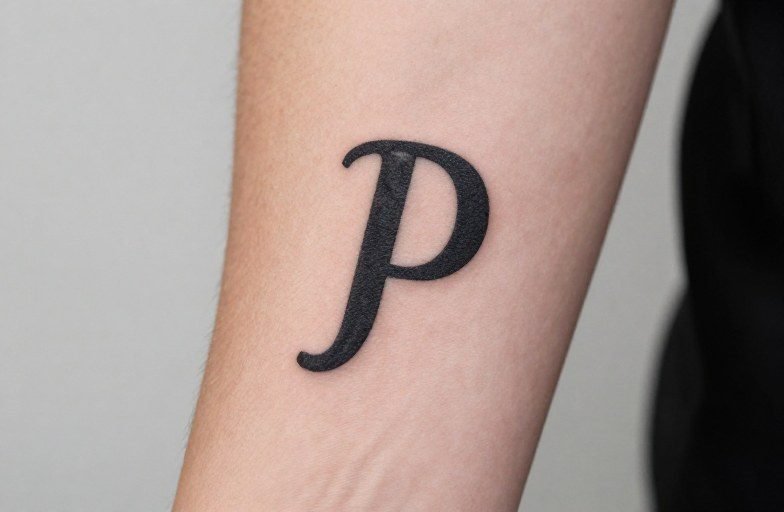
An apostrophe tattoo most often signals a deliberate pause, a grammatical breath that mirrors life’s interruptions, losses, or moments of reflection. For others, it represents possession: what is yours, claimed and owned. The mark is small, but its implications are substantial because it relies on context to complete its meaning.
Who Chooses This Tattoo
Writers, editors, and language lovers gravitate toward the apostrophe for obvious reasons, but the choice runs broader than professional affiliation. People who have experienced interruption, career pivots, recovered health, interrupted grief, find the symbol speaks to their specific circumstance without requiring explanation.
The Grammar-Minded
Teachers, copy editors, poets, and journalists sometimes choose this mark as a professional sigil. Placement matters here: behind the ear, along the inner forearm, or at the wrist bone where it catches light during typing or writing. These spots keep the symbol visible to the wearer without broadcasting it.
Those Marking Absence
An apostrophe indicates omission. Someone missing a person, a place, or a former self may use it to mark what once was present and now is not. The tattoo becomes a private notation, readable only to those who know the context. This interpretation leans heavily on placement and pairing, an apostrophe alone reads differently than one set beside a date, name, or coordinate.
Color vs Black and Grey
Scale dictates technique with this design. At small sizes, black and grey hold definition longer; color tends to blur or require touchups sooner because the apostrophe’s thin strokes offer little room for pigment density.
Black Ink Longevity
Single-needle or tight three-needle black work produces the cleanest result. The mark should read instantly at conversational distance. Over decades, even well-done fine lines spread slightly, expect the apostrophe to soften from a crisp tick to a gentle blur, especially on high-movement areas like wrists or fingers. This aging is normal, not failure.
Color Applications
Red apostrophes appear, sometimes referencing editorial markup or personal significance. Watercolor splashes behind the mark can suggest the “pause” interpretation visually, but this approach ages poorly if the splash lacks strong outline support. Solid color fill, blue, green, purple, works better than gradients for longevity at this scale.
Design Tips & Pairings
Negative space and surrounding elements determine whether the apostrophe reads as punctuation or abstract shape. Isolation risks ambiguity; context clarifies intent.
- With text: An apostrophe preceding or following a word, date, or name anchors its grammatical function. “’87” marks a birth year; “mama’s” claims relationship.
- With imagery: Paired with a semicolon, it joins the mental health awareness conversation. Beside a heart line, it suggests interrupted love.
- Standalone placement: The inner bicep, collarbone tip, or side of the finger work best. Avoid the arched top of the foot or ribs where the mark may distort with movement or weight change.
Line weight should exceed what looks correct on paper; skin is not paper. A stroke that appears slightly heavy in the stencil will heal to the intended weight. Too thin, and the apostrophe vanishes into a freckle-like blur within five years.
History & Cultural Roots
The apostrophe as a tattoo motif lacks the deep historical lineage of religious or tribal symbols. Its appearance is largely a late-20th and 21st-century phenomenon, tied to the rise of literary and minimalist tattooing.
Typographic Tattoos
The broader category of punctuation tattoos, quotation marks, semicolons, ampersands, emerged alongside the 1990s and 2000s wave of text-based and “literary” tattooing. The semicolon project, founded in 2013, normalized punctuation as personal symbolism and opened space for the apostrophe to carry similar weight. Some trace the apostrophe specifically to writers’ communities in urban centers where small, meaningful marks gained preference over large pieces.
Possession and Identity
In English grammar, the apostrophe denotes ownership. This function has been adopted by people asserting autonomy, over their bodies, their narratives, their recovered selves. The tattoo becomes a grammatical act of self-possession, particularly resonant for those who have felt dispossessed of agency through trauma, illness, or systemic circumstance.
Similar & Related Symbols
Understanding adjacent symbols helps clarify whether the apostrophe serves your intention or whether another mark fits better.
- Semicolon: Specifically tied to suicide prevention and continuation of life. More universally recognized than the apostrophe, but also more loaded with established meaning.
- Ellipsis: Three dots suggesting trailing thought, unfinished business, or omission. Visually softer, less abrupt than the apostrophe’s single interruption.
- Quotation marks: Often frame words or phrases; when empty, suggest voice or the act of being quoted. More performative than the apostrophe’s private notation.
- Comma: Similar pause function but grammatically weaker, less definitive. The comma continues; the apostrophe interrupts or possesses.
The caesura, an ancient mark indicating metrical pause in poetry, represents a more obscure alternative with classical weight but near-zero recognition outside academic circles.
Common Variations & Styles
Despite the symbol’s simplicity, execution varies significantly.
Typeface Choices
Serif apostrophes carry formal, literary weight; the small hook at top and bottom grounds them visually. Sans-serif versions read modern, clean, digital. Script or hand-drawn apostrophes introduce personality but sacrifice immediate recognition. Most tattoo artists will default to a simplified custom version that heals predictably rather than replicating a specific font exactly.
Scale and Orientation
Standard orientation tilts upper-left to lower-right. Reversing this reads as a stray mark or accidental blemish to most viewers. Vertical stretching turns the apostrophe into a comma or abstract tear shape; some request this deliberately. Scale ranges from 3mm (risky, likely to blur) to 15mm (clear, readable, stable). The sweet spot for longevity and clarity sits between 8mm and 12mm in height.
Before You Decide
Consider the apostrophe’s dependence on context. Without surrounding elements, it risks being misread as a stray mark, a scar, or simply puzzling. This can be intentional, private symbolism has value, but should be a conscious choice, not an accident.
Think about aging. Single-needle fine line work requires a skilled artist and realistic expectations. The mark will not remain razor-sharp; plan for softening and potential touchups at the ten-year mark, sooner if placed on hands or feet.
Finally, examine your motivation. The apostrophe rewards specificity. “I paused” differs from “I possess” differs from “something is missing.” Knowing which grammar you intend helps your artist place and scale the mark appropriately. Bring reference, explain the context, and trust the process of translating a printed symbol into living skin.
Frequently Asked Questions
Will an apostrophe tattoo be mistaken for a random mark or blemish?
Without context, some viewers may not recognize it as intentional punctuation. Placement near other tattoos or text helps, as does slightly larger scale. If you want immediate recognition, pair it with additional elements.
How small can an apostrophe tattoo be before it becomes unrecognizable?
Below 8mm height, the risk of blurring into an indistinct dot increases significantly, especially on high-movement areas. For clarity that lasts, aim for at least 8-12mm in height with clean line weight.
Can an apostrophe tattoo work as a cover-up or in a patchwork sleeve?
Its small size makes it unsuitable for covering existing work, but it integrates well into patchwork arrangements. It fills gaps between larger pieces and can serve as a visual pause in a dense composition.
What does an apostrophe tattoo mean when paired with a date or name?
It typically indicates possession or omission in that context. “‘Sarah’s” or “’03” uses the apostrophe grammatically, while a standalone mark beside a date might indicate something missing from that year or a life interrupted at that point.
Related Tattoo Meanings
- Astronaut Tattoo Meaning: Isolation, Courage, and the Unknown
- Avocado Tattoo Meaning: Growth, Health Modern Wit
- Axe Tattoo Meaning: Symbolism, Design Placement Guide
- Explore more









