An Anthony Padilla tattoo typically honors the YouTuber’s public journey through internet culture, mental health openness, and creative reinvention. For many, it captures nostalgia for early Smosh-era comedy, while others connect to his later advocacy around anxiety, depression, and leaving toxic environments. The meaning hinges on which era of his career resonates with you and what visual element you choose to represent.
Design Tips & Pairings
Building a cohesive piece around this theme means choosing imagery that actually speaks to Padilla’s specific arc rather than generic YouTube iconography.
Iconography That Works
The classic “Shut Up!” catchphrase in its original yellow-and-black colorway reads instantly to fans of the Smosh golden age. For his post-Smosh chapter, the open brain logo from his self-titled channel or simple script of “I have anxiety” carries weight. Some go with the flamingo motif tied to his podcast branding, or a portrait piece incorporating his actual likeness alongside symbolic elements.
- Pair text banners with traditional roses or California poppies for regional grounding
- Frame portrait work with film strips or camera viewfinders referencing his video roots
- Add broken chains or open doors to symbolize his departure from Smosh and creative freedom
- Consider negative-space speech bubbles containing his actual quotes about mental health
What to Avoid
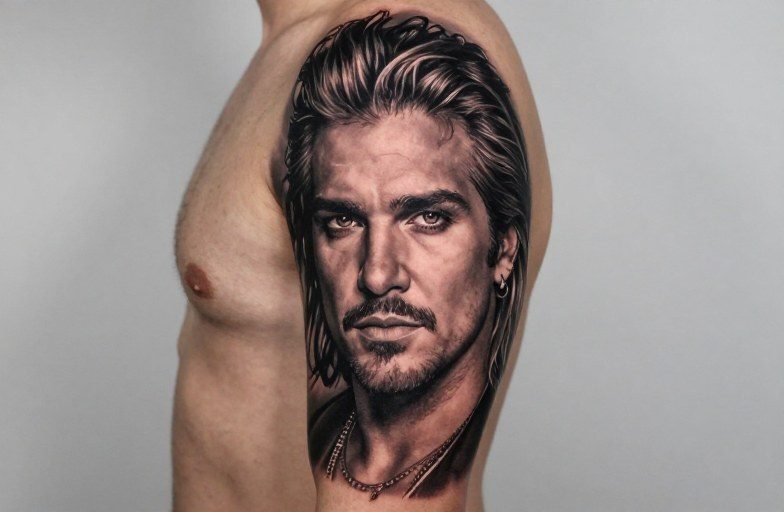
Steer clear of directly reproducing copyrighted Smosh logos without understanding legal and ethical gray areas. Also, portrait tattoos of any public figure risk aging poorly if that person’s public standing shifts. If you want his likeness, consider stylized or illustrative approaches rather than photorealism, which also ages better on skin.
How It Ages on Skin
Text-heavy designs dominate this subject matter, and text ages differently than imagery. Fine script, especially the thin lettering common in quote tattoos, tends to blur and feather over 5-10 years as ink particles migrate through the dermis. Bold, blocky fonts hold their edges longer. The “Shut Up!” style works partly because its original design already uses thick, high-contrast strokes.
Color saturation matters too. The bright yellow from Smosh branding often fades toward a mustard or greenish cast on skin, particularly in areas with sun exposure. Black and grey versions of the same design maintain readability longer. If you’re committed to color, plan for touch-ups every few years and commit to sun protection.
Portrait work of Padilla himself faces standard portrait challenges: fine facial details soften, subtle shading in beards and hair can muddy together, and the piece requires a larger minimum size to hold detail. Expect a well-done portrait to need refresh work within 7-12 years.
Color vs Black and Grey
When Color Makes Sense
The Smosh palette, specifically that aggressive yellow against black, carries immediate recognition. If nostalgia for that era drives your choice, color delivers the punch. His later branding uses softer pinks and teals that translate well to tattoo pigment, though pastel tones require more frequent maintenance. Color also suits illustrative or neo-traditional approaches where flat, bold fields are the aesthetic goal.
Black and Grey Advantages
Black and grey excels for portrait work, script emphasis, or pieces where the emotional weight matters more than brand recognition. The “I have anxiety” phrase hits harder in stark black ink without decorative color. Greywash can create atmospheric backgrounds, storm clouds parting, dawn breaking, that support transformation themes without competing with the central message. This approach also costs less, heals faster with less peeling, and ages more gracefully on all skin tones.
Best Placements
Forearm placement dominates quote tattoos for visibility and personal reminder value. The inner forearm offers flatter skin for clean lettering, while the outer forearm handles circular or framed designs well. For the “Shut Up!” style, the outer forearm or calf provides enough flat real estate for the rectangular format.
Ribcage and side placements suit longer quotes or vertical compositions, though they hurt more and heal with more movement irritation. The chest works for portrait pieces or heart-centered symbolism around his mental health advocacy. Upper arm and shoulder areas accommodate medium-sized illustrative work with surrounding filler potential.
Smaller pieces, single flamingos, minimal script, tiny icons, fit wrists, ankles, or behind the ear. These scale down the commitment and cut detail and future expansion options.
Common Variations & Styles
Style Approaches
Traditional American handles the bold graphics well: thick black outlines, limited color palette, heavy saturation. The “Shut Up!” text practically begs for this treatment. Neo-traditional allows more illustrative detail, maybe Padilla’s likeness merged with symbolic elements like a brain opening into flowers. Fine-line single needle works for delicate script or minimal icons but requires an artist specifically skilled in that discipline.
Blackwork and ornamental framing can turn simple text into a substantial piece. Some collectors opt for patch-style designs mimicking embroidered patches, which suits internet culture references through a craft aesthetic.
Hybrid and Personal Twists
Many collectors merge Padilla-specific elements with personal symbolism. His anxiety advocacy paired with your own coping imagery, perhaps a specific medication, therapy tools, or personal mantras, creates something that transcends fan tattoo territory. His departure from Smosh parallels anyone leaving a restrictive situation, so imagery of open roads, unlocked doors, or birds in flight paired with his quotes broadens the meaning.
History & Cultural Roots
YouTube culture tattoos as a category emerged in the early 2010s as the platform’s creators achieved mainstream recognition. Padilla’s career arc, often linked to the broader shift from collaborative channels to individual creator autonomy, mirrors how internet labor evolved. Early Smosh content is commonly associated with the pre-monetization era of pure creative experimentation, while his 2017 departure and subsequent solo work tracks with platform maturation and creator rights discussions.
Mental health disclosure in creator spaces, which Padilla participated in openly, followed broader cultural destigmatization trends. The “I have anxiety” tattoo specifically connects to this wave of public vulnerability that became more prevalent in the late 2010s. Some trace similar disclosure tattoos to earlier movements in zine culture and riot grrrl, though the internet accelerated visibility.
Portrait tattoos of public figures have existed across cultures, from political leaders to entertainers. The modern fan portrait carries specific contemporary weight around parasocial relationships and identity formation through media consumption. Padilla’s documented openness about his own struggles arguably makes him a more defensible portrait subject than figures whose private lives remain opaque.
The Takeaway
An Anthony Padilla tattoo works best when it anchors to a specific, genuine connection, whether that’s laughing at early Smosh videos during formative years, finding language for your own anxiety through his disclosure, or respecting his public evolution away from a restrictive situation. The design choices should serve that specific meaning rather than defaulting to whatever image Google serves first. Prioritize technical decisions that respect how tattoos actually age: bolder lines, thoughtful placement, realistic color expectations. The result should read clearly to those who know it, and stay personally meaningful to you regardless of who else catches the reference.
Frequently Asked Questions
Is an Anthony Padilla tattoo only for hardcore Smosh fans?
Not necessarily. While some collectors connect to the comedy era, others resonate with his mental health advocacy or creative independence narrative. The meaning depends on which phase of his career speaks to you.
How much should I expect to pay for a quality piece?
Script and small icon work typically runs $150-400, while portrait or detailed illustrative pieces range $400-1,000+ depending on size, artist experience, and your location. Book consultations with artists whose portfolio matches your chosen style.
Will people constantly ask me about this tattoo?
If you choose recognizable imagery like the “Shut Up!” text or his likeness, yes, expect questions from fans and confusion from those unfamiliar. More abstract or symbolic approaches reduce this but may sacrifice immediate recognition.
Can I combine this with other YouTube or internet culture tattoos?
Absolutely, though composition matters. A patchwork sleeve approach works, or thematic linking through mental health or creative career narratives. Avoid cramming unrelated references together without visual cohesion.
Related Tattoo Meanings
- Hog Symbolism Tattoo Meaning: Grit, Prosperity Defiance
- Anvil Tattoo Meaning: Strength, Craft, and Endurance
- Apostrophe Tattoo Meaning: Pause, Possession, and Purpose
- Explore more