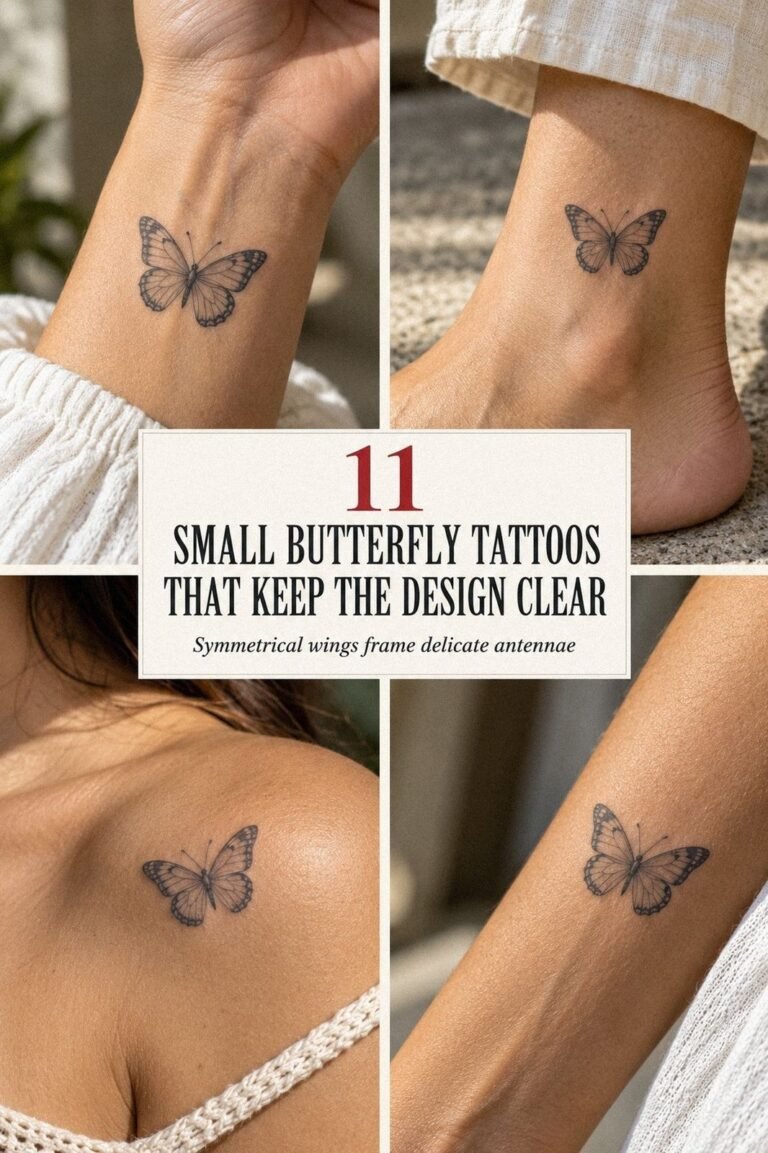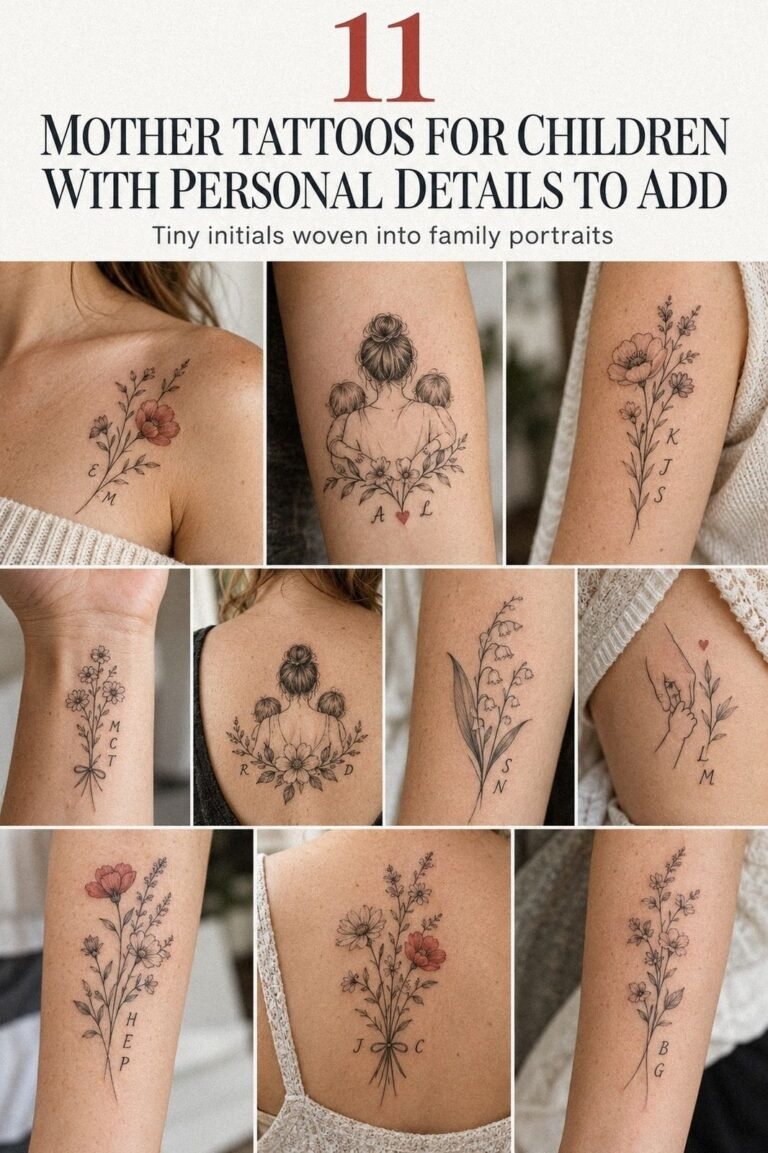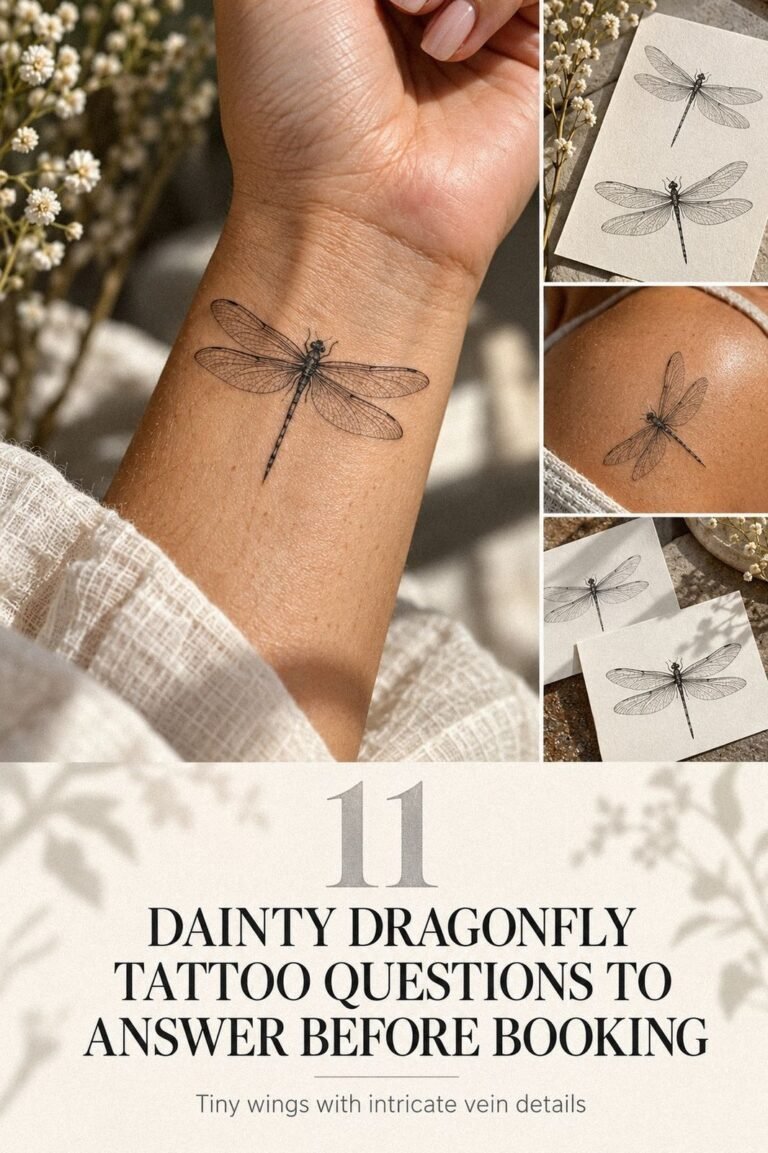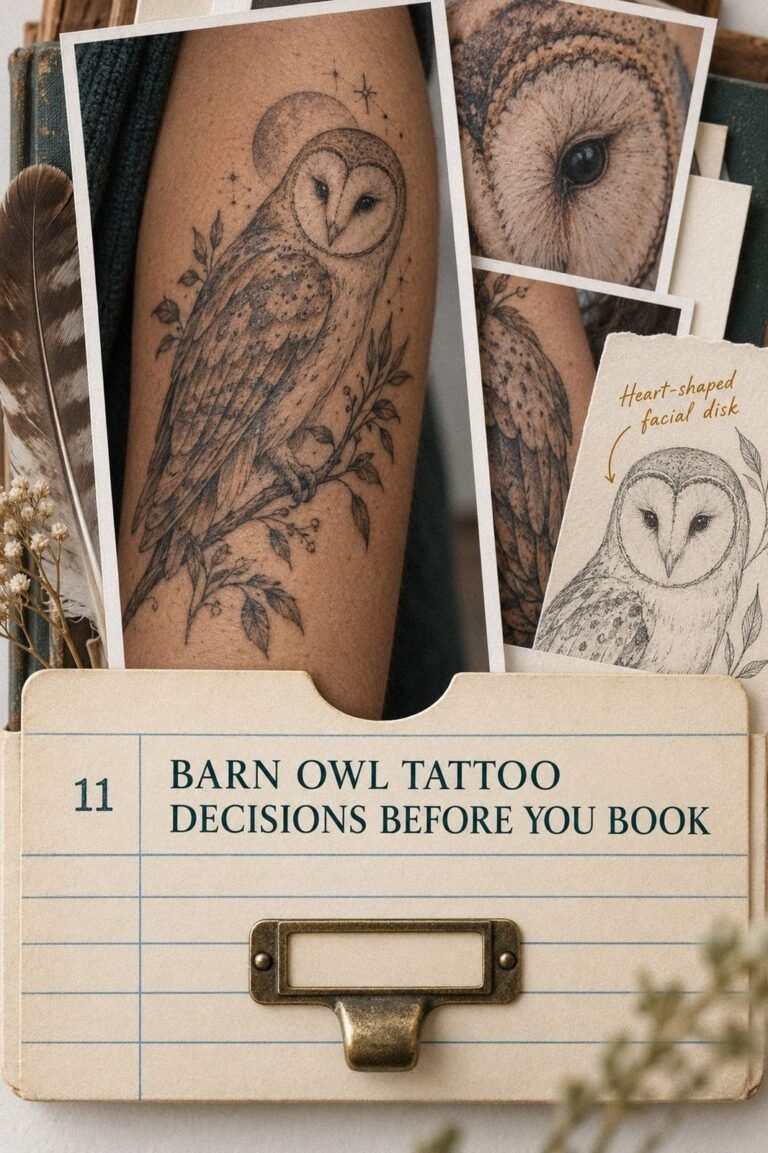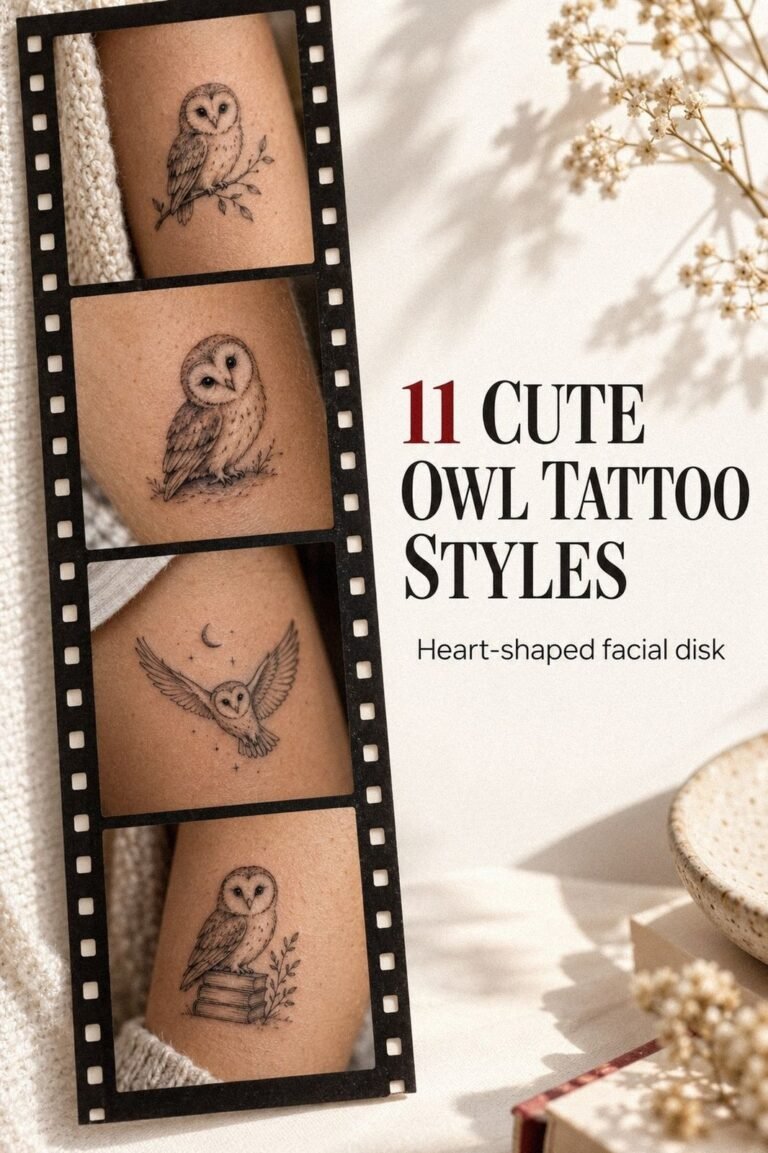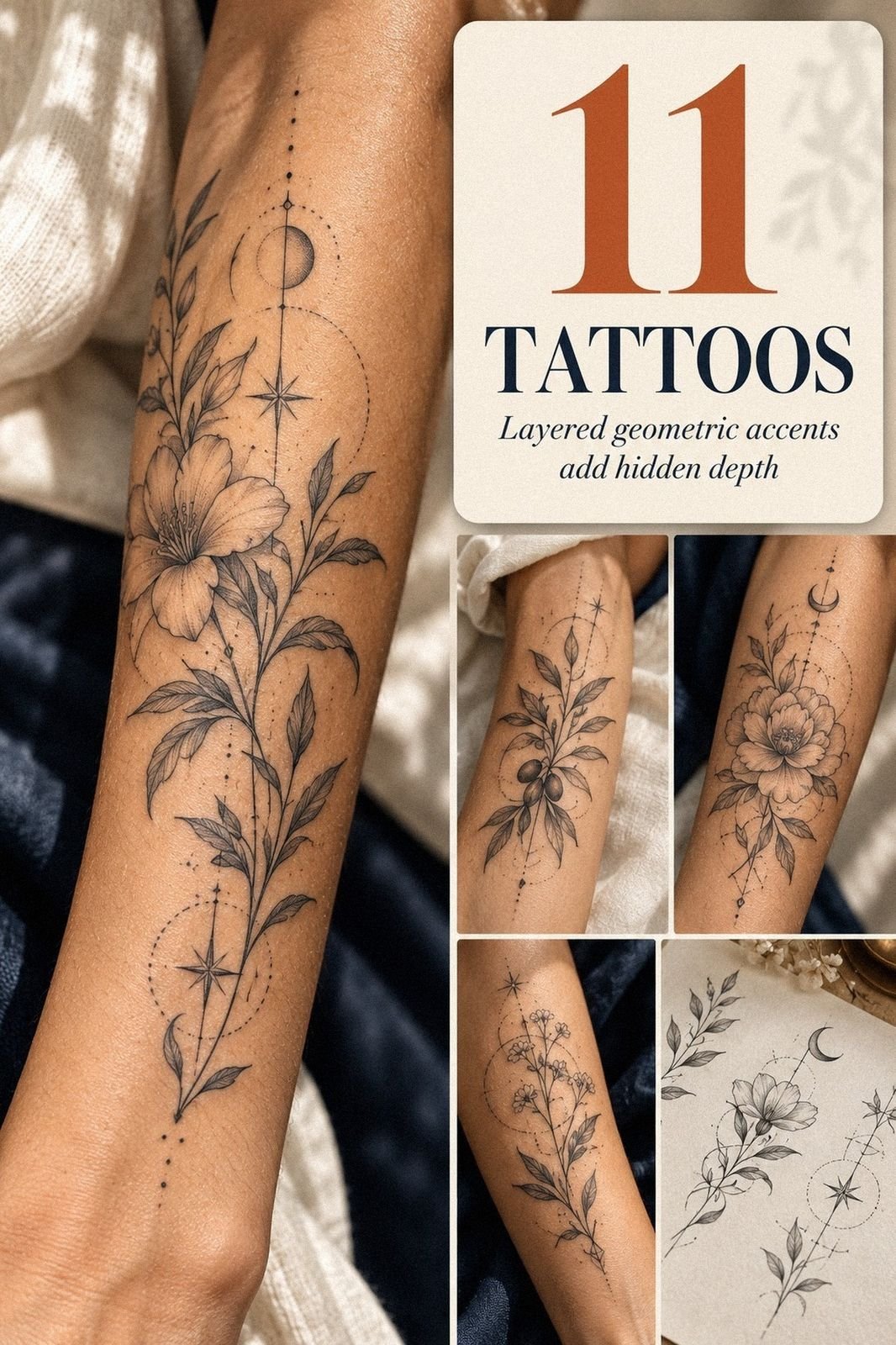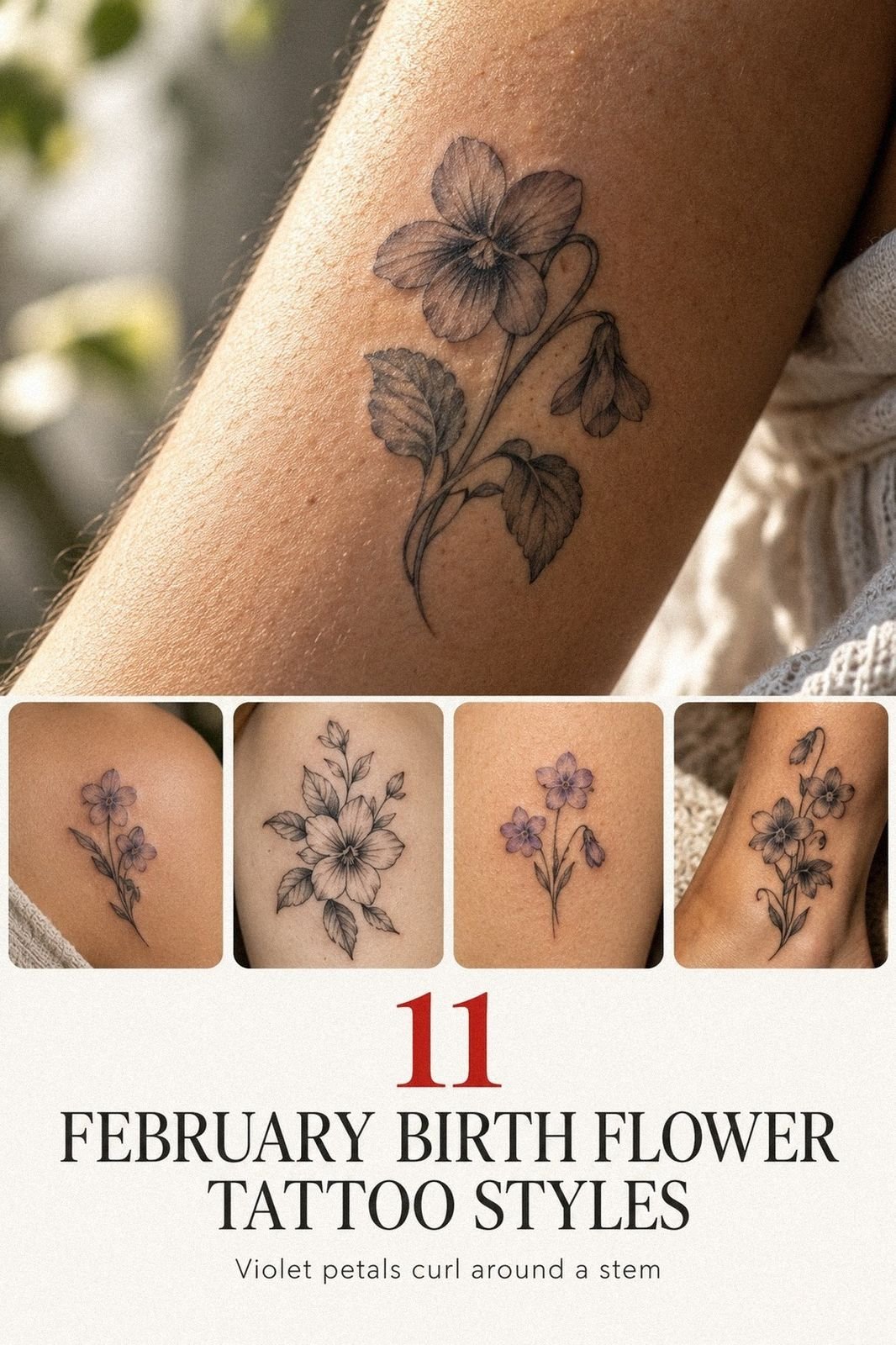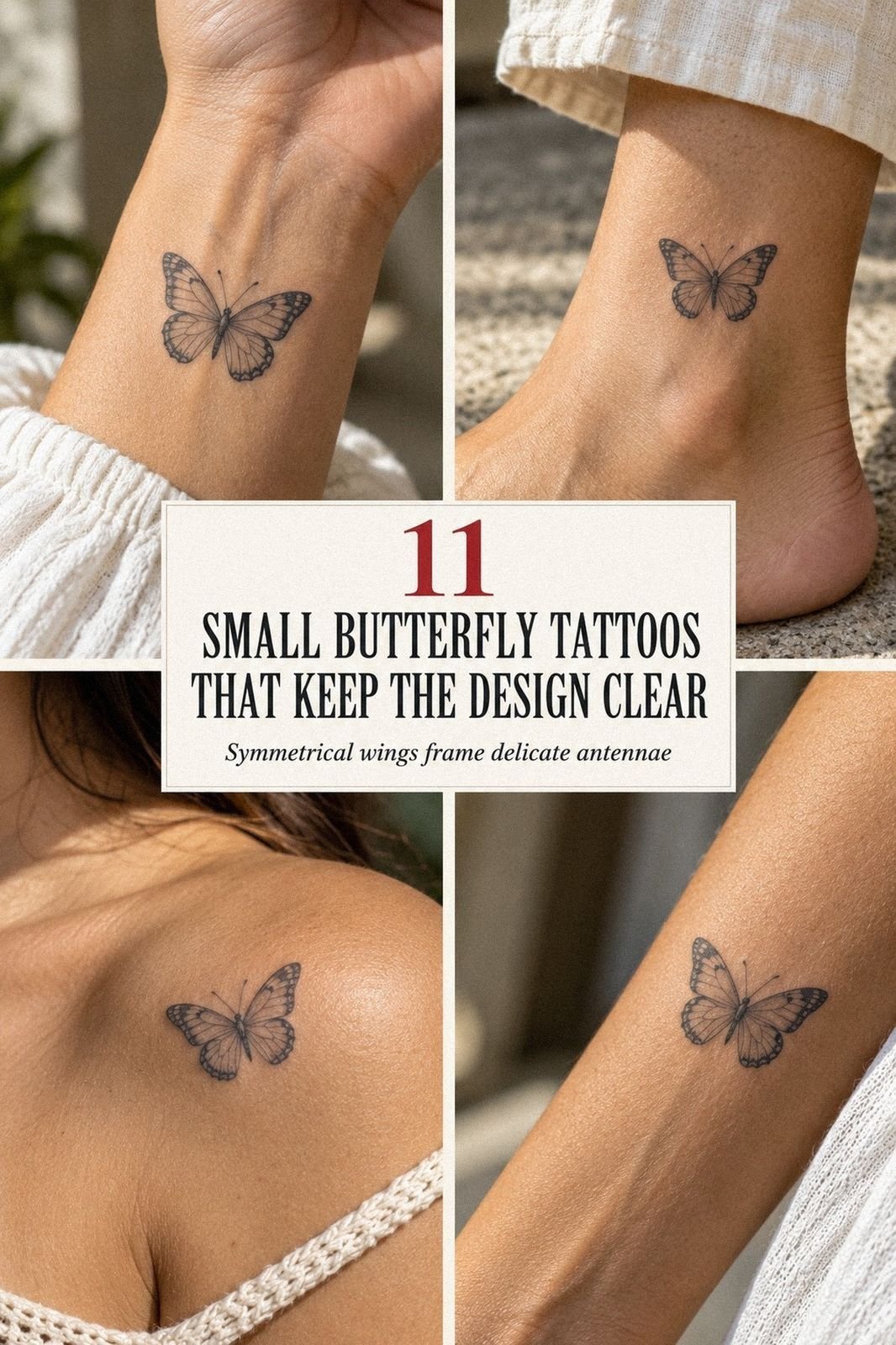
Bird tattoos can stay clean for years if you give the design enough breathing room. I almost made my first bird reference way too tiny, and my artist talked me out of it. Good call. These are the bird tattoo ideas I’d bring to a consult, not copy pixel for pixel.
- Place a Tiny Sparrow Tattoo on the Inner Wrist
- Let a Fine-Line Hummingbird Tattoo Breathe Through Wildflowers
- Go Bold With a Blackwork Raven Across the Forearm
- Anchor Watercolor Bluebird Ink With Real Linework
- Use the Behind-the-Ear Rule for a Minimalist Swallow
- Frame an Eagle Tattoo on the Upper Arm
- Follow the Ribcage Flow With a Peacock Feather
- Make Matching Bird Tattoos Feel Like Yours, Not a Uniform
- Build a Geometric Owl on the Outer Calf
- Choose Red-Ink Cardinal Script Over a Fussy Memorial Piece
- Let a Japanese Crane Cross the Shoulder Blade
- Keep a Small Chickadee Above the Ankle Bone
- Create a Collarbone Flight Path With Bird Silhouettes
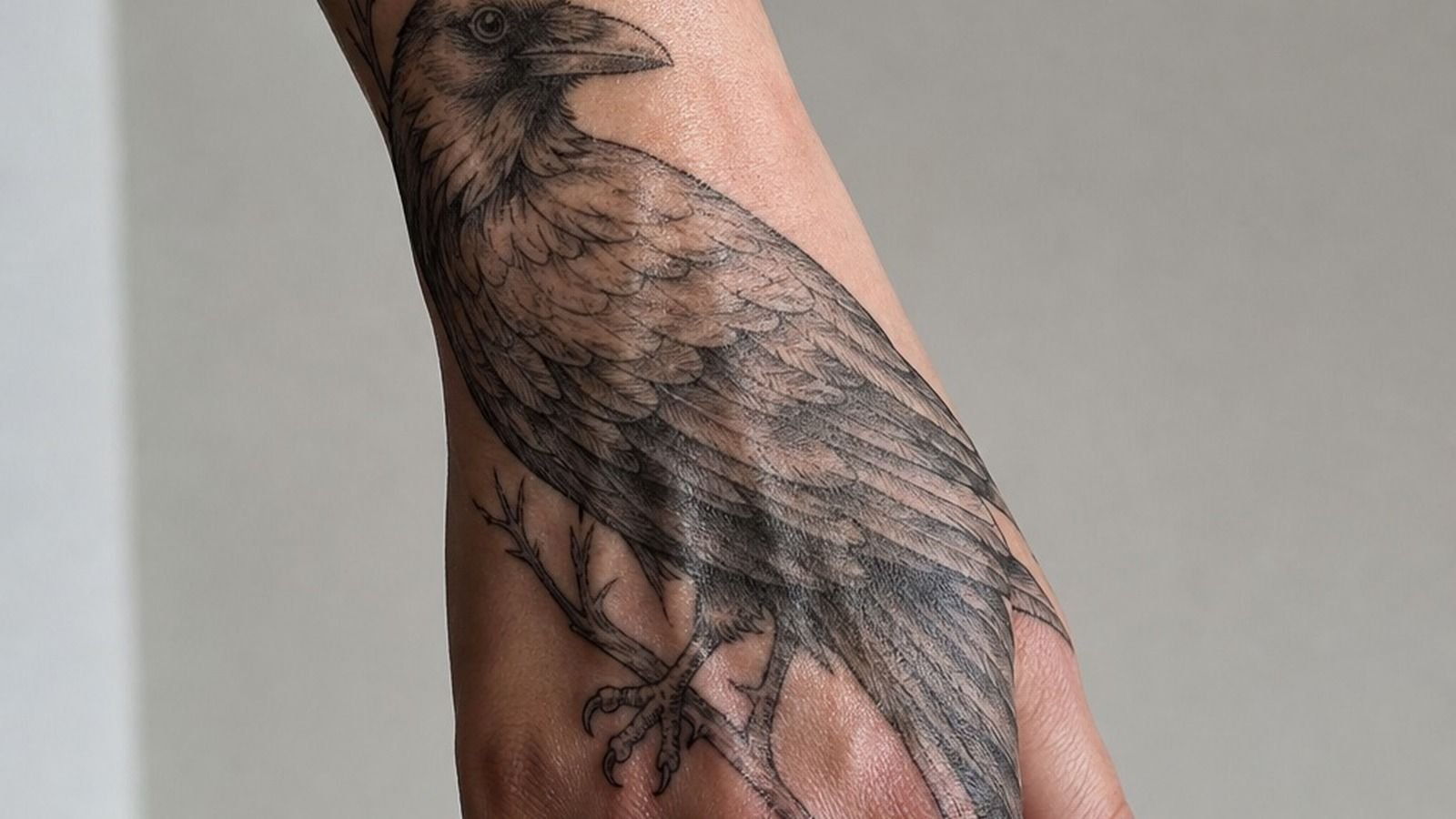
- Pick Black-and-Grey Crow Over a Tiny Hand Detail
- Spread Flying Birds Across the Back Instead of Making a Stamp
- Balance a Bird and Crescent Moon Down the Spine
- Grow a Fine-Line Phoenix Through Botanical Details
1Place a Tiny Sparrow Tattoo on the Inner Wrist
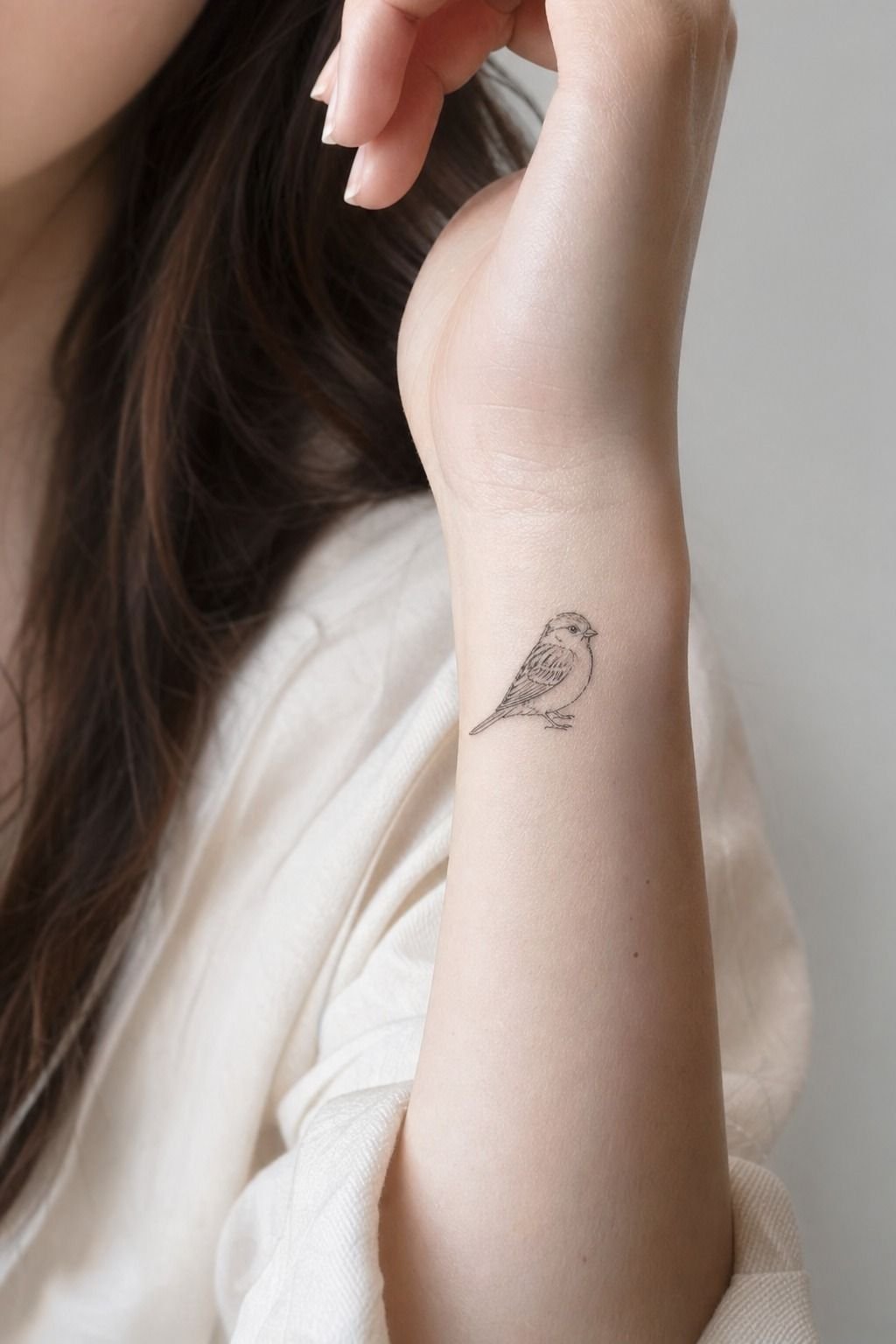
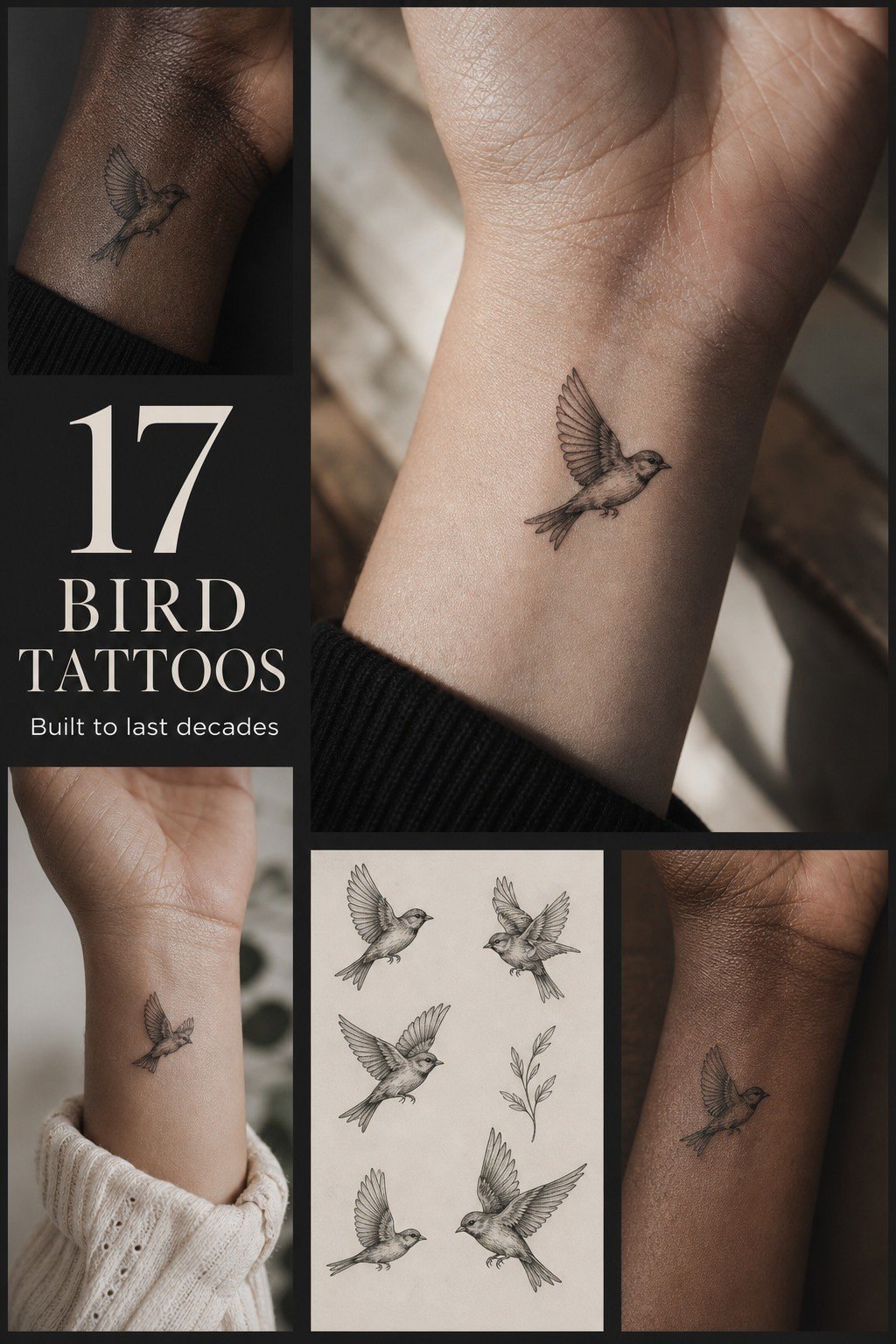
A tiny sparrow on your inner wrist works when you keep it crisp, simple, and around 1 to 1.5 inches wide. You want a clear body, one wing shape, and a small beak, not twenty little feathers that’ll turn to soup. Single-needle black ink gives this meaningful tattoo a gentle, intimate read.
Your wrist is visible, but it’s also a high-wear zone. I’d keep the sparrow slightly above the crease so your movement doesn’t chew it up. If you want fine line that ages cute on you, read up on why tattoos blur over time before committing.
2Let a Fine-Line Hummingbird Tattoo Breathe Through Wildflowers
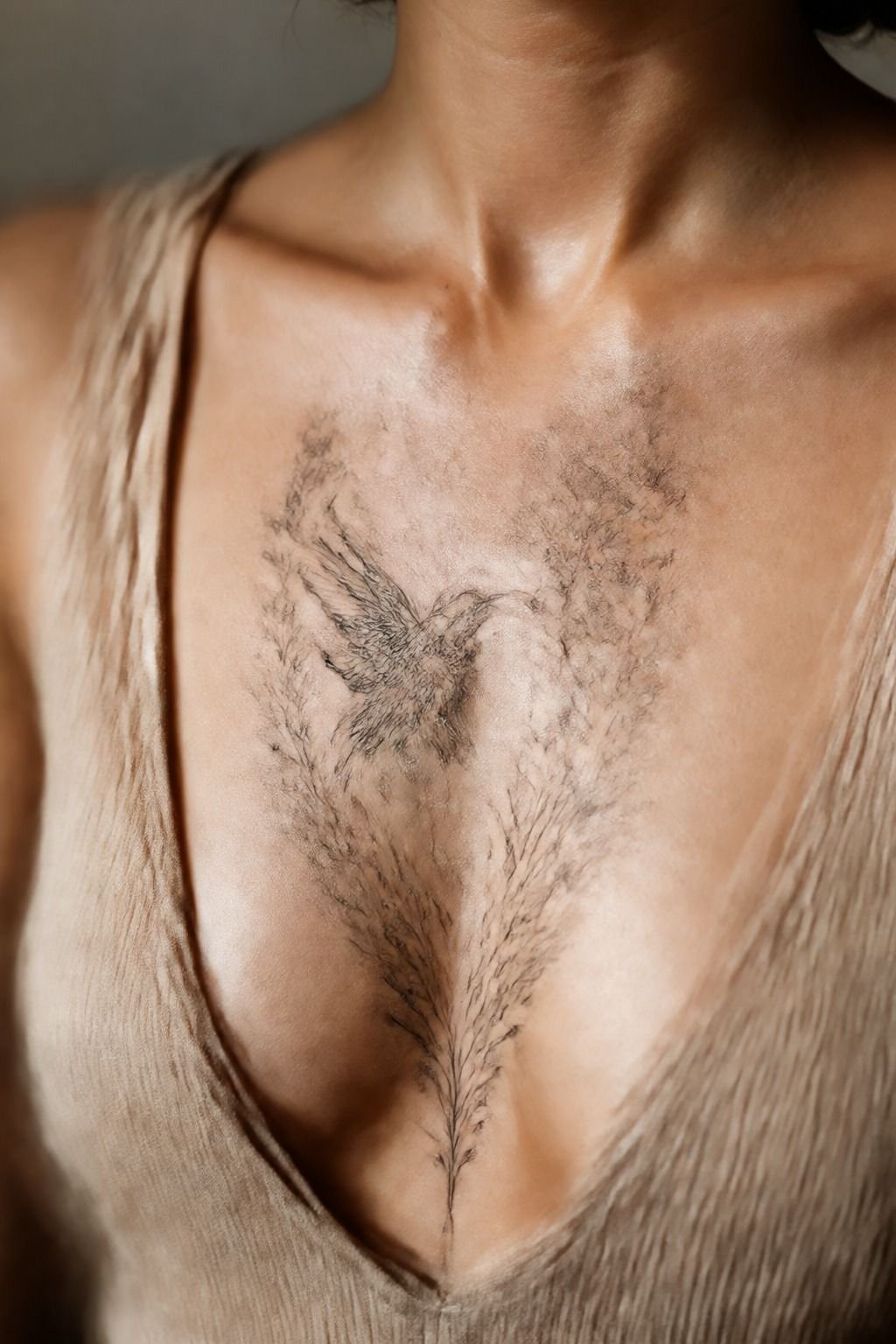
A hummingbird on the sternum needs flow. Let the wings sit open above a few wildflower stems, with enough skin showing between the petals and bird so the whole piece feels airy instead of busy.
Sternum work is spicy, especially near bone. Lines feel sharper there, and color packing would make it worse, so I’d choose black-and-grey with soft grey wash shadows.
Skip the Pinterest-exact copy request. Bring your references for vibe, then let your artist draw something that fits your body.
3Go Bold With a Blackwork Raven Across the Forearm
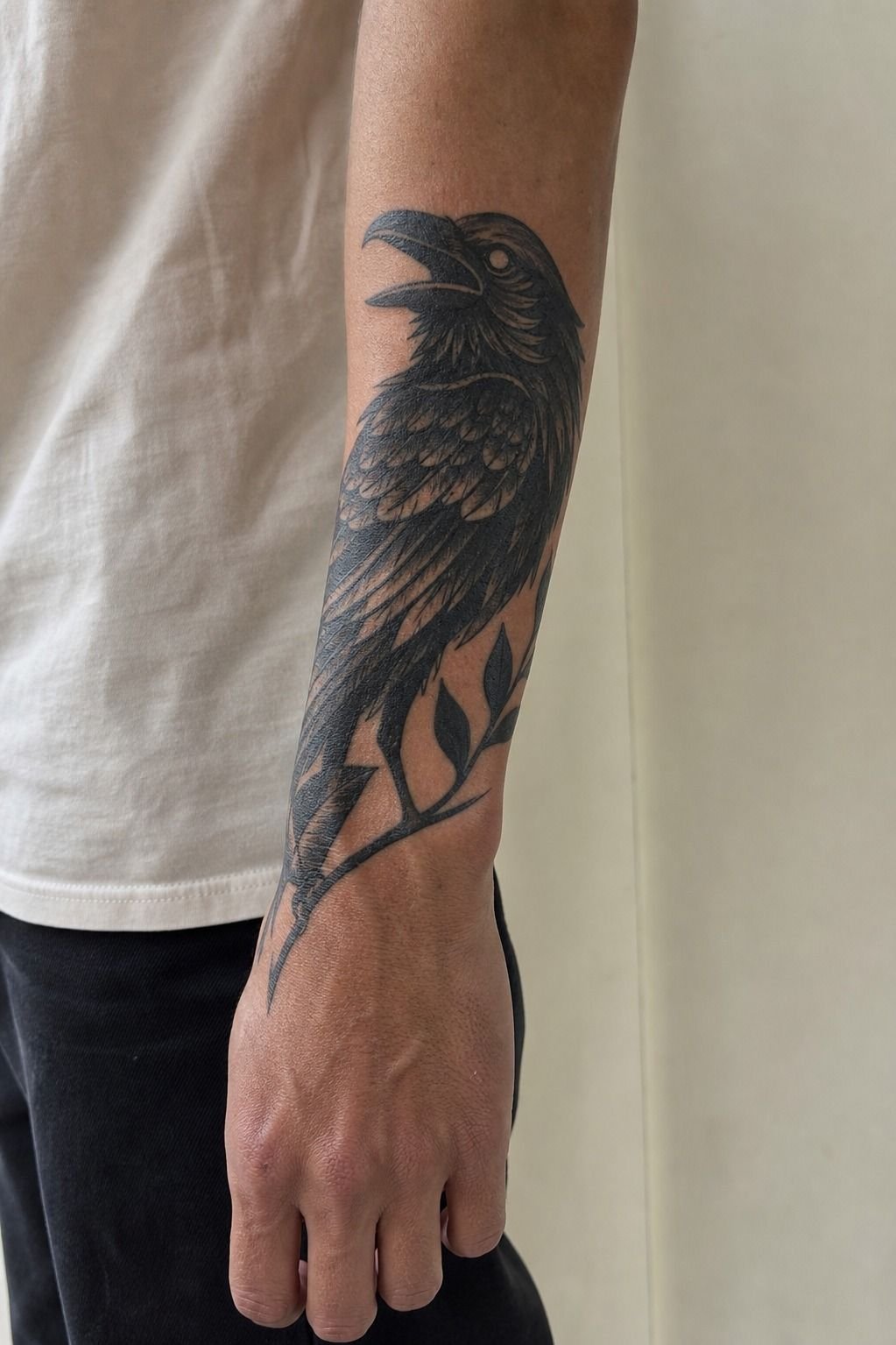
A raven across the forearm is one of those animal tattoos that reads from across the room.
4Anchor Watercolor Bluebird Ink With Real Linework
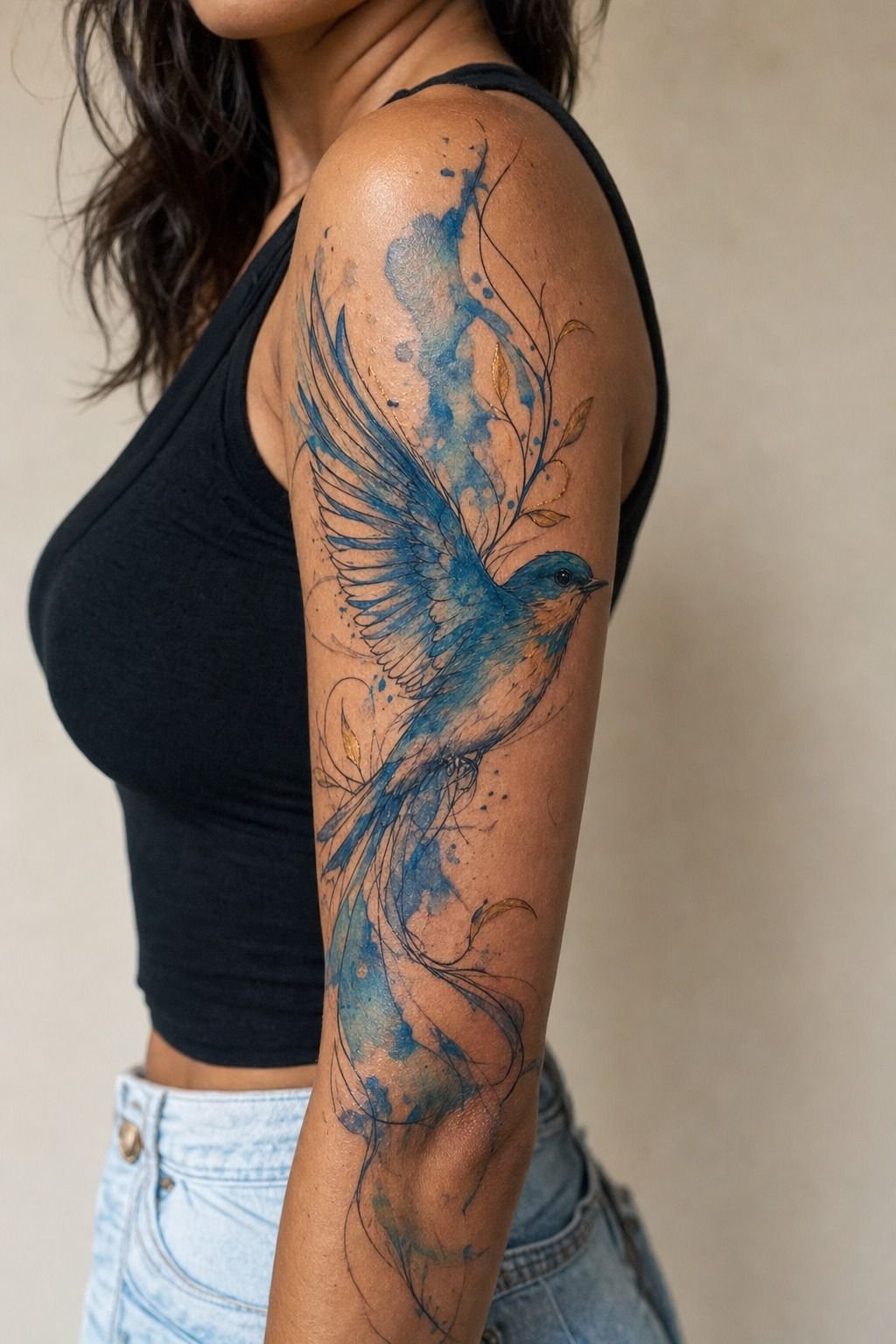
Watercolor can look bright and loose, but it needs structure. Give your bluebird a confident black outline around the head, wing, and tail, then let blue and pale gold wash soften beyond it. That’s watercolor anchored with line, and it heals much cleaner.
On an upper arm, you’ve got room for a 3 to 4 inch design that won’t crowd itself. The color can feel captivating without becoming a blurry cloud. If you’re choosing placement first, these upper arm tattoos for women show why that spot holds up so well.
5Use the Behind-the-Ear Rule for a Minimalist Swallow
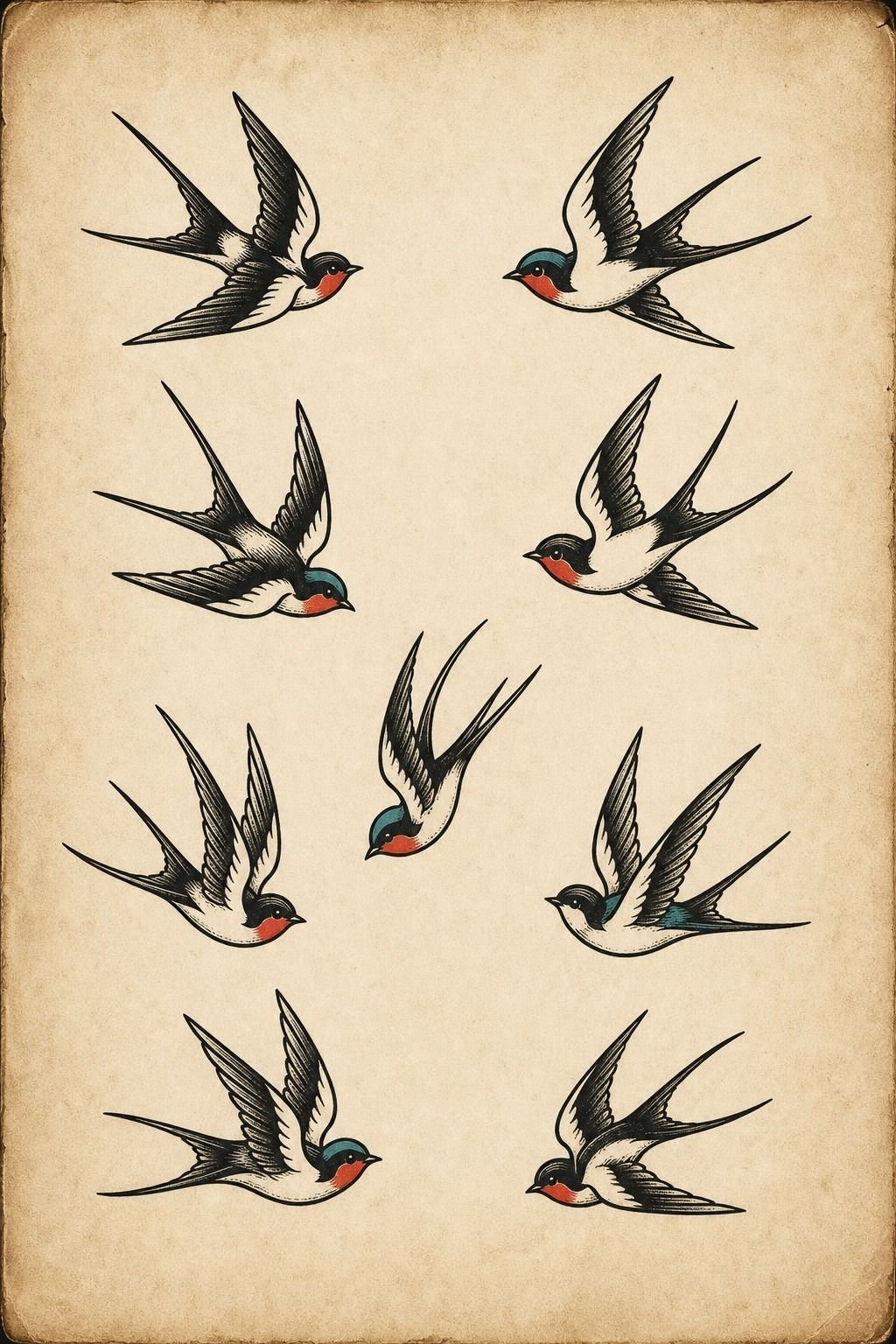
A swallow behind the ear should be tiny flash, not a detailed illustration. Think traditional black linework, a forked tail, and one small wing gesture. It’s charming because it’s restrained.
But behind-the-ear tattoos fade faster than people expect. Your hair products, sunscreen, sleep, and constant rubbing all matter. I’d make the swallow slightly bolder than the flash-sheet version you love, because that extra line weight gives your skin something solid to hold.
6Frame an Eagle Tattoo on the Upper Arm
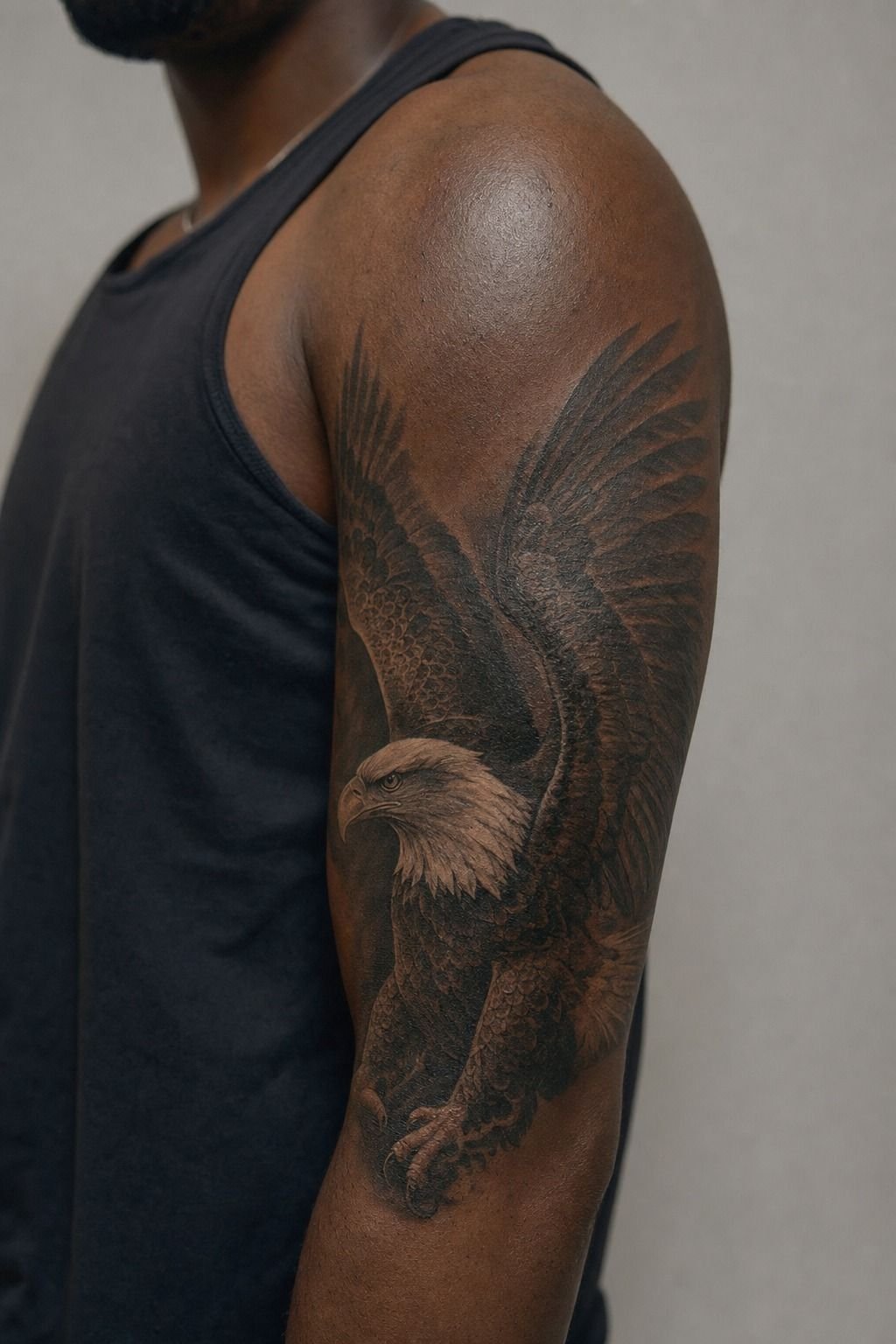
A realistic eagle needs room for its eye, beak, and feather direction. On the upper arm, a 4-inch-plus black-and-grey realism piece can wrap with your shoulder instead of sitting like a flat sticker.
Micro-realism is tempting, but I’d skip it if you want a bird that still reads clearly in ten years. Ask for smooth grey wash and a few deep blacks around the eye.
Your artist should build contrast in one clean pass, not scratch at the skin fifty times. That’s how realism stays dramatic.
7Follow the Ribcage Flow With a Peacock Feather
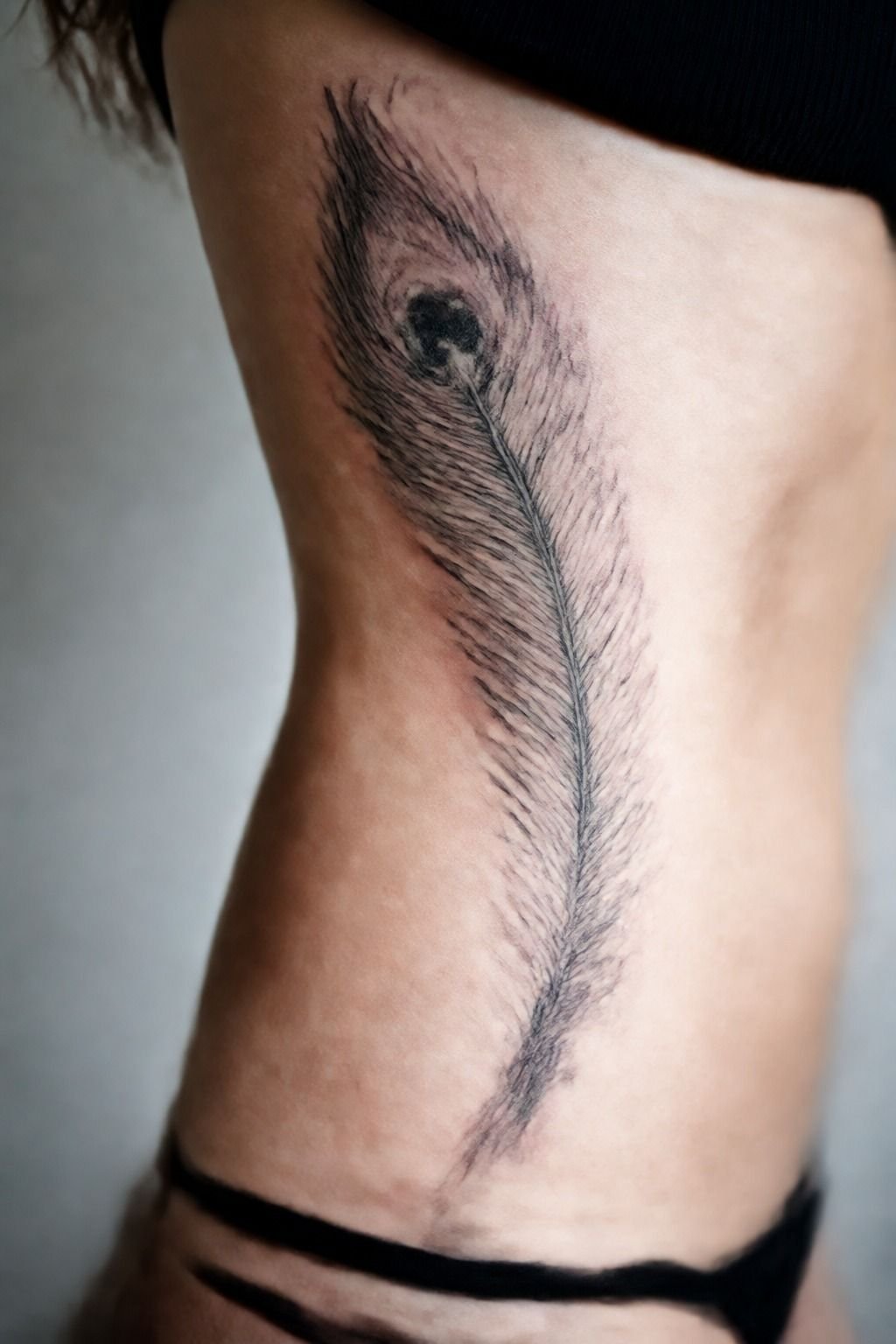
A peacock feather along the ribs should follow your natural curve from underbust toward hip.
8Make Matching Bird Tattoos Feel Like Yours, Not a Uniform
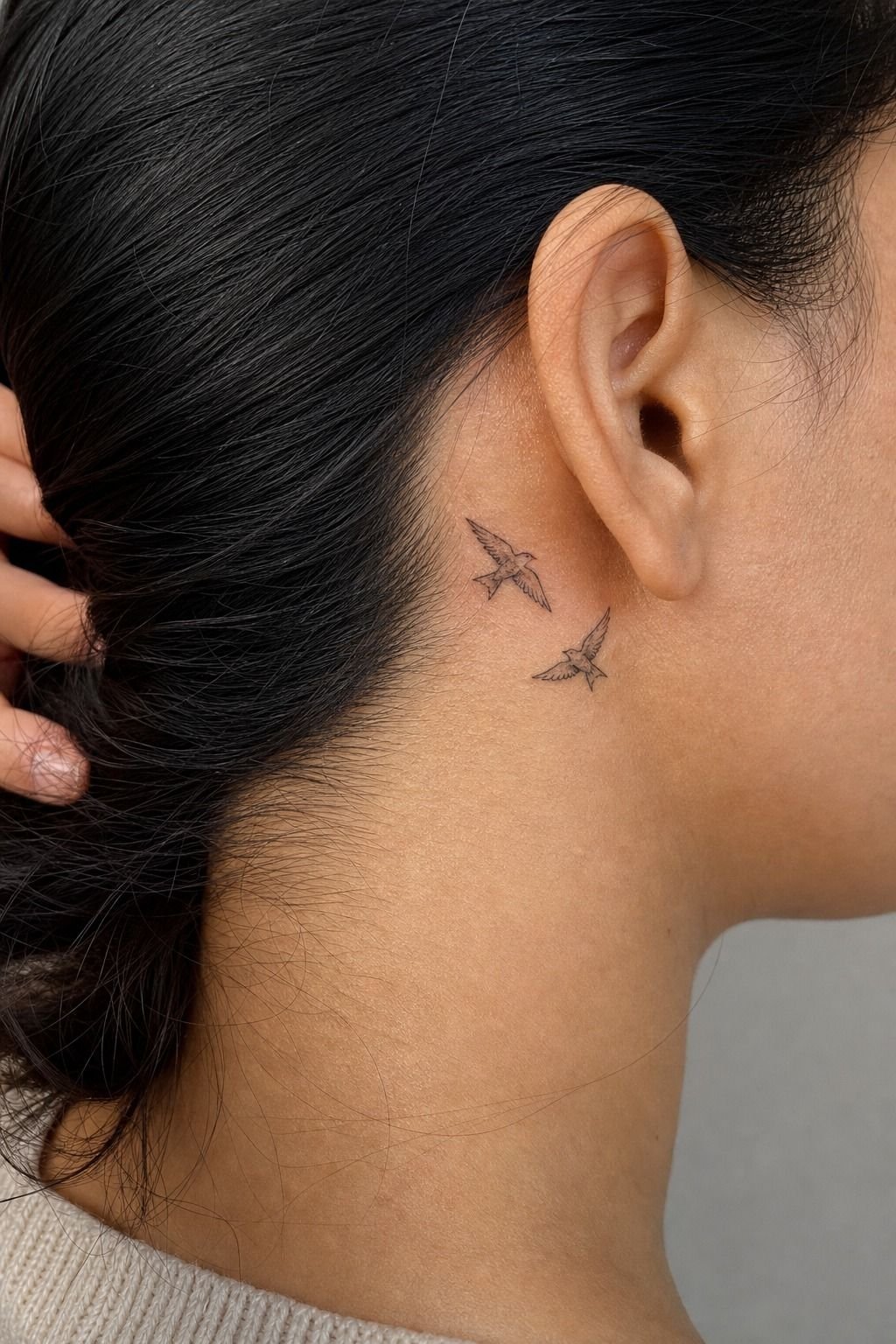
Matching bird tattoos for best friends don’t have to be identical. Pick the same species or flight direction, then let each person choose placement.
One small swallow behind the ear, one on the inner arm. Same story, different skin.
I like fine-line silhouettes for this because you can keep the shared idea calm and personal. Don’t force the same size if one of you has a high-wear placement.
Your tattoo should fit your body first. For another paired concept, see these unique butterfly tattoos.
9Build a Geometric Owl on the Outer Calf
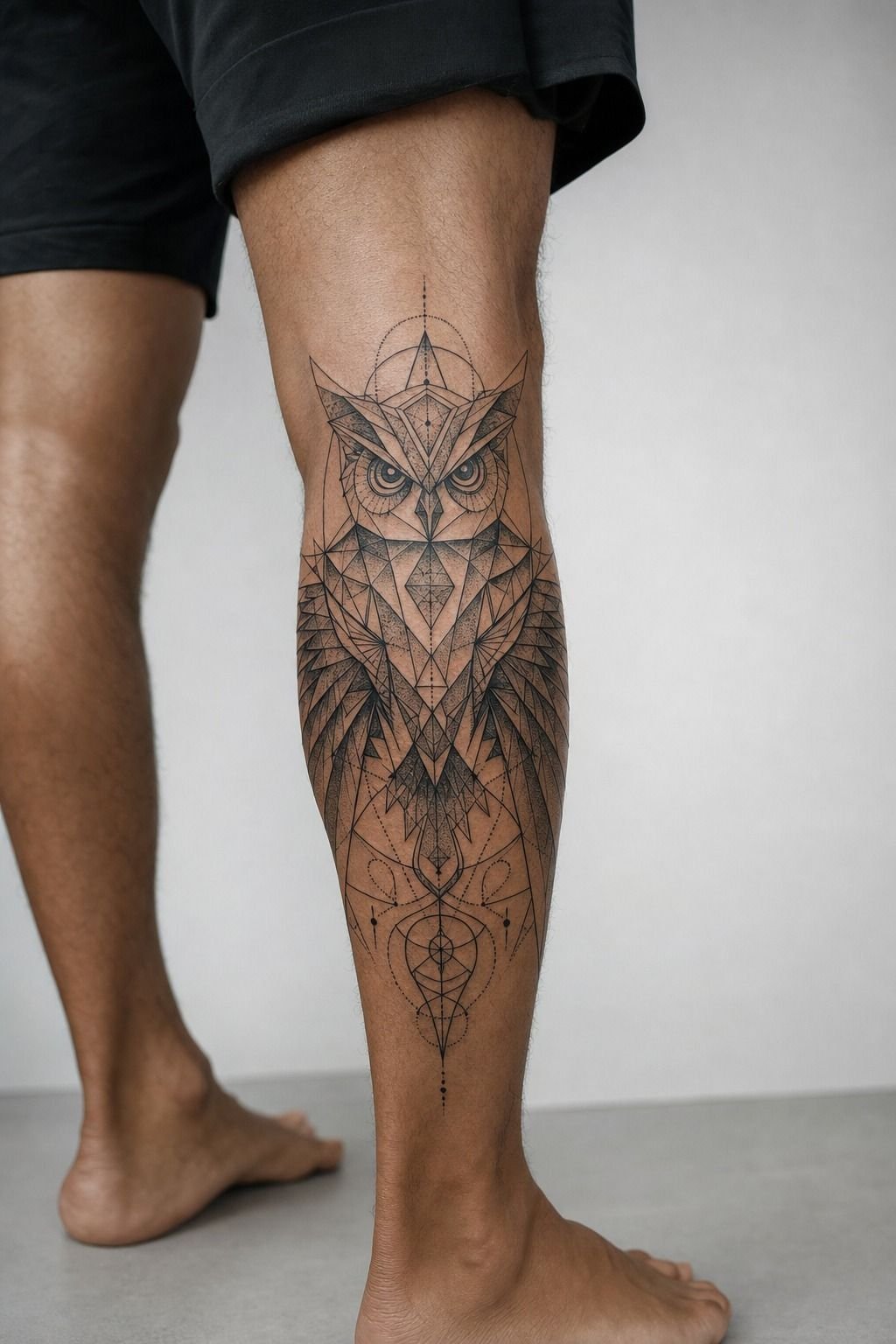
The Three-Plane Owl Method uses a clean owl face, mirrored geometric shapes, and a dark central eye line. On your outer calf, the design can be 5 to 6 inches tall and still have plenty of space for blackwork geometry.
Your calf is one of the more tolerable larger placements, and it gives the owl a strong vertical read. I’d avoid making every triangle identical.
A little irregularity keeps the tattoo organic. Crisp lines, one clean pull, and enough black to keep the design bold.
10Choose Red-Ink Cardinal Script Over a Fussy Memorial Piece
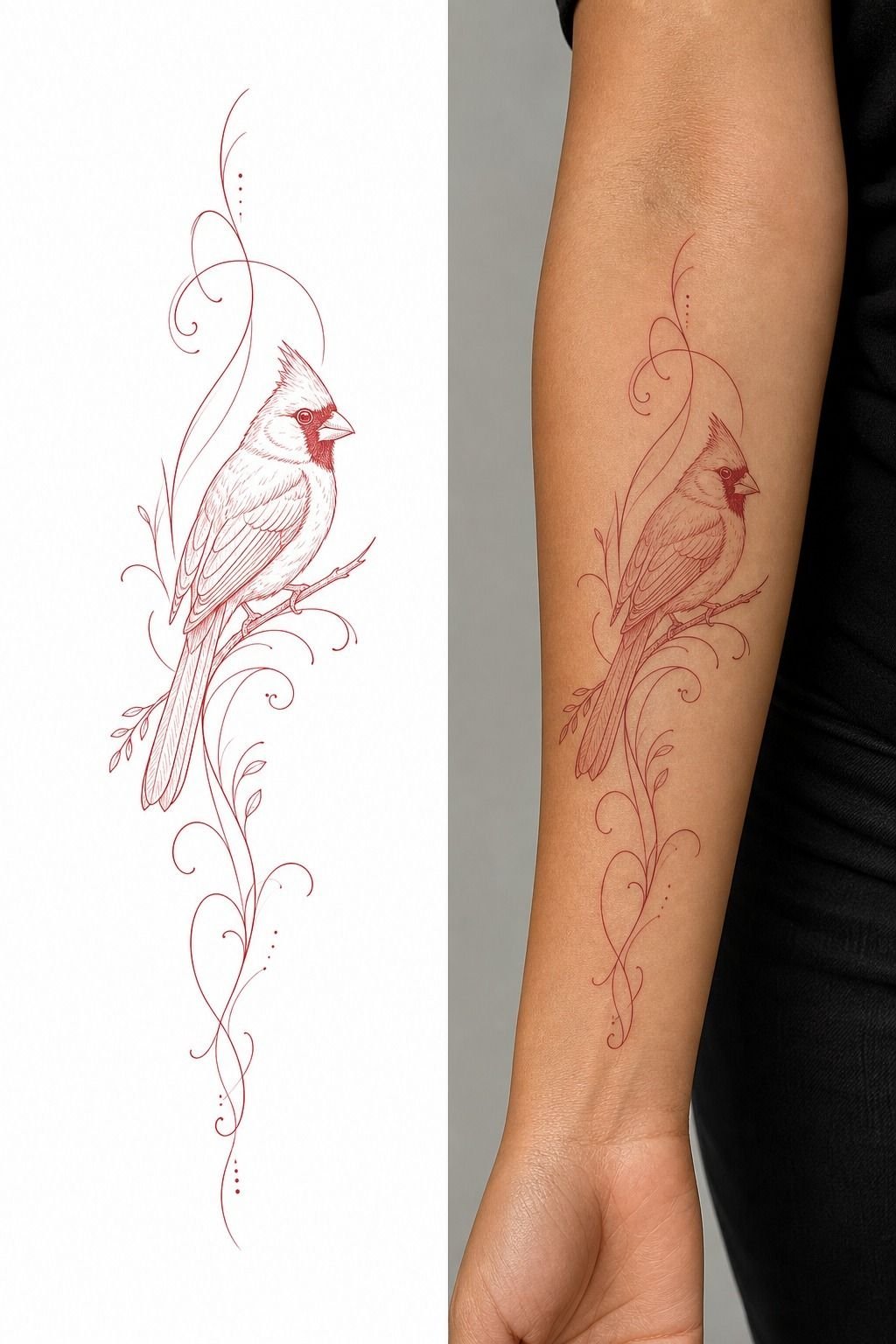
A red cardinal with meaningful script can hit hard without becoming sentimental wallpaper. Keep the bird line-based, then use one short word in fine red ink beneath the wing. A name, date, or phrase longer than a few words will fight the bird.
Red is spice, not your foundation. You’ll want black linework holding the cardinal together, because red alone can soften more than black as your skin changes.
The stencil-versus-healed comparison matters here. Ask to see healed red work, not just fresh photos.
11Let a Japanese Crane Cross the Shoulder Blade
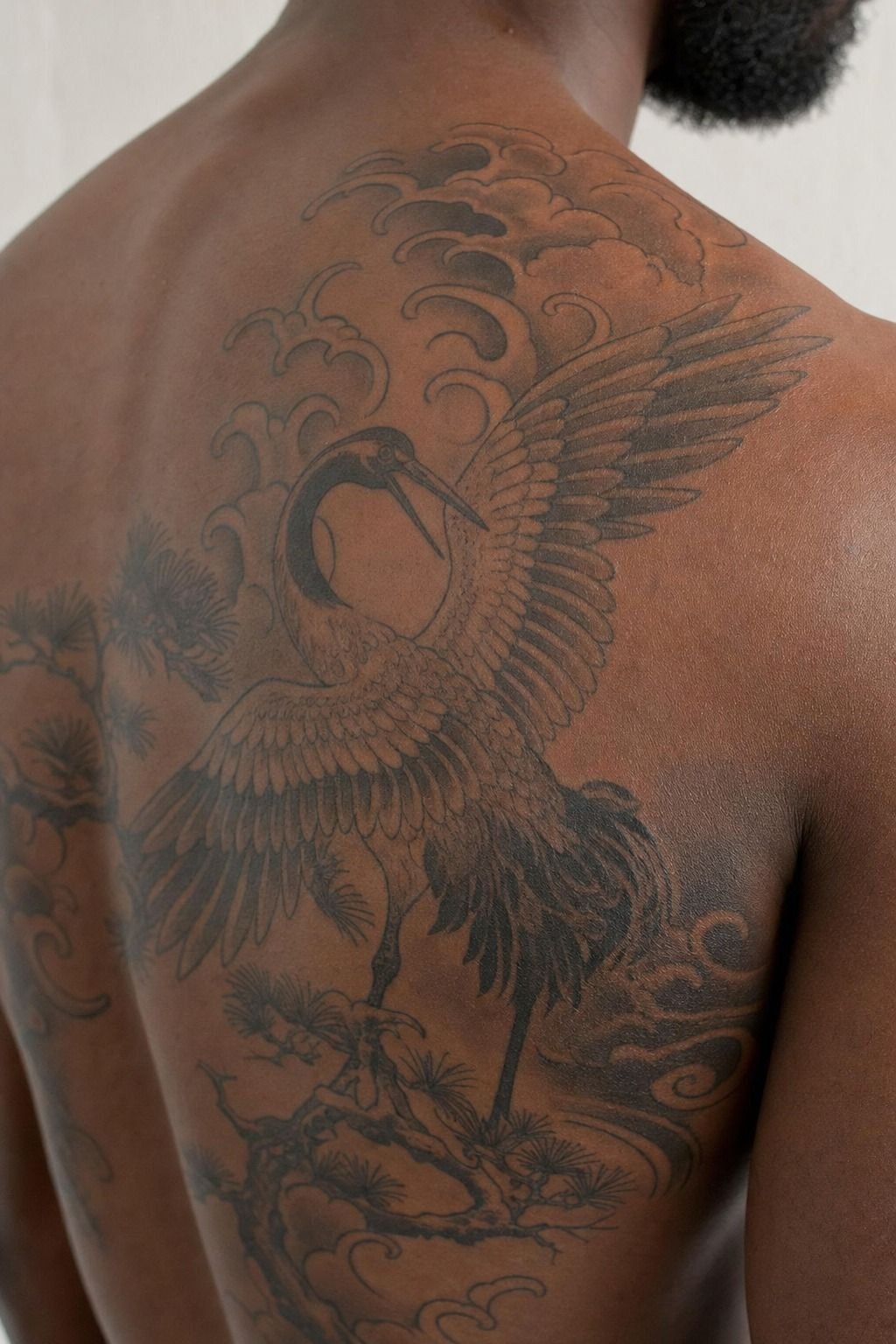
A Japanese crane needs movement through the shoulder blade. Let the neck arc over the scapula, with one wing opening toward the upper back and sumi-style black shading underneath. That’s a better fit than dropping a tiny crane in the center like a logo.
This placement gives you a broad, low-wear canvas. Marco’s rule for Japanese work is simple: respect the flow before chasing detail.
A crane can feel peaceful, but it should still have enough black to hold. Explore traditional tattoo design choices if you’re weighing bold versus delicate linework.
12Keep a Small Chickadee Above the Ankle Bone
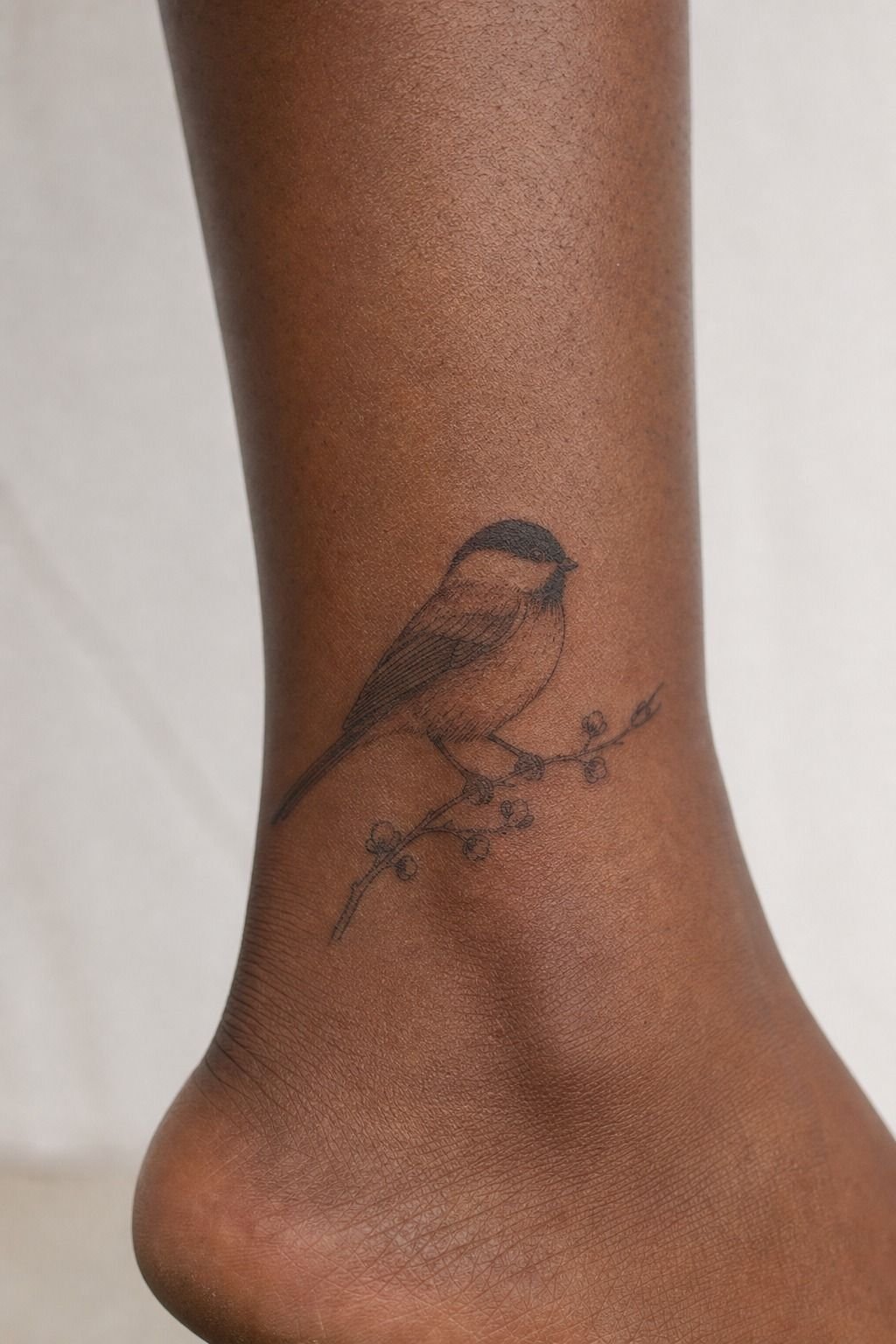
A chickadee above the ankle bone works best at 1.5 to 2 inches, with a round body and a black cap you can recognize instantly.
13Create a Collarbone Flight Path With Bird Silhouettes
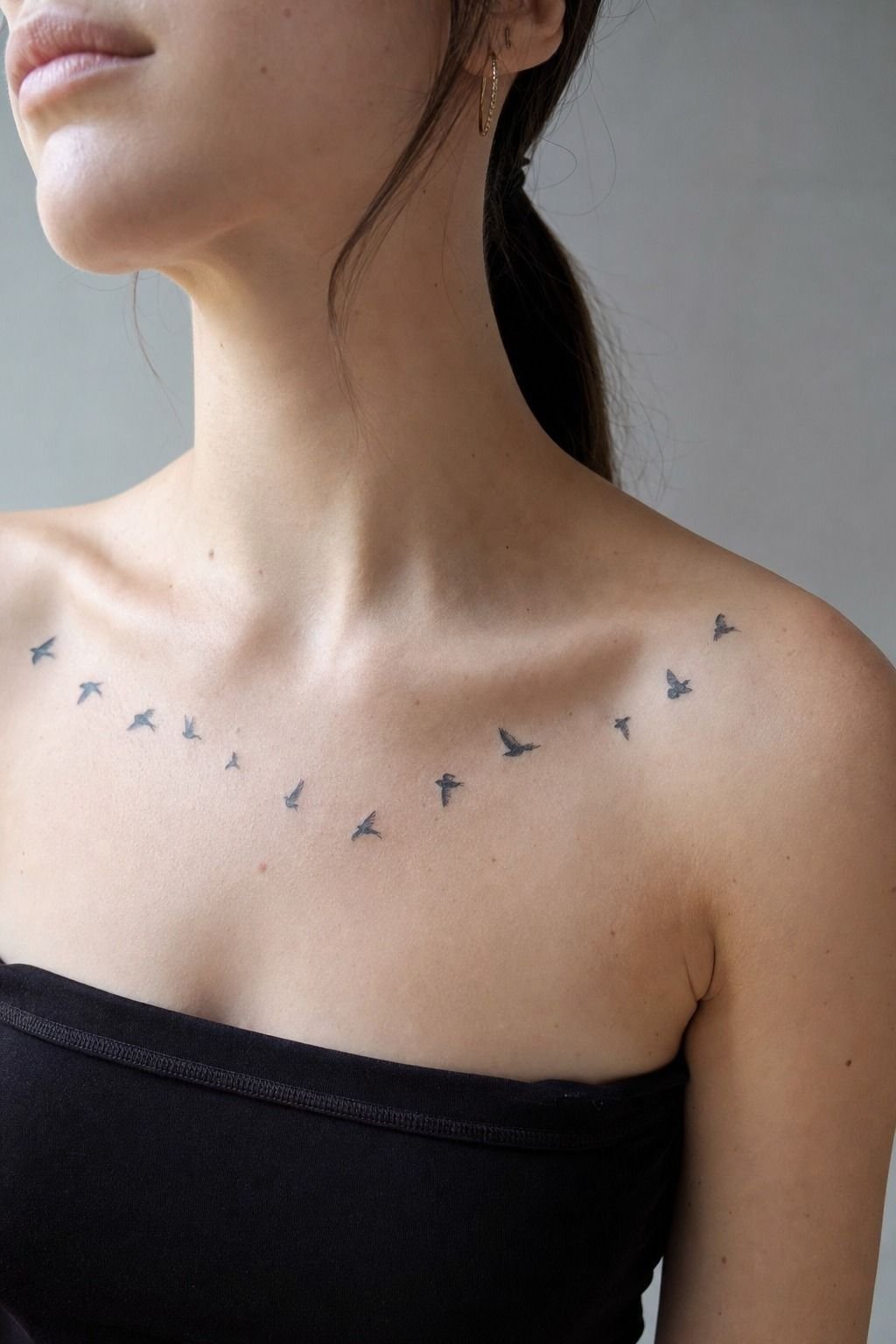
Bird silhouettes along the collarbone need a path, not random dots. Start with one slightly larger bird near the shoulder, then let three or four smaller black silhouettes taper toward the center. That shift gives your tattoo motion.
Your collarbone can be tender, but the linework session is usually manageable. I’d place the birds just below the bone rather than right on top of it, where the skin stretches more. Want a little mystical energy without clutter?
Pair the idea with inspiration from witchy tattoos.
14Pick Black-and-Grey Crow Over a Tiny Hand Detail
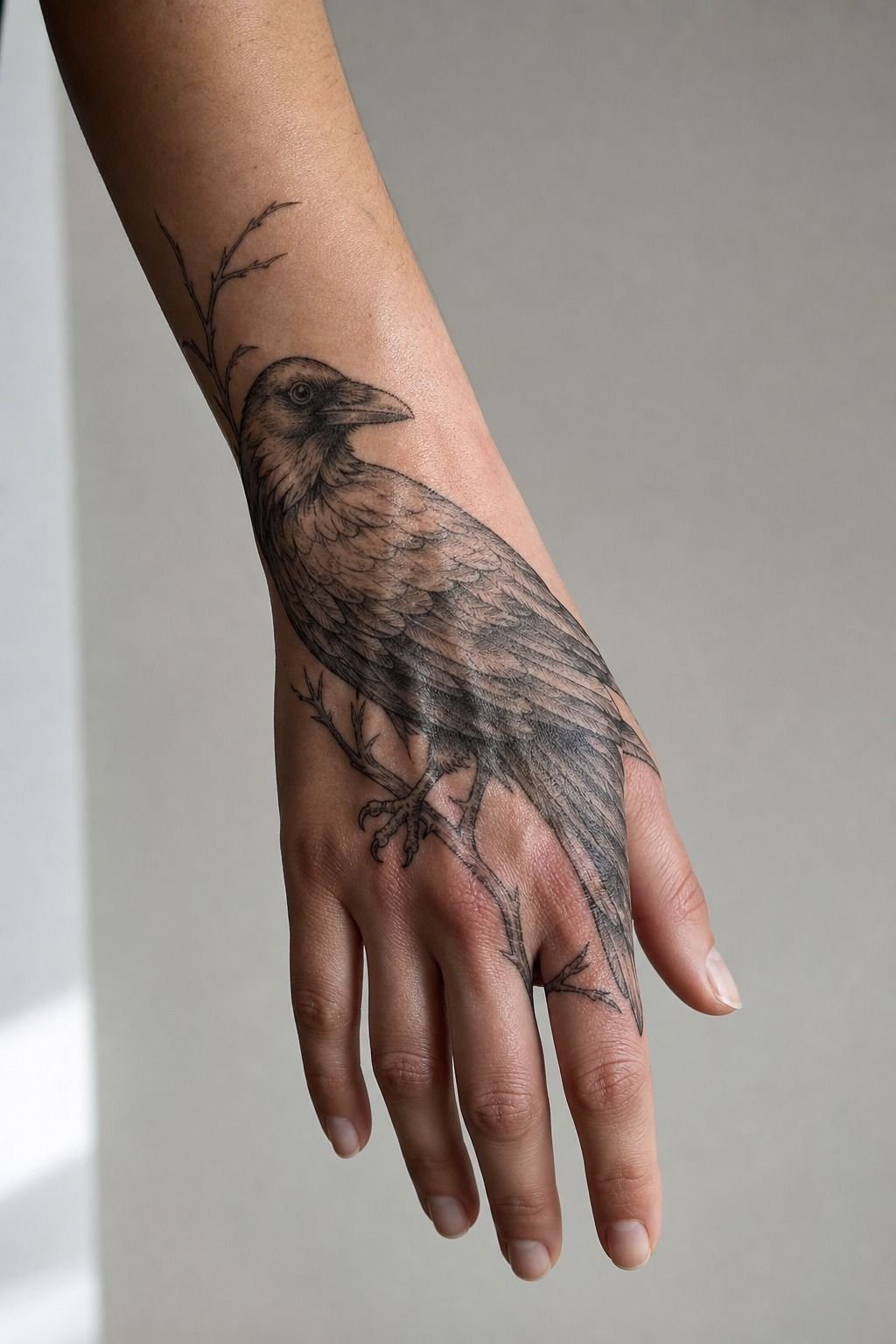
A crow on the hand should be graphic, dark, and honest about maintenance. Use bold black linework for the head and wing, then pepper shading through the body.
A tiny realistic crow on that placement is a losing bet. It’ll soften fast.
Hands are high-wear zones, full stop. You wash them, bend them, expose them to sun, and knock them into everything.
If you still want it, go bigger than your first instinct and accept touch-ups. That’s the deal.
The crow can look moody and powerful, but your artist shouldn’t promise permanence.
15Spread Flying Birds Across the Back Instead of Making a Stamp
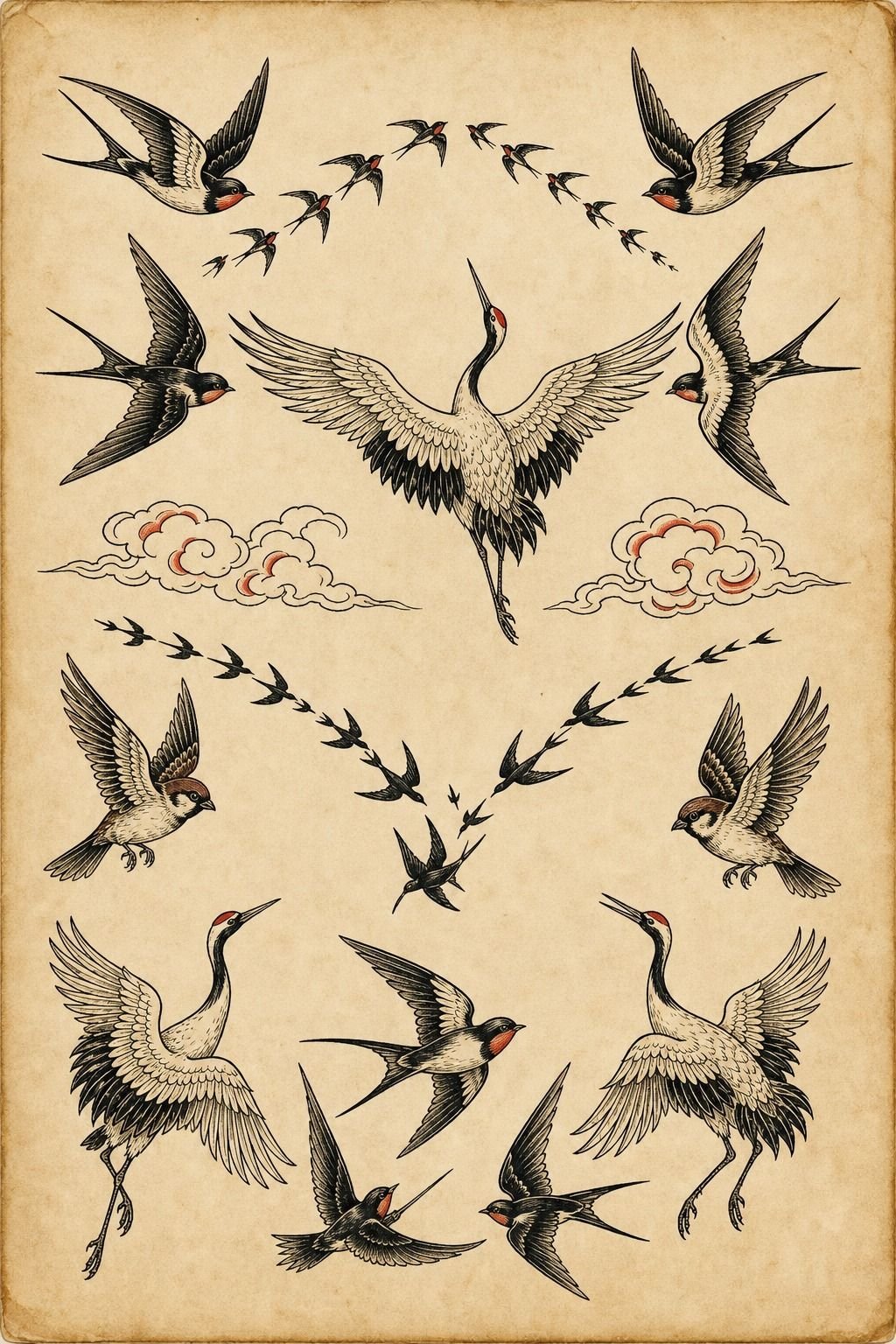
Flying birds across the back need scale. Let the flock begin near one shoulder blade and travel across, with bigger birds leading and smaller ones falling behind. Fine-line black ink looks gentle here because the back gives it room.
This is where I’d use a flash sheet as a starting point, then redraw the spacing for your body. Your back is a low-wear placement, and it heals nice if you avoid backpack straps and sweaty gym friction early on.
A flock can be timeless. A perfectly even row looks like a temporary decal.
16Balance a Bird and Crescent Moon Down the Spine
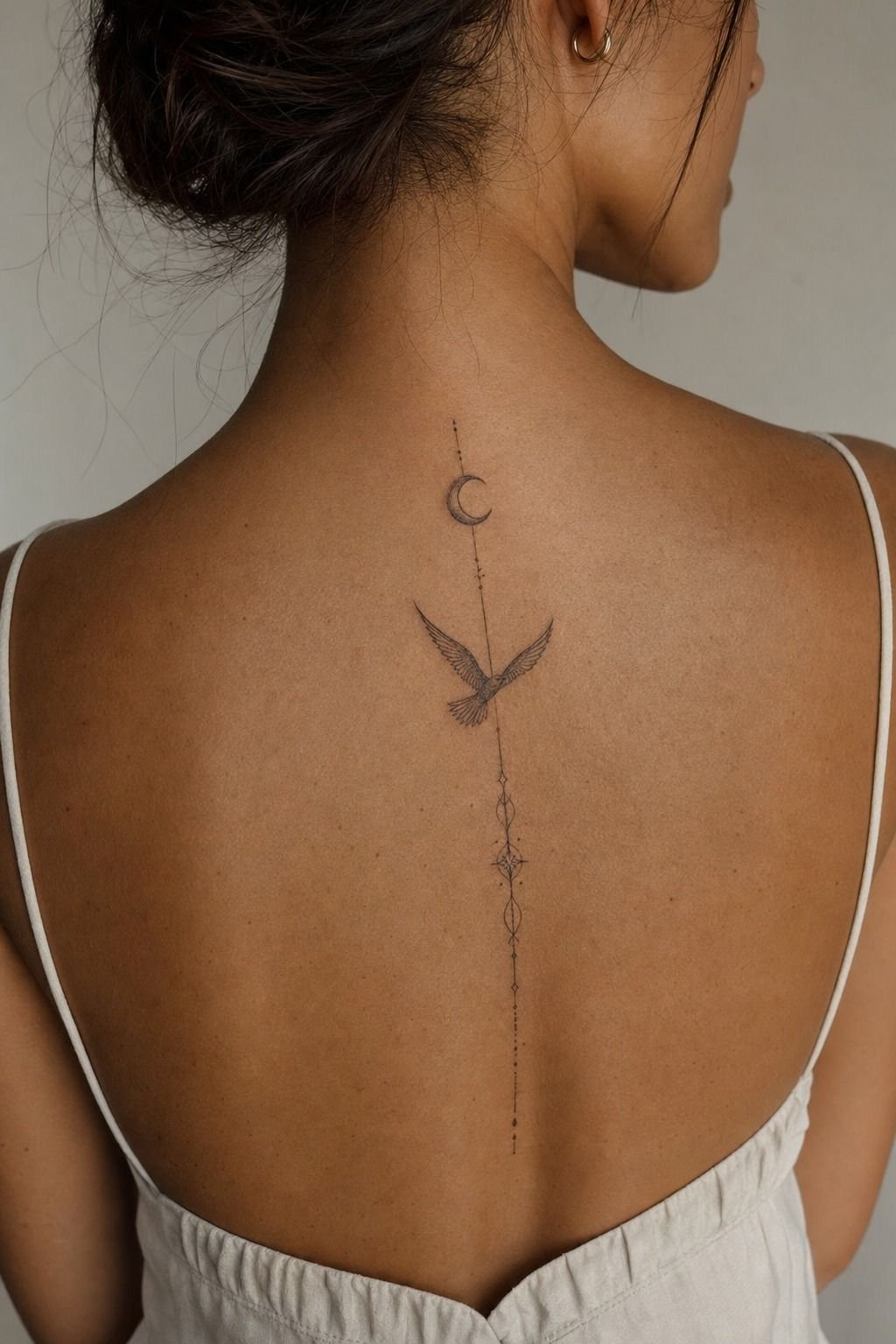
The Crescent-Flight Balance puts a small bird under a slim moon, with the linework centered down your upper spine. Use single-needle black ink and leave open skin inside the crescent. It’s subtle, not invisible.
Your spine placement is spicy in the center, then calmer as the design drifts outward. Keep the moon at least 1.5 inches tall, or the inner curve can close up over time.
But if you want white highlights, know they’re less predictable than black. Read our guide to white ink tattoos before you ask for them.
17Grow a Fine-Line Phoenix Through Botanical Details
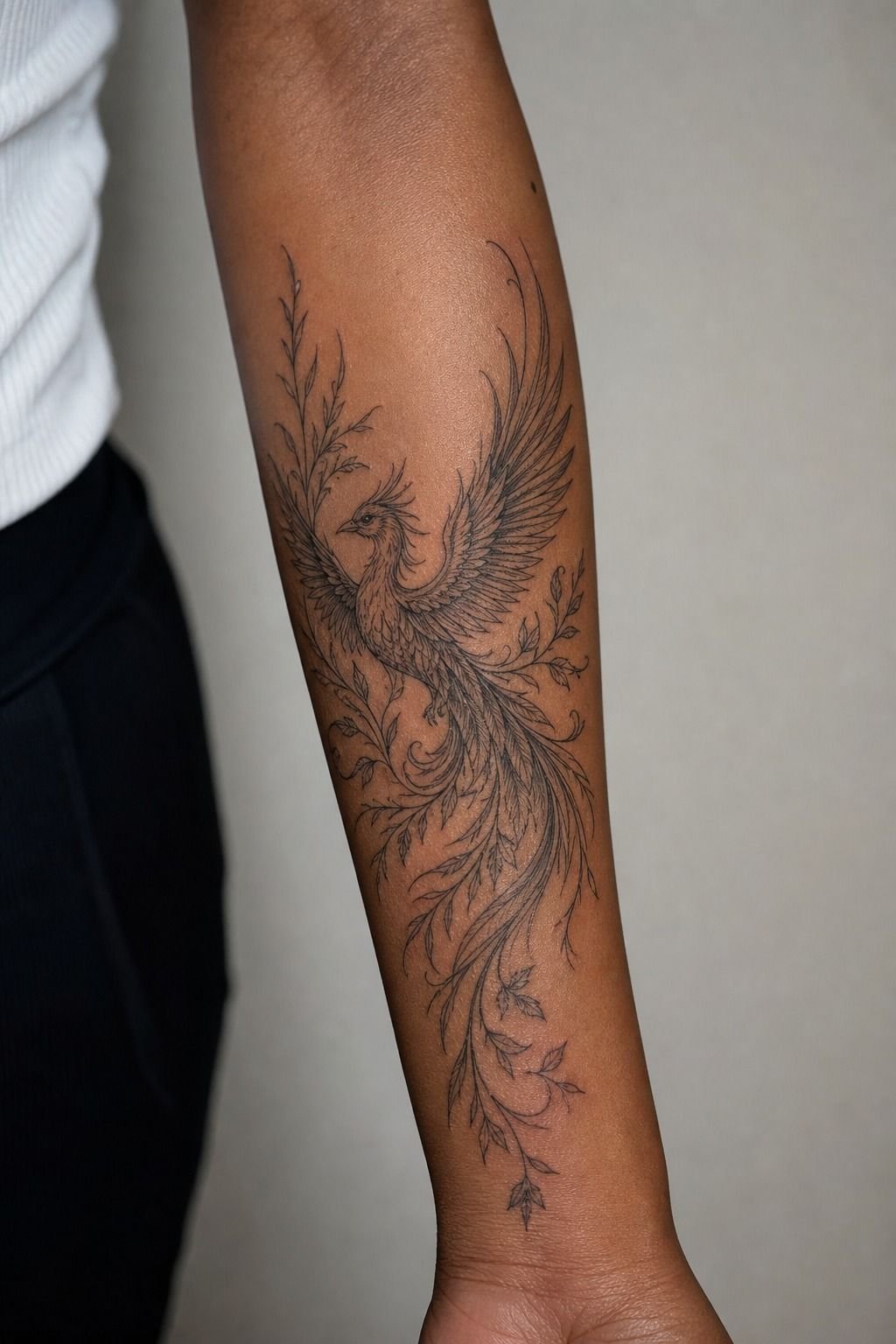
A phoenix on the inner forearm should rise through botanical stems, not float alone. Give the body a readable black core, then use fine botanical linework for feathers that turn into leaves. The result feels warm and meaningful without looking like a generic rebirth symbol.
Your inner forearm is visible and fairly manageable for pain, but it moves a lot while healing. Keep sleeves loose. I’d choose black-and-grey over a rainbow phoenix here, because strong contrast ages better and the botanical details stay soft instead of muddy.
What Bird Tattoos Cost and How They Heal
Your price comes down to size, placement, artist, and how much custom drawing you need. A shop minimum is often around $50 to $100, while typical US hourly rates run about $100 to $250. You’re paying for clean work and safe practice, not just minutes under the machine.
First few days, it’s an open wound, so treat it like that. Wash with gentle unscented soap, apply a thin layer of ointment, and don’t suffocate it. It’ll peel like a sunburn.
Don’t pick the flakes or you can pull color out.
My No-Bullshit Bird Tattoo Rule
I’ve watched people over-design bird tattoos because they’re trying to make one image carry every memory, every person, every feeling. That’s where a clean idea gets chewed up. They ask for the sparrow, a compass, a whole quote, birth flowers, stars, coordinates, and five different colors.
Then they want it all on a wrist. No.
That size on a wrist is gonna mush out, so I’d bump it up the forearm where it breathes and ages nicer.
The best bird tattoo isn’t the one with the longest explanation. It’s the one you’ll still recognize without squinting.
A raven can mean protection or mystery. A cardinal can hold grief or family. A crane can be a wish for luck, longevity, or a fresh start.
But you don’t have to write the symbolism all over your skin for it to count. Your reason can stay yours.
I also think people get too scared of black. Black isn’t boring.
It’s the part that keeps the bird visible after the fresh shine fades and the silver-skin phase passes. Color can be gorgeous, sure, but it needs a solid plan.
Fine red ink can look soft and intimate. Blue wash can feel bright.
Neither replaces structure. The design needs crispy and confident lines underneath.
And pick your artist for the style, not their follower count. You want healed photos, clean linework, sensible placement advice, and a studio that feels calm and clean.
If an artist says your tiny detailed bird will blur, listen. They’re saving you from a future cover-up.
What People Always Want to Know
How much does a bird tattoo usually cost?
A small bird tattoo usually costs around $50 to $100 at minimum, while custom work often runs $100 to $250 per hour in the US. Your size, detail, placement, and artist matter more than the bird itself.
Are bird tattoos a good idea for a first tattoo?
Yes, especially on your outer arm, calf, or upper thigh. A simple bird gives you clear linework that can age well, and those placements are usually more tolerable than ribs, feet, hands, or sternum.
How do I choose a tattoo artist for bird tattoos?
Choose an artist whose healed portfolio matches your goal. Look for clean healed linework, strong black saturation, and photos in natural light. If you want realism, don’t book someone whose best work is only tiny minimalist flash.
How much do bird tattoos hurt?
Pain depends on placement. Your outer arm, calf, and shoulder are generally more manageable; ribs, sternum, feet, and hands are spicier. Placement control matters, so check where tattoos hurt less before booking.
How long does a bird tattoo take to heal?
Surface healing usually takes about 2 to 3 weeks, while deeper settling can take 2 to 3 months. Wash gently, moisturize lightly, avoid pools and sun, and don’t let gym friction rub the fresh work raw.
What’s the best placement for a bird tattoo?
Your outer forearm or upper arm is a strong choice because the bird has room to breathe and the skin gets less wear. For a smaller piece, the inner wrist works if you keep the design simple and bold enough.
Where I’d Start First
If I had to pick one, I’d start with the blackwork raven on the outer forearm. It has enough skin and contrast to stay readable instead of fading into grey fuzz. Pin that raven for later and compare it with why tattoos blur over time.