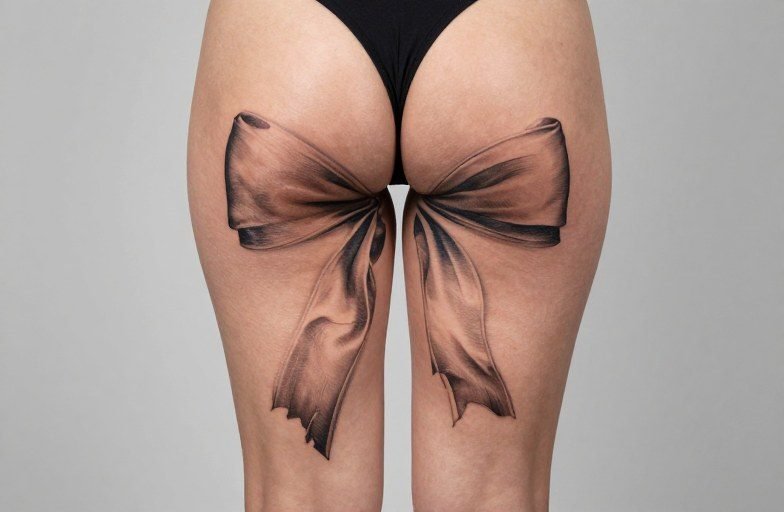
A bow tattoo on the back of the thighs most commonly signals the body as a gift, wrapped, presented, and revealed only when the wearer chooses. The placement itself is half the message: hidden in daily life, visible only in specific contexts, which creates a private layer of meaning that the wearer controls completely. Beyond the gift metaphor, these bows can reference femininity, sexual autonomy, or the tension between restraint and release.
Personal & Modern Meanings
The Gift Metaphor
The wrapped-present reading dominates contemporary interpretations. Two symmetrical bows on the back of each thigh frame the body as something packaged and offered. Crucially, though, the wearer decides when to “unwrap”, bending, sitting, or choosing revealing clothing. That control distinguishes this from passive decoration. The meaning lands differently depending on who holds the power to view it: the wearer, a partner, or the public.
Femininity and Playfulness
Bows carry strong associations with girlhood aesthetics, hair ribbons, gift wrap, lingerie details. On the back of thighs, this can read as reclaimed femininity: deliberate, adult, and self-directed rather than imposed. Some choose thin, delicate line work to emphasize elegance; others go bold with saturated red or black to push the motif toward something more graphic and assertive. The style choice reshapes the meaning significantly.
- Small, simple bows: subtle, personal, easily concealed
- Large, shaded bows with trailing ribbons: more theatrical, draw the eye across the back of the leg
- Matching pairs: symmetry emphasizes the “framing” effect
- Single bow: often reads as more individualistic, less about presentation
Who Chooses This Tattoo
Demographics here skew heavily toward women, though the design occasionally appears on men in queer or alternative contexts. Age ranges widely, early twenties through forties, with placement preference often correlating with professional needs for concealment. The back of the thigh hides under most work attire but reveals easily in swimwear or intimate settings.
Common motivations include marking a personal transformation, celebrating body acceptance after change, or simply enjoying a design that feels both decorative and slightly transgressive. The tattoo functions as a secret: known to the wearer, revealed selectively. That controlled disclosure appeals to people who value privacy but want meaningful personal marking.
Professional and Social Considerations
Healing this placement demands thought. The back of the thigh rubs against car seats, office chairs, and tight clothing. Plan for two weeks of loose pants or dresses, and expect some sitting discomfort. The skin here also stretches significantly with weight fluctuation, which can distort line work over time. Artists often recommend slightly bolder lines than you’d choose for a forearm or rib piece to account for this.
Religious & Spiritual Angles
Direct religious symbolism for bow tattoos is sparse, but connections exist through broader gift and covenant imagery. In Christian tradition, grace is often described as unearned gift, bow imagery can gesture toward that concept without being explicitly devotional. Some wearers pair bows with scripture references or cross elements to anchor the spiritual reading.
Eastern traditions offer looser associations. In Japanese culture, noshi, decorative paper strips attached to gifts, carry ceremonial weight, though these differ visually from Western bows. Buddhist gift-giving practices emphasize the intention behind offering rather than the object itself, which some wearers reference when explaining their tattoo’s significance.
Secular Spirituality
Even without doctrinal alignment, the bow-as-gift resonates with gratitude practices and mindfulness. The tattoo becomes a physical reminder of the body as temporary, valuable, and not to be taken for granted. This interpretation appeals to people with recovery histories or those who’ve experienced significant health changes.
History & Cultural Roots
Ribbon and bow motifs in tattooing trace back to at least the early 20th century, commonly associated with sailor and military traditions. Those early designs, often armband-style bows with names woven through, functioned as keepsakes and memorials rather than purely decorative elements. The specific placement on the back of thighs is a much more recent development, rising with the broader trend of “sexy” placement tattoos in the 1990s and 2000s.
Pin-up and burlesque aesthetics heavily influenced this evolution. Classic pin-up art frequently featured garter belts with bows positioned at the thigh, creating a visual precedent that tattoo artists and clients continue referencing. The transition from illustrated fantasy to actual skin marking followed naturally as tattooing gained mainstream acceptance and women became a larger client demographic.
Contemporary Evolution
Social media accelerated this design’s spread. Instagram-friendly placement, photogenic, slightly provocative, easy to frame in mirror selfies, drove popularity without necessarily diluting personal meaning. The visual format suits platform aesthetics: symmetrical, legible at small scale, and contextually suggestive without being explicit. That said, most people choosing this design predate their social media presence rather than following it.
Design Tips & Pairings
Technical Considerations
Line weight matters enormously here. Thin lines (single needle or tight three-round liner) photograph beautifully fresh but blur significantly within five to ten years on thigh skin. Medium weight (seven to nine round liner) holds better long-term. Shading ages faster than line work in this location due to friction and moisture, expect solid blacks to soften into gray, and color to fade toward muted tones.
Size sweet spot runs roughly three to five inches per bow. Smaller loses detail and impact; larger starts to dominate the canvas and can distort with leg movement. Symmetry demands careful stencil placement, thighs are not identical canvases, and natural asymmetry in muscle and fat distribution requires artistic adjustment rather than mechanical mirroring.
Common Pairings
- Garter belt lines: extends the lingerie reference, creates a cohesive “set”
- Script or names: woven through the bow or trailing as ribbon ends
- Floral elements: roses or cherry blossoms at the bow’s center
- Dagger or weapon: subverts the softness, adds edge
- Color vs. black and gray: red reads classic/romantic; black reads graphic/modern
Mythology & Folklore
Archery bows appear across mythologies, Artemis, Apollo, Cupid, but these differ from decorative ribbon bows. Some trace decorative bow symbolism to Celtic ribbon work and knot traditions, where interlaced patterns represented binding contracts and protection. The visual similarity is limited, though the conceptual overlap (binding, marking significance) holds some resonance.
Folk practices involving gift-wrapping often linked elaborate bows to warding off evil spirits or marking special status. In some European traditions, the bow on a bride’s dress required specific tying to ensure fertility. These historical threads are tenuous connections to modern tattoo choices, but they illustrate how deeply the wrapped-gift image is embedded in cultural consciousness.
Modern Mythmaking
Contemporary tattoo culture generates its own folklore. The bow on back of thighs has accumulated specific urban associations, often linked to BDSM and bondage aesthetics, where rope work and decorative restraint carry established visual language. Some wearers explicitly embrace this reading; others reject it. Neither interpretation is more “authentic”; the design’s ambiguity is part of its durability as a motif.
Final Thoughts
Bow tattoos on the back of thighs succeed because they balance multiple readings without collapsing into any single one. Gift, secret, feminine marker, playful provocation, meanings coexist and shift depending on viewer, context, and the wearer’s own intent. The placement itself does significant symbolic work: hidden by default, revealed by choice, carrying an inherent performative quality that simpler locations lack.
If you’re considering this design, think hard about the specific bow style, size, and whether you want symmetry or a single piece. Technical decisions, line weight, color vs. black, healing logistics, shape the long-term result more than conceptual meaning does. The best bow tattoos combine clear personal significance with smart execution: knowing why you want it, and ensuring the artist understands how thigh skin behaves differently than more common placements. Done well, it remains readable and resonant for decades. Done carelessly, it blurs into indistinct decoration that no longer reads as bow at all.
Frequently Asked Questions
Do bow tattoos on the back of thighs stretch badly if you gain or lose weight?
Thigh skin experiences significant stretching with weight change, which can distort symmetry and line crispness over time. Maintaining stable weight helps preserve the design, but choosing slightly bolder lines initially provides some buffer against minor fluctuation.
How painful is getting tattooed on the back of the thigh?
Pain levels vary individually, but the back of the thigh generally rates moderate to high, closer to the knee and inner thigh hurts more, while the outer and upper areas are somewhat more tolerable. The session length matters; two symmetrical bows in one sitting can be exhausting.
Can men get bow tattoos on their back thighs, or is it strictly feminine?
Men do get this design, particularly in queer, drag, and alternative fashion contexts where the motif carries different cultural associations. Masculine presentation of the design often involves heavier line work, darker color palettes, or pairing with contrasting imagery like weapons or skulls.
How do you keep bow tattoos looking symmetrical as they age?
Perfect symmetry is impossible to maintain long-term due to natural body asymmetry and aging, but starting with a skilled artist who adjusts the stencil to your actual anatomy, not just mirroring, helps significantly. Periodic touch-ups every few years can restore faded details and rebalance any noticeable drift.
Related Tattoo Meanings
- Cathedral Window Tattoo Meaning: Light, Structure, and Stillness
- Chakra Tattoo Meaning: Energy, Balance Body Placement
- Ega Tattoo Meaning: Symbolism, Placement Aging
- Explore more