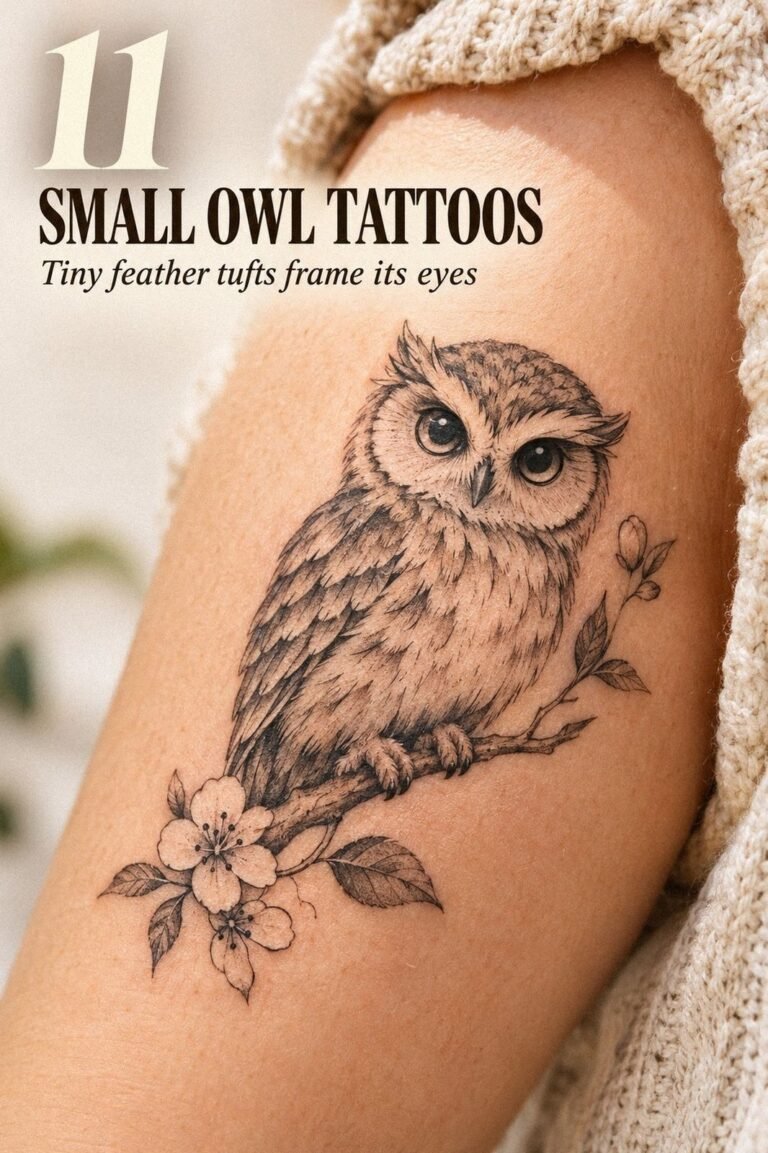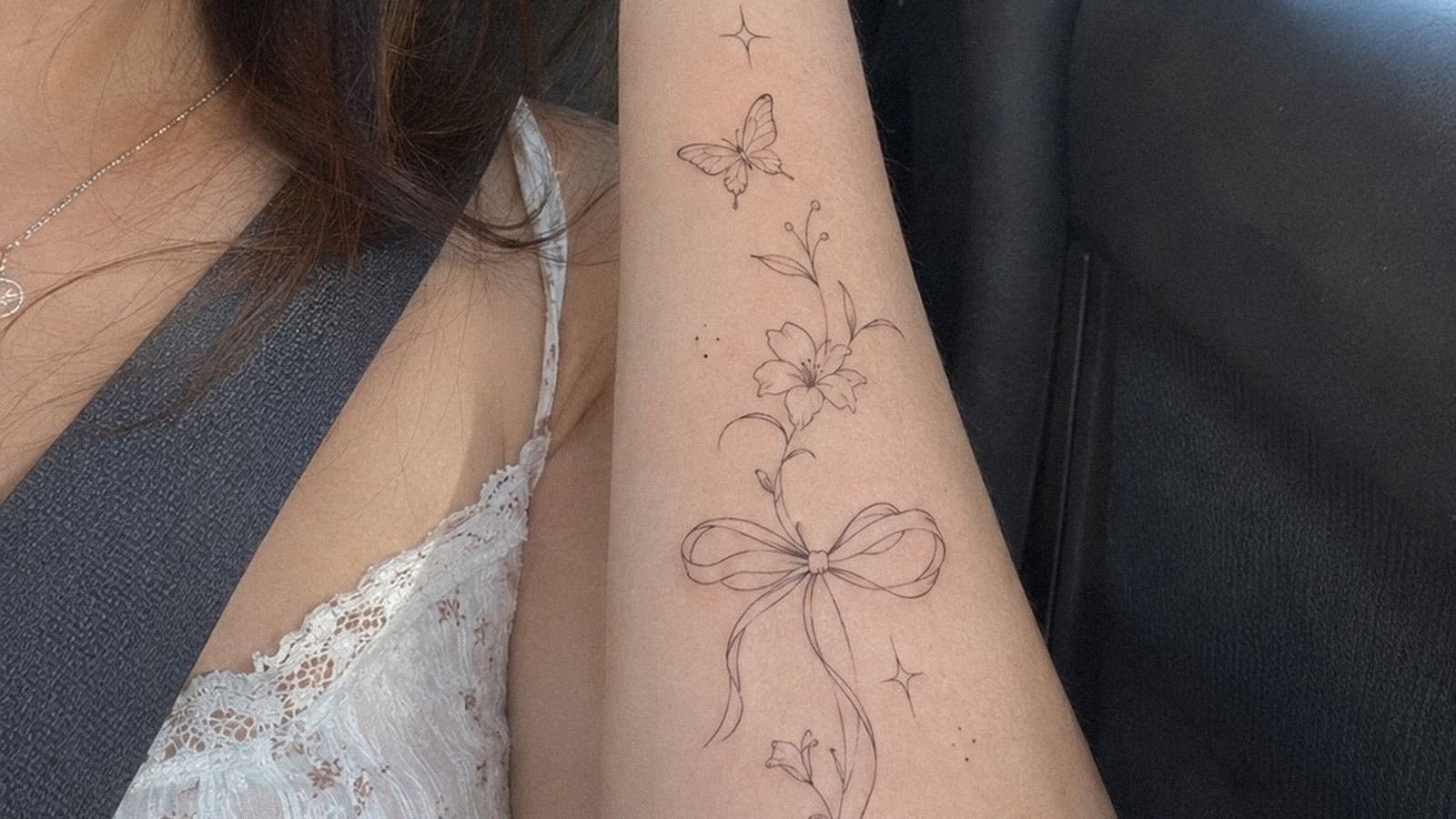

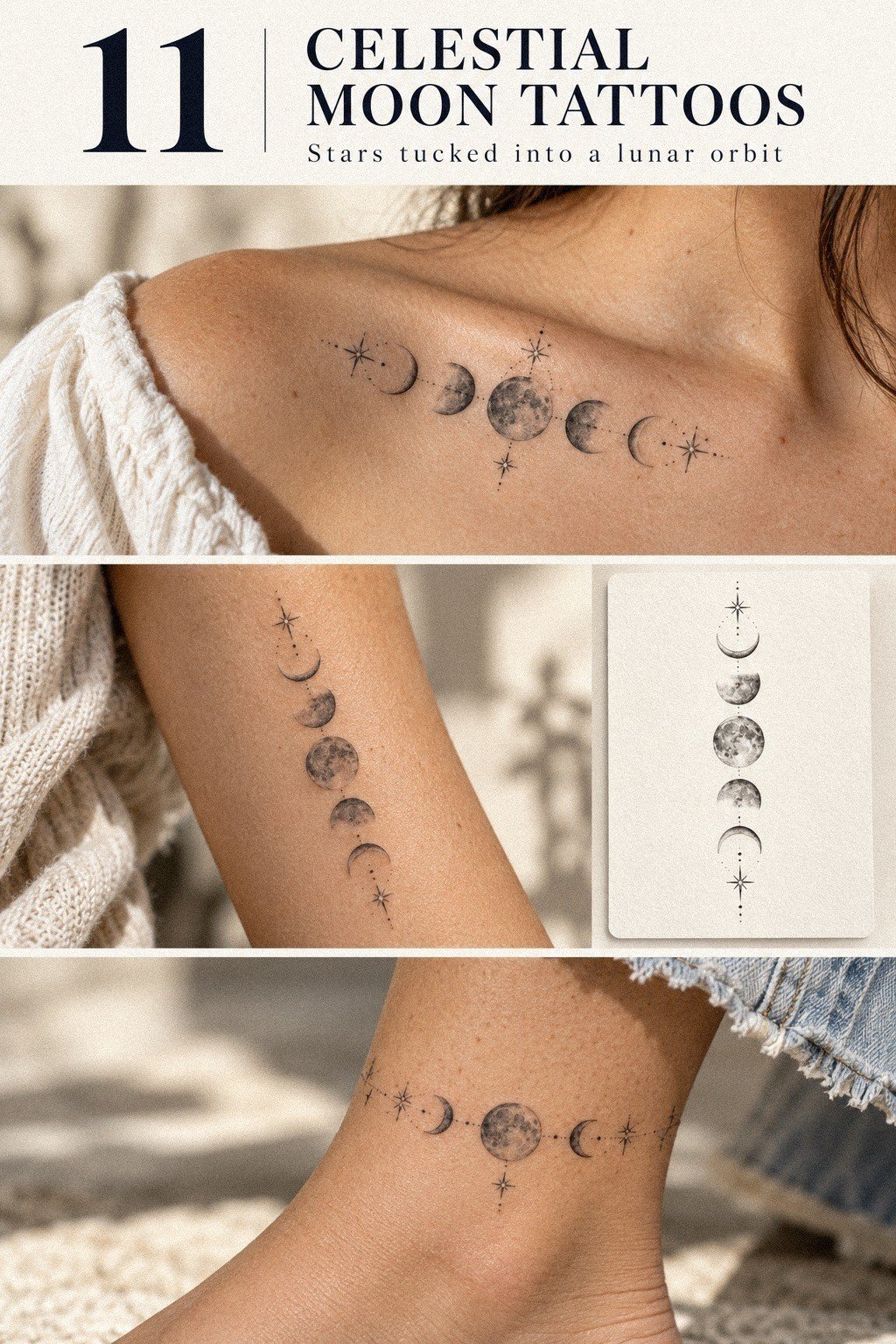
A celestial moon tattoo ages gracefully when you choose readable linework, enough breathing room, and a placement that protects it from constant friction and UV exposure. I learned that after seeing a delicate crescent lose its crisp points under poor planning. Your best result starts before the stencil. It starts with meaning.
Editor’s note: The most successful moon tattoos aren’t always the most intricate. They’re the ones with a clear silhouette, a personal idea, and enough open skin for every mark to remain readable.
Your design can be a minimal crescent, an ornate constellation, a feminine symbol, or a masculine emblem. The right choice is the one you’ll still value when the trend has moved on.
A Moon Phase Changes the Whole Mood
The moon phase sets the emotional direction before you add stars, symbols, or shading. A crescent can feel personal and symbolic, while a full moon may look powerful and sacred.
If you’re still deciding, this guide to moon phases tattoo meaning can help you connect the shape with renewal, protection, balance, or a particular season of your life.
I’d sketch several phases and live with them for a few days. You’ll notice that one feels expressive, another understated, and one may suddenly feel like the only honest choice.
- Start With a Meaningful Moon Phase
- Pick Intricate Celestial Linework Details
- Where Should Your Crescent Moon Go?
- Layer Stars Around the Lunar Design
- Keep Small Celestial Details Crisp
- Witchy Moon Composition: What Belongs?
- Choose Shading for a Striking Moon
- Minimal or Ornate? Balance Scale With Placement
- Can You Plan for Sensation?
- Protect Fine Linework During Healing
- Your Moon’s Personal Symbols
1Start With a Meaningful Moon Phase

Choose the moon phase before you choose the decoration. A crescent can feel meaningful crescent, symbolic, and understated, especially when you connect it to renewal, protection, or a specific season of your life.
For more symbolism, browse this moon tattoo meaning guide. You’ll understand what your design is saying before anyone asks, and that clarity is worth the investment.
A new moon can suggest beginnings. A half moon may represent balance, while a full moon can feel sacred and haunting. I’d choose the phase that still feels meaningful when nobody else knows the reference.
Sketch the open side of the crescent and decide whether it faces your fingers, elbow, or shoulder. A terracotta-and-olive ink crescent can look bold without becoming heavy, while a thinner outline feels delicate and personal.
Ask yourself one question: what do you want to remember when you see it? Your answer should guide the stars, dots, and symbols. A meaningful design ages better emotionally because you won’t want to replace it when a trend shifts!
The Focal Point Should Stay Obvious
Build everything around one unmistakable shape. Your eye should find the crescent first, then the largest star, then the smallest marks.
That hierarchy keeps an open crescent silhouette readable even when the design is intricate. If every symbol has equal weight, the tattoo can become gritty visual noise instead of a striking composition.
I’d rather see one daring curve and three intentional stars than a crowded collection of tiny ideas. Strong editing makes a tattoo feel iconic.
2Pick Intricate Celestial Linework Details

Build the linework around one readable crescent. Your design can include planets, stars, dots, or a small constellation, but the moon should remain the first shape your eye notices.
If you’re drawn to unusual arrangements, compare your idea with these unique moon tattoo ideas. You’ll find more value in studying healed proportions than in copying every tiny detail from a fresh design.
Ask your tattoo artist to show healed linework, not only fresh examples. Fresh single-needle work can look sharp and striking, while healed lines may soften slightly.
You’ll want to see how the smallest star points behave after the skin settles. I’d choose three intentional stars over nine identical dots because repetition can make a small piece look mechanical.
Keep the largest line visually dominant. Your crescent should read first, then the stars, then any tiny marks.
Good design wins! If a one-inch piece needs more room, spending a little more on scale may be worth it.
Skin Tone and Contrast Matter
Ask how the design will read against your skin after the initial redness fades. A black line contrast can look crisp on many complexions, but the final effect depends on saturation, placement, and line weight.
A tattoo artist should explain whether fine dots, pale shading, or delicate gaps will remain visible. You’re not asking for a guarantee. You’re asking for an honest plan.
I’d bring healed examples with a similar skin tone when possible. That makes the conversation more practical and less dependent on fresh examples.
3Where Should Your Crescent Moon Go?

Use body placement to protect the design’s structure. The spine, inner forearm, thigh, ankle, shoulder, and ribs all create different visual effects, so your choice should follow your daily habits.
For more symbolism, browse this moon tattoo meaning guide. A private placement can feel sacred, while a visible placement can make the tattoo more conversational and expressive.
Your artist should check how the stencil sits when you stand, bend, and twist. Skin stretches differently across the spine and ribs, so a design that looks centered while you’re seated may shift visually when you move.
Think about visibility, too. A plum-and-gray crescent can feel elegant and graceful without becoming ornate. An inner forearm tattoo may be easier to inspect during healing and easier to protect from friction.
A paper stencil lets you inspect the curve before any ink touches your skin. Take a few steps back, turn naturally, and ask whether the moon still reads clearly. If it doesn’t, the placement or scale needs another look.
How Should the Crescent Face?
There’s no universal direction, but orientation can change the feeling of the tattoo. A crescent opening toward your hand may feel like it’s holding something, while one facing your shoulder can suggest movement upward.
Try the stencil in both directions. You’ll know quickly whether the curve feels graceful, edgy, romantic, or strangely disconnected from your body.
I’d choose the direction that feels natural when your arm or leg rests normally. You shouldn’t have to twist yourself to understand the design.
4Layer Stars Around the Lunar Design

Layer stars with a clear hierarchy. Start with one larger star, add two smaller points, and finish with a few dots if the design still has room to breathe.
That arrangement feels playful, dainty, and vibrant because the marks don’t all compete for attention. If you’re considering a pairing, explore this sun moon and stars tattoo collection before settling on your layout.
Your ankle moves inside socks and shoes, while your wrist bends throughout the day. Leave enough negative space between each mark so the design won’t become a dark cluster.
I’d avoid putting the smallest dots directly where a shoe seam, watchband, or tight sleeve rubs. Repeated friction won’t erase ink overnight, but it can make aftercare harder and reduce the crispness you’re paying for.
A fine-line tattoo needle can create a crisp star, but the final size still matters more than the tool name. Ask your artist to show you the smallest mark they recommend for your skin and placement. That conversation can save you money and disappointment.
Negative Space Is Part of the Design
Open skin isn’t an unfinished area. It gives every celestial mark enough separation to stay legible.
A gap between the crescent and a star can make both shapes feel sharper. Without that gap, even an elegant tattoo may heal into a dense patch.
I’d protect the empty areas as carefully as the inked ones. That restraint matters!
5Keep Small Celestial Details Crisp

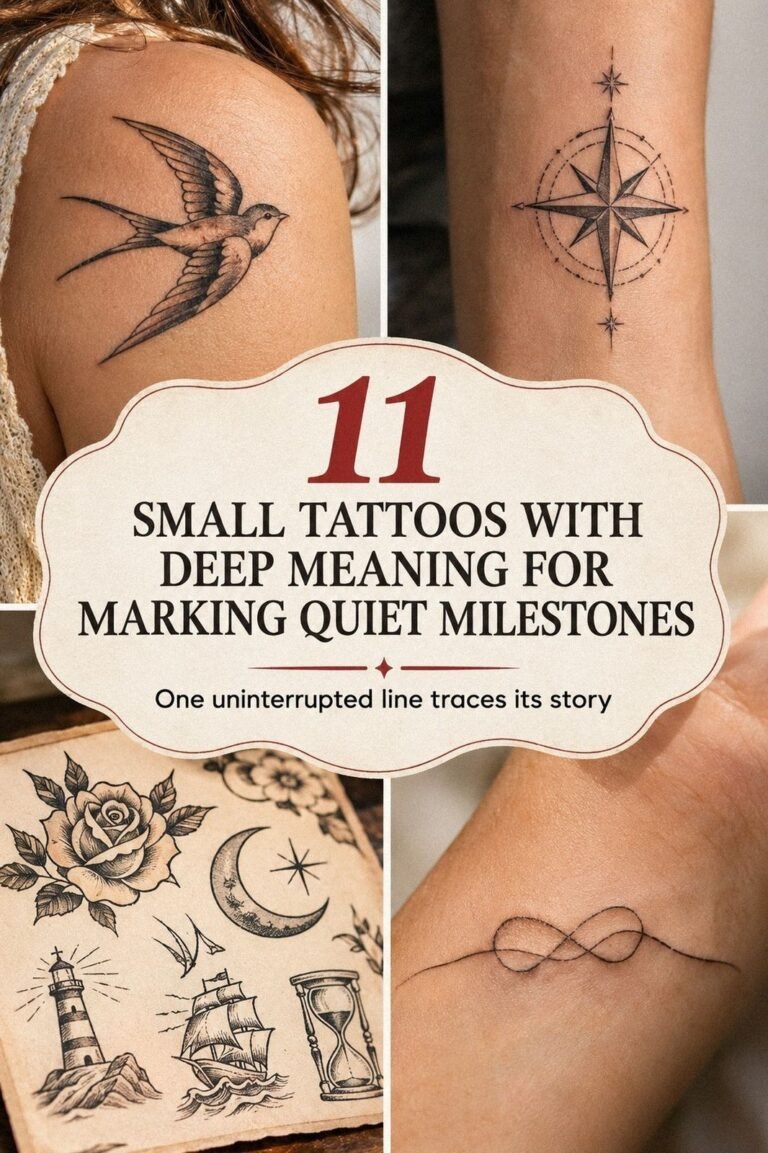
Use a flash sheet to edit before you commit. A hand-drawn collection of crescents, stars, dots, and symbols gives you a physical way to compare shapes before the appointment.
Circle the details you’d keep if the design had to lose half its decoration. That exercise is surprisingly useful, especially when your first concept feels intricate but not necessarily readable.
Your final piece might include an emerald-and-gold flash design, a crescent, three stars, and one tiny dot rather than every mark on the page. I’d remove miniature facial features or hairline rays if they make the moon harder to read.
Fine details can soften with time, especially when they’re packed close together. Your artist can widen a gap, thicken one structural line, or replace a fragile point with a small solid shape.
Those edits may feel less dainty on paper, but they often look more polished after healing. If you want another starting point, compare the proportions in these unique moon tattoo ideas.
A Small Symbol Can Carry More Weight
One symbol usually says more than five disconnected ones. Consider a birth star, a small initial, a protective eye, or a single botanical shape.
The best addition feels personal and meaningful, not merely decorative. You’ll recognize it instantly, even if someone else never understands the reference.
I’d avoid adding a symbol just because the stencil looks empty. Empty skin may be exactly what keeps the composition elegant.
6Witchy Moon Composition: What Belongs?
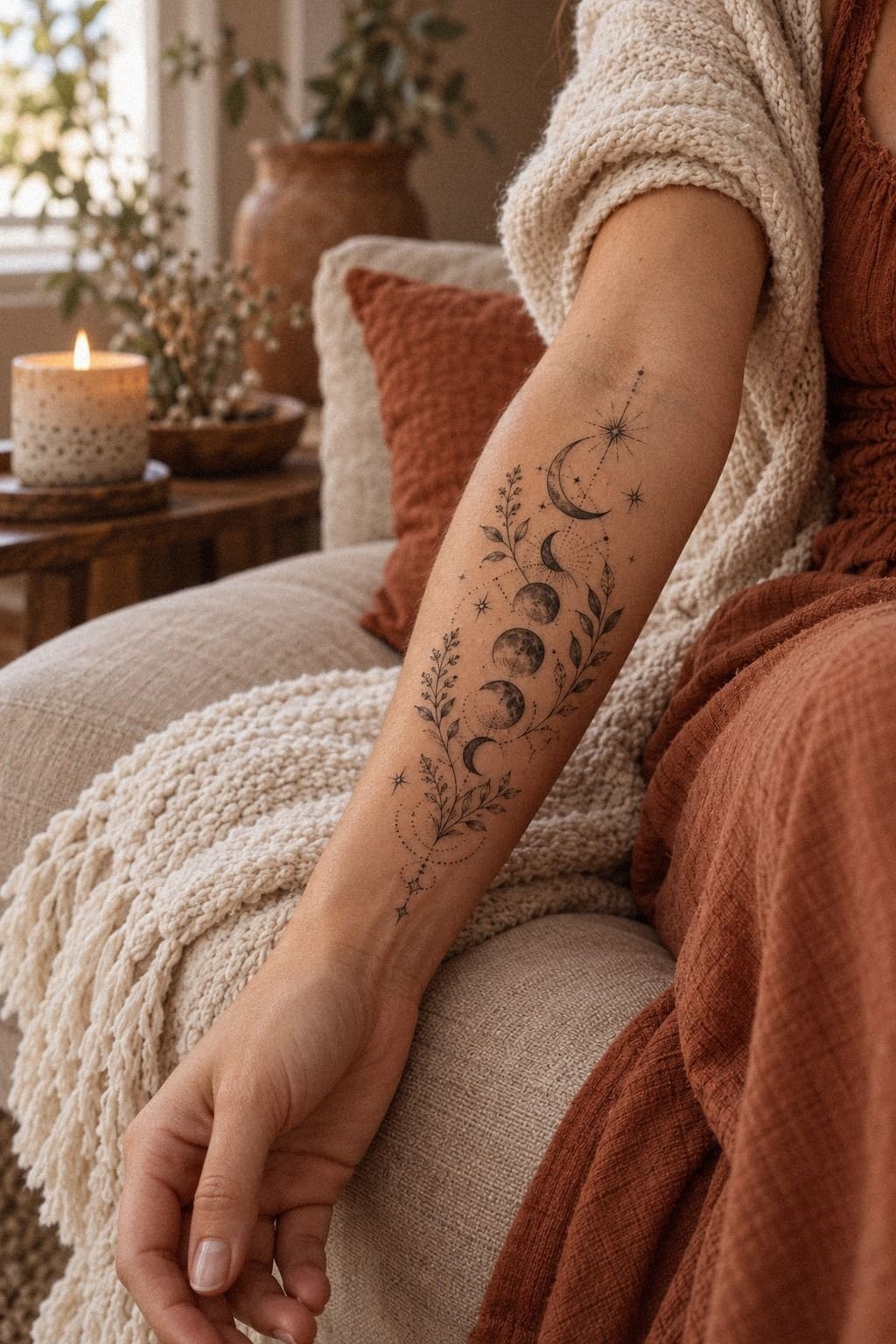
Plan a witchy mood through shape, not clutter. A forest-green and rust accent can support the mood when the symbols remain selective.
7Choose Shading for a Striking Moon

Choose shading only when it strengthens the crescent. Open skin can create as much drama as solid color, especially when the outline is confident and the surrounding marks stay restrained.
A small patch of charcoal shading can anchor one tip of the crescent, while scattered dots create depth around it. That contrast feels powerful and striking when the dark area stays intentional.
I’d avoid soft dusty-rose washes in a very small design because they can lose definition sooner than a clean charcoal shape. If you’re comparing realistic approaches, this realistic moon tattoo guide can help you judge the detail level.
Ask whether your artist recommends stippling, smooth shading, or no shading at all. Your skin, placement, and final size matter more than the style label.
A larger thigh piece may hold shading better than a tiny wrist piece. The extra consultation cost can be worth it when it prevents you from paying for details your skin can’t support.
8Minimal or Ornate? Balance Scale With Placement

Balance the design by measuring the body area, not by chasing the smallest possible tattoo. A warm-white crescent with camel and black accents needs enough room to remain readable when your arm hangs naturally.
Use the three-space rule: one clear gap inside or beside the crescent, one gap between the moon and the closest star, and one outer margin around the whole arrangement.
Those spaces create a calmer visual rhythm and protect the design from becoming a dense cluster. You can compare different proportions in these moon tattoo ideas.
Discuss scale in inches or centimeters with your artist. A one-inch moon may suit a simple crescent, while a more intricate design may need closer to two inches or more.
The correct size depends on your line density, skin, and placement, so don’t treat one measurement as universal. A slightly larger tattoo may offer better long-term value than a cramped miniature.
9Can You Plan for Sensation?

Choose placement with honest expectations about sensation. Ribs, feet, hands, and the sternum are usually more sensitive because the skin is thinner and the body has less padding there.
Your threshold still matters more than someone else’s ranking. I’ve heard people call a forearm painless and others call it intense, so you shouldn’t treat an online pain chart as a guarantee.
Before you commit to detailed shading, ask your artist whether the design can stay outline-only. A midnight-blue outline lets you see if the placement feels right without adding unnecessary session time.
I’d choose a thigh, forearm, or shoulder for a first piece if you’re nervous. Those areas are often more tolerable, and a shorter appointment may offer better value than forcing a detailed design into a sensitive placement.
Bring water, eat normally, and wear clothing that gives your artist easy access. If you need a pause, say so. You don’t have to prove you’re fierce to make a meaningful choice.
10Protect Fine Linework During Healing

Protect the tattoo while the surface heals. Your job is to let the skin recover without picking, soaking, or exposing it to unnecessary friction.
Follow your artist’s instructions for washing and moisturizing. A gentle fragrance-free cleanser is commonly used, followed by a thin layer of suitable moisturizer.
Avoid swimming and prolonged soaking while the surface is healing, and keep direct sun away from the area. You’ll want the skin calm, clean, and lightly hydrated.
The surface often heals in about two to three weeks, while complete healing can take about two to three months. A healed tattoo won’t look identical to the stencil, and some softness is normal.
I made the mistake of judging a fine-line piece too early. The first week looked dark and tight, then the design softened into the intended shape. If you notice unusual heat, spreading redness, or worsening pain, contact a qualified medical professional.
Before You Leave the Appointment
Take a final look at the stencil while standing, sitting, and moving naturally. Check the crescent placement, the star spacing, and the direction of the opening.
Ask your artist to explain the aftercare in plain language. You’ll want to know when to wash, what to avoid, and when normal softness becomes a reason to ask questions.
Trust that pause. If the stencil feels wrong, speak up before the needle starts. A good artist would rather adjust a meaningful design than rush you into a decision.
11Your Moon’s Personal Symbols

Personalize the moon with one symbol that belongs to you. A birth flower, small initial, star, or dot pattern can make a timeless design feel private and specific.
You can explore this moon cycle tattoo meaning guide before deciding. It may help you connect the phase with a date, relationship, transition, or promise.
A terracotta-and-olive symbolic star can carry more emotional weight than a long quote squeezed beside the moon. I’d skip lettering in a tiny ankle design unless your artist confirms it has enough room to remain crisp.
Symbols age with more grace when their silhouettes are simple. If you’re still choosing between several ideas, return to the moon cycle tattoo meaning guide and note which symbols you’d keep without explanation.
Check the final stencil while standing and sitting. You’ll notice whether the crescent follows your body, whether the stars feel balanced, and whether the placement matches your daily clothes.
What I Learned From Choosing Fine Linework
I used to think the most delicate tattoo would be the most elegant one. That isn’t always true. Fine linework can be graceful and crisp, but it needs room, contrast, and a placement that doesn’t constantly fight movement or friction.
When I’ve seen a moon tattoo age poorly, the problem usually began with too many tiny marks packed into too little skin. I’d rather choose a simple shape with strong structure than spend more on details that disappear into visual noise.
My strongest preference is a simple crescent with a small number of stars. It’s expressive without being loud, and it gives your eye a clear place to rest.
I’d choose a bold black accent over a complicated gray gradient, especially on an ankle, wrist, or forearm. The black stays readable, while the open skin keeps the design light.
I also think people underestimate the emotional side of placement. A spine tattoo can feel private and centered, an ankle piece can feel playful, and an inner-forearm moon can be more visible and conversational.
None is universally better. Your daily habits, work, clothing, and comfort should make the decision. If the design still feels romantic or empowering after those practical questions, it may be worth it.
The best tattoo appointment includes a little hesitation. Ask for a larger stencil, turn your body, and look at it in ordinary light. If you’re still excited after ten minutes, you’re probably close.
And if the artist recommends removing one detail, listen to the reason before you defend the sketch. A smaller, sharper tattoo often gives you more value than a crowded one.
What People Always Want to Know
How much does a Celestial Moon Tattoo usually cost?
A Celestial Moon Tattoo usually costs about $100 to $300 in the US, depending on size, placement, artist, and region. A clear healed result matters more to me than chasing the lowest price.
– Small studio minimum: about $50 to $100 – Typical hourly rate: about $100 to $250 – Larger or detailed piece: higher total cost
Are Celestial Moon Tattoos a good idea for a first tattoo?
Yes, I think a Celestial Moon Tattoo can be a strong first tattoo because the subject works with minimal, symbolic linework and several tolerable placements. A simple crescent is easy to understand while still feeling meaningful.
– Forearm or thigh placement – Clear black outline – Small star grouping
How do I choose a tattoo artist for a Celestial Moon Tattoo?
I’d choose an artist with clean linework, healed portfolio examples, and strong studio hygiene. Healed examples show real skill better than fresh tattoos alone.
– Fine-line portfolio – Consistent crescent shapes – Clean, licensed studio – Clear aftercare instructions
How much do Celestial Moon Tattoos hurt?
Pain varies, but I’d expect ribs, feet, hands, and sternum to feel more sensitive than the forearm, thigh, or shoulder. Placement affects comfort as much as the design itself.
– More sensitive: ribs, feet, hands, sternum – Often more tolerable: forearm, thigh, shoulder – Breaks during the session
How long does a Celestial Moon Tattoo take to heal?
The surface usually heals in about two to three weeks, while complete healing can take about two to three months. Gentle aftercare protects crisp lines during that period.
– Mild washing – Thin moisturizer – No swimming during surface healing – Limited sun exposure
What’s the best placement for a Celestial Moon Tattoo?
I’d start with the forearm or thigh because they’re often more tolerable and give fine linework room to breathe. A stable placement helps the design stay readable as it settles.
– Inner forearm for visibility – Thigh for more space – Spine for a private vertical composition
Where I’d Start First
If I had to pick one step, I’d start with the moon phase. Your meaning determines every later choice, and a clear crescent gives fine linework enough space to age without becoming a crowded blur.
Sketch it, live with it, then choose placement. Save this guide before your consultation, and bring your questions about size, healing, cost, and long-term value.
I’d also compare a few unique moon tattoo ideas and revisit this moon phases tattoo meaning guide before finalizing the stencil. Start there!