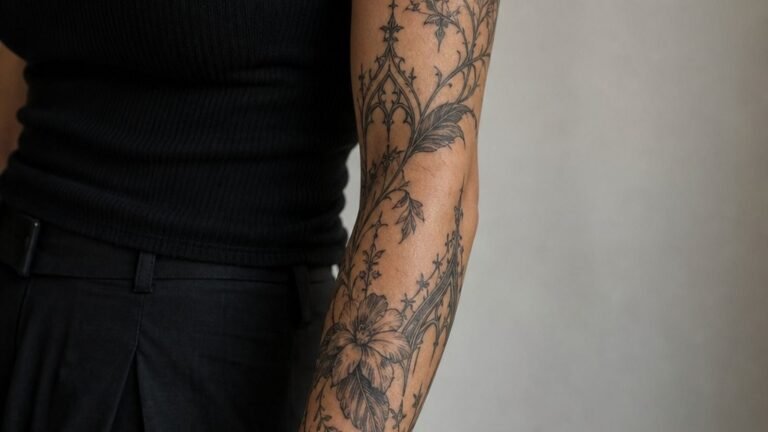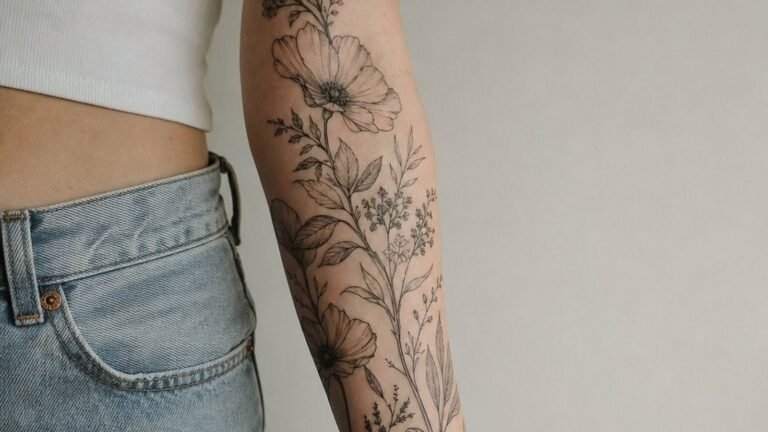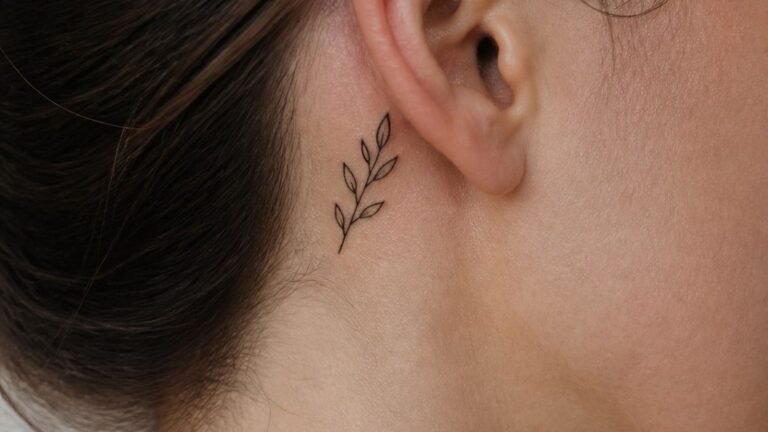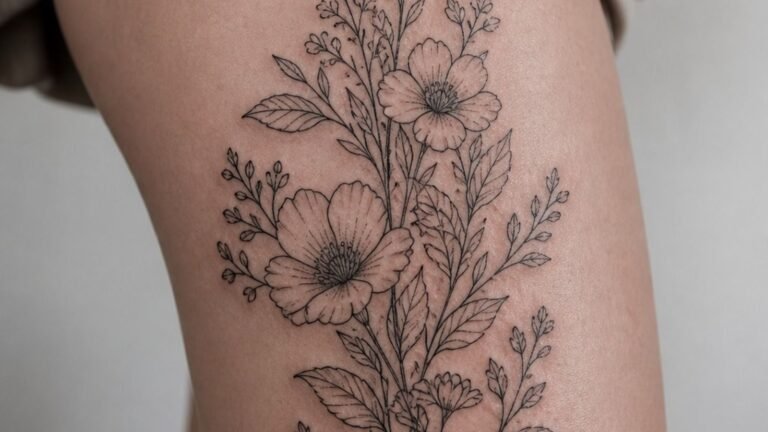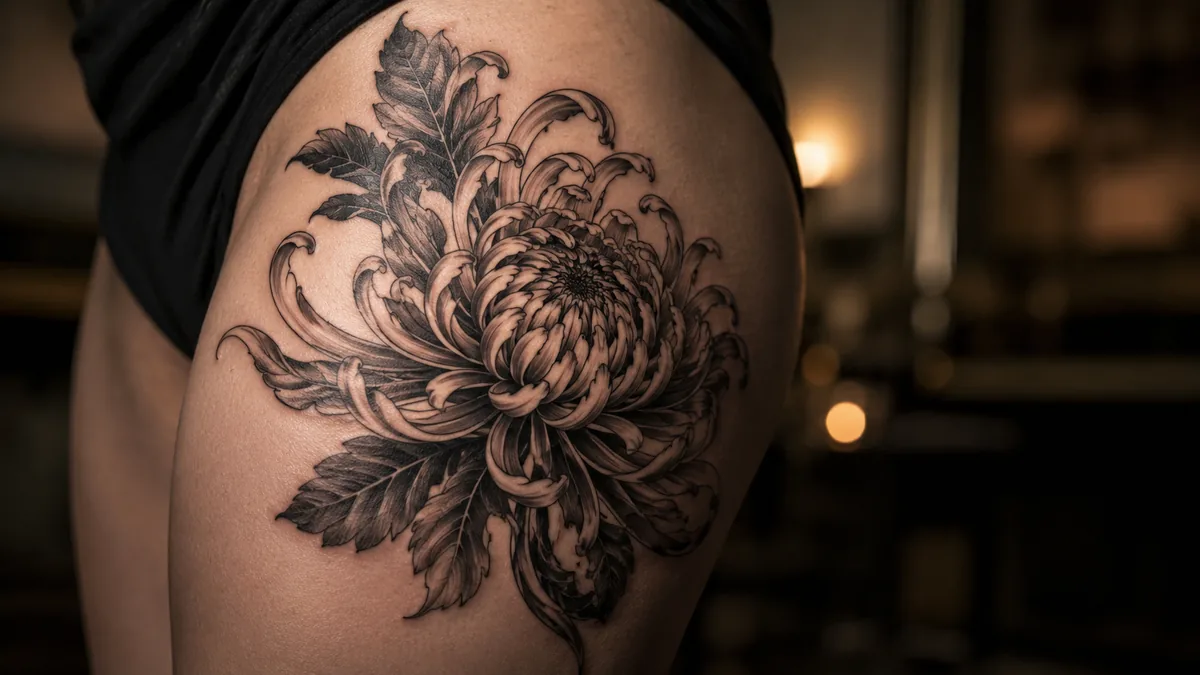
The chrysanthemum is one of those flowers that carries serious weight across multiple cultures, and the tattoo world has fully embraced it. If you’re drawn to a tight Japanese-style kiku or a loose, naturalistic bloom, this flower says something specific. It’s not just pretty filler. It means something.
the chrysanthemum tattoo stands for longevity, resilience, and joy. It blooms late in the year, pushing through cold when everything else has died back. That’s the vibe people carry on their skin. Life persisting. Good things earned, not given.
Core Symbolism: What the Chrysanthemum Tattoo Actually Means
The chrysanthemum’s primary meanings are longevity, joy, and optimism. Because it blooms in autumn and even into early winter, it’s long been associated with endurance and the ability to thrive under tough conditions. A lot of people get this tattoo as a statement of surviving hard times, not just aesthetically but philosophically. It’s the flower that keeps going.
It also carries meanings of rebirth and renewal, since it’s a perennial that returns season after season. Some people attach happiness and mental fortitude to it too. If you’ve come through something rough and you’re still standing, the chrysanthemum reads as a quiet, confident reminder of that fact. No drama, just evidence.
Japanese and East Asian Cultural Background
The chrysanthemum blooms hardest when everything else has died.
In Japan, the chrysanthemum, called kiku, is the imperial family’s crest. It’s been the seal of the emperor since the 12th century, so it carries connotations of nobility, perfection, and the highest order of achievement. Japanese tattoo tradition, irezumi, has used the kiku for centuries as a central motif, often paired with dragons, koi, or waves. It represents the sun and its symmetrical petals suggest order and wholeness.
In Chinese culture, the chrysanthemum is one of the Four Gentlemen, alongside plum blossom, orchid, and bamboo. It symbolizes scholarly integrity and perseverance. In both traditions it also holds associations with the afterlife, not as something dark, but as a passage. It appears in funeral customs as a symbol of grief and respect for the dead, so some people get it as a memorial piece.
Western Meanings and How They Differ
In American and European tattoo culture, people gravitate toward the chrysanthemum for its associations with positivity and longevity, often without the imperial or funerary weight it carries in Asia. It’s frequently chosen to represent a birth month flower since it’s the birth flower for November. That makes it a popular choice for birthday tattoos or pieces honoring someone born that month.
Western wearers also lean into the beauty-and-resilience angle. The layered petals read as complexity and depth. It’s a flower that rewards a second look, which is exactly what a lot of people want from their ink. It says they’re more layered than they look at first glance. Simple read on the outside, more going on underneath.
Design Styles: From Traditional to Fine Line
American traditional chrysanthemums are bold, iconic, with a limited palette and thick outlines. They hold up over decades and read clean from across the room. Bold will hold, and this style proves it every time. Neo-traditional takes those same solid shapes but adds more petal depth, richer color gradients, and detailed shading. Either way you’re getting a piece that ages with dignity.
Japanese-style kiku are probably the most recognizable take. Tight, symmetrical petals, strong linework, and often rendered in black and grey or with a muted traditional palette. Fine line chrysanthemums are trending hard right now, especially single-needle micro blooms. They look crispy fresh out the gate. Just know they need touch-ups sooner in high-wear areas, and a skilled hand is non-negotiable or you’ll get blowout in those delicate lines.
Color vs. Black and Grey
Color chrysanthemums let you load on meaning. Red reads as love and passion. Yellow carries friendship and loyalty. White sits closest to the memorial and grief end of the spectrum, honoring someone lost. Purple suggests royalty and admiration. Pink comes across soft, warm, celebration of life. If you’re going color, make sure your artist saturates it properly. A washed-out chrysanthemum looks rough at five years.
Black and grey chrysanthemums are timeless and versatile. A good whip shade on the petals gives them that three-dimensional pull that makes the piece pop off the skin. Black and grey also age more predictably on most skin tones. If you’re unsure about committing to color, this is a strong default. The depth you can get with just ink and water is impressive, and it lets the symbolism lead rather than the hue.
Placement and How It Heals and Ages
The thigh, forearm, shoulder, and upper back are your best bets for a chrysanthemum with real detail. These zones are relatively flat, lower on the pain scale, and they age reliably well. A fist-sized bloom on the thigh gives your artist room to work. A sleeve placement, whether part of a Japanese bodysuit or a mixed piece, is where the kiku really shines because you can surround it with complementary motifs.
Ribs and the sternum are spicy zones. The piece will look stunning if you commit to the placement, but those fine lines in high-flex areas can spread slightly over time. Hands and fingers are high-wear and need consistent touch-ups. The foot and inner wrist heal inconsistently for some people. Talk to your artist about skin type and lifestyle before you lock a placement. A piece that heals nice is always better than one that looked good for a week.
Who Gets This Tattoo and How to Make It Yours
People who get chrysanthemum tattoos tend to fall into a few categories. November birthdays and people honoring someone born that month. People coming out the other side of illness, loss, or a rough chapter who want a symbol of having lasted through it. Folks deep in Japanese or East Asian aesthetics building out a themed sleeve. And honestly, people who just love botanicals and want something that carries real substance, not just surface-level decoration.
To make it personal, think about context and combination. A chrysanthemum paired with a skull shifts the meaning toward the Mexican and Japanese tradition of honoring the dead with beauty. Add a koi and a wave and you’re building a narrative about perseverance and flow. A single clean bloom with a birth year underneath is simple and direct. Talk to your artist about what the piece is actually for, not just what it looks like. The meaning should be yours, not just default symbolism from a flash sheet.